
Middle East Disruptions Ground 29 Flights, Strand Hundreds in April 2026
Middle East disruptions have triggered airspace closures across the region, grounding 29 flights and delaying over 500 services in April 2026. Hundreds of passengers face extended waits at major hubs including Dubai, Riyadh, Cairo, and Istanbul.

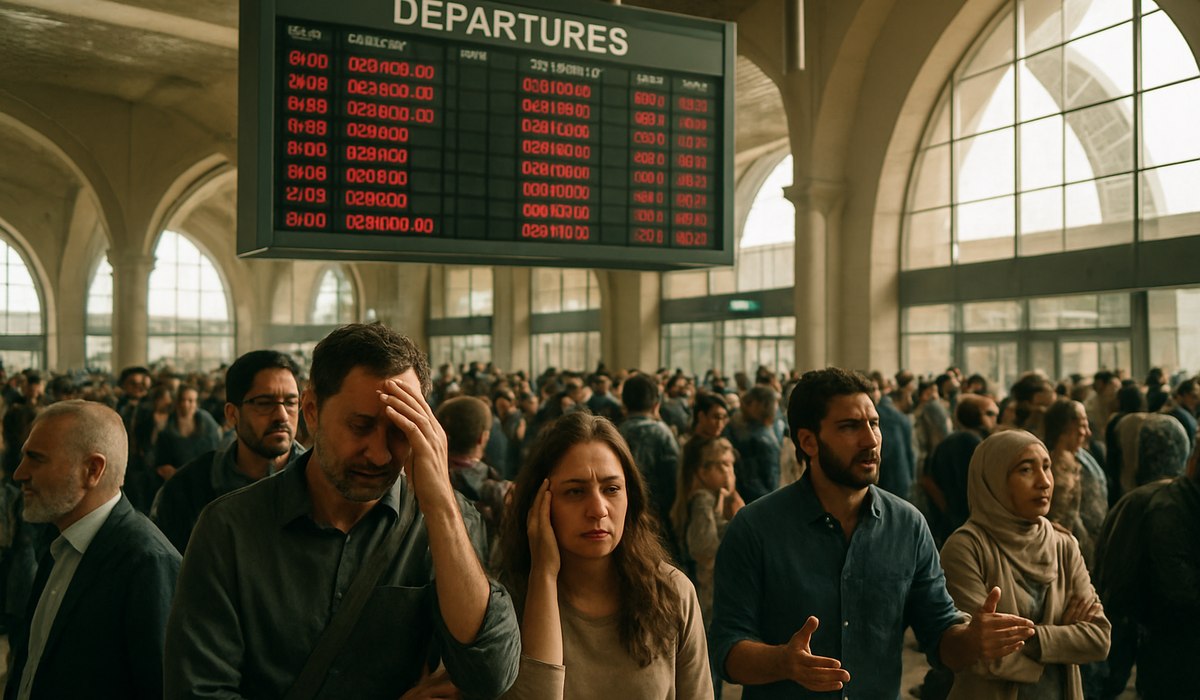
Image generated by AI
Airspace Closures Leave Hundreds Stranded Across Regional Hubs
Volatile security conditions and intermittent airspace closures have triggered unprecedented Middle East disruptions affecting hundreds of passengers. Between late February and early April 2026, cascading flight cancellations and delays have overwhelmed major aviation hubs across the region. Flight tracking data confirms that 29 services have been cancelled while more than 517 additional flights experienced significant delays. The disruption stems from temporary closures affecting airspace over Iran, Iraq, Lebanon, Jordan, and parts of the Persian Gulf—forcing airlines to suspend routes, reroute aircraft, and ground operations indefinitely. Travelers at Dubai, Riyadh, Cairo, and Istanbul airports have borne the brunt of this crisis, with many learning of schedule changes mere hours before departure.
Regional Airspace Closures Trigger Mass Flight Disruptions
The Middle East disruptions represent a critical turning point for aviation connectivity across three continents. Aviation analytics platforms report that overall flight activity for Gulf carriers fell sharply during the height of airspace restrictions, recovering to only 50% of pre-disruption operational capacity by early April. Airlines including Emirates, Saudia, Etihad, and Pegasus have implemented rolling modifications to their timetables, canceling routes through sensitive corridors while maintaining skeleton service on alternative paths.
The closures affect multiple critical flight corridors simultaneously. When a single airspace zone closes, the ripple effects multiply across European-Middle Eastern-Asian (EMA) networks—a system designed with limited redundancy. Dubai International Airport, serving as one of the world's busiest aviation hubs, recorded banks of delayed departures as carriers held aircraft on ground or extended flight times by several hours through reroutes. Similar congestion has materialized at Riyadh, Cairo, and Istanbul, where tightly scheduled operations leave minimal buffer for disruptions.
According to recent IATA regional reports, ground delays have averaged 4-6 hours on affected routes, while some long-haul connections have been pushed back 12-24 hours or cancelled entirely. The operational stress has forced carriers to implement selective suspensions on routes transiting the most sensitive airspace, creating an unpredictable travel environment.
Impact on Major Hub Operations and Passenger Networks
The Middle East disruptions have created cascading operational challenges at four critical aviation centers. Dubai International Airport remains severely constrained despite partial recovery, with Emirates warning passengers of potential last-minute changes on long-haul connections linking North America and Europe through its hub. The airline continues to operate reduced schedules with advisories recommending passengers monitor flight status constantly.
At Riyadh and Jeddah airports, Saudia has faced recurring disruptions on services touching affected corridors, including flights to neighboring Gulf states and key regional capitals. Airport information systems continue listing Saudia among carriers with elevated delays and departures, alongside Gulf and Asian airlines adapting routings.
Istanbul Airport experienced over 100 flight delays during peak disruption periods in March, with double-digit cancellations recorded daily. Turkish carriers and foreign airlines have been forced to adopt elongated routings that reduce schedule flexibility and eliminate buffers for weather or mechanical issues.
In Egypt, both national carrier EgyptAir and foreign airlines have faced sudden cancellations and rescheduling, particularly affecting services from the Gulf and Levant regions. The operational unpredictability extends connection times and increases passenger anxiety about final arrival times.
Recovery Outlook for Gulf Carrier Operations
Aviation experts project a gradual recovery trajectory extending through mid-2026, though full normalization remains uncertain. Emirates has reportedly restored much of its pre-disruption network but continues implementing precautionary measures. The airline maintains enhanced monitoring protocols on all long-haul connections and has increased crew standby positions to manage unexpected schedule changes.
Saudia's recovery timeline depends on continued airspace access across key Saudi-Egypt and Saudi-Gulf routes. Industry observers note that while outright cancellations have declined compared to peak disruption levels, elevated delay volumes persist—creating challenging conditions for connecting passengers.
Budget carriers including Pegasus have suspended services to Iran, Iraq, Jordan, and Lebanon, with operational summaries indicating continuing knock-on effects from longer routings and reallocated flight slots. These carriers have slower recovery capabilities due to leaner operational margins compared to full-service network carriers.
The broader recovery outlook hinges on sustained airspace reopening across the Iran-Iraq-Lebanon-Jordan corridor. Until aviation authorities confirm permanent reopening of these zones, airlines will maintain conservative scheduling and increased rerouting contingencies.
What Travelers Should Know About Rerouting and Delays
The Middle East disruptions require immediate passenger awareness and preparation strategies. Airlines are rerouting affected flights through alternative corridors, extending journey times by 2-5 hours and requiring connection time adjustments. Travelers should anticipate sudden schedule changes announced with minimal notice—often 6-12 hours before departure.
Current operational data shows that rebooking options remain limited due to industry-wide capacity constraints. Passengers with flexible travel dates should consider postponing non-essential trips through the region until mid-May 2026, when operational recovery is expected to reach 75% of normal capacity.
Travel insurance with trip delay and cancellation coverage has become essential for Middle East bookings. Standard policies should provide minimum coverage of $300 for delays exceeding 8 hours and full rebooking allowances.
Airlines have activated customer communication protocols, but information dissemination remains inconsistent. Passengers are strongly advised to register with airline apps and enable real-time push notifications for flight status updates. Email monitoring alone may result in missed critical notifications.
Connecting passengers should add 4-6 hours to typical connection windows across Dubai, Doha, Riyadh, and Istanbul hubs. Single-connection itineraries are higher-risk during the current disruption period.
Key Data Table
| Metric | Value | Impact Level |
|---|---|---|
| Total Flight Cancellations | 29 services | Critical |
| Delayed Flights | 517+ services | Critical |
| Primary Affected Hubs | Dubai, Riyadh, Cairo, Istanbul | All Major |
| Airspace Closures Duration | Late Feb – Early Apr 2026 | 6+ weeks |
| Operational Recovery Rate | 50% of normal capacity | Severe |
| Average Ground Delay | 4-6 hours per flight | High |
| Long-haul Reroute Time Increase | 2-5 additional hours | Moderate-High |
| Most Affected Carriers | Emirates, Saudia, Etihad, Pegasus | Major Impact |
What This Means for Travelers
-
Monitor Your Booking Daily: Log into your airline account 72 hours before departure and check for schedule changes. Middle East disruptions may alter your flight time with minimal notice.
-
Add Buffer Time: Include 4-6 additional hours in connection windows at regional hubs. Standard connection times are insufficient during current disruption conditions.
-
Purchase Flexible Tickets: If possible, book tickets allowing free rebooking rather than paid changes. Standard economy fares may carry $150-300 rebooking penalties.
-
Enable Real-Time Alerts: Register with airline apps and mobile services for push notifications. Email notifications alone are insufficient for catching last-minute changes.
-
Consider Trip Postponement: Non-essential travel through the Middle East should be deferred until May 2026 when recovery targets 75% capacity.
-
Secure Comprehensive Insurance: Purchase travel insurance with $300+ coverage for trip delays exceeding 8 hours and full rebooking provisions.
-
Plan Ground Transportation Flexibility: Book airport transfers allowing 2-3 hour buffer windows. Delays may cascade from earlier flight disruptions.
Disclaimer
This article is for informational and educational purposes only. It does not constitute legal, financial, or professional advice. While we strive to provide accurate and up-to-date information, travel policies, regulations, and conditions change rapidly. Always verify information with official sources before making travel decisions. Nomad Lawyer makes no representations about the accuracy, reliability, completeness, or suitability of the information provided. Readers should consult qualified professionals for advice specific to their circumstances. The views expressed in this article are those of the author and do not necessarily reflect the views of Nomad Lawyer.
Preeti Gunjan
Contributor & Community Manager
A passionate traveller and community builder. Preeti helps grow the Nomad Lawyer community, fostering engagement and bringing the reader experience to life.
Learn more about our team →