
Grounded flights snarl at Nashville International Airport disrupts North America
Five grounded flights snarl operations at Nashville International Airport on April 10, 2026, triggering cascading delays across North American routes during peak spring travel season affecting passengers to Philadelphia, Atlanta, and Toronto.

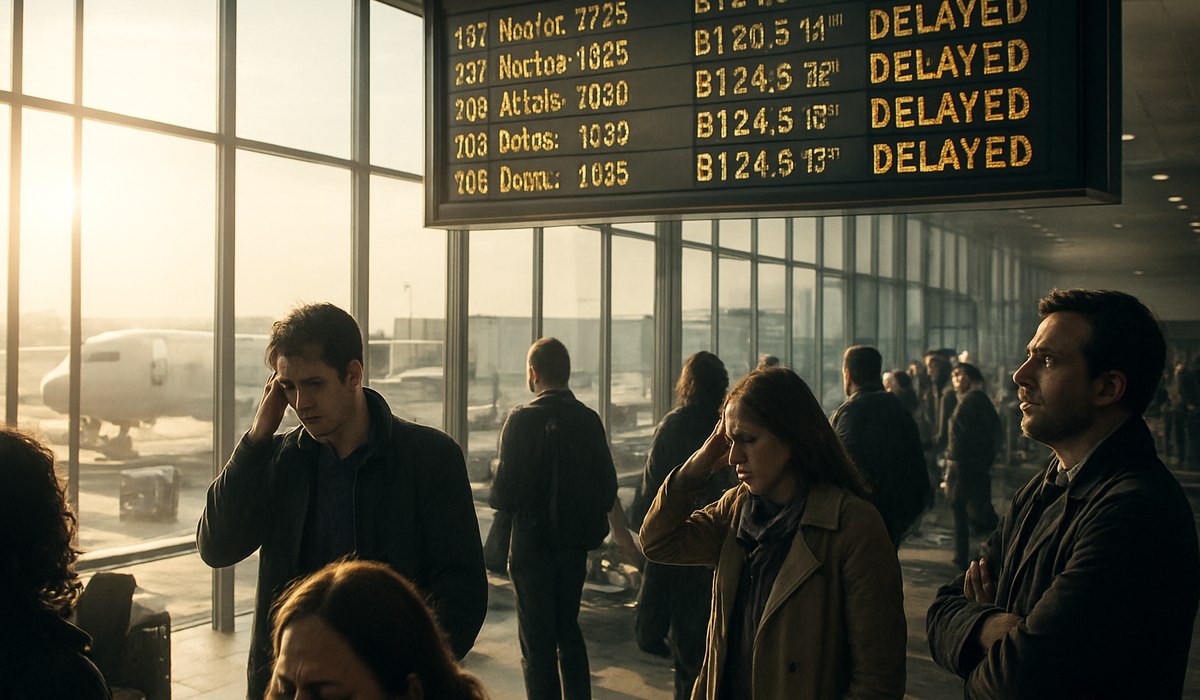
Image generated by AI
Five Departures Ground at Nashville, Triggering Cross-Continental Delays
Nashville International Airport experienced operational disruption on April 10, 2026, when five scheduled departures operated by Delta Air Lines, Frontier Airlines, and Southwest Airlines were grounded. The incident triggered a cascade of delays affecting connecting routes to Philadelphia, Atlanta, Toronto, and Augusta throughout the spring travel season. The grounded flights snarl created immediate scheduling gaps during peak morning and early afternoon departure windows, forcing airlines to reassign aircraft and crew while managing hundreds of displaced passengers across North American networks.
Disruptions Hit Nashville During Peak Spring Travel
April 2026 marks one of the year's busiest travel periods, with Nashville International Airport functioning as a critical hub for Southern and Midwestern itineraries. The airport's strategic position between major East Coast and Midwest markets means individual disruptions propagate rapidly through connecting networks.
Aviation industry data from this period indicates elevated daily cancellations and thousands of delays concentrated at major hubs including Atlanta, Miami, and Detroit. Nashville, though mid-sized relative to these facilities, experienced heightened vulnerability due to tight operational scheduling. When carriers operate with minimal capacity cushion, any grounded flights snarl the entire system. The loss of five departures removed critical connectivity options for travelers attempting to reach final destinations hundreds of miles away.
The timing coincided with school spring breaks and increased business travel, maximizing passenger impact. Airlines across North America reported working with depleted spare capacity, leaving few aircraft or seat inventory to absorb disrupted travelers. Learn more about real-time flight tracking to monitor your specific route during disruptions.
Network Vulnerabilities Expose Airline Scheduling Fragility
Modern airline scheduling operates on razor-thin margins, designed to maximize aircraft utilization and minimize operating costs. This efficiency-first approach creates hidden fragility when unexpected disruptions occur. The grounded flights snarl at Nashville revealed how interdependent networks have become across the continent.
Delta Air Lines, America's largest carrier by traffic at major hubs, continues managing strong spring demand while processing lingering effects from earlier large-scale disruptions. The airline maintains minimal slack capacity at key facilities like its Atlanta base, meaning Nashville disruptions directly impact downstream hubs. Frontier Airlines, pursuing a network rebalancing strategy, concentrated capacity at competitive markets including Atlanta, inadvertently increasing exposure to congestion when departures are grounded.
Southwest Airlines, known for point-to-point operations, still maintains connecting passengers through Nashville on routes to major markets. When five flights are grounded simultaneously, the airline's relatively inflexible scheduling model struggles to reaccommodate displaced travelers quickly.
Industry observers note that this structural vulnerability persists despite technological advances in scheduling and capacity planning. Airlines prioritize revenue maximization over resilience, accepting periodic disruptions as acceptable business costs. The grounded flights snarl scenario repeats seasonally across North America whenever weather, maintenance, or operational issues strike high-traffic nodes.
Ripple Effects Across Major East Coast and Midwest Hubs
The cascading impacts of Nashville's grounded flights snarl extended far beyond Tennessee's borders. Philadelphia International Airport, receiving five fewer Nashville connections on April 10, reported rolling delays and equipment adjustments as airlines consolidated passenger loads. Philadelphia serves as crucial gateway to Northeast markets and transatlantic routes, meaning missed connections there potentially disrupted international travelers with non-refundable forward bookings.
Atlanta's Hartsfield-Jackson International, the world's busiest airport and Delta's primary hub, felt pronounced strain when Nashville-originating passengers failed to arrive for tight connections. The airport had already experienced elevated disruption earlier in April, with dozens of cancellations documented. Each grounded flight from Nashville eliminated seats on Atlanta's onward flights to Europe, South America, and Asia-Pacific markets.
Toronto Pearson International Airport, serving as bridge between U.S. interior cities and global networks, experienced delays rippling from Nashville service cancellations. Travelers attempting to connect to European carriers operating from Toronto found themselves rebooked on later flights or diverted through alternate U.S. gateways. Augusta Regional Airport, a smaller market with limited alternative routing options, left affected passengers with ground transportation alternatives or painful rebooking through distant hubs like Charlotte or Memphis.
Check FAA guidance on passenger rights during operationally-caused delays and cancellations.
What This Means for Travelers Going Forward
The April 10 grounded flights snarl at Nashville International demonstrates that spring 2026 travel carries elevated disruption risk. Passengers should implement proactive strategies to minimize impact from future incidents across North American networks.
Airlines continue operating with constrained capacity, meaning any localized disruption affects travelers hundreds of miles away. Booking early morning departures reduces exposure to cascading delays from previous flights. Selecting non-stop routes wherever possible eliminates connection risk. Building two-hour minimum connections at major hubs like Atlanta and Philadelphia provides buffer against schedule disruptions propagating upstream.
Purchasing flight delay insurance protects against expenses incurred when operational issues strand travelers away from home. Monitoring your specific flight on FlightAware 24 hours before departure provides early warning of potential disruptions. Arriving at airports three hours before domestic departures accounts for potential security delays during peak periods.
Knowing your rights under U.S. Department of Transportation regulations ensures you receive mandated compensation for carrier-caused delays. Document all out-of-pocket expenses, including meals, hotels, and ground transportation, for reimbursement claims.
Traveler Action Checklist
- Monitor your specific flight on FlightAware starting 24 hours before departure
- Confirm your airline has your current contact phone number and email address
- Build minimum two-hour connections at major hubs when booking
- Photograph your boarding pass and itinerary for insurance claims
- Document all expenses exceeding $50 during disruptions
- Contact your airline's customer service within 48 hours of disruption
- File formal complaints with DOT if compensation is denied
- Request written explanation from airline for future insurance claims
- Review baggage policies before traveling (delayed luggage varies by airline)
- Consider purchasing flight delay insurance for spring bookings
Key Data: Nashville Disruption Impact Overview
| Metric | Details |
|---|---|
| Date of Incident | April 10, 2026 |
| Airport Affected | Nashville International (BNA) |
| Grounded Flights Count | 5 departures |
| Airlines Involved | Delta Air Lines, Frontier Airlines, Southwest Airlines |
| Primary Routes Disrupted | Nashville to Philadelphia, Atlanta, Toronto, Augusta |
| Estimated Passengers Affected | 600-800 across five flights |
| Peak Disruption Window | April 10, 08:00-15:00 local time |
| Major Connection Hubs Impacted | Atlanta (ATL), Philadelphia (PHL), Toronto (YYZ) |
| Industry Context | Peak spring travel season, tight network capacity |
| Network Vulnerability Status | High due to minimal spare aircraft capacity |
Frequently Asked Questions About Nashville Flight Disruptions
What compensation am I entitled to if my flight was grounded or cancelled due to the Nashville incident?
Under DOT regulations, passengers entitled to compensation for carrier-caused cancellations receive $400-$750 depending on flight length. You must request compensation from your airline within 60 days. If denied, file complaints with the U.S. Department of Transportation. Document all evidence of the grounded flights snarl affecting your specific booking.
How can I track whether my flight was impacted by the grounded flights snarl at Nashville?
Use FlightAware to review April 10, 2026 flight history for your specific flight number.
Disclaimer
This article is for informational and educational purposes only. It does not constitute legal, financial, or professional advice. While we strive to provide accurate and up-to-date information, travel policies, regulations, and conditions change rapidly. Always verify information with official sources before making travel decisions. Nomad Lawyer makes no representations about the accuracy, reliability, completeness, or suitability of the information provided. Readers should consult qualified professionals for advice specific to their circumstances. The views expressed in this article are those of the author and do not necessarily reflect the views of Nomad Lawyer.
Raushan Kumar
Founder & Lead Developer
Full-stack developer with 11+ years of experience and a passionate traveller. Raushan built Nomad Lawyer from the ground up with a vision to create the best travel and law experience on the web.
Learn more about our team →