
Middle East Conflict Grounds 29 Flights in April 2026, Stranding Travelers
A fresh wave of 29 commercial flights were grounded in early April 2026 as Middle East conflict-related airspace restrictions created travel chaos. Hundreds of passengers faced cancellations and emergency rebookings across key regional hubs amid escalating regional tensions.

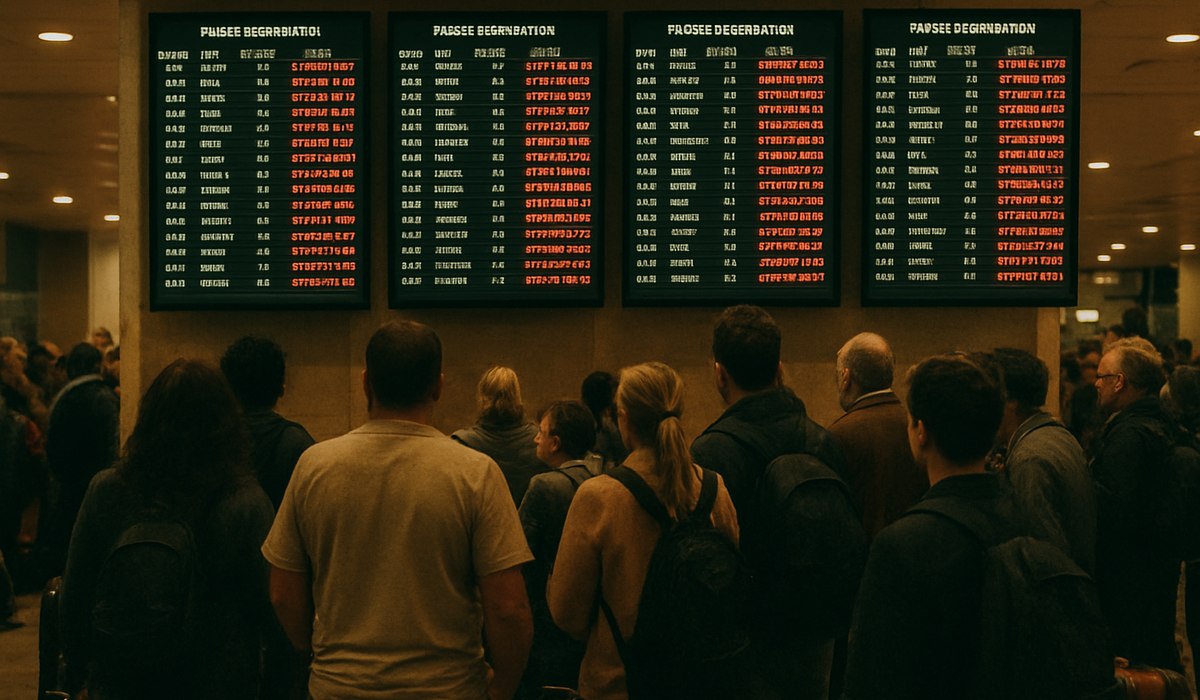
Image generated by AI
Breaking: 29 Flights Grounded as Middle East Conflict Escalates April Disruptions
At least 29 commercial flights were grounded during the first week of April 2026 as escalating Middle East conflict tensions triggered fresh airspace restrictions across the region. The cancellations stranded hundreds of passengers at major regional hubs including Dubai, Doha, and Amman, marking a renewed spike in travel disruptions after weeks of relative stability. Airlines cite conflict-related security concerns and contested airspace closures as primary reasons for the abrupt schedule adjustments, affecting routes between Europe, North America, and South Asian destinations.
The April flight cancellations represent a concentrated cluster of disruptions centered around April 1-7, 2026. Regional aviation data firms and consolidated airline advisories documented the grounded services, though no single official government tally exists. Passengers who believed the worst disruptions had passed in late March suddenly faced cancellations of previously confirmed bookings, creating widespread frustration across already-vulnerable routing corridors.
April Flight Cancellations Create Fresh Disruption Cluster
The early April 2026 cancellation wave demonstrates how volatile Middle East conflict conditions remain for commercial aviation. Airlines had repositioned aircraft and crews away from core regional hubs during March, hoping to stabilize operations by month's end. However, renewed security alerts and airspace restrictions forced carriers to ground or convert 29 scheduled services into emergency rescue rotations within just seven days.
Flight tracking data aggregated from multiple sources shows that the April disruptions differed from previous patterns. Rather than sustained airport closures, carriers faced day-by-day uncertainty about which airspace segments remained accessible. This unpredictability forced last-minute cancellation decisions that caught passengers with limited rebooking options, particularly on less-frequent routes where a single grounded flight eliminates an entire day's connectivity to key destinations.
Industry analysts note that aircraft repositioning challenges exacerbated the April situation. Crews stationed outside their home bases faced scheduling conflicts when new restrictions emerged, and aircraft parked in secondary airports couldn't quickly return to primary hubs. These operational constraints transformed what might have been routine schedule adjustments into widespread service cancellations affecting hundreds of travelers simultaneously.
Vulnerable Routes: Europe-Gulf and North America-Asia Connections Hit Hardest
The 29 grounded flights predominantly served routes most dependent on Middle Eastern airspace. Europe-to-Gulf connections through contested overfly zones suffered particularly severe disruptions, as did North America-to-Asia routings that typically transit Iran, Iraq, or Syrian airspace. Services connecting London, Frankfurt, and Paris with Dubai, Abu Dhabi, Doha, and Kuwait City represented a disproportionate share of the April cancellations.
North America-Asia connections proved equally vulnerable. Flights from New York, Los Angeles, and Chicago bound for Delhi, Bangkok, and Singapore normally optimize routing through Middle Eastern airspace to reduce flight time and fuel consumption. With those corridors increasingly restricted, carriers faced choosing between lengthy detours reducing daily frequency or outright cancellation. Many airlines selected cancellation to avoid operating unprofitable extended-routing services.
Secondary hubs including Amman, Muscat, and smaller Saudi Arabian airports absorbed some diverted traffic but lacked capacity for sustained rerouting. Passengers booked on once-daily services to these airports had no alternative flights when cancellations occurred. The April disruptions thus created bottlenecks not just at major hubs but throughout the region's entire aviation network.
Operational Chaos: Aircraft Repositioning and Last-Minute Reschedules
The logistics underlying the 29 April cancellations reveal systemic challenges facing Middle East conflict-era aviation. Aircraft prepositioned in secondary locations during March couldn't be efficiently moved when April restrictions took effect. A plane positioned in Amman to avoid contested airspace around Syria couldn't easily relocate to Dubai when demand shifted, creating cascading schedule conflicts.
Crew scheduling added another complexity layer. Pilots and flight attendants already displaced from their home bases during March faced maximum flight-hour limitations and mandatory rest requirements. When April restrictions emerged, airlines discovered they lacked available crews to operate planned services, even if airspace had remained open. This forced either additional aircraft repositioning or outright cancellations—many carriers chose cancellation to avoid compounding crew scheduling chaos.
Last-minute decision-making characterized the entire April operational period. Airlines couldn't plan beyond 24-48 hours with confidence, as airspace closure notices and security alerts arrived with minimal advance warning. Flights confirmed weeks earlier were canceled hours before scheduled departure. This operational unpredictability cascaded through the entire aviation system, affecting not just the grounded flights themselves but subsequent rotations that relied on those aircraft and crews.
What This Means for Travelers Booked on Middle East Routes
The April 2026 flight groundings underscore that Middle East conflict-related travel disruptions remain acute and unpredictable. Passengers booking routes through contested airspace should anticipate frequent schedule changes, possible cancellations, and extended travel times due to rerouting. Airlines continue emphasizing flexibility in itineraries and comprehensive travel insurance as essential planning tools for Middle East region travel.
Current passenger impacts include:
- Flight cancellations with 24-48 hour notice becoming normalized
- Rebooking onto flights departing days or weeks later than original bookings
- Forced rerouting through longer, more expensive flight paths adding 4-8 hours to journey times
- Limited seat availability on alternative flights during peak travel periods
- Overnight accommodations in unplanned hub cities while awaiting rebooking
- Extended border queues and document verification delays at alternative airports
Airlines have implemented flexible rebooking policies allowing passengers to change travel dates or receive monetary refunds rather than forced rerouting. However, refund processing timelines extend to 30-60 days in many cases, providing limited immediate relief for stranded travelers. Passengers holding non-refundable economy fares face particular challenges, as many carriers exclude Middle East conflict situations from standard refund eligibility.
Travel insurance claims related to Middle East conflict disruptions have increased substantially since February 2026. Policies covering airspace closure, airline bankruptcy, and schedule change disruptions are processing claims at elevated volumes. New travel insurance products emphasizing Middle East region coverage are entering the market, with many including specific provisions for conflict-related cancellations.
Tracking Flight Updates in Real Time
Passengers need reliable real-time flight information during this volatile period. FlightAware provides continuously updated tracking of grounded flights, cancellations, and active routing changes for routes affected by Middle East conflict. The platform allows searching specific flights to view current status, delay reasons, and rerouting details with 15-minute update frequency.
The FAA maintains official notices to airmen (NOTAMs) documenting airspace closures, restrictions, and special operating procedures affecting Middle East region flying. While primarily technical documents, NOTAMs provide authoritative confirmation of which airspace remains operational versus restricted. Passengers can cross-reference NOTAM data with airline schedule updates to understand why specific flights were canceled or rerouted.
Airline websites and customer service lines provide the most direct cancellation notifications and rebooking options. Major carriers operating Middle East routes send push notifications and email alerts when flights are grounded, typically offering immediate rebooking alternatives. Response times vary significantly—some airlines process rebooking within 2-4 hours, while others maintain queues extending to 24+ hours during peak cancellation periods.
Key Data: April 2026 Flight Groundings by Route and Carrier
| Route Corridor | Primary Airports | Affected Flights | Typical Delay Impact | Status as of April 7 |
|---|---|---|---|---|
| Europe-Gulf (East-West) | LHR-DXB, CD |
Disclaimer
This article is for informational and educational purposes only. It does not constitute legal, financial, or professional advice. While we strive to provide accurate and up-to-date information, travel policies, regulations, and conditions change rapidly. Always verify information with official sources before making travel decisions. Nomad Lawyer makes no representations about the accuracy, reliability, completeness, or suitability of the information provided. Readers should consult qualified professionals for advice specific to their circumstances. The views expressed in this article are those of the author and do not necessarily reflect the views of Nomad Lawyer.
Preeti Gunjan
Contributor & Community Manager
A passionate traveller and community builder. Preeti helps grow the Nomad Lawyer community, fostering engagement and bringing the reader experience to life.
Learn more about our team →