
Middle East Aviation Crisis 2026: Istanbul and Cairo Hubs Face 1,617 Flight Delays in Single Day
Airspace restrictions and operational bottlenecks triggered 1,617 delays and 71 cancellations across Middle East hubs on September 3, 2026, placing extreme pressure on Istanbul and Cairo.

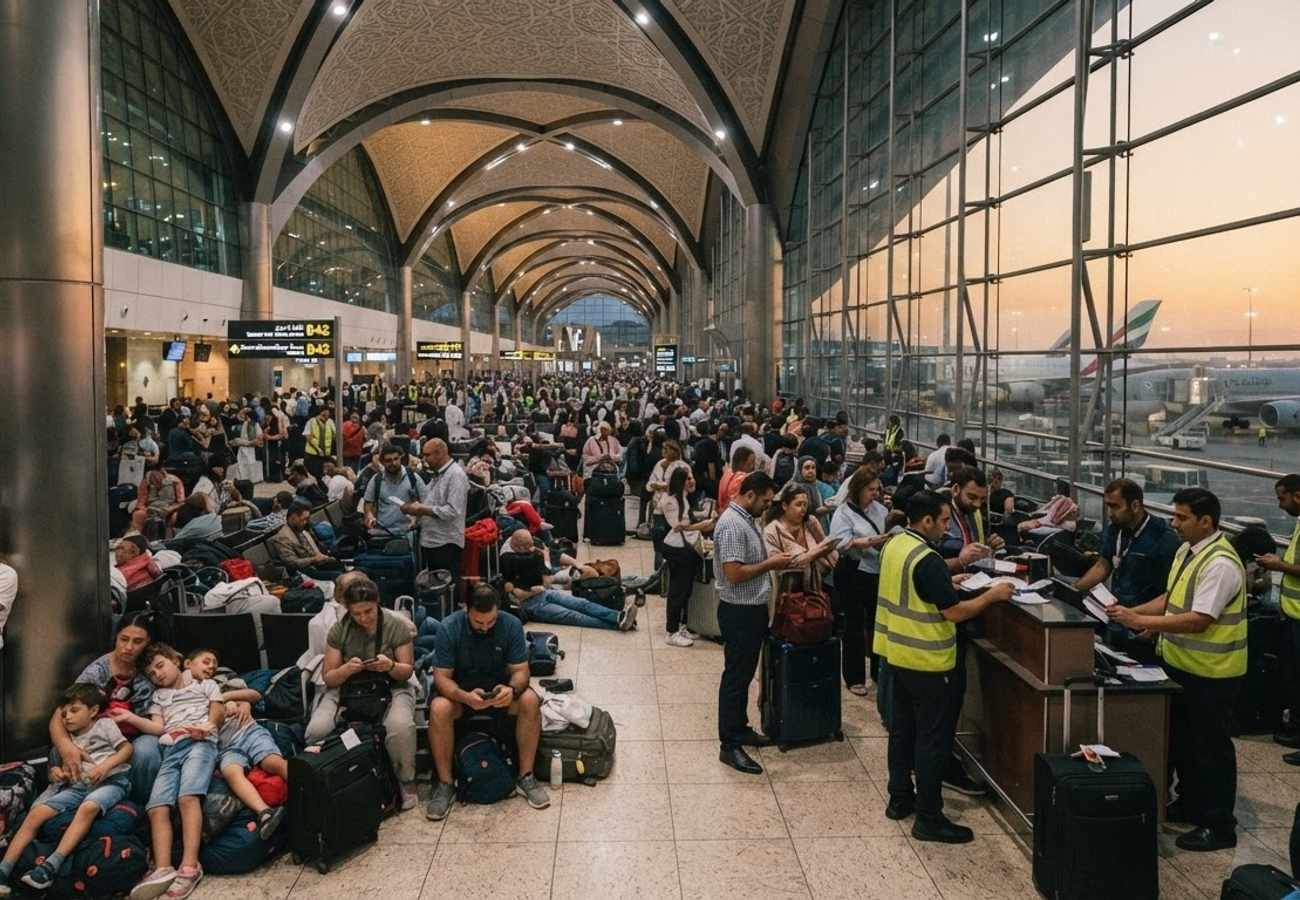
Image generated by AI
A massive wave of airspace closures and operational bottlenecks triggered 1,617 flight delays and 71 cancellations across Middle East hubs on September 3, 2026, with Istanbul and Cairo emerging as primary pressure points. This surge underscores a deepening structural crisis in regional aviation that is now impacting transit far beyond the immediate conflict zones.
The instability in Middle Eastern airspace has transitioned from a series of isolated incidents into a systemic failure. While the Gulf's "super-connectors" typically bear the brunt of these disruptions, recent data indicates a significant spillover effect. The network strain is now heavily impacting secondary and tertiary gateways that serve as the primary conduits between Europe, Africa, and Asia.
Regional Transit Hubs Face New Wave of Disruptions
Flight tracking data and official travel advisories reveal that on September 3, 2026, the regional aviation network suffered a severe breakdown. The result was 1,617 delayed flights and 71 total cancellations. While Dubai recorded the highest volume of disrupted services, the operational strain shifted visibly toward Istanbul and Cairo.
Industry reports attribute this spike to three converging factors: persistent conflict-related airspace closures, mandatory rerouting to avoid Iranian and Iraqi airspace, and localized weather patterns that stripped away the remaining scheduling margins. These disruptions are concentrated at transit-heavy facilities, specifically Istanbul Airport and Cairo International, which act as critical bridges for intercontinental travel.
This volatility is part of a larger trajectory that began in February 2026. Following conflict-driven airspace restrictions and physical damage to several Gulf hubs, the region's aviation sector has plummeted. International aviation bodies now project that the Middle East will be the only major global market to record collective airline losses throughout 2026.
Istanbul's Vulnerability as a Regional Shock Absorber
Throughout 2026, Istanbul has occupied a paradoxical position: it has functioned as both a strategic alternative and a primary victim of the regional crisis. As Gulf airspace became intermittently unavailable and airport capacities dropped, long-haul traffic between Asia and Europe shifted toward Türkiye. This forced an unsustainable volume of aircraft and passengers into Istanbul’s two primary airports.
Despite Istanbul Airport remaining operational through late August and early September, the facility has become highly sensitive to "upstream" turbulence. When flights are rerouted or delayed in the Middle East, the effect cascades into Istanbul. This results in aircraft arriving out of sequence and extended flight durations due to detours, which in turn trigger a chain reaction of late departures and missed connections.
Data from early 2026 suggests that Türkiye’s airspace absorbed a massive shift in traffic flows immediately after the onset of regional hostilities. Because Istanbul was already Europe’s most connected hub to Middle East destinations, this high connectivity transformed into a liability. Any military advisory or closure to the south or east now adds immediate complexity to flight planning, increasing the probability of rolling delays.
Cairo International Airport Exposure in Africa-Europe Corridors
Cairo International Airport has seen a marked increase in its exposure to regional volatility as carriers seek alternatives to reduced operations in the Gulf. Route-mapping studies from 2026 identify Egypt as a critical "diversion state," maintaining open airspace to facilitate rerouted flows between Africa, Europe, and the Middle East.
Recent disruption logs place Cairo alongside Istanbul, Kuwait, and various Saudi Arabian hubs as airports experiencing elevated cancellation and delay rates. The pressure on Cairo is driven by a combination of:
- Increased transfer traffic from diverted Gulf flights.
- Rising demand from African markets.
- High-density "banked" departure waves that leave no room for error.
While Cairo has avoided the physical damage seen at some Gulf facilities, the infrastructure is operating at its absolute limit. Logistics bulletins warn that irregular airspace operations frequently result in extended ground times and missed slot windows, creating knock-on effects for regional feeder flights.
Transition from Short-Term Shock to Structural Aviation Crisis
The current state of Middle East aviation is no longer viewed as a temporary glitch but as a structural turning point. According to analysis from the International Air Transport Association (IATA), the combination of operational disruptions and soaring fuel prices has effectively cut expected industry profitability by 50%. The Middle East remains the only global region forecasted to end the year in net loss territory.
The closure of vital flight corridors has forced airlines to implement costly adaptations:
- Extended Routings: Flights are taking longer paths to avoid conflict zones.
- Increased Fuel Loads: Longer flights require more fuel, increasing costs and reducing payload capacity.
- Capacity Reductions: Some carriers have parked widebody aircraft or redeployed them to other regions, leaving fewer spare planes and crews to handle recoveries when delays occur.
The human cost is evident in the traffic data. During the peak crisis months of March and April 2026, passenger numbers at major Middle East hubs dropped by more than 50% compared to original forecasts. Simultaneously, fares on the remaining viable routes have surged.
Operational Impact on Travelers in Istanbul and Cairo
The recent tally of 1,617 delays demonstrates that the crisis is now a universal problem for anyone traveling through the region. For passengers using Istanbul or Cairo to connect Europe with Southeast Asia or East Africa, the risk of disruption is now a baseline expectation.
From a logistical standpoint, the current environment creates a "bottleneck effect." Even when airports are technically open, waves of late arrivals create sudden congestion at security checkpoints, immigration halls, and baggage reclaim areas, particularly during overnight peaks.
For the traveler, this means that traditional "tight" connections are no longer viable. Experts suggest building significant buffer time into itineraries and relying on real-time airline app notifications rather than static schedules.
For the airlines, this instability is forcing a complete rethink of crew positioning and aircraft allocation. While carriers with diversified global hubs can shift capacity away from volatile corridors, those reliant on the Middle East are trapped in a cycle of last-minute changes and uncertain recovery timelines.
The 2026 aviation crisis has proven that in a hyper-connected world, a closure in one airspace can paralyze a hub thousands of miles away.
Related Travel Guides
Disclaimer
This article is for informational and educational purposes only. It does not constitute legal, financial, or professional advice. While we strive to provide accurate and up-to-date information, travel policies, regulations, and conditions change rapidly. Always verify information with official sources before making travel decisions. Nomad Lawyer makes no representations about the accuracy, reliability, completeness, or suitability of the information provided. Readers should consult qualified professionals for advice specific to their circumstances. The views expressed in this article are those of the author and do not necessarily reflect the views of Nomad Lawyer.
Kunal K Choudhary
Co-Founder & Contributor
A passionate traveller and tech enthusiast. Kunal contributes to the vision and growth of Nomad Lawyer, bringing fresh perspectives and driving the community forward.
Learn more about our team →