
IndiGo Issues Delay Advisory as Heavy Rain Floods Delhi Indira Gandhi International Airport in 2026
IndiGo and other major carriers warn of widespread disruptions at Delhi's IGI Airport after intense monsoon rains caused severe waterlogging and flight diversions.

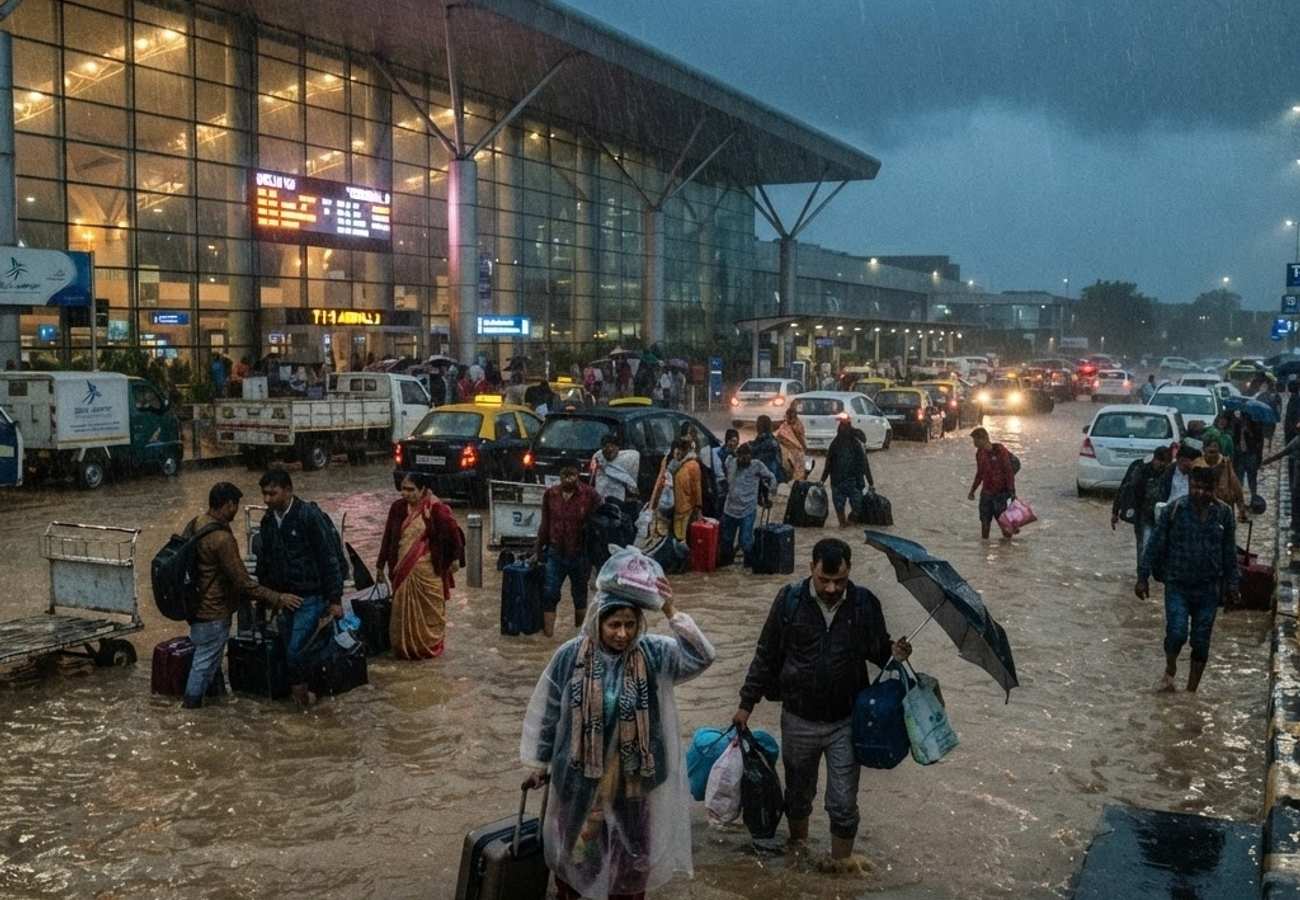
Image generated by AI
Heavy rain on September 4 triggered ankle-deep water at Indira Gandhi International (IGI) Airport, forcing the diversion of 11 flights and causing widespread delays across hundreds of services.
The Monsoon Disruption at IGI
A sudden shift in weather patterns has left Delhi’s primary aviation hub struggling with critical infrastructure failures. Intense afternoon showers on September 4 transformed the forecourts and key access areas of IGI Airport into makeshift ponds, with passengers forced to wade through pooled water to reach departure and arrival zones. The impact was felt across at least two terminals, where flooded subways and approach roads created a bottleneck for thousands of travelers.
The operational fallout was immediate. As visibility plummeted and ground handling slowed, air traffic controllers managed extreme congestion, resulting in 11 flights being diverted to nearby airports within a short window on Friday afternoon. Many other aircraft were forced into holding patterns, creating a ripple effect of delays that impacted not only the capital but domestic connectivity across India.
Operational Response and Airline Advisories
Low-cost carrier IndiGo has issued a formal travel advisory, urging passengers to verify their flight status via the mobile app or website before departing for the airport. The airline highlighted that the disruption is a systemic weather event affecting multiple carriers, including Air India, which has also issued similar warnings.
The India Meteorological Department (IMD) played a central role in the escalation, upgrading a yellow warning to a red alert as the rainfall intensified. These alerts signaled a high probability of transport failure and severe waterlogging in low-lying areas of the National Capital Region (NCR).
Infrastructure Strain and Environmental Impact
For the visitor, the real impact is the recurring failure of the airport's drainage systems. The flooding highlighted chronic vulnerabilities in the Dwarka underpass—a vital link between Palam and the domestic terminal—and other low-lying perimeter stretches.
Urban planners point to a dangerous combination of expanding paved surfaces and saturated drainage networks that cannot keep pace with the increasingly erratic "cloudburst" style rainfall seen in recent years. This shift toward more intense, short-duration storms is overwhelming traditional stormwater management, turning essential transit nodes into flood zones.
Visitor Insider Tips
Navigating Delhi during the late-monsoon season requires a different strategy than standard travel. To avoid being stranded, keep these local insights in mind:
- Prioritize the Delhi Metro: When surface roads flood, the Metro remains the most reliable artery into the city. While localized disruptions occur, it is far less susceptible to the gridlock seen on the airport approach roads.
- Avoid Underpasses: During a red alert, avoid the Dwarka underpass and other low-lying connectors. These are the first areas to flood and can trap vehicles for hours.
- The 4-Hour Rule: During active IMD rain alerts, allow at least four hours for transit to IGI Airport, even for domestic flights, to account for road closures and waterlogging.
- Digital Redundancy: Keep offline PDF copies of your boarding pass and ID. If you are diverted to a different terminal or airport, connectivity can become spotty due to network congestion.
- Local Dining Tip: If stranded in the terminal, seek out the regional kiosks offering Masala Chai and hot snacks; these are often the only places with consistent service during power fluctuations in the outer concourses.
Tourism Outlook
The repeated flooding at IGI Airport underscores a pressing need for "climate-proof" infrastructure in India's aviation gateways. While the immediate weather conditions usually ease over a weekend, the long-term impact is a growing reliance on digital real-time monitoring and a shift toward rail-based airport access. For the tourism sector, these events emphasize the importance of flexible booking and the necessity for regional conservation bodies to integrate better urban drainage with airport expansion.
Stay vigilant and check the IMD red alerts before booking your transit to the capital.
Related Travel Guides
Disclaimer
This article is for informational and educational purposes only. It does not constitute legal, financial, or professional advice. While we strive to provide accurate and up-to-date information, travel policies, regulations, and conditions change rapidly. Always verify information with official sources before making travel decisions. Nomad Lawyer makes no representations about the accuracy, reliability, completeness, or suitability of the information provided. Readers should consult qualified professionals for advice specific to their circumstances. The views expressed in this article are those of the author and do not necessarily reflect the views of Nomad Lawyer.
Preeti Gunjan
Contributor & Community Manager
A passionate traveller and community builder. Preeti helps grow the Nomad Lawyer community, fostering engagement and bringing the reader experience to life.
Learn more about our team →