
Northern Portugal Rail Upgrades 2026: Porto Infrastructure Projects to Shift Tourism to Douro Valley
Major rail investments in Northern Portugal, including the Douro line and Porto suburban network, aim to decentralize tourism and encourage multi-night stays beyond Porto.

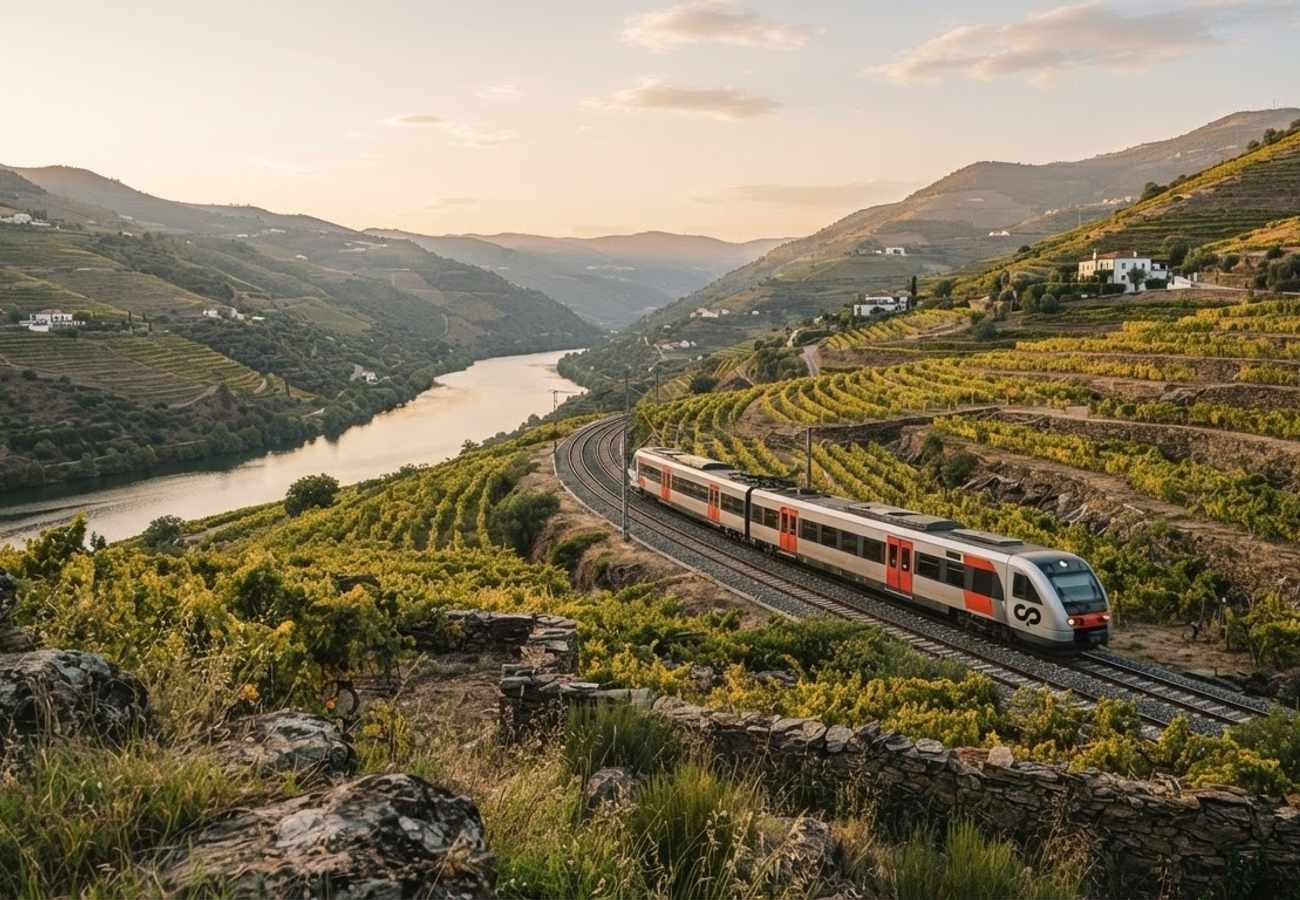
Image generated by AI
Investment in Northern Portugal’s regional rail network is fundamentally altering visitor movement patterns. New infrastructure projects are designed to transition the region from a hub-and-spoke model centered on Porto to a distributed network supporting multi-night stays in the Douro Valley and historic inland cities.
Regional Rail Infrastructure Under Pressure
Porto's status as a primary European city-break destination has created significant strain on the rail corridors extending toward Braga, Guimarães, and the Douro Valley. Historically, these destinations have been marketed as day trips, leading to a concentration of visitor spending within Porto and underutilization of regional hospitality assets.
Our analysis of regional planning documents reveals that rail density in Northern Portugal remains below the European Union average. Historic underinvestment has limited the efficiency of the Douro and Minho corridors, which were originally designed for local commuting rather than the high volumes of international tourism currently observed.
Under the "Portugal 2030" national strategy, the Douro line and Porto's suburban routes are now prioritized for:
- Full electrification of diesel-dependent segments.
- Implementation of modern safety and signaling systems.
- Increased passenger capacity to accommodate tourist surges.
Douro Valley Modernization and Expansion
The Douro line, connecting Porto to a UNESCO World Heritage vineyard landscape, is being repositioned as a tourism product in its own right. Infraestruturas de Portugal is currently executing the Ferrovia 2020 and PNI 2030 investment programs to resolve long-standing bottlenecks.
Current technical upgrades include the rollout of European-standard train control systems, modern telecommunications, and the rehabilitation of bridges and tunnels. These interventions are specifically targeted at the Marco de Canaveses, Régua, and Pocinho sections.
Flight tracking and transit data suggest that these improvements will enable higher-frequency services, making Pinhão, Régua, and Pocinho viable bases for overnight stays. Furthermore, official summaries indicate that reopening the closed Pocinho–Barca d’Alva section is economically and socially viable, with a projected increase in hospitality and food service employment.
Porto Suburban Network and Connectivity Hubs
While the Douro line captures international attention, the suburban backbone converging on Porto is seeing the most intensive capital expenditure. A critical project on the Minho line between Contumil and Ermesinde—which handles over 200 trains per day—is receiving an investment of more than 200 million euros.
This funding, supported by European Union grants, focuses on:
- Expanding track capacity to reduce congestion.
- Upgrading signaling to improve reliability for the Braga and Guimarães branches.
- Enhancing the connectivity of the Porto urban network via the Green Rail Pass.
The reopening of the Leixões line for passenger services further diversifies the network, linking the port area and university campuses to suburban junctions, reducing the reliance on organized road tours.
High-Speed Rail and Future Trans-European Links
The long-term strategic vision for Portuguese rail involves high-speed corridors that will redraw the visitor map of the North. The Porto-to-Lisbon high-speed project is currently in a staged rollout, with the section between Porto and Oiã expected to be completed by 2030.
Key future developments include:
- Porto-Vigo Link: A proposed high-speed cross-border connection to Galicia, Spain, integrating Porto into the trans-European transport system's core network.
- Trás-os-Montes Corridor: Feasibility studies for a new line connecting Porto with Vila Real, Bragança, and the Spanish border to open car-dependent inland areas.
- Guimarães Metrobus: A rapid transit corridor planned for 2025–2030 to link the city to a prospective high-speed station serving Braga.
Passenger Rights & Travel Advisory
For passengers navigating these upgrades, the transition from diesel to electric and the implementation of new signaling can lead to temporary schedule volatility.
Our analysis of passenger rights suggests the following for those affected by rail disruptions in Portugal:
- Delay Compensation: Under EU rail passenger rights, if a journey is delayed by more than 60 minutes, passengers may be entitled to compensation (typically 25% of the ticket price for delays of 60-119 minutes, and 50% for delays over 120 minutes).
- Rebooking Rights: In the event of a cancellation or significant delay, passengers are entitled to a choice between reimbursement of the ticket or re-routing to their final destination at the earliest opportunity.
- For the affected passenger, this means: You should retain all original tickets and request a written statement of delay from CP (Comboios de Portugal) staff at the station to facilitate claims.
The shift toward "slow tourism" in Northern Portugal is a calculated move to mitigate overtourism in Porto's city center. By upgrading the rail infrastructure, the government is effectively expanding the "tourist zone" by several hundred kilometers. The success of this strategy depends on the synchronization of rail frequency with the development of boutique hospitality in secondary cities like Vila Real and Bragança. If the high-speed link to Vigo is realized, Porto will evolve from a destination into a primary transit hub for the entire Iberian Northwest.
The transition from day-tripping to regional immersion marks a new era for Portuguese tourism.
Related Travel Guides
Disclaimer
This article is for informational and educational purposes only. It does not constitute legal, financial, or professional advice. While we strive to provide accurate and up-to-date information, travel policies, regulations, and conditions change rapidly. Always verify information with official sources before making travel decisions. Nomad Lawyer makes no representations about the accuracy, reliability, completeness, or suitability of the information provided. Readers should consult qualified professionals for advice specific to their circumstances. The views expressed in this article are those of the author and do not necessarily reflect the views of Nomad Lawyer.
Preeti Gunjan
Contributor & Community Manager
A passionate traveller and community builder. Preeti helps grow the Nomad Lawyer community, fostering engagement and bringing the reader experience to life.
Learn more about our team →