
Middle East Airspace Crisis: 8 Countries Close Skies in June 2026, Stranding Thousands Globally
Kuwait, Bahrain, Iran, Iraq, and Israel shut airspace following military strikes. Eight countries now closed, disrupting flights across three continents and forcing major airline reroutes.

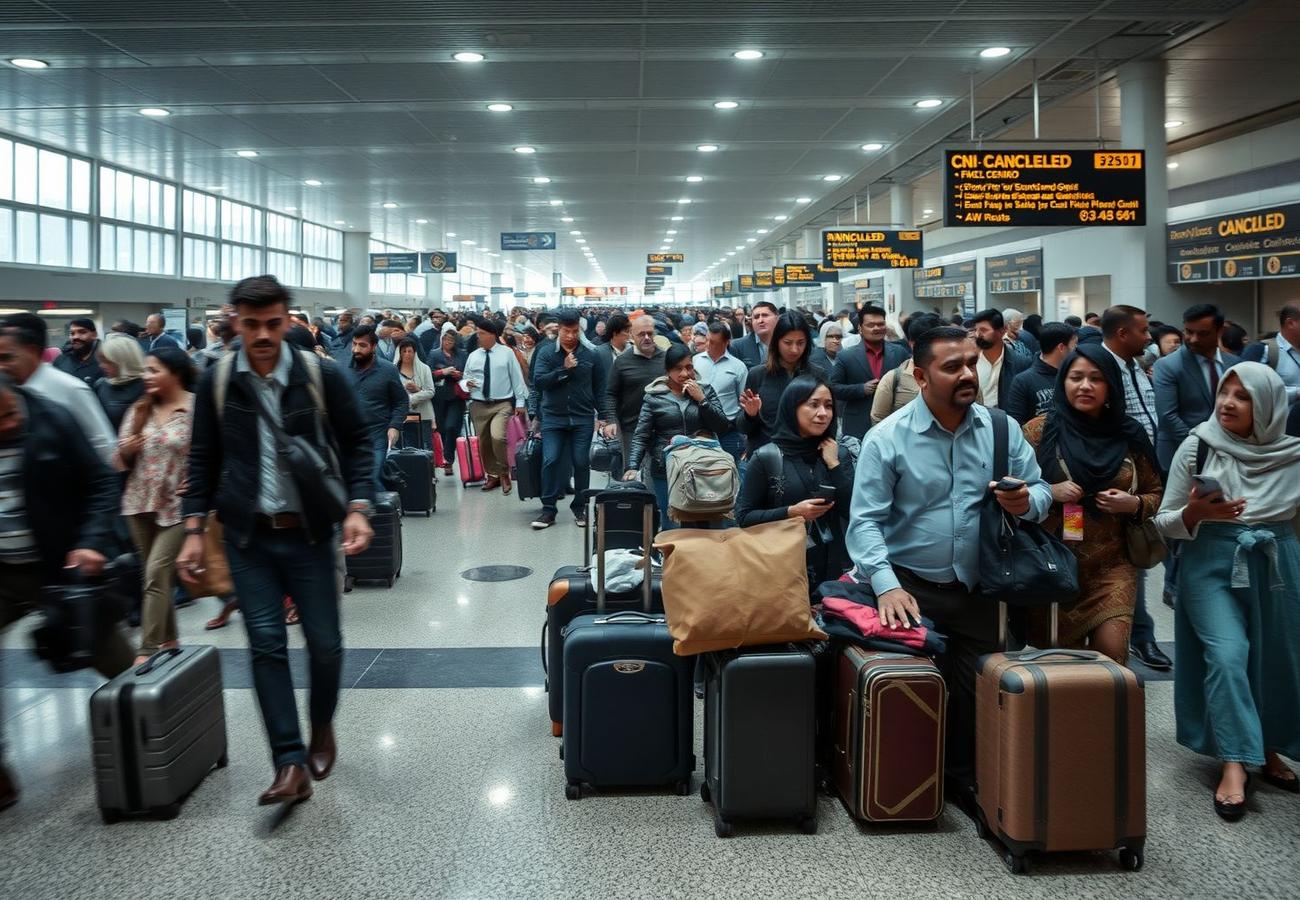
Image generated by AI
The Middle East Aviation System Just Locked Down
The Middle East aviation system has effectively gone dark. In the span of 72 hours, eight countries have either fully or partially shuttered their airspace, trapping thousands of travelers and forcing global airlines into an unprecedented operational meltdown. This isn't a weather delay or mechanical malfunction—this is a systemic regional crisis now rippling across three continents and reshaping global air traffic in real time.
I've covered aviation disruptions for years, but what's unfolding right now is extraordinary in scale and speed. When major Gulf hubs go offline simultaneously, the cascade effect reaches Frankfurt, London, Singapore, and beyond within hours.
Kuwait's Complete Airspace Shutdown: Where It All Collapsed
Kuwait International Airport has been taken completely offline. Authorities closed the entire airspace following missile and drone strikes that damaged critical infrastructure across the country. The impact was immediate and catastrophic.
Kuwait Airways, the national carrier, grounded its entire fleet. Jazeera Airways, the country's budget carrier, stopped operating flights altogether and instead began bussing stranded passengers across the Saudi border just to reach an operational airport. This isn't a temporary fix—it's desperation logistics.
Thousands of travelers remain caught in limbo with canceled flights, no alternative routes, and no clear reopening timeline.
Reddit: "I'm stuck in Kuwait City right now. The airline said maybe 72 hours. It's been five days. Nobody knows anything." — r/travel
Bahrain's Flight Information Region Goes Silent
Bahrain closed its entire Flight Information Region under emergency NOTAM directives. This is total suspension—no incoming, outgoing, or transit traffic permitted. Bahrain International Airport, once a strategic Gulf hub, now operates in near-silence with only restricted emergency departures allowed.
Gulf Air is now diverting all passengers to Saudi Arabia's King Fahd International Airport, adding hours to journeys that normally take 45 minutes. The extra transit time, ground handling, and rebooking chaos have effectively erased Bahrain from the regional aviation map.
Iran's Corridor Vanishes: The Europe-Asia Route Collapses
Iran operates a critical air corridor connecting Europe to South Asia. For decades, international carriers have transited through Iranian airspace to shorten routes and reduce fuel consumption. That corridor is now sealed.
Iran's complete military lockdown has barred all international airlines from transiting. Emirates, Turkish Airlines, Lufthansa—none can pass through anymore. Airlines are now forced to route around Iran entirely, adding 1,000+ kilometers to journey times.
Fuel costs are spiking. Flight times are expanding dramatically. This single closure has reshaped global air traffic patterns according to real-time aviation tracking data in just 48 hours.
Iraq Becomes a Designated Conflict Zone No-Fly Area
Iraq didn't just restrict airspace—it became a designated military conflict zone with a complete no-fly ban. Positioned directly beneath active missile corridors, Iraqi airspace is now one of the most avoided territories in global aviation.
Airlines operating Europe-to-Asia routes are forced into lengthy detours. Fuel surcharges are now inevitable. Passengers are facing unexpected delays that weren't in the travel forecast a week ago.
Israel Restricts to Emergency and Repatriation Operations Only
Israel implemented strict aviation controls with Ben Gurion Airport remaining open only for emergency operations and repatriation services. Commercial aviation has been largely suspended.
Travelers are now dependent on special evacuation arrangements. Tourism has effectively paused. Business connectivity across the region is severed.
Qatar and UAE: The Last Gasping Hubs
Qatar remains technically open, but Hamad International Airport—one of the world's most critical transit hubs—is operating under severe constraints. Qatar Airways has scaled back operations significantly. Route adjustments are constant.
Meanwhile, Dubai International Airport and Abu Dhabi International Airport are drowning under regional pressure. They're the only major Gulf gateways still operating at near-normal capacity, and they're being crushed.
Emirates and Etihad have suspended services to affected Gulf destinations. Congestion is severe. Backlogs are mounting. Delays are now spreading to European, Asian, and North American routes. The UAE hasn't closed—but it's absorbing the weight of being the region's last open alternative.
The Global Shockwave: Three Continents Now Affected
This crisis has metastasized beyond the Middle East. According to aviation tracking data, flight delays are rippling through European hubs like Frankfurt, London, and Paris. Asian carriers are absorbing higher fuel costs. North American airlines are adjusting transatlantic and Asia-Pacific routes entirely.
Insurance claims are mounting. Fuel surcharges are being implemented across the board. Passenger compensation demands are overwhelming airline customer service systems.
Reddit: "My flight from Singapore to London is now 3 hours longer and $400 more expensive. This is insane." — r/aviation
What Happens to Your Booking Right Now?
If you're booked on any flight connecting through the Middle East, contact your airline immediately. Standard rebooking policies are strained under the pressure. Carriers are prioritizing high-revenue passengers and essential repatriation flights over standard bookings.
Check IATA's latest travel guidance for real-time updates on specific routes. Many insurance policies explicitly exclude military conflict zones, so verify your coverage immediately before assuming protection.
When Will Airspace Reopen?
There's no official timeline. Airspace reopenings in conflict situations typically require geopolitical de-escalation—not mechanical repairs or weather improvements. This disruption could last days. It could last weeks. Airlines are now preparing for sustained global operations without Middle Eastern routes.
Cargo is being diverted. Passenger networks are being permanently reconfigured. Some routes may never return to their previous configurations.
The Middle East aviation crisis of June 2026 will be studied as a case study in systemic infrastructure disruption for years to come. This is what happens when regional tension meets global aviation infrastructure—and everyone loses.
When eight countries close their skies simultaneously, there's no workaround—only adaptation and delay.
Related Travel Guides
- Newark Liberty Records Massive Aviation Incident as $200 Oil and US-Iran Conflict Disrupt Global Travel Hubs: How United Airlines and Saudi Arabia Navigate 2026 Energy Crisis and Strait of Hormuz Lockdown
- Uganda Says Tourist Sites Safe Despite Ebola Outbreak in 2026
- JFK Delays Cascade Across U.S. Network During Spring Travel Surge
Disclaimer
This article is for informational and educational purposes only. It does not constitute legal, financial, or professional advice. While we strive to provide accurate and up-to-date information, travel policies, regulations, and conditions change rapidly. Always verify information with official sources before making travel decisions. Nomad Lawyer makes no representations about the accuracy, reliability, completeness, or suitability of the information provided. Readers should consult qualified professionals for advice specific to their circumstances. The views expressed in this article are those of the author and do not necessarily reflect the views of Nomad Lawyer.
Preeti Gunjan
Contributor & Community Manager
A passionate traveller and community builder. Preeti helps grow the Nomad Lawyer community, fostering engagement and bringing the reader experience to life.
Learn more about our team →