
Michigan Sustainable Tourism Summit Debuts in Remote Keweenaw Peninsula This Spring
Michigan's inaugural sustainable tourism summit launches in Keweenaw Peninsula spring 2026, positioning the remote region as America's testing ground for balanced visitor growth.

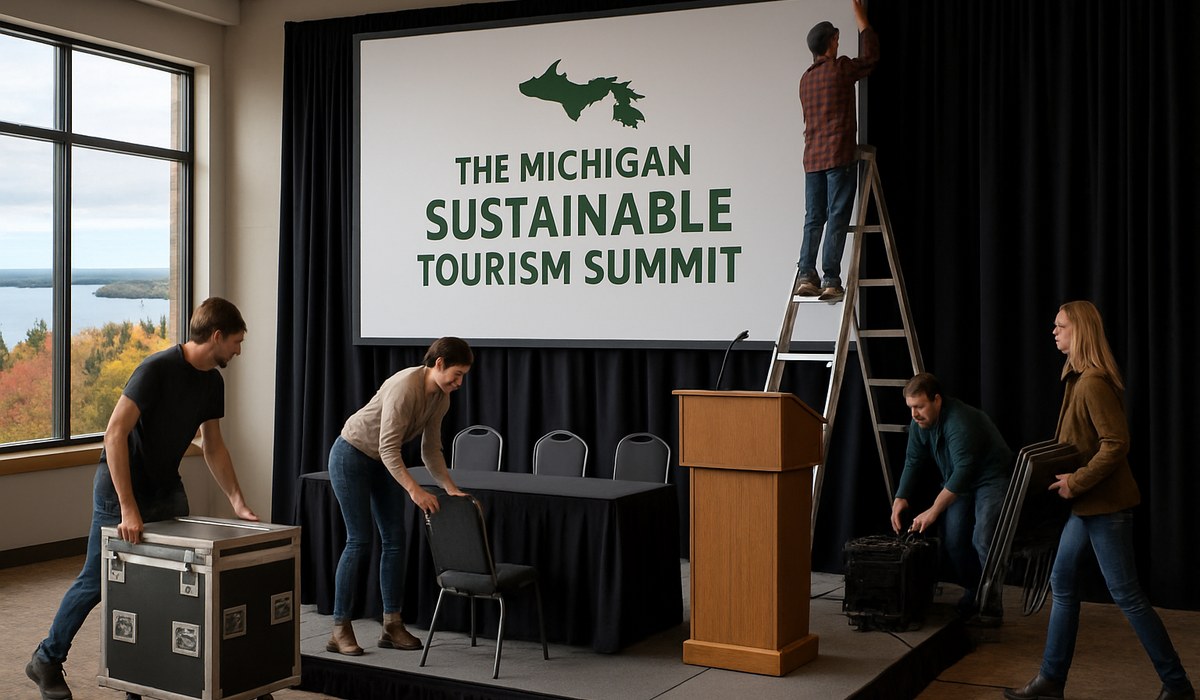
Image generated by AI
**> Quick Summary
• Michigan's inaugural sustainable tourism summit launches in the Keweenaw Peninsula this spring, marking the first major event focused on balancing ecology and visitor economies in remote American destinations • The summit positions Michigan's Upper Peninsula as a laboratory for sustainable practices that other isolated regions can replicate • Industry leaders, destination managers, and conservation experts will converge on the copper-rich peninsula to develop replicable frameworks • Travelers increasingly seek destinations where their visits contribute positively—this summit could reshape how remote areas approach visitor infrastructure**
While most tourism conferences unfold in convention centers, Michigan's inaugural Sustainable Tourism Summit is setting up shop in the very landscape it aims to protect—the rugged, copper-rich Keweenaw Peninsula, where ecological fragility meets economic opportunity. Scheduled for spring 2026, this gathering represents far more than another industry talk-fest. It positions one of America's most remote peninsulas as the testing ground for a critical question: How can isolated destinations grow visitor economies without destroying what makes them worth visiting?
The decision to host this first-of-its-kind event within the Keweenaw itself carries deliberate symbolism. Organizers want attendees to experience firsthand the delicate ecosystems, small-town infrastructure, and community dynamics that sustainable practices must protect. This isn't abstract theory—it's policy development happening in the very forests, lakeshores, and historic mining towns that depend on getting the balance right.
Why the Keweenaw Peninsula Is the Ideal Sustainable Tourism Testing Ground
Michigan's Keweenaw Peninsula juts into Lake Superior like a geological finger pointing toward Canada. This narrow landmass, roughly 90 miles long and never more than 30 miles wide, contains fewer than 40,000 year-round residents spread across hardscrabble towns with names like Calumet, Copper Harbor, and Eagle River. The region's mining heritage left behind both architectural treasures and environmental scars—making it the perfect microcosm for conversations about tourism's dual nature.
The peninsula receives approximately 200,000 visitors annually, primarily during summer and fall foliage seasons. That volume already strains local infrastructure: two-lane highways, volunteer fire departments, and aging water systems never designed for seasonal population surges. Yet tourism revenue accounts for nearly 30 percent of the region's economy, according to Michigan's Upper Peninsula Tourism Board. Reducing visitors isn't viable. Managing them sustainably becomes imperative.
Similar to how solo female travelers choosing lesser-known destinations seek authentic experiences in places like Estonia, the Keweenaw attracts visitors specifically because it hasn't been Disneyfied. Old-growth forests meet rocky shorelines. Dark sky preserves offer stargazing found nowhere else in the Midwest. Historic copper mines provide glimpses into immigrant labor history. Any sustainability framework must preserve these authentic characteristics while supporting communities that depend on visitor spending.
The region's compact geography allows summit participants to tour diverse sites within hours: a restored mining ghost town, a struggling bed-and-breakfast facing staffing shortages, trailheads overrun on summer weekends, and tribal lands where Indigenous communities navigate tourism on their own terms. Few destinations offer such concentrated learning opportunities.
What Sets This Summit Apart From Traditional Tourism Conferences
Traditional tourism conferences typically celebrate growth metrics: more visitors, higher spending, increased hotel occupancy. The Michigan Sustainable Tourism Summit flips that script. Organizers have structured the event around constraint-based planning—identifying environmental and social carrying capacities first, then designing visitor experiences that respect those limits.
The agenda integrates principles from sustainable tourism frameworks established by international bodies like the UN World Tourism Organization, but applies them specifically to remote American contexts. European models often don't translate directly to regions with vast public lands, minimal public transportation, and tourism seasons compressed into four months.
Workshop sessions address practical challenges: How do you convince visitors to book shoulder-season trips when school calendars dictate summer travel? What infrastructure investments deliver maximum sustainability per dollar—electric vehicle charging stations, composting toilets at trailheads, broadband for remote work? When does "sustainable tourism" become a marketing buzzword that erodes community trust?
Unlike conferences dominated by hotel chains and destination marketing organizations, this summit reserves 40 percent of attendance for community stakeholders: local business owners, tribal representatives, conservation group members, and residents whose daily lives feel tourism's impacts. Their voices will shape outcomes rather than simply receiving top-down recommendations.
The event draws inspiration from emerging remote destinations profiled by outlets like National Geographic—places learning to manage attention before it becomes overwhelming. The Keweenaw still has that luxury. Yellowstone and Great Smoky Mountains don't.
Economic and Environmental Stakes for Remote American Destinations
Michigan's Upper Peninsula faces economic pressures familiar to rural regions nationwide: population decline, aging infrastructure, limited job opportunities for young adults. Tourism offers one of few viable economic engines. But unmanaged tourism accelerates the very challenges it's meant to solve.
Consider housing. Short-term rental platforms have converted year-round housing into vacation properties throughout the Keweenaw, driving rents beyond what tourism industry wages support. Service sector workers—the very people who make tourism function—increasingly commute from lower-cost areas, burning fossil fuels and reducing quality of life. Some restaurants now close mid-week because they cannot staff full operations.
Environmental degradation follows similar patterns. Popular trails develop erosion gullies. Lakeshore campgrounds exceed waste management capacity. Off-road vehicles damage fragile dune ecosystems. Wildlife habitats shrink as tourism development spreads. Each problem worsens incrementally until crisis points arrive—then reactive, expensive interventions replace proactive planning.
The summit aims to model an alternative path. By bringing together stakeholders before crisis hits, the region can establish sustainable baselines: visitor caps on sensitive sites, workforce housing requirements for new tourism development, seasonal restrictions protecting wildlife breeding areas. These policies require political courage, especially when neighboring destinations pursue growth-at-any-cost strategies.
The stakes extend beyond Michigan. Dozens of remote American regions—Alaska's Inside Passage, Utah's canyon country, Montana's Hi-Line—watch the Keweenaw experiment. If this peninsula demonstrates that sustainability enhances rather than hinders tourism economies, it provides a replicable blueprint. Much like debates about redefining trip value beyond price in Asian business travel markets, this summit challenges the assumption that more always equals better.
Regional competition also factors in. The Keweenaw competes with destinations across the Upper Great Lakes region, from Wisconsin's Door County to Minnesota's North Shore. These regional travel showdowns often revolve around who can attract the most visitors. The summit proposes competing instead on visitor quality and community benefit—metrics that require new measurement tools and mindsets.
Who Should Attend and What They'll Take Home
Summit organizers target five primary audiences: destination management organizations grappling with overtourism, conservation groups seeking tourism partnerships, tourism business owners wanting sustainable operating models, government officials crafting policies, and researchers studying visitor impacts. Each constituency brings different needs and leaves with distinct takeaways.
Destination managers from other remote regions will learn site-hardening techniques that allow increased visitation without resource damage, dynamic pricing models that smooth seasonal demand spikes, and community engagement processes that build local support rather than resentment. The Keweenaw's compact scale makes these strategies visible in ways a sprawling national park cannot replicate.
Business owners gain access to sustainability certification programs, energy efficiency retrofits that reduce operating costs, and marketing strategies that attract high-value visitors willing to pay premiums for authentic, low-impact experiences. Data presented at the summit will quantify how sustainable practices affect both revenue and profit margins—critical information for operators skeptical that "green" tourism delivers financial returns.
Policymakers will examine zoning innovations, tourist taxation models that fund infrastructure without pricing out middle-class travelers, and public-private partnerships that distribute costs equitably. Several Michigan state legislators plan to attend, recognizing that frameworks developed here could apply statewide.
Researchers studying tourism's sociological and environmental impacts will participate in field studies during the summit, collecting baseline data as the region implements new policies. Multi-year tracking will assess which interventions succeed and which prove ineffective—information crucial for evidence-based tourism planning nationwide.
The summit's spring timing offers deliberate advantages. Attendees experience shoulder season firsthand, when visitor pressure drops but landscape beauty remains stunning. They'll witness the challenges communities face during slow periods: empty storefronts, underutilized lodging, residents wondering if winter hardship is worth summer chaos.
Most participants will fly into Houghton County Memorial Airport, which offers limited but growing service from Detroit and Chicago. The 90-minute drive from Marquette provides an alternative, traversing forests and small towns that illustrate both the region's appeal and its infrastructure constraints. Rental vehicles dominate transportation—public transit barely exists, making sustainable visitor mobility one of the summit's thornier challenges to address.
Spring temperatures in the Keweenaw hover between 35 and 55 degrees Fahrenheit, with unpredictable weather that can shift from sunshine to snow squalls within hours. Participants should pack layers and waterproof gear. This climate variability itself becomes a teaching moment: tourism businesses here cannot rely on predictable conditions, requiring adaptability that sustainable frameworks must accommodate.
The U.S. dollar is the local currency, and while Michigan requires no special visas for domestic travelers, international attendees should ensure proper documentation. The region's remoteness means cellular coverage can be spotty, especially in wilderness areas. This digital disconnection, frustrating for some, exemplifies the authentic experience many visitors seek.
Safety considerations center more on wilderness preparedness than crime. Black bears inhabit the forests, though attacks are extraordinarily rare with proper food storage. Lake Superior's frigid waters pose hypothermia risks even in summer. Winter driving conditions challenge even experienced operators. These realities remind summit attendees that sustainable tourism in remote regions must address visitor safety without creating an artificial safety bubble that diminishes authenticity.
The summit will likely become an annual event if this inaugural gathering succeeds. Organizers envision rotating locations throughout Michigan's Upper Peninsula, distributing economic benefits while showcasing different communities' approaches to sustainability challenges. Long-term, the model could expand to other states facing similar balancing acts between preservation and prosperity.
FAQ
When exactly is the Michigan Sustainable Tourism Summit taking place? The inaugural summit is scheduled for spring 2026 in the Keweenaw Peninsula, with specific dates expected to be announced in early April. Organizers are finalizing the schedule to avoid conflicts with Earth Day events while ensuring weather conditions allow for field tours.
How much does summit attendance cost and who can register? Registration details have not been publicly released, but organizers indicate tiered pricing to make the event accessible to community stakeholders, small business owners, and nonprofit organizations while covering costs through higher fees for larger institutions and government agencies.
Will the summit offer virtual attendance options? Organizers emphasize the importance of experiencing the destination firsthand, making in-person attendance central to the summit's philosophy. However, keynote sessions may be recorded for later viewing, and organizers are exploring hybrid workshop options for those unable to travel.
What makes the Keweenaw Peninsula different from other remote destinations? The peninsula's small scale, tight-knit communities, mix of public and private lands, Indigenous presence, and industrial heritage create a representative cross-section of challenges facing remote American destinations. Its manageable geography allows participants to see diverse scenarios quickly.
Can individual travelers attend or is this only for tourism professionals? While the summit targets tourism industry professionals, policymakers, and researchers, organizers welcome engaged travelers interested in sustainable practices. Community input sessions will be open to all attendees regardless of professional affiliation, recognizing that visitors themselves are crucial stakeholders.
Related Articles:
Disclaimer
This article is for informational and educational purposes only. It does not constitute legal, financial, or professional advice. While we strive to provide accurate and up-to-date information, travel policies, regulations, and conditions change rapidly. Always verify information with official sources before making travel decisions. Nomad Lawyer makes no representations about the accuracy, reliability, completeness, or suitability of the information provided. Readers should consult qualified professionals for advice specific to their circumstances. The views expressed in this article are those of the author and do not necessarily reflect the views of Nomad Lawyer.
Raushan Kumar
Founder & Lead Developer
Full-stack developer with 11+ years of experience and a passionate traveller. Raushan built Nomad Lawyer from the ground up with a vision to create the best travel and law experience on the web.
Learn more about our team →