
Travel Industry Michigan Leaders Convene Summit to Redefine Sustainable Tourism
Michigan hosts groundbreaking sustainable tourism summit in March 2026, positioning the state as America's unexpected eco-travel innovation hub for conscious travelers.

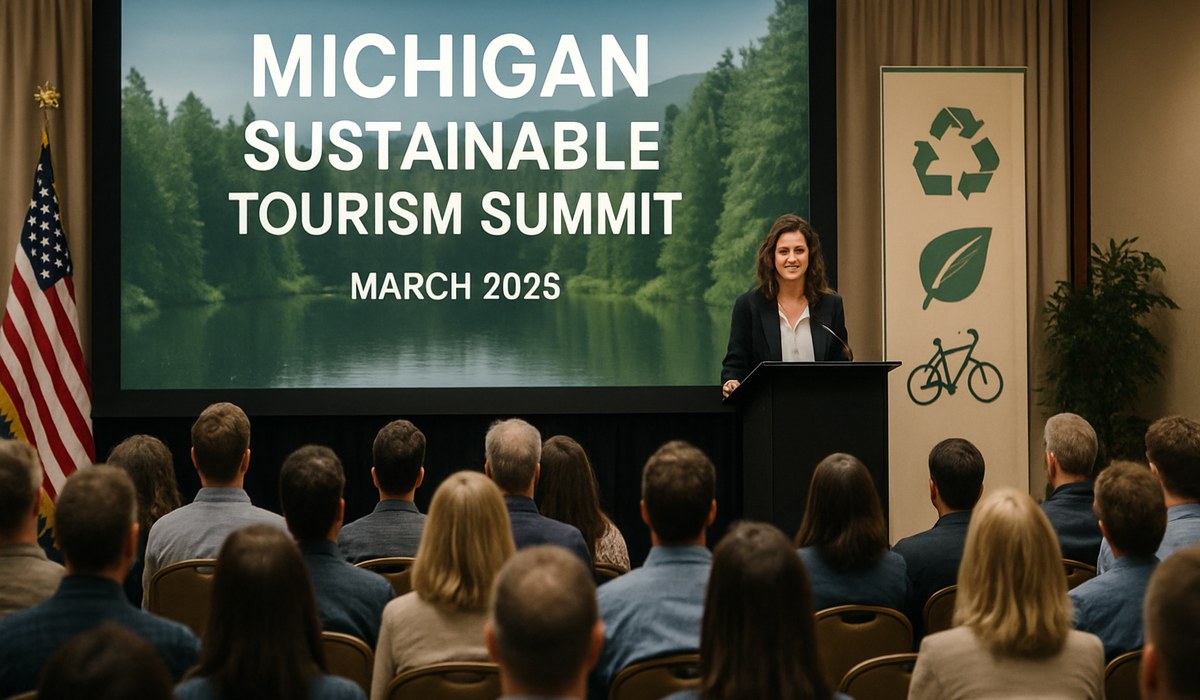
Image generated by AI
Quick Summary
- Michigan launches comprehensive sustainable tourism summit, challenging coastal states for eco-conscious traveler market share
- Event unites industry stakeholders, conservation experts, and policymakers to establish new environmental travel standards
- State aims to leverage Great Lakes natural assets while pioneering responsible tourism infrastructure
- Summit outcomes expected to influence nationwide sustainable travel policies and practices
While California and Colorado dominate eco-tourism headlines, Michigan is quietly assembling a blueprint that could redefine how Americans travel sustainably—starting with a groundbreaking summit that brings together industry leaders, policymakers, and conservation experts. The state's ambitious initiative arrives as domestic travelers increasingly seek meaningful experiences that minimize environmental impact without sacrificing comfort or accessibility.
Why Michigan Is Betting Big on Sustainable Tourism
The travel industry Michigan summit represents far more than a regional gathering. State tourism officials have identified sustainable travel as a $200 billion opportunity within the United States market by 2028, according to preliminary economic projections released ahead of the event. Michigan's Natural Resources Department estimates the state currently attracts 126 million visitors annually, generating approximately $26 billion in direct spending.
Director Sarah Bentley of Pure Michigan, the state's tourism bureau, explained the strategic timing: "Our freshwater coastline exceeds the entire East Coast's length. We possess natural assets that rival any destination, yet we've lagged in promoting responsible visitation frameworks."
The summit follows global frameworks established by the UN World Tourism Organization's sustainable development guidelines, which emphasize balancing economic growth with environmental preservation and cultural authenticity. Michigan's approach focuses specifically on freshwater ecosystem protection, rural community economic resilience, and carbon-neutral transportation infrastructure.
Industry participation confirms serious commercial interest beyond environmental rhetoric. Major hotel chains, regional airlines, adventure outfitters, and destination marketing organizations have committed representatives to working sessions addressing everything from waste reduction targets to indigenous community partnerships.
What the Michigan Sustainable Tourism Summit Means for Travelers
Practical outcomes from this gathering will directly shape visitor experiences across the state throughout 2027 and beyond. Summit organizers have outlined specific deliverables including standardized eco-certification for lodging properties, transparent carbon offset programs for transportation, and enhanced trail management systems designed to protect sensitive natural areas while improving access.
For travelers planning weekend getaway destinations in neighboring states, Michigan's initiative signals a competitive shift. The state aims to differentiate itself through verifiable sustainability credentials rather than just marketing claims. Proposed standards would require participating businesses to document energy consumption, waste diversion rates, local sourcing percentages, and community investment metrics.
Jennifer Martinez, executive director of the Midwest Sustainable Tourism Alliance, noted growing consumer expectations: "Sixty-three percent of American travelers now consider environmental impact when choosing destinations. Michigan recognizes that sustainability isn't niche—it's mainstream market positioning."
The summit's practical focus includes developing smartphone applications that guide visitors toward certified sustainable businesses, creating transit connections between natural attractions to reduce vehicle dependency, and establishing clear communication about seasonal capacity limits to prevent overtourism damage.
Workshop sessions will address specific challenges facing Michigan's diverse tourism sectors—from Mackinac Island's car-free historic preservation to Detroit's urban sustainability initiatives and Upper Peninsula wilderness management. Solutions developed here could provide templates for other states grappling with similar balancing acts between tourism revenue and environmental protection.
How Eco-Friendly Travel Is Reshaping the U.S. Tourism Landscape
Michigan's summit positions the state within a broader transformation of American travel priorities. Recent data shows 71% of U.S. travelers now seek experiences that benefit local communities, while travelers increasingly prioritize value and experience quality over bargain pricing alone.
National Geographic's recent analysis of eco-tourism trends highlights accelerating demand for authentic, low-impact experiences. This shift creates opportunities for destinations willing to invest in infrastructure that supports responsible travel rather than simply maximizing visitor numbers.
The economic argument for sustainable tourism has strengthened considerably. Studies from the Travel Foundation demonstrate that sustainable tourism businesses typically achieve 23% higher profit margins than conventional operators, largely through operational efficiencies, premium pricing ability, and stronger customer loyalty.
Michigan's strategic advantage lies in abundant natural resources that don't require artificial attraction development. The Great Lakes provide world-class freshwater recreation. Four distinct seasons support year-round visitation. Dense forest coverage offers wilderness experiences within driving distance of major population centers.
Summit participants will examine successful international models from New Zealand's Tiaki Promise to Costa Rica's Certification for Sustainable Tourism program, adapting elements appropriate for Michigan's specific context. The goal isn't simply copying external frameworks but creating regionally relevant standards that authentic reflect local environmental priorities and cultural values.
Michigan's Competitive Edge: Nature Meets Innovation
The state's positioning as a sustainable tourism leader builds on existing strengths while addressing historical weaknesses. Michigan ranks third nationally in state park acreage but historically underperformed in translating natural assets into cohesive tourism narratives that compete with Western states.
Summit organizers emphasize that sustainability provides differentiation in an increasingly crowded travel marketplace. While mountain states market elevation and desert regions promote climate, Michigan offers something less commodified—the world's largest freshwater ecosystem combined with genuine seasonal variety.
Technological innovation features prominently in planned initiatives. Proposed pilot programs include solar-powered electric vehicle charging networks along coastal scenic routes, artificial intelligence systems for predicting and managing visitor flow at popular sites, and blockchain-based verification for sustainability claims by tourism operators.
The integration with cultural tourism experiences represents another strategic dimension. Michigan's industrial heritage sites, tribal cultural centers, and agricultural tourism operations will receive support to develop programming that educates visitors about regional history while demonstrating contemporary sustainability practices.
Rural economic development stands as a core summit priority. Many Michigan communities face depopulation and declining agricultural income. Well-managed sustainable tourism offers diversification opportunities that preserve community character while generating new revenue streams. Summit working groups will develop specific strategies for small-scale lodging, farm-to-table dining networks, and artisan craft marketing.
Investment in workforce development addresses another critical need. The state plans to launch sustainable tourism training programs through community colleges, equipping workers with skills ranging from ecological interpretation to renewable energy system maintenance. These programs aim to create career pathways that keep young residents in rural communities.
International delegation attendance underscores Michigan's growing reputation. Tourism officials from Ontario, Quebec, and several European regions will observe summit proceedings, potentially leading to reciprocal knowledge exchanges and coordinated cross-border sustainable tourism corridors along the Great Lakes.
Getting There and Practical Information
Michigan maintains three major airport gateways in Detroit, Grand Rapids, and Traverse City, with Detroit Metropolitan Wayne County Airport serving as the primary international entry point. Ground transportation improvements under discussion at the summit include expanded intercity bus service, electric vehicle rental availability, and bicycle-friendly infrastructure connecting downtown areas with natural attractions.
United States citizens require no special documentation for domestic travel to Michigan. International visitors should verify current visa requirements through official channels. The state operates on Eastern Time, shares water borders with Canada, and uses the U.S. dollar exclusively.
Climate varies dramatically by region and season. Southern Michigan experiences humid continental weather with July averages near 84°F (29°C) and January lows around 18°F (-8°C). Upper Peninsula conditions run approximately 10 degrees cooler year-round with significantly heavier snowfall supporting winter recreation industries.
Summit outcomes will directly influence infrastructure development timing. Proposed sustainable accommodation certification programs should launch by autumn 2026, while major trail improvements and electric vehicle charging networks face 2027-2028 completion targets. Travelers planning visits should monitor Pure Michigan's official channels for updates on new sustainable tourism offerings.
Safety standards in Michigan meet typical United States norms. Wilderness areas require standard precautions regarding wildlife, weather preparedness, and navigation. Coastal conditions on the Great Lakes demand respect—sudden weather changes and cold water temperatures present hazards for unprepared boaters and swimmers even during summer months.
FAQ: Michigan Sustainable Tourism Summit
What specific outcomes should travelers expect from this summit?
Visitors will see tangible changes including new eco-certification labels on accommodations, expanded public transportation connecting natural attractions, and enhanced trail systems with capacity management. Implementation begins in late 2026 with most initiatives operational by summer 2027.
How does Michigan's sustainable tourism compare with Western states?
Michigan offers unique freshwater-focused experiences that complement rather than compete with mountain destinations. The state's emphasis on accessibility for Midwest populations and four-season programming creates different market positioning than Rocky Mountain or Pacific Coast regions.
Will sustainable tourism initiatives increase travel costs?
Initial data suggests modest premium pricing of 8-12% for certified sustainable accommodations, offset by longer visitor stays and higher satisfaction scores. Many sustainability measures like improved public transit actually reduce total trip costs for travelers.
Can international visitors participate in summit events?
While the summit primarily targets industry professionals and policymakers, several public sessions welcome interested travelers. Check the Pure Michigan website for specific open sessions and registration requirements.
How will Michigan measure success of sustainable tourism programs?
The state established baseline metrics including visitor spending per capita, environmental impact indicators like water quality and wildlife population data, and community economic resilience measures. Annual reporting will track progress against 2026 benchmarks through 2030.
Related Articles
Disclaimer
This article is for informational and educational purposes only. It does not constitute legal, financial, or professional advice. While we strive to provide accurate and up-to-date information, travel policies, regulations, and conditions change rapidly. Always verify information with official sources before making travel decisions. Nomad Lawyer makes no representations about the accuracy, reliability, completeness, or suitability of the information provided. Readers should consult qualified professionals for advice specific to their circumstances. The views expressed in this article are those of the author and do not necessarily reflect the views of Nomad Lawyer.
Preeti Gunjan
Contributor & Community Manager
A passionate traveller and community builder. Preeti helps grow the Nomad Lawyer community, fostering engagement and bringing the reader experience to life.
Learn more about our team →