Mexico Launches México Invita App with 290 Routes Across 32 States to Modernize Tourism and Consumer Rights

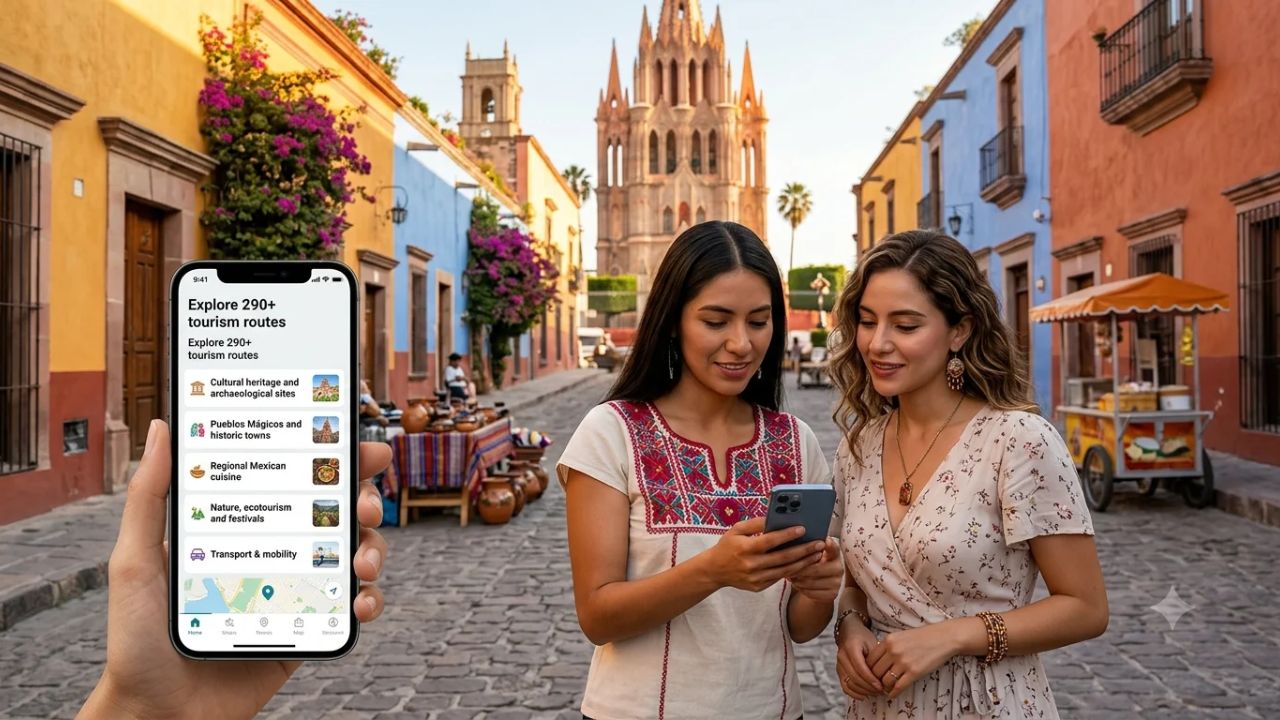
MEXICO CITY — In a coordinated initiative to modernize national tourism infrastructure and decentralize visitor spending beyond coastal resort corridors, the Mexican Federal Government has officially launched México Invita, a centralized digital travel application integrating more than 290 curated routes across all 32 federal entities. Developed by the Software Factory of the Digital Transformation and Telecommunications Agency (ATDT) in partnership with the Ministry of Tourism (SECTUR), the bilingual mobile platform debuted on November 1, 2026, across iOS, Android, and Huawei ecosystems. By uniting cultural heritage mapping, regional gastronomy, Tren Maya rail mobility, and direct legal recourse through the Federal Consumer Protection Agency (PROFECO), the platform establishes a comprehensive public technology utility for domestic and international travelers.
The launch of México Invita marks a significant evolution in how emerging economies manage high-volume international tourism. For decades, foreign visitation to Mexico has remained heavily concentrated within a handful of mature beach enclaves—predominantly Cancun, the Riviera Maya, Los Cabos, and Puerto Vallarta—leaving the interior heritage cities, indigenous agricultural regions, and lesser-known archaeological zones economically peripheral. By consolidating verified logistics, route schedules, and public safety networks into a single sovereign digital clearinghouse, the Mexican government aims to lower the friction of overland exploration, directing independent travelers into municipal markets, craft cooperatives, and regional family businesses across the republic.
       MÉXICO INVITA APPLICATION ARCHITECTURE & ECOSYSTEM (2026)

  [ CORE GOVERNMENT SPONSORS: SECTUR & ATDT SOFTWARE FACTORY ]
  * Free Nationwide Bilingual Deployment (Spanish & English)
  * Multi-Platform Availability: iOS, Android, Huawei AppGallery
                         |
                         v
  +--------------------------------------------------------------------------+
  |                   FOUR-PILLAR USER INTERFACE (UI)                        |
  +--------------------------------------------------------------------------+
          |                      |                     |              |
          v                      v                     v              v
     [ INICIO ]             [ EXPLORA ]          [ SERVICIOS ]     [ MENÚ ]
   (Home Hub &            (290+ Curated         (Mobility, Legal  (Profiles &
   Seasonal Events)        State Routes)         & Assistance)     Settings)
          |                      |                     |              |
          +----------------------+---------------------+--------------+
                                 |
                                 v
  [ INTEGRATED OPERATIONAL CAPABILITIES ]
  * Cultural Mapping: 177 Pueblos Mágicos & INAH Archaeological Sites
  * Gastronomic Heritage: Traditional Cooks & Regional Agro-Tourism
  * Transit & Mobility: Tren Maya Intercity Schedules & Ángeles Verdes Patrols
  * Consumer Protection: PROFECO Dispute Filing & One-Touch 911 Emergency Link
The Architecture of México Invita: Public Software Engineering
The structural foundation of México Invita reflects a deliberate institutional shift within the Mexican federal administration toward digital sovereignty and in-house technical development. Rather than contracting proprietary software developers or licensing foreign commercial software, the application was engineered by the Software Factory (Fábrica de Software) of the newly established Digital Transformation and Telecommunications Agency (ATDT). In collaboration with SECTUR’s Directorate of Tourism Planning, the development team built a scalable, public-service digital infrastructure intended to operate as a permanent utility rather than a temporary promotional campaign.
The user experience is structured around a streamlined four-hub interface designed to minimize cognitive load for travelers moving across unfamiliar terrain:
- Home (Inicio): An aggregated dashboard displaying contextual travel updates, national cultural calendars, seasonal festivals (such as Day of the Dead and regional patron saint fairs), weather alerts, and official travel advisories issued by civil protection authorities.
- Explore (Explora): The core discovery engine, allowing users to filter experiences by geographical state, thematic interests (historical, archaeological, ecological, culinary), or physical travel distance from their current GPS coordinates.
- Services (Servicios): A practical utility suite integrating real-time highway emergency reporting, official immigration procedures, public transportation timetables, and direct links to consumer advocacy portals.
- Menu (Menú): Personal account settings, offline profile caching, language toggles, accessibility preferences, and user privacy configurations governed by Mexican federal data protection laws.
To ensure broad international usability, the platform provides full bilingual localization in Spanish and English. In addition, by distributing the application without user licensing fees across the Apple App Store, Google Play Store, and the Huawei AppGallery, the government has ensured accessibility for domestic smartphone users who rely heavily on affordable non-Western hardware ecosystems.
Underpinning the client application is an open-source, modular backend architecture hosted entirely within sovereign Mexican government cloud infrastructure. The ATDT Software Factory utilized lightweight containerized microservices to guarantee uninterrupted service during high-volume national holidays and international sports spectacles. Data transmissions are shielded by advanced end-to-end encryption protocols, adhering strictly to Mexico’s Federal Law on the Protection of Personal Data Held by Obligated Subjects (LGPDPPSO). Rather than monetizing traveler behavioral data through third-party advertising trackers—a common grievance among commercial tourism platforms—México Invita operates under a strict public utility mandate, ensuring that user location tracking is processed anonymously and solely utilized for real-time roadside assistance, emergency response, and aggregate crowd-density management. Direct API integrations with individual state tourism ministries (Secretarías de Turismo Estatales) allow municipal authorities to update local road closures, festival times, and indigenous craft fair schedules without requiring full app store version updates.
Curating Over 290 Routes Across Thirty-Two Federal Entities
The centerpiece of México Invita is its extensive catalog of more than 290 curated travel routes connecting all 31 sovereign states and Mexico City. Instead of presenting isolated, disconnected points of interest, the platform groups heritage sites, national parks, and local businesses into cohesive overland itineraries ranging from single-day day-trips to multi-week overland journeys.
                  THEMATIC CROSS-COUNTRY CORRIDOR SAMPLES

   [ BAJÍO SILVER & COLONIAL TRAIL ]            [ MAYA BIOSPHERE & RAIL TRAIL ]
   Guanajuato -> San Miguel -> Zacatecas        Palenque -> Calakmul -> Bacalar
   * UNESCO Silver Mining Baroque Cores         * Lowland Tropical Rainforest Ecosystems
   * 18th-Century Aqueducts & Churches          * Tren Maya Intercity Station Stops
   * Regional Leather & Ceramic Guilds          * Indigenous Lacandon & Maya Guides
                 |                                             |
                 +----------------------+----------------------+
                                        |
                                        v
   [ OAXACA INDIGENOUS ARTISAN CORRIDOR ]       [ CHEPE COPPER CANYON PASSAGE ]
   Oaxaca City -> Mitla -> Hierve el Agua       Chihuahua City -> Creel -> Los Mochis
   * Zapotec Weaving & Black Pottery Guilds     * High-Altitude Passenger Rail Engineering
   * Mezcal Agave Distilleries & Palenques      * Rarámuri Canyon Cultural Encounters
A major objective of this route mapping is the elevation of Mexico's 177 recognized Pueblos Mágicos (Magical Towns). These designated municipalities—celebrated for their preserved architecture, historical significance, and living cultural traditions—often struggle with digital visibility. México Invita embeds these towns directly into broader regional driving itineraries. For example, a traveler driving between Mexico City and Guadalajara is presented with structured diversion routes passing through the copper-smithing village of Santa Clara del Cobre in Michoacán or the artisan tile workshops of Tlaquepaque in Jalisco.
Archaeological preservation also receives comprehensive digital integration. Operating in coordination with the National Institute of Anthropology and History (INAH), the application documents certified operational hours, official entrance fees, and museum visitor limits across world-renowned archaeological complexes like Teotihuacan, Chichen Itza, Monte Alban, and Palenque, while directing adventurous visitors to lesser-known, low-impact ruins such as Becán in Campeche or Cantona in Puebla.
Gastronomic Tourism: Promoting Regional Terroir and Traditional Cooks
Gastronomy serves as one of Mexico’s most potent cultural exports and economic engines. Traditional Mexican cuisine was inscribed by UNESCO on the Representative List of the Intangible Cultural Heritage of Humanity in 2010, recognizing its ancestral agricultural foundations centered on corn, beans, and chili peppers, alongside intricate culinary techniques preserved across generations.
México Invita translates this cultural heritage into actionable travel itineraries by highlighting regional culinary routes and verified local food establishments. Recognizing that Mexican cuisine is not a singular national tradition but a rich mosaic of regional identities, the platform catalogues distinct culinary ecosystems:
        REGIONAL CULINARY PROVENANCE AND TERROIR FRAMEWORK

   OAXACA & SOUTHERN HIGHLANDS         MICHOACÁN & CENTRAL VALLEYS
  +--------------------------------+  +--------------------------------+
  | Complex 7-Mole Traditions      |  | Ancestral Copper-Kettle Carnitas|
  | Artisanal Mezcal Palenques     |  | Blue Corn Tortillas & Uchepos  |
  | Tlayudas & Criollo Native Corn |  | Purépecha Traditional Cooks    |
  +--------------------------------+  +--------------------------------+
                 \                                  /
                  \                                /
                   +------------------------------+
                                  |
                                  v
   BAJA CALIFORNIA PENINSULA           YUCATÁN SOUTHEAST COASTAL BASIN
  +--------------------------------+  +--------------------------------+
  | Baja-Med Olive Oil & Wine      |  | Pit-Roasted Cochinita Pibil    |
  | Pacific Sustainable Fisheries  |  | Citrus & Achiote Marinades     |
  | Valle de Guadalupe Vineyards   |  | Maya Recado Spice Pastes       |
  +--------------------------------+  +--------------------------------+
Significantly, the platform creates direct visibility for certified cocineras tradicionales (traditional female cooks) and family-owned fondas who operate outside commercial booking systems. By mapping traditional municipal markets (mercados municipales) and rural food cooperatives alongside high-end restaurants, the application channels traveler dining expenditure directly into regional farming communities, artisanal cheese producers, and indigenous cooperative kitchens.
The application also maps specialized agro-tourism itineraries, including the Tequila Trail through Jalisco's blue agave fields, coffee plantation stays along the cloud forest ridges of Coatepec in Veracruz, and vanilla farming cooperatives in Papantla. Each route provides travelers with background on sustainable harvesting practices, fair-trade certifications, and opportunities to purchase authentic foodstuffs directly from primary agricultural producers.
Integrated Mobility: Connecting Tren Maya and Highway Support Networks
Seamless travel across a country spanning nearly two million square kilometers requires reliable, multimodal transit coordination. México Invita addresses transit logistics by connecting passenger rail schedules, long-distance bus routes, highway safety frameworks, and airport entry requirements into a coordinated digital interface.
The application prominently features the Tren Maya railway network, the landmark 1,554-kilometer passenger rail system traversing five southeastern states: Chiapas, Tabasco, Campeche, Yucatán, and Quintana Roo. The mobile platform displays operational rail stations, connects users to official ticketing portals, and outlines step-free station access standards. Travelers can plan integrated itineraries that disembark from the train at intermediate stations like Izamal or Hecelchakán to explore regional archaeological sites before reconnecting with the rail line.
       MÉXICO INVITA MULTIMODAL TRANSIT INTEGRATION

   [ PASSENGER RAIL SYSTEMS ]
   * Tren Maya: 1,554 km Circuit across 5 Southeastern States
   * Interoceanic Rail Corridor (CIIT): Trans-Isthmus Links
   * Ferrocarril Chihuahua al Pacífico (ChePe): Copper Canyon Route
                         |
                         v
   [ FEDERAL HIGHWAY SAFETY INFRASTRUCTURE ]
   * Ángeles Verdes (Green Angels): Real-Time Mechanical Assistance
   * Integrated Tollway (Cuota) Maps & Official Rest Stops
   * Emergency Civil Protection & Heavy Weather Detour Routing
                         |
                         v
   [ AIRPORT & IMMIGRATION TRANSIT LOGISTICS ]
   * Digital FMM Tourist Card Guidelines & Customs Rules
   * Official Airport Taxi Concession Verification Portals
For highway travel, the application connects directly with the Ángeles Verdes (Green Angels), Mexico’s specialized highway patrol service operated by the Ministry of Tourism. Operating a fleet of hundreds of mobile mechanic vehicles across the federal highway network, the Ángeles Verdes provide complimentary mechanical repairs, flat tire assistance, emergency fuel deliveries, and first-aid support. Through México Invita, motorists experiencing vehicle breakdowns on federal toll highways (autopistas de cuota) can transmit their precise GPS coordinates directly to Green Angels regional dispatchers, substantially reducing roadside wait times.
The platform also provides practical orientation regarding Mexican immigration protocols. International visitors can review official guidelines governing the Forma Migratoria Múltiple (FMM) digital tourist card, duty-free customs allowances managed by the Tax Administration Service (SAT), and authorized taxi concession stands at major intercontinental gateways like Mexico City International Airport (AICM), Cancun (CUN), and Guadalajara (GDL), protecting travelers from unlicensed airport transportation solicitors.
Consumer Rights and Emergency Safety: PROFECO and 911 Integration
A distinctive feature separating México Invita from commercial travel platforms is its direct integration with federal regulatory and consumer protection agencies. In popular tourism destinations worldwide, independent travelers frequently encounter deceptive pricing, undisclosed hotel surcharges, cancellation disputes, and fraudulent tour packages.
To combat these abuses, México Invita incorporates direct digital access to the Federal Consumer Protection Agency (PROFECO). Through dedicated in-app complaint modules, travelers can review passenger rights governing airline delays, verify whether a tour operator is officially licensed, and initiate formal administrative dispute filings against non-compliant hotels, car rental agencies, and travel operators. During seasonal holiday periods, PROFECO operates digital concierges that mediate disputes between consumers and commercial providers, ensuring that foreign visitors possess enforceable legal recourse under Mexican commercial law.
          CONSUMER PROTECTION & EMERGENCY ESCALATION SYSTEM

  [ CONSUMER DISPUTE PROTOCOL ]              [ EMERGENCY DISPATCH PROTOCOL ]
  PROFECO Consumer Protection                Federal Emergency Services
  * Real-Time Airline Delay Rights           * One-Touch Direct 911 Dispatch
  * Hotel Cancellation Mediation             * National Civil Protection Alerts
  * Fraudulent Tour Agency Audits            * CONAPRED Anti-Bias Support
                 \                                  /
                  \                                /
                   +------------------------------+
                                  |
                                  v
   [ ENFORCEABLE LEGAL PROTECTION & RAPID INCIDENT RESOLUTION ]
Emergency assistance is organized through a one-touch interface that connects directly with Mexico's national 911 emergency dispatch system. Depending on the traveler's physical location, the system routes calls to local emergency medical services, municipal police, or highway rescue units.
Additionally, the application provides specialized contact directories for public welfare agencies:
- Civil Protection (Protección Civil): Delivers real-time seismic alerts, volcanic activity bulletins (for Popocatépetl and Colima), and tropical hurricane tracking across Atlantic and Pacific coastal waters.
- National Anti-Discrimination Council (CONAPRED): Provides legal guidance and complaint intake for travelers experiencing racial, ethnic, religious, or sexual orientation discrimination.
- Gender-Based Violence Support: Direct connection to emergency helplines and safe shelter networks for female travelers experiencing harassment, threats, or violence.
- Human Rights Commissions: Contact points for consular travelers requiring assistance regarding interactions with municipal or federal law enforcement authorities.
From FIFA World Cup 2026 Asset to Permanent Public Digital Utility
The formal nationwide release of México Invita on November 1, 2026, represents the strategic realization of an initiative originally unveiled on May 21, 2026. Initially conceived as a specialized digital component of Mexico’s host-nation preparations for the 2026 FIFA World Cup, the original platform sought to channel international football fans visiting the three Mexican host cities—Mexico City (Estadio Azteca), Guadalajara (Estadio Akron), and Monterrey (Estadio BBVA)—into regional excursions across central and northern Mexico.
Following the tournament, federal authorities recognized that the digital platform possessed significant long-term value as permanent public digital infrastructure (infraestructura digital pública). Rather than decommissioning the software or allowing it to languish as an abandoned sporting asset, SECTUR and ATDT retooled the underlying codebase, expanding the route network from host-city corridors to encompass all 32 federal entities.
        THE EVOLUTIONARY TIMELINE OF MÉXICO INVITA (2026)

  [ 21 MAY 2026: CONCEPT PREVIEW ]
  * Announced as digital tourism tool for FIFA World Cup visitors
  * Focused on Mexico City, Guadalajara, and Monterrey corridors
  * Initial testing of Tren Maya transit schedule integrations
                         |
                         v
  [ SUMMER 2026: EXPANSION & INTEGRATION ]
  * ATDT Software Factory expands codebase to all 32 federal entities
  * Formal data integrations completed with INAH, PROFECO, and Ángeles Verdes
  * 177 Pueblos Mágicos and 290+ thematic driving routes codified
                         |
                         v
  [ 1 NOVEMBER 2026: NATIONWIDE BILINGUAL LAUNCH ]
  * Joint Communiqué 43/2026 issued by SECTUR and ATDT
  * Free public release across iOS, Android, and Huawei platforms
  * Codified as permanent sovereign digital tourism infrastructure
However, objective policy analysis reveals several operational milestones that the platform has yet to achieve. While the technological framework is robust, federal authorities have not released official performance metrics, including total application downloads, daily active users (DAUs), or verified consumer conversions. Additionally, in many rural and mountainous regions of Chiapas, Oaxaca, and the Sierra Tarahumara, commercial cellular coverage remains intermittent. The application currently lacks a comprehensive offline vector mapping mode, meaning that travelers who do not pre-download route itineraries may find digital access limited in remote wilderness sectors. Addressing these connectivity limitations through local Wi-Fi hotspots and expanding translation capabilities to indigenous languages and Asian visitor languages represent essential tasks for subsequent software updates.
Comparative Positioning of National Tourism Platforms
To evaluate where México Invita stands within the global landscape of sovereign digital travel technologies, it is useful to compare its architecture against prominent international state-sponsored platforms. The table below outlines key functional features across national tourism applications:
| Digital Platform | Governing Agency & Country | Supported Geographic Scope | Integrated Consumer Rights | Real-Time Transit Integration | Multi-Platform Availability |
|---|---|---|---|---|---|
| México Invita | SECTUR & ATDT (Mexico) | All 32 federal entities (290+ routes) | Direct PROFECO consumer dispute filing & 911 | Tren Maya schedules & Ángeles Verdes roadside dispatch | iOS, Android, and Huawei (Bilingual) |
| España Digital (Spain.info) | Turespaña (Spain) | 17 Autonomous Communities | General consumer links; no direct judicial filing | Renfe rail links & regional transit maps | iOS and Android (Multilingual) |
| Colombia Travel App | ProColombia (Colombia) | 6 Tourism Regions | Ministry guidance; independent consumer desks | General intercity bus guidance; no live roadside link | iOS and Android (Spanish/English) |
| Visit Korea App | KTO (South Korea) | Nationwide (Special cities & provinces) | 1330 Korea Travel Hotline integration | KTX high-speed rail & T-money card links | iOS and Android (Multilingual) |
| Discover Qatar | Qatar Tourism (Qatar) | National (Metropolitan Doha & regions) | Tourist Police dispatch coordination | Doha Metro & airport tramway scheduling | iOS and Android (Multilingual) |
México Invita distinguishes itself through its strong emphasis on direct legal recourse and emergency physical infrastructure. While platforms like Spain.info and Colombia Travel function primarily as digital marketing brochures, México Invita operates as an active administrative portal that directly links the user with law enforcement dispatch, consumer rights tribunals, and federal roadside mechanical fleets.
Strategic Advisory: Maximizing Value with México Invita
For travelers planning an overland journey through Mexico, incorporating México Invita into your digital workflow provides essential security and logistical advantages. The following recommendations assist visitors in navigating the application effectively:
                  PRACTICAL TRAVELER ACTION CHECKLIST

 [ STEP 1: DOWNLOAD & CONFIGURE PROFILE PRIOR TO ARRIVAL ]
 * Install México Invita via official Apple, Google, or Huawei app stores
 * Select English or Spanish language preferences in the Menu settings
 * Review official immigration guidelines regarding digital FMM entry cards
                          |
                          v
 [ STEP 2: PRE-DOWNLOAD ITINERARY DETAILS FOR OFFLINE ZONES ]
 * Take digital screenshots of route waypoints before visiting rural highlands
 * Note physical toll booth locations (Caseta de Cobro) on selected routes
 * Verify fuel station spacing across desert corridors in northern states
                          |
                          v
 [ STEP 3: ACTIVATE EMERGENCY & CONSUMER CONTACT SHORTCUTS ]
 * Test the in-app 911 one-touch link and record local consular phone numbers
 * Familiarize yourself with PROFECO complaint procedures for airline/hotel delays
 * Verify Ángeles Verdes emergency dispatch access along federal toll highways
                          |
                          v
 [ STEP 4: COORDINATE MULTIMODAL BOOKINGS WITH OFFICIAL HUBS ]
 * Cross-reference Tren Maya route schedules with archaeological park hours
 * Use official municipal market listings to patronize verified artisan guilds
 * Book authorized airport concession taxis to eliminate street-side transit scams
- Install and Configure the Application Before Departure: Download México Invita onto your mobile device prior to arriving in Mexico. Open the application while connected to high-speed home or hotel Wi-Fi to allow core route databases, regional emergency contacts, and maps to cache in memory. Ensure that device permissions grant the application access to location services (GPS), which is required for real-time roadside assistance and nearby landmark discovery.
- Mitigate Rural Cellular Gaps with Cached Route Data: While mobile cellular coverage is excellent across Mexico’s urban centers and major toll highways, network reception can drop across deep canyon passes, cloud forests, and remote archaeological reserves. Before embarking on an overland route through regions like the Sierra Norte of Oaxaca or the Lacandon Jungle in Chiapas, take digital screenshots of detailed route directions, contact telephone numbers for eco-lodges, and physical highway marker numbers.
- Utilize Federal Toll Roads and the Ángeles Verdes Network: When driving an independent rental car across Mexico, prioritize federal toll expressways (autopistas de cuota) over free secondary roads (carreteras libres). Toll highways offer superior pavement maintenance, controlled intersections, and continuous patrols by the National Guard and Ángeles Verdes. If your vehicle suffers mechanical failure or a flat tire, use the México Invita Services tab to contact Green Angels dispatch, providing your highway route number and nearest kilometer marker.
- Leverage PROFECO In-App Tools for Consumer Dispute Resolution: If an airline cancels a domestic flight without providing statutory accommodation, or if a hotel refuses to honor a confirmed reservation, do not immediately accept out-of-pocket losses. Access the PROFECO portal within the application to review mandatory consumer compensation matrices. Presenting the official digital PROFECO regulation to airline customer service representatives or hotel front desks often resolves commercial disputes promptly.
- Pair Cultural Routes with Regulated Multi-Modal Transit: When planning journeys along southeastern routes, synchronize the application’s cultural itineraries with official Tren Maya train departures. Plan station arrivals to coincide with morning visiting hours at major archaeological parks, allowing you to explore historic ruins before midday heat, and utilize the app's dining recommendations to enjoy authentic regional cuisine at traditional mercados before returning to your rail carriage.
México Invita represents a sophisticated modernization of national tourism management in Latin America. By combining extensive cultural route mapping with real-time transit logistics and sovereign consumer protection, the platform equips domestic and international travelers with the tools necessary to experience Mexico's rich heritage with confidence, autonomy, and security.
Related Travel Guides
- Netherlands Integrates Live Station Lift Alerts into Rail Itineraries Across Northern Europe
- La Capitale Marks 10 Years at Four Seasons Hotel Amman as Chef Sacha Enjalbert Takes the Helm
- YOTEL Debuts in Thailand at Cloud 11 Bangkok with Hilton Honors Loyalty Integration
- Lisbon and Porto Lead Portugal Cruise Revolution with Shore Power and Regional Dispersion by 2027
- Uniworld Unveils Mekong Mystique Luxury River Ship for 2028 Vietnam and Cambodia Voyages
This article is for informational purposes. Flight routes, passenger regulations, visa rules, and transit advisories are subject to change by airlines and aviation authorities. Readers are advised to verify schedules and travel documentation with relevant carriers and border agencies before departure.
Related Stories

Mexico Launches México Invita App with 290+ Tourism Routes and PROFECO Consumer Protection in 2026

United States Introduces AI Air Traffic Control System in Washington DC to Transform Travel With Faster Flights and Fewer Delays