
Mexico Hurricane Simon 2026: Category 4 Storm Shuts Puerto Vallarta and Manzanillo Airports
Category 4 Hurricane Simon packs 150 mph winds along Mexico's Pacific coast, forcing preventive closures at Puerto Vallarta and Manzanillo international airports, triggering 30-inch rainfall alerts, and evacuating coastal municipalities.

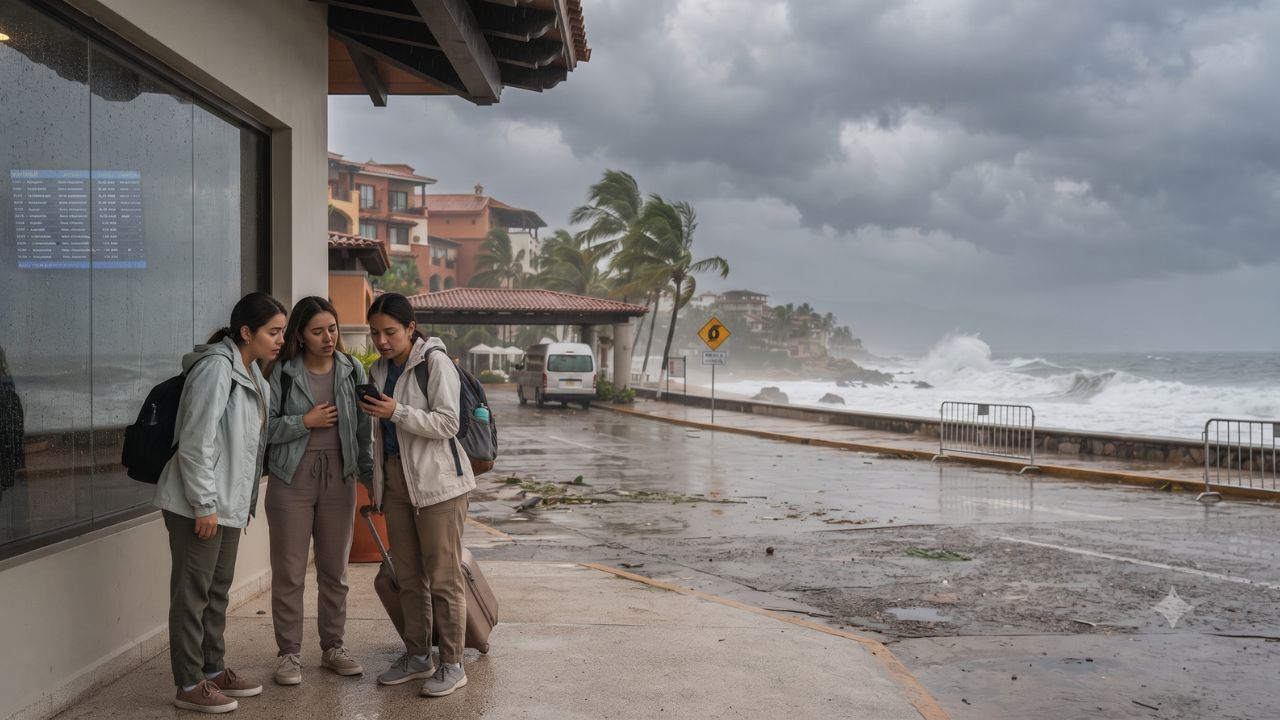
Sustained maximum winds of approximately 150 mph (240 km/h) and catastrophic rainfall forecasts peaking at 30 inches have brought commercial aviation to a standstill along Mexico's west-central Pacific seaboard. The rapid intensification of Hurricane Simon into a Category 4 system across the weekend of 10–11 October 2026 triggered emergency operational shutdowns at Licenciado Gustavo Díaz Ordaz International Airport in Puerto Vallarta and Playa de Oro International Airport in Manzanillo. With outer bands raking coastal Jalisco, Colima, Michoacán, and Nayarit, civil protection agencies ordered preemptive evacuations across vulnerable beachfront strips while grounding commercial aviation corridors connecting North America to Mexico's Pacific resorts.
The disruption reaches far beyond physical storm damage. Ground stops and fleet repositioning across Pacific gateways create rolling crew-scheduling dislocations throughout North American airline networks, leaving ticket holders facing multi-day backlogs. For passengers caught in the strike zone or holding impending reservations, the crisis exposes sharp operational divisions between airline voluntary waiver windows, emergency lodging availability, and civil aviation passenger rights under Mexican federal law.
Meteorological Evolution: Slow Forward Velocity and Coastal Proximity
Hurricane Simon underwent rapid cyclonic intensification during 10–11 October 2026 as ocean surface temperatures across the eastern Pacific supported intense convection. Assessments released early Sunday morning by the National Hurricane Center (NHC) logged maximum sustained winds of roughly 150 mph (240 km/h). At that observation point, the storm's center sat approximately 110 miles south-southeast of Cabo Corrientes, crawling north-northwest at an unusually slow forward pace of roughly 6 mph. Subsequent meteorological updates documented sustained winds near 145 mph, confirming that the storm retained destructive upper-tier major hurricane strength.
The system's lethargic forward speed poses severe hazards for tourism corridors. When major cyclonic systems decelerate near coastal shelves, torrential precipitation bands remain anchored over littoral plains and adjoining mountain chains for prolonged periods. The NHC issued warnings indicating that southwestern Mexico should prepare for broad accumulations between 10 and 20 inches of rainfall, with localized mountain pockets across Michoacán, Colima, and Jalisco facing extreme accumulations of up to 30 inches.
These astronomical rainfall volumes convert tranquil highland river basins into high-velocity mudflows, threatening arterial highways that link beach resorts to inland transport nodes like Guadalajara. Simultaneously, the Mexican Navy imposed comprehensive navigation restrictions, suspending recreational, passenger, and commercial maritime departures across the ports of Puerto Vallarta, Manzanillo, San Blas, and Lázaro Cárdenas to avert vessel groundings from destructive ocean swells and lethal rip currents.
Air Terminal Closures and Infrastructure Disruption Profile
Commercial aviation across the central Pacific coast ceased ahead of the storm's eyewall approach. Puerto Vallarta International Airport (PVR) suspended all flight activities starting at 6:00 pm local time on Saturday, 10 October 2026. The airport operating consortium established a provisional reopening window targeting 8:00 am on Monday, 12 October, subject to comprehensive engineering surveys of runway drainage, apron lighting, perimeter security barriers, and terminal structural integrity. Manzanillo International Airport (ZLO) enacted a parallel complete suspension on Saturday evening, leading directly to the wholesale cancellation of all scheduled commercial operations on Sunday, 11 October.
Federal and regional authorities simultaneously mobilized extensive civil defense protocols. According to an official Jalisco state briefing issued on 9 October, emergency personnel carried out the direct evacuation of 261 residents from high-risk coastal zones, while preparing 13 emergency reception shelters engineered to house approximately 1,900 displaced people. In neighboring Colima, state agencies opened five emergency shelters and deployed more than 1,500 specialized personnel to safeguard vulnerable population clusters in Armería, Tecomán, and Manzanillo. Across both states, emergency management officials placed 28 municipalities under maximum Red cyclone alert, while an additional 93 municipalities were placed under High Alert.
| Metric / Operational Factor | Official Value / Verified Specification | Regional Impact Context |
|---|---|---|
| Peak Sustained Winds | 150 mph (240 km/h) early 11 Oct; later ~145 mph | Category 4 major hurricane force along west-central Pacific coast |
| Storm Position & Movement | 110 miles SSE of Cabo Corrientes; 6 mph NNW | Slow translation speed prolongs squall impact on shoreline |
| Puerto Vallarta Airport (PVR) | Suspended operations 6:00 pm Sat, 10 Oct | Reopening set provisionally for 8:00 am Mon, 12 Oct pending review |
| Manzanillo Airport (ZLO) | Suspended operations Saturday evening, 10 Oct | All commercial flight operations cancelled for 11 Oct |
| Peak Rainfall Forecasts | 10 to 20 inches broad; up to 30 inches isolated | Extreme flash flooding and landslide risks in Michoacán, Colima, Jalisco |
| State Evacuation Count | 261 individuals evacuated in Jalisco (9 Oct) | Precautionary relocation from vulnerable littoral zones |
| Dedicated Emergency Shelters | 13 shelters in Jalisco (1,900 cap.); 5 in Colima | Safe refuge opened across resort and rural jurisdictions |
| Civil Alert Municipalities | 28 Maximum Red Alert; 93 High Alert | Suspended school classes and non-essential commercial activities |
| Deployed Response Force | Over 1,500 emergency personnel deployed | Stationed across Colima, Armería, Tecomán, and coastal corridors |
| Maritime Port Status | Navigation barred: PVR, Manzanillo, San Blas, Lázaro Cárdenas | Mexican Navy restrictions halt all leisure and commercial shipping |
Expert Analysis: Airline Operational Recovery, Passenger Rights, and Insurance Exposure
For travelers with itineraries running through west-central Mexico, the operational reality of hurricane disruption extends well beyond the physical duration of the storm. When international hubs like Puerto Vallarta shut their runways, air carriers do not simply park jets at the terminal; they reposition high-value narrowbody and widebody airframes to inland staging bases or US hubs to prevent salt spray, projectile debris, and wind shear damage. Bringing these fleets back requires multi-tiered logistical clearance: terminal safety certification, air traffic control radar verification, fuel depot contamination testing, and the dispatch of ferry flights with replacement crews.
Airlines operating routes into Puerto Vallarta and Manzanillo face tight duty-time constraints under federal aviation flight-crew regulations. As a consequence, provisional airport reopening times do not translate into immediate normal flight schedules. When a terminal resumes operations at 8:00 am following a storm, inbound aircraft often will not land until midday or afternoon, producing secondary cancellations and severe departure delays that compound over a 48-to-72-hour window. Travelers holding return tickets must anticipate that confirmed seats on subsequent flights will be exceptionally scarce, as carriers prioritize clearing multi-day passenger backlogs.
From a regulatory and financial standpoint, natural disasters fall under extraordinary circumstances (fuerza mayor). Under Mexican federal aviation consumer protection rules overseen by the consumer protection agency PROFECO and guidance from the Secretaría de Turismo de México (SECTUR), airlines are exempt from paying passenger compensation, hotel allowances, or food vouchers when delays or cancellations stem strictly from severe weather events. However, carriers remain legally bound to offer affected passengers the choice between full ticket refunds, date rebooking without penalty within policy parameters, or carriage on the earliest available alternative flight once operations resume.
Travelers must exercise caution regarding accommodation arrangements. Luxury properties throughout Costa Alegre, Cabo Corrientes, Cihuatlán, La Huerta, and Tomatlán operate emergency protocols during Red Alert conditions. Hotel managements frequently restrict elevator usage, close beachfront pools, and relocate guests from exterior villas to reinforced interior ballroom facilities. Travelers incurring unexpected hotel extension costs or purchasing alternate ground transportation should systematically archive digital folio receipts, written airline cancellation confirmations, and local Coordinación Nacional de Protección Civil advisories, as private travel insurance coverage under trip interruption provisions hinges entirely on formal documentation verifying mandatory transit halts.
Key Takeaways
- Puerto Vallarta International Airport and Manzanillo International Airport enacted emergency ground halts on 10 October 2026, forcing widespread flight cancellations across the holiday weekend.
- Category 4 Hurricane Simon produced sustained winds of 150 mph (240 km/h) while moving north-northwest at approximately 6 mph, centered 110 miles south-southeast of Cabo Corrientes.
- Rainfall accumulations ranging between 10 and 20 inches broadly, with localized totals reaching 30 inches, create severe flash flood and landslide hazards across Jalisco, Colima, and Michoacán.
- Emergency civil protection services activated 18 temporary shelters across Jalisco and Colima, ordered 261 priority evacuations, and placed 28 municipalities on maximum Red Alert.
- Flight resumptions remain contingent on post-storm runway and terminal safety inspections; airlines do not provide statutory hotel or meal compensation under Mexican law for weather-driven cancellations.
FAQ: Mexico Pacific Hurricane Disruptions 2026
When will flights resume at Puerto Vallarta and Manzanillo airports?
Puerto Vallarta Airport scheduled a provisional reopening for 8:00 am Monday, 12 October 2026, subject to runway and facility safety inspections. Flights at Manzanillo Airport were cancelled through Sunday, 11 October, with resumptions dependent on local civil protection clearances.
Are airlines required to pay for passenger hotel stays during hurricane groundings in Mexico?
No. Under Mexican aviation regulations and international airline carriage conditions, hurricanes constitute severe weather fuerza mayor. Airlines must offer penalty-free rebooking or full ticket refunds, but are not legally obligated to provide complimentary hotel lodging or meals.
What should travelers do if their coastal hotel is ordered to evacuate?
Follow instructions issued by hotel staff and civil defense authorities immediately. Relocate to designated municipal shelters or reinforced interior hotel shelters, keep essential identification and medications sealed in waterproof containers, and avoid windows, balconies, or beach access points.
How can travelers contact emergency services in Mexico during Hurricane Simon?
Dial 911 for direct access to police, medical, and civil protection emergency dispatchers anywhere in Mexico. Tourists should monitor official bulletins from Protección Civil and verify flight statuses directly through airline digital portals rather than traveling to closed airport terminals.
Careful verification of airline waiver policies and absolute adherence to local civil defense evacuation mandates remain the only dependable defenses against major hurricane disruptions along the Pacific coast.
Related Travel Guides
Disclaimer
This article is for informational and educational purposes only. It does not constitute legal, financial, or professional advice. While we strive to provide accurate and up-to-date information, travel policies, regulations, and conditions change rapidly. Always verify information with official sources before making travel decisions. Nomad Lawyer makes no representations about the accuracy, reliability, completeness, or suitability of the information provided. Readers should consult qualified professionals for advice specific to their circumstances. The views expressed in this article are those of the author and do not necessarily reflect the views of Nomad Lawyer.
Kunal K Choudhary
Co-Founder & Contributor
A passionate traveller and tech enthusiast. Kunal contributes to the vision and growth of Nomad Lawyer, bringing fresh perspectives and driving the community forward.
Learn more about our team →