
Mexico Aviation Crisis 2026: 129 Delays and 14 Cancellations Hit Cancún and Mexico City Airports
Major Mexican aviation hubs are facing severe operational strain with 129 delays and 14 cancellations affecting thousands of passengers across Cancún, Mexico City, Monterrey, and Guadalajara.

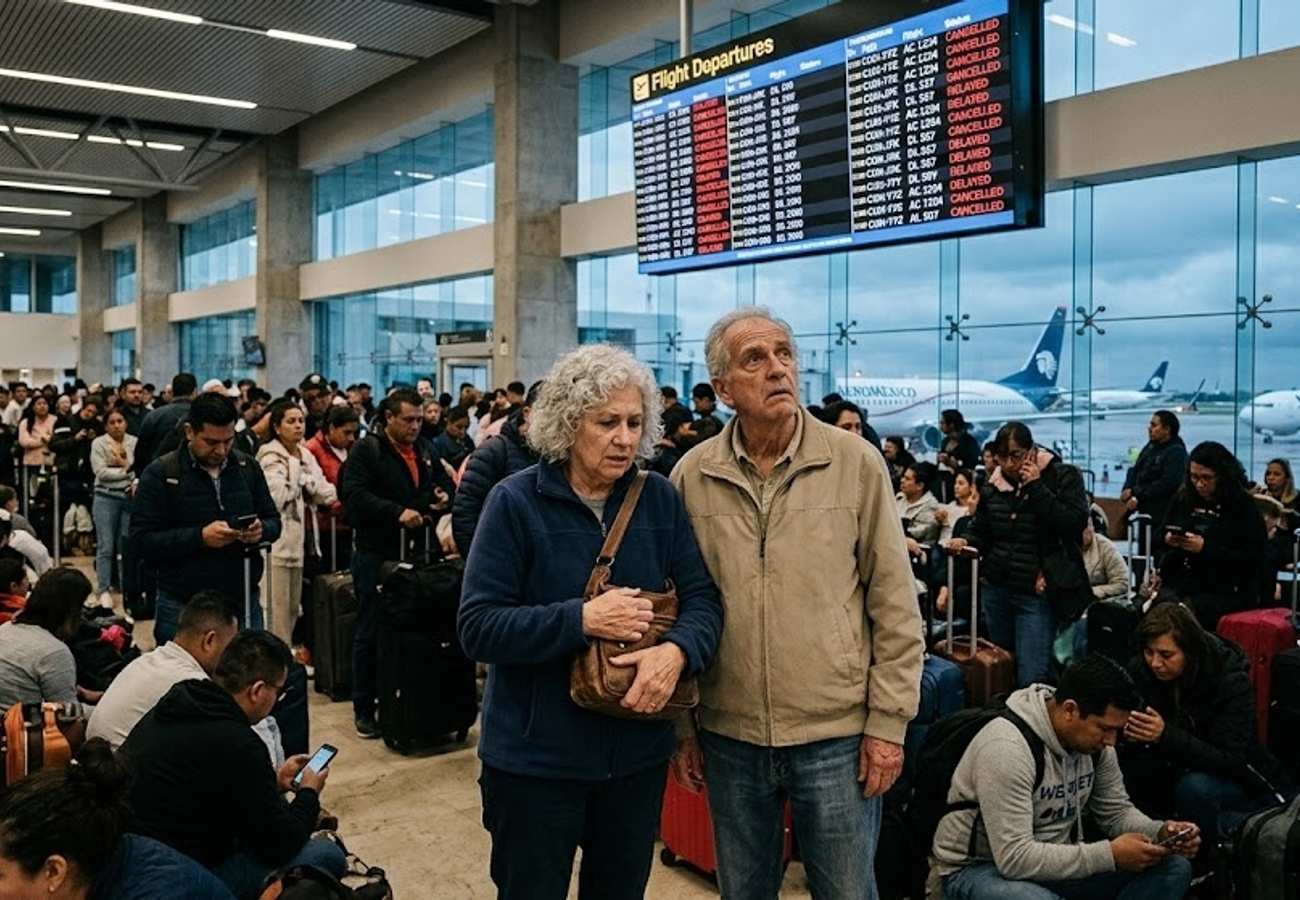
Image generated by AI
[Mexico City, July 29, 2026] — A sudden surge in operational failures has paralyzed parts of Mexico’s aviation network, resulting in 129 flight delays and 14 total cancellations across the nation's primary air gateways. These disruptions have triggered widespread uncertainty for international tourists and domestic business travelers, stemming from a combination of aircraft rotation failures, scheduling complexities, and extreme traffic pressure at high-density hubs.
The instability is most acute at the country's four largest airports, where a mix of low-cost carriers and flagship airlines are struggling to maintain schedules. Industry reports indicate that the volatility is driven by a convergence of operational constraints and rising demand, leaving airport management teams scrambling to restore normalcy.
Operational Breakdown Across Mexico's Major Hubs
The scale of the disruption varies by region, but the cumulative impact has created a bottleneck effect across the national airspace. Data indicates that the total number of affected operations reached 143, which includes both the 129 delayed departures and the 14 flights that were scrapped entirely.
Cancún International Airport emerged as the most volatile site, recording 48 delays and four cancellations. This brings the total number of disrupted operations at the Caribbean gateway to 52. Given its role as the primary entry point for global tourism, these failures have a cascading effect on hotel transfers and connecting regional flights.
In the capital, Lic. Benito Juárez International Airport in Mexico City reported 33 delays and two cancellations. While the number of cancellations was lower than in other hubs, the sheer volume of passengers at this Latin American center means the 33 delays caused significant terminal congestion.
Monterrey’s General Mariano Escobedo International Airport faced the most severe cancellation rate, recording six cancelled flights alongside 24 delays. Meanwhile, Don Miguel Hidalgo y Costilla International Airport in Guadalajara saw 27 delays and two cancellations.
Airline-Specific Impact and Carrier Performance
The disruptions did not hit all carriers equally. Low-cost carriers (LCCs) and specific international airlines bore the brunt of the scheduling failures.
At Cancún, American Airlines faced the steepest challenge with nine delayed flights. Volaris followed with six delays, while Southwest Airlines and JetBlue each recorded five delayed operations. This suggests that the pressure at Cancún is heavily tied to North American leisure routes.
In Mexico City, the national carrier AeroMéxico was the most affected, reporting 11 delays. Its regional arm, Aeroméxico Connect, added another five delays to the tally. Notably, Volaris was the only airline to record cancellations at the Mexico City hub, with two flights cancelled.
The situation in Monterrey saw VivaAerobus recording the highest number of delays with nine flights affected. However, Volaris suffered the most significant blow in terms of reliability here, registering four cancellations.
Guadalajara's disruptions were almost exclusively dominated by Volaris, which reported 22 delayed flights. Additionally, SkyWest recorded two delays, which, based on available data, represents a 100% delay rate for its operations at that specific location.
Summary of Airport Disruptions
| Airport Location | Total Delays | Total Cancellations | Primary Affected Carriers |
|---|---|---|---|
| Cancún | 48 | 4 | American Airlines, Volaris, JetBlue, Southwest |
| Mexico City | 33 | 2 | AeroMéxico, Aeroméxico Connect, Volaris |
| Monterrey | 24 | 6 | VivaAerobus, Volaris |
| Guadalajara | 27 | 2 | Volaris, SkyWest |
| Total | 129 | 14 |
Strategic Analysis of Regional Impact
The distribution of these delays reveals a fragmented aviation landscape. In Cancún, the impact is primarily "tourism-centric," where delays in international arrivals disrupt the entire hospitality chain from airport shuttles to resort check-ins.
Conversely, the disruptions in Mexico City and Monterrey are "economy-centric." As the primary hubs for government and corporate travel, delays at Lic. Benito Juárez and General Mariano Escobedo airports create a ripple effect that impacts business productivity and regional connectivity.
The heavy concentration of delays involving Volaris across multiple cities suggests a systemic operational issue within that specific carrier's fleet rotation or crew scheduling, rather than a localized airport failure.
Guidance for Disrupted Passengers
For those currently navigating the chaos in Mexico, aviation experts recommend a proactive approach to avoid being stranded.
Travelers are urged to verify flight statuses via official airline apps or websites before departing for the airport. Because delays are fluctuating in real-time, terminal information boards may lag behind digital updates.
Given the congestion at Cancún and Mexico City, passengers should allocate significantly more time for security and boarding processes. Those facing cancellations should immediately request rebooking options or travel credits, as availability for alternative flights will diminish rapidly as more passengers seek changes.
Crucially, travelers with tight connections should avoid booking short layovers until their incoming flight status is confirmed. Maintaining digital backups of all travel documents and correspondence with the airline is also advised to expedite the claims process for compensation or re-accommodation.
Why This Matters: The Traveler's Perspective
From a logistical standpoint, this event highlights a growing fragility in Mexico's aviation infrastructure. When 143 operations are disrupted across just four airports, it indicates that the system is operating at its absolute limit.
For the traveler, this means that "on-time" departures are no longer a guarantee during peak demand periods. The high concentration of failures among low-cost carriers suggests that while budget travel is accessible, the operational reliability may be lower than that of full-service carriers. Passengers should consider the "hidden cost" of a cheaper ticket—potentially hours of lost time or the cost of an unplanned hotel stay during a cancellation.
From a legal and consumer rights perspective, passengers should document every delay and cancellation. Under many aviation regulations, passengers may be entitled to meals, communication vouchers, or hotel accommodation if the disruption is within the airline's control.
Passengers are advised to monitor official aviation feeds and maintain flexible itineraries as the network works toward full recovery.
Related Travel Guides
Disclaimer
This article is for informational and educational purposes only. It does not constitute legal, financial, or professional advice. While we strive to provide accurate and up-to-date information, travel policies, regulations, and conditions change rapidly. Always verify information with official sources before making travel decisions. Nomad Lawyer makes no representations about the accuracy, reliability, completeness, or suitability of the information provided. Readers should consult qualified professionals for advice specific to their circumstances. The views expressed in this article are those of the author and do not necessarily reflect the views of Nomad Lawyer.
Raushan Kumar
Founder & Lead Developer
Full-stack developer with 11+ years of experience and a passionate traveller. Raushan built Nomad Lawyer from the ground up with a vision to create the best travel and law experience on the web.
Learn more about our team →