
Mega-Attraction Economies 2026: Orlando, Tokyo, Spain & Global Travel Guide

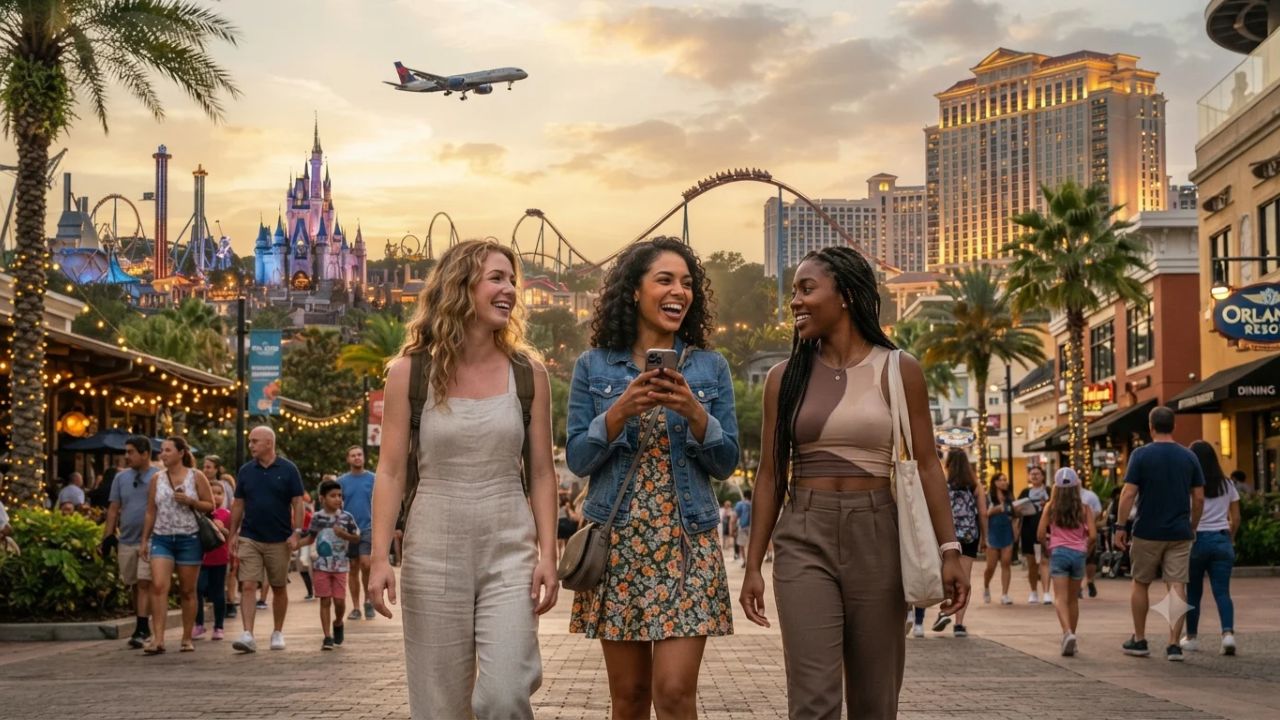
In Central Florida, an astonishing 75,333,800 visitors generated 59.9 billion dollars in direct expenditure and a total economic footprint of 94.5 billion dollars in 2024, proving that modern theme parks no longer function as isolated day-trip amusements but as foundational economic anchors. That transformation mirrors a sweeping global evolution where tourism capitals—including Tokyo with 24.79 million foreign visitors, Spain with 93.8 million international arrivals, Greater Paris with 36.3 million travelers, and Dubai with 18.72 million overnight guests—fuse mega-attractions with high-capacity aviation and hospitality networks to drive multi-day visitor stays.
The Stay-Extension Blueprint: How Mega-Attractions Power Global Capitals
The modern global attraction economy has transitioned from transactional sightseeing into an integrated ecosystem. Rather than offering standalone tickets, premier destinations connect theme parks, world-class museums, sporting arenas, retail corridors, and culinary districts with high-capacity aviation gateways.
Consider how these leading tourism ecosystems convert attraction demand into overnight economic yield:
- Orlando: Visit Orlando recorded 68.84 million domestic arrivals and 6.5 million international travelers (up 5.9 percent), led by Canada (1.29 million), the United Kingdom (907,900), Brazil (697,200), Mexico (438,000), and Colombia (343,000), supported by Orlando International Airport (MCO) handling over 57 million passengers.
- Tokyo & Japan: Tokyo captured 24.79 million international arrivals (up 26.9 percent year-on-year and 63.3 percent above 2019), generating 3.96 trillion yen in foreign visitor spending. Nationally, Japan welcomed 36,869,900 foreign tourists across 160 million guest nights, with cross-prefecture travel reaching 1.2 times pre-pandemic levels as documented by the Japan National Tourism Organization.
- Spain: Setting an all-time national record of 93,799,505 international tourists (up 10.1 percent), Spain distributed visitors across regional clusters: Catalonia (19.94 million), Balearic Islands (15.31 million), Canary Islands (15.23 million), Andalucía (13.60 million), Valencia (11.94 million), and Madrid (8.82 million). Spanish Aena airports processed 309.33 million passengers, led by Madrid-Barajas (66.20 million) and Barcelona-El Prat (55.03 million), tracked by Turespaña.
- Paris: Greater Paris accommodated 36.3 million tourists across 132,430 hotel rooms, supported by over 100 million airport passengers and 12 million ticket sales across the Olympic (11.2 million visitors) and Paralympic (3.4 million visitors) periods.
- Dubai: Welcomed 18.72 million international overnight visitors (up 9 percent) across 154,016 hotel rooms in 832 establishments, while Dubai International Airport (DXB) processed 92.3 million passengers.
Comparing Tourism Models: Dedicated Corridors vs. Dense Urban Grids
Each global heavyweight illustrates a distinct architectural model for capturing and extending visitor stays.
Orlando represents the purpose-built resort corridor model. Here, vast multi-park developments integrate on-site hotels, water parks, championship golf courses, and open-air dining complexes. Visitors enter a self-contained ecosystem where private transit shuttles eliminate the need to navigate municipal roadways, keeping leisure expenditure concentrated within the resort district.
Tokyo operates on a decentralized metropolitan grid model. Rather than confining entertainment to private compounds, world-class attractions—from teamLab digital art exhibitions and Tokyo Dome sporting events to historic shrines like Senso-ji and Ghibli Museum—integrate seamlessly into the urban transit fabric. Passengers ride JR Yamanote loop trains and Tokyo Metro subways between shopping districts in Ginza, dining alleys in Shinjuku, and pop-culture hubs in Akihabara.
Spain showcases the distributed regional cluster model. Rather than funneling all international traffic into a single gateway, the country utilizes high-speed AVE rail and a multi-hub airport network to connect UNESCO World Heritage landmarks in Andalusia—such as the Alhambra and Cordoba's Mosque-Cathedral under the UNESCO World Heritage Convention—with Mediterranean coastal resorts and Basque culinary hubs.
Visitor Insider Tips: Maximizing Multi-Day Attraction Itineraries
Navigating high-density attraction capitals requires strategic planning to bypass long queues, reduce transport friction, and manage travel budgets.
Ticket Strategies and Queue Management
- Anchor Your Days Around Timed Entry: At mega-attractions across Tokyo, Paris, and Orlando, book earliest-morning timed-entry slots online several weeks in advance. Arriving forty-five minutes before official opening allows you to experience headline exhibits before peak midday queues form.
- Multi-Attraction City Passes: In Tokyo and Madrid, regional transit and museum passes (such as the Tokyo Subway 72-hour Ticket or Madrid Paseo del Arte Card) offer substantial cost savings and bypass standard ticket-counter lines.
- Single Rider Lines: In Orlando and Tokyo theme parks, solo travelers and older families willing to split party seating on thrill rides can utilize designated Single Rider queues to cut wait times by up to seventy percent.
Transport and Transit Hacks
- Brightline High-Speed Rail in Florida: In Orlando, connect from Terminal C at Orlando International Airport (MCO) to West Palm Beach, Fort Lauderdale, and downtown Miami aboard Brightline higher-speed trains, avoiding congested Interstate 4 traffic.
- Avoid Peak Commuter Rush in Tokyo: When traveling with children or luggage on the Tokyo Metro network, avoid riding between 7:30 AM and 9:00 AM on weekdays when commuter crowds pack train platforms.
- AVE Train Validation in Spain: Spain’s high-speed AVE trains include free local commuter rail transfers (Combinado Cercanías) on your long-distance ticket. Use the barcode on your high-speed ticket at station turnstiles in Madrid or Barcelona to ride regional trains for free.
Dining and Neighborhood Basing
- Dine Outside Attraction Gates: In Orlando, escape theme park dining prices by exploring the vibrant Vietnamese and East Asian culinary district along Mills 50 or the neighborhood bistros of Winter Park.
- Supermarket Basements (Depachika) in Tokyo: Pick up restaurant-quality bento boxes, fresh sushi, and artisan French pastries at department store basement food halls in Shinjuku or Shibuya at a fraction of sit-down restaurant prices.
Cultural and Environmental Context: Sustainable Density and Community Balance
The immense scale of modern attraction tourism places significant demands on municipal transit, energy grids, and residential communities. In cities like Paris, Barcelona, and Palma de Mallorca, municipal authorities have implemented strict caps on tourist apartment rentals and expanded bicycle transit lanes to protect residential neighborhoods from being hollowed out.
In Orlando and Dubai, environmental initiatives focus on resource efficiency. Central Florida attractions have deployed vast floating solar arrays and zero-landfill recycling initiatives, while Dubai’s luxury resorts have replaced single-use plastics with on-site atmospheric water generators.
Mindful travelers support sustainable tourism by patronizing locally owned restaurants, using electrified mass transit systems like high-speed rail, and venturing beyond headline monuments to discover rural craft villages and regional conservation reserves.
FAQ: Planning Mega-Attraction Travel 2026
What makes Orlando the world leader in attraction tourism?
Orlando welcomed 75.33 million visitors in 2024, generating $59.9 billion in direct spending through an interconnected network of theme parks, resorts, and aviation infrastructure.
How does Tokyo's attraction economy differ from Orlando's?
Tokyo integrates attractions directly into its municipal urban fabric and high-speed rail grid rather than confining them to self-contained suburban resort corridors.
What was the economic impact of the 2024 Paris Olympic and Paralympic Games?
The Olympic period attracted 11.2 million visitors and the Paralympics drew 3.4 million, selling over 12 million tickets across Greater Paris's cultural and sporting venues.
How did Spain achieve record international tourist arrivals in 2024?
Spain welcomed 93.8 million international visitors by distributing travelers across diverse regional clusters—including Catalonia, the Balearic Islands, the Canaries, and Andalusia—linked by 309 million airport passengers.
From high-tech simulator thrill rides to thousand-year-old temple avenues, modern travel capitals prove that an unforgettable journey is defined by the richness of the entire ecosystem.
Related Travel Guides
Disclaimer
This article is for informational and educational purposes only. It does not constitute legal, financial, or professional advice. While we strive to provide accurate and up-to-date information, travel policies, regulations, and conditions change rapidly. Always verify information with official sources before making travel decisions. Nomad Lawyer makes no representations about the accuracy, reliability, completeness, or suitability of the information provided. Readers should consult qualified professionals for advice specific to their circumstances. The views expressed in this article are those of the author and do not necessarily reflect the views of Nomad Lawyer.
Raushan Kumar
Founder & Lead Developer
Full-stack developer with 11+ years of experience and a passionate traveller. Raushan built Nomad Lawyer from the ground up with a vision to create the best travel and law experience on the web.
Learn more about our team →