
Hanoi's 2065 Vision: How Vietnam's Capital Transformation Will Reshape Tourism
Vietnam's ambitious Hanoi 2065 strategy promises to transform the capital into a global city with enhanced tourism infrastructure, improved connectivity, and sustainable development that will reshape visitor experiences across northern Vietnam.

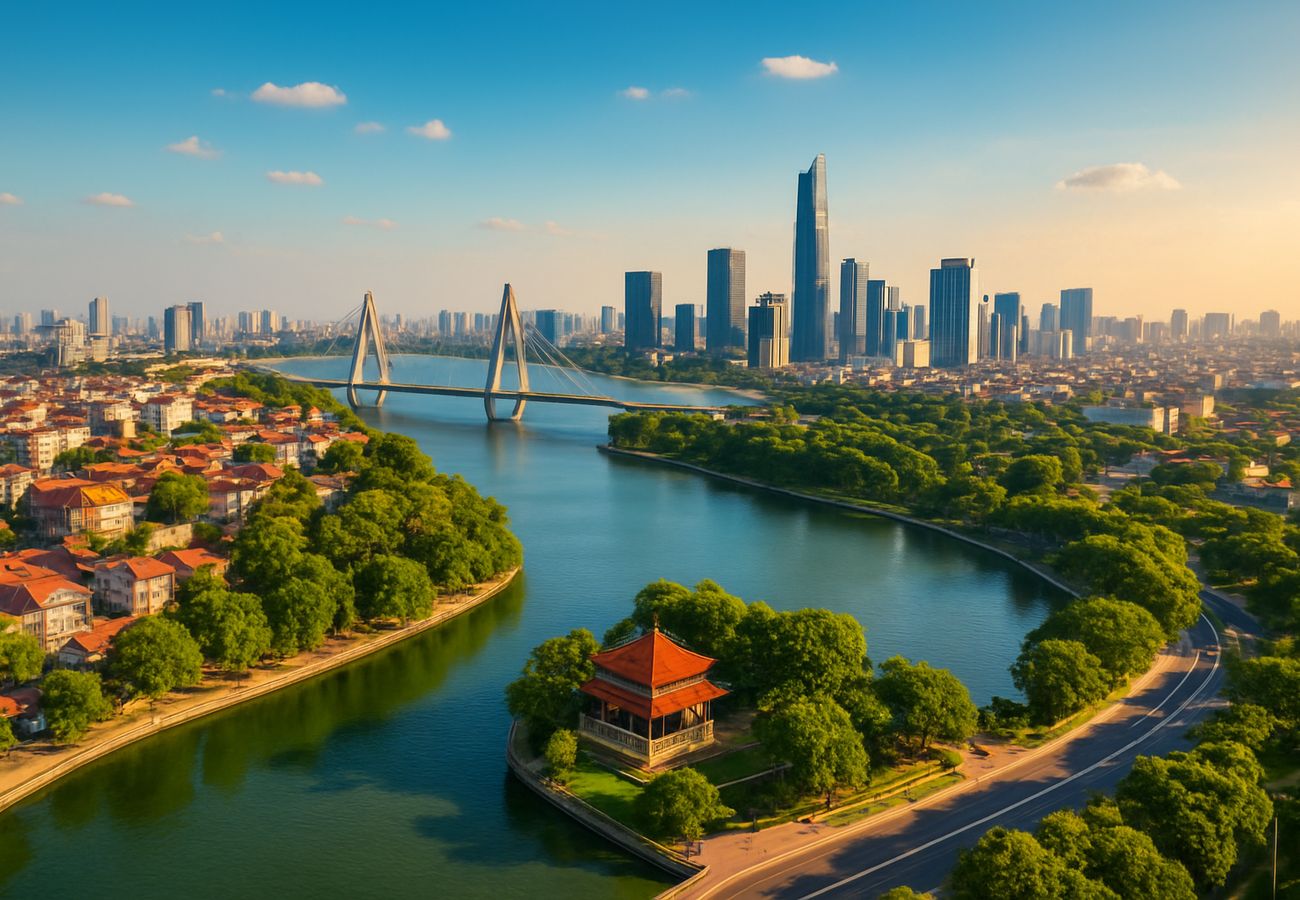
Image generated by AI
Vietnam has just unveiled an ambitious roadmap that goes far beyond typical urban planning—it's a complete reimagining of Hanoi as a globally competitive destination. City leaders recently approved a long-term development strategy stretching to 2065, and for travelers, this changes everything about how they'll experience the capital and northern Vietnam over the coming decades.
The strategy isn't about erasing what makes Hanoi special. Instead, it's designed to enhance the city's historic neighborhoods, cultural landmarks, and street-level authenticity while layering in world-class infrastructure. For nomadic professionals and leisure travelers alike, this means smoother movement, better-connected regions, and a destination that balances preservation with progress.
Reddit: "Hanoi needs this infrastructure overhaul badly. The traffic alone keeps me from exploring further into the surrounding provinces." — r/digitalnomad
The Master Plan: A Century-Long Transformation
At the core of Hanoi's vision is an updated master plan that guides development through the next hundred years. This isn't incremental change—it's a comprehensive framework addressing how the capital will grow, connect, and serve both residents and visitors.
The plan emphasizes livability, innovation, and cultural richness. But tourism sits squarely at the center of these ambitions. As Hanoi becomes easier to navigate and more attractive to international visitors, it's expected to strengthen its position as one of Asia's most compelling destinations.
The vision recognizes that preserving character matters as much as modernization. Hanoi's strength lies in its contradictions: centuries-old temples alongside French colonial architecture, bustling street markets merging with contemporary development. The 2065 strategy ensures these defining qualities survive and thrive alongside new infrastructure.
Regional Connectivity: Opening Doors to Northern Vietnam
One of the most transformative aspects of this strategy is its emphasis on regional integration. Hanoi will serve as the connector hub linking surrounding provinces and economic corridors throughout northern Vietnam.
For travelers, this means easier access to cultural, historical, and natural attractions beyond the capital. A traveler could spend mornings exploring Hanoi's Old Quarter, then use improved transportation links to reach nearby destinations like Ninh Binh, Ha Long Bay, or mountain regions in a single afternoon.
Better connectivity typically encourages visitors to extend trips and explore beyond traditional tourist routes. As northern Vietnam continues attracting international interest, stronger infrastructure could distribute tourism benefits across the region while making travel more seamless.
This approach aligns with broader Vietnam tourism growth strategies, positioning the entire region as more accessible and interconnected.
The Red River: From Icon to Experience Hub
The Red River has defined Hanoi for centuries, but the 2065 vision reimagines it as a central ecological and cultural corridor—potentially transforming it into a major tourism draw.
Officials envision riverfront areas becoming focal points for recreation, cultural activities, public events, and visitor experiences. Think Bangkok's riverside districts or Singapore's Marina Bay model applied to Hanoi's historic waterfront.
For tourists, this translates to new walking paths, cultural venues, viewpoints, and gathering spaces that celebrate the river's environmental and cultural significance. The river could become as central to the visitor experience as the temples and markets that currently define the city.
This waterfront transformation could help Hanoi compete with other major Asian capitals that have successfully leveraged their rivers as tourism assets.
Transportation Revolution: Mobility as the Game-Changer
Modern transportation fundamentally shapes how travelers experience cities. Long commutes, congestion, and limited access discourage exploration. Efficient mobility encourages discovery.
Hanoi's investment in transportation infrastructure is expected to be transformative. Authorities are setting ambitious goals to expand public transit networks and improve mobility throughout the capital. For visitors, this means easier movement between historical districts, cultural sites, business centers, and emerging neighborhoods.
Better accessibility strengthens Hanoi's appeal for international conferences, exhibitions, and business events—sectors that drive significant tourism revenue and longer stays.
Improved public transportation also reduces reliance on taxis and reduces carbon emissions, addressing sustainability concerns that increasingly influence travel decisions among global audiences.
Sustainability: The New Tourism Currency
Environmental considerations now influence where travelers choose to visit. Around the world, visitors increasingly prefer destinations prioritizing responsible development and environmental protection.
Hanoi's 2065 strategy highlights green spaces, environmental management, climate resilience, and improved urban conditions—benefits intended for residents that also enhance visitor experiences. Cleaner public spaces, greener neighborhoods, and environmentally conscious development position the city as balancing growth with responsibility.
As global tourism trends evolve, sustainability is shifting from niche concern to mainstream expectation. Cities that ignore this shift risk losing appeal among younger travelers and conscious consumers who influence tourism decisions.
Hanoi appears to be positioning itself as a destination that respects its environmental future.
Strengthening Vietnam's Tourism Leadership
As Vietnam's political and cultural center, Hanoi serves as the entry point for many international visitors. A stronger, more connected, and more accessible capital could attract additional visitors while encouraging longer stays throughout the country.
The city's development supports multiple tourism segments: leisure travel, cultural tourism, business tourism, educational exchanges, and international events. This diversification strengthens tourism sector resilience while creating opportunities for local businesses and communities.
Hanoi's transformation could benefit the entire northern region, helping distribute tourism revenue beyond traditional hotspots and supporting economic development across Vietnam.
The Global City Ambition: 2065 and Beyond
The ultimate objective reaches far beyond conventional tourism goals. Officials envision Hanoi becoming a leading center for innovation, education, culture, and technology—achieving "global city 2065" status.
Such recognition would place Hanoi among the world's most internationally recognized urban destinations. For visitors, this means a city offering the best of both worlds: preserved cultural heritage combined with modern infrastructure and forward-focused development.
The transformation could reshape not only the capital but the entire future of Vietnam tourism. From improved transportation and stronger regional connections to sustainability initiatives and cultural preservation, Hanoi's strategy has potential to influence how millions of travelers experience the city for generations.
If executed successfully, this could become one of the most significant developments for Southeast Asian tourism—helping Hanoi compete globally while retaining the unique character that has attracted visitors for centuries.
The race for global city status just got real—and travelers will be the biggest winners.
Related Travel Guides
Disclaimer
This article is for informational and educational purposes only. It does not constitute legal, financial, or professional advice. While we strive to provide accurate and up-to-date information, travel policies, regulations, and conditions change rapidly. Always verify information with official sources before making travel decisions. Nomad Lawyer makes no representations about the accuracy, reliability, completeness, or suitability of the information provided. Readers should consult qualified professionals for advice specific to their circumstances. The views expressed in this article are those of the author and do not necessarily reflect the views of Nomad Lawyer.
Raushan Kumar
Founder & Lead Developer
Full-stack developer with 11+ years of experience and a passionate traveller. Raushan built Nomad Lawyer from the ground up with a vision to create the best travel and law experience on the web.
Learn more about our team →