
Mammoth Lakes Secures Year-Round United Airlines Flights Between Bishop and San Francisco
Mammoth Lakes Secures Year-Round United Airlines Flights Between Bishop and San Francisco

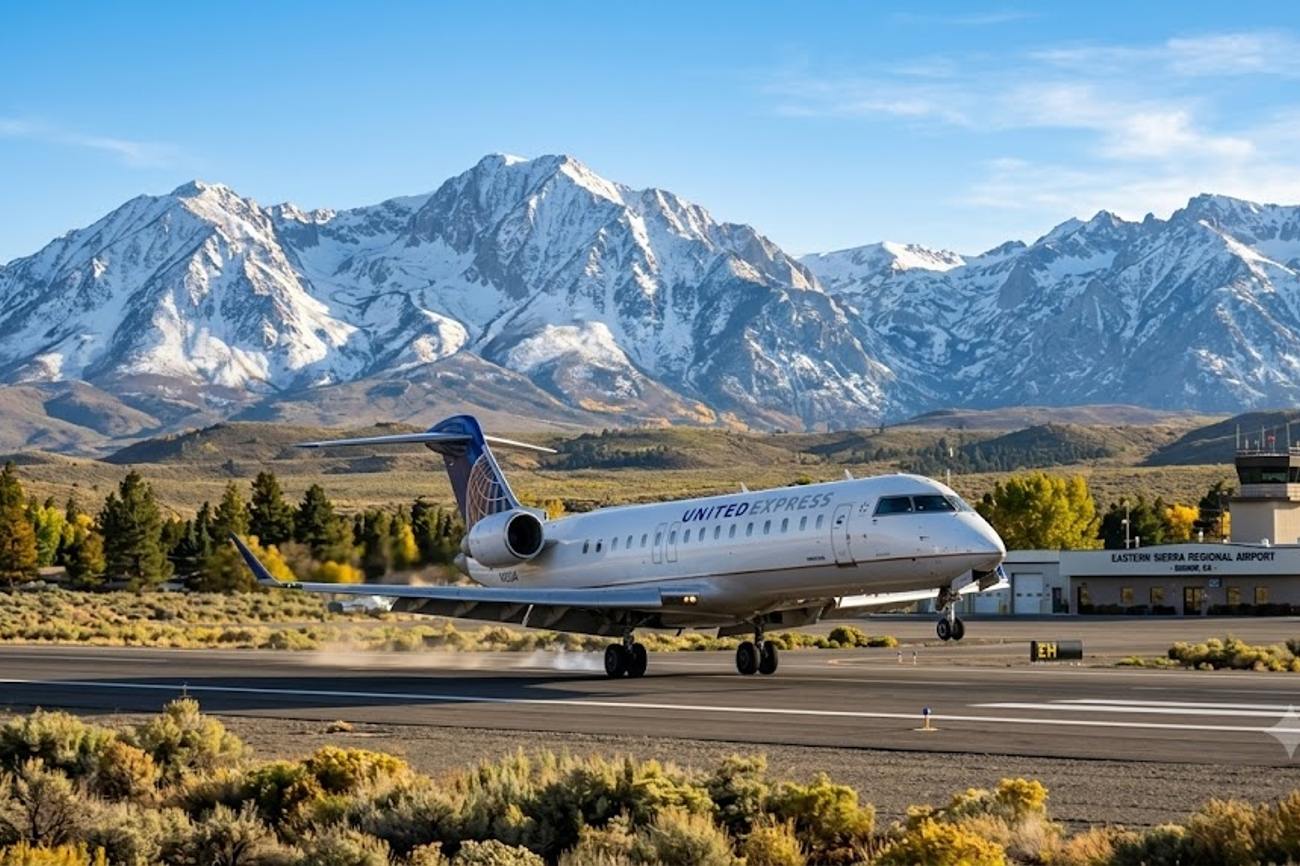
Image generated by AI
60% of passengers surveyed indicated they would increase their flight frequency if Eastern Sierra Regional Airport transitioned to year-round operations. This specific demand signal has triggered a strategic pivot by United Airlines, which has officially converted its Bishop to San Francisco route from a seasonal luxury into a permanent fixture of the regional transport infrastructure. By securing a four-season schedule, the Eastern Sierra region is attempting to break the "boom-and-bust" cycle of mountain tourism, transforming the gateway from a seasonal waypoint into a consistent aviation node.
The Strategic Pivot to Year-Round Connectivity
The transition of the Bishop (BIH) to San Francisco International (SFO) route is not a random scheduling adjustment but the result of a coordinated lobbying effort by the Eastern Sierra Air Alliance (ESAA). This coalition—comprising the Town of Mammoth Lakes, Inyo County, the City of Bishop, the Bishop Chamber of Commerce, Mammoth Mountain, and Mammoth Lakes Tourism—has operated as a quasi-regulatory body to bridge the gap between local infrastructure and carrier profitability.
Historically, the Eastern Sierra has suffered from "shoulder season" isolation, where the gaps between the peak skiing winter and the hiking summer left the region disconnected from major West Coast hubs. By institutionalizing year-round service, the ESAA is effectively attempting to flatten the seasonality curve of the local economy. The move recognizes that while Mammoth Lakes is the primary destination draw, the airport serves as the critical logistics hub for the entire Eastern Sierra corridor.
Operational Breakdown: Route Frequency and Capacity
The new flight schedule is tiered to match the fluctuating demand of the California mountain climate. Rather than a flat daily frequency, United has implemented a variable load model that protects the carrier from empty seats during low-demand periods while maximizing throughput during peak surges.
| Season | Frequency | Route | Primary Hub |
|---|---|---|---|
| Summer | Daily | BIH $\rightarrow$ SFO | San Francisco International |
| Winter | Daily | BIH $\rightarrow$ SFO | San Francisco International |
| Spring | 4 Days Weekly | BIH $\rightarrow$ SFO | San Francisco International |
| Autumn | 4 Days Weekly | BIH $\rightarrow$ SFO | San Francisco International |
| Winter (Special) | Daily | BIH $\rightarrow$ DEN | Denver International |
The inclusion of the Denver (DEN) route during the winter months creates a dual-hub strategy. This allows the region to capture two distinct markets: the high-net-worth Bay Area weekend traveler and the Midwestern ski enthusiast. This redundancy is vital for regional resilience; if one hub faces weather-related disruptions, the other remains a viable entry point for the region.
Expert Analysis: The Economics of Regional Access
For travelers booking these routes, the direct consequence is a significant reduction in "friction cost." Previously, the reliance on seasonal flights forced a high percentage of visitors to endure long-distance surface journeys—often 5 to 7 hours of driving from the Bay Area—which creates a psychological barrier to spontaneous or short-term visitation.
The pricing pressure created by this shift will likely stabilize over time. When a route is purely seasonal, airlines often employ aggressive surge pricing during peak windows. By establishing a year-round presence, United creates a more predictable baseline of demand. This allows for more consistent fare buckets, making the region more attractive to the 31% of passengers who are local residents and business travelers rather than just vacationers.
Furthermore, the U.S. Department of Transportation data reveals a critical demographic split: 66% of passengers are visitors, while 31% are originating residents. This 31% represents the "anchor demand." While tourists provide the profit spikes, the residents provide the stability. By catering to the residents' need for year-round access to SFO, United secures a guaranteed minimum load factor that justifies the aircraft's presence during the quieter spring and autumn months.
From a logistical standpoint, the Eastern Sierra is positioning itself to compete with other mountain destinations by removing the "transportation tax" of time. The ability to fly into Bishop (BIH) and transfer to Mammoth Lakes is a competitive advantage that shifts the region's value proposition from a "dedicated trip" destination to a "convenient getaway" destination.
Key Takeaways
- Schedule Shift: United Airlines has moved the Bishop (BIH) to San Francisco (SFO) route to year-round status, with daily flights in summer/winter and four-day weekly service in spring/autumn.
- Demand Drivers: 2025 DOT data confirms that 66% of BIH traffic is visitor-based, but 60% of all passengers expressed a desire for year-round connectivity.
- Hub Redundancy: Winter travelers have access to two major hubs, with daily flights maintained to both San Francisco (SFO) and Denver (DEN).
- Institutional Support: The expansion was driven by the Eastern Sierra Air Alliance, a partnership between municipal governments, tourism boards, and private entities like Mammoth Mountain.
- Economic Goal: The primary objective is to stimulate tourism and business activity during the traditional "shoulder seasons" of spring and autumn.
FAQ: Eastern Sierra Aviation 2025
Which airports serve the Mammoth Lakes region? Travelers primarily use the Eastern Sierra Regional Airport (BIH) located in Bishop. From there, it is a short drive to Mammoth Lakes. United Airlines provides the primary commercial links to San Francisco and Denver.
Is the Bishop to San Francisco flight available every day? No. The service is daily during the summer and winter peaks. During the spring and autumn shoulder seasons, flights operate four days per week.
Can I fly to Bishop from cities other than San Francisco? During the winter season, United Airlines operates daily flights between Bishop (BIH) and Denver International Airport (DEN), providing a second major US gateway for the region.
Why did the flight schedule change to year-round? Data showed that 60% of passengers would fly more often if service were permanent. Local government and tourism alliances worked with United to ensure the region is accessible outside of peak ski and summer months.
The transition from seasonal to permanent air access marks the end of the Eastern Sierra's isolation, turning a mountain retreat into a connected regional economy.
Tags: United Airlines, Eastern Sierra Regional Airport, Mammoth Lakes Tourism, Bishop California, SFO-BIH Route, Eastern Sierra Air Alliance
Related Travel Guides
- Air India Unveils New Travel Campaign Celebrating India’s Sporting Spirit and Collective Rise
- Super Air Jet Expands Domestic Indonesian Connectivity with Six Nonstop Routes from Bandung Husein Sastranegara Airport
- Singapore Airlines Secures Skytrax World Best Airline 2026 Title as Global Aviation Hubs Elevate Passenger Experience Standards
Disclaimer
This article is for informational and educational purposes only. It does not constitute legal, financial, or professional advice. While we strive to provide accurate and up-to-date information, travel policies, regulations, and conditions change rapidly. Always verify information with official sources before making travel decisions. Nomad Lawyer makes no representations about the accuracy, reliability, completeness, or suitability of the information provided. Readers should consult qualified professionals for advice specific to their circumstances. The views expressed in this article are those of the author and do not necessarily reflect the views of Nomad Lawyer.
Naina Thakur
Contributor & Travel Specialist
Travel enthusiast and legal writer covering visa regulations, responsible tourism, and cultural journeys across global destinations.
Learn more about our team →