
Malta Secures $2 Billion Tourism Investment Pledge at WTTC Global Summit in Valletta as European Growth Outpaces Peers
Malta lands a $2B private investment pledge at the WTTC Global Summit in Valletta as 16.8% GDP tourism expansion dramatically outpaces European averages.

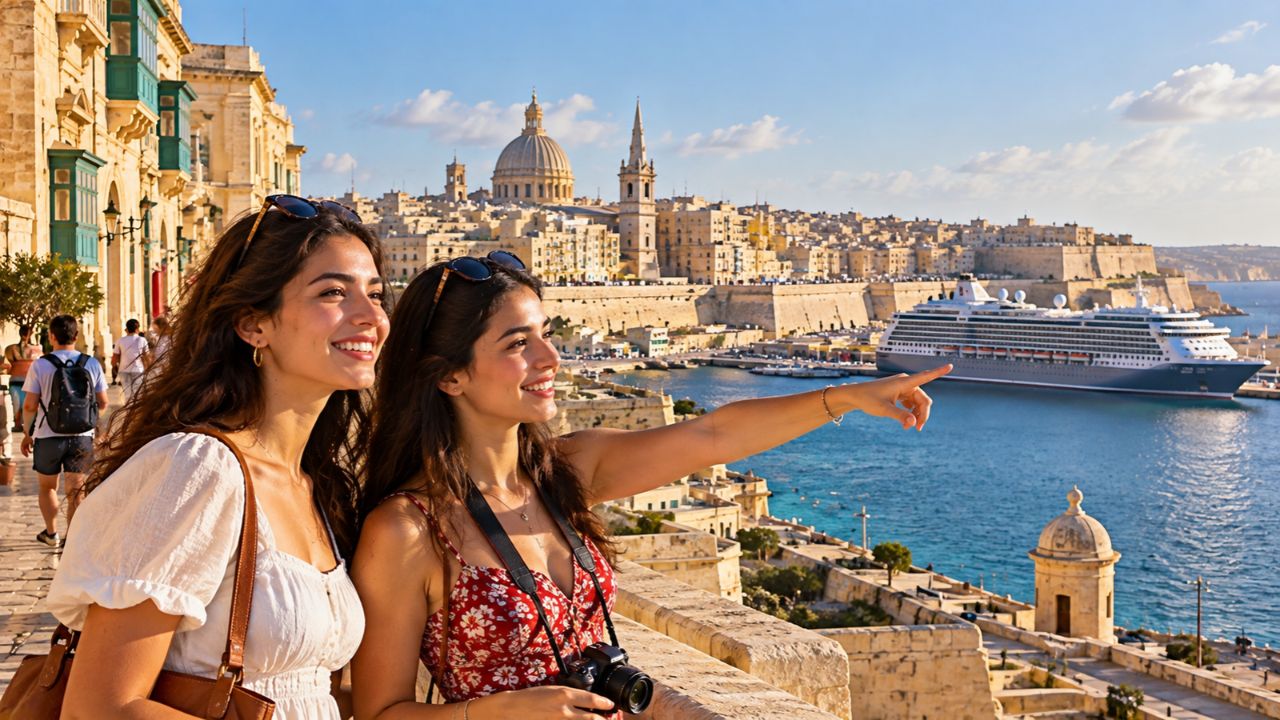
Historic bastions and maritime waterfront lining the Grand Harbour of Valletta
Outperforming European Union averages by more than sixfold with a 16.8% annual expansion in tourism GDP and a 16.1% leap in international visitor spending, Malta has converted its post-pandemic momentum into a collective $2 billion private-sector investment commitment. Formalized on 13 October 2026 following the 26th Global Summit of the World Travel & Tourism Council (WTTC) in Valletta, the multi-billion-dollar commitment signals an institutional shift among international hospitality brands, aviation groups, and infrastructure developers toward the central Mediterranean archipelago. With the sector on track to inject $4.9 billion into the domestic economy in 2026—representing 16.9% of national Gross Domestic Product (GDP) and supporting more than one in five jobs nationwide—Malta is positioning itself as a high-yield Mediterranean hub.
Hosted under the thematic banner "FUTU[RE]SET" between 7 and 9 October, the summit gathered over 1,000 delegates and 200 chief executives in Valletta, organized in direct partnership with the Malta Tourism Authority (MTA) and the Ministry for Foreign Affairs and Tourism. However, behind the headline scale of the $2 billion figure lies a critical economic distinction: an aggregate private-sector pledge does not constitute disbursed capital. Without itemized project allocations, construction schedules, or investor breakdowns, Malta's primary logistical challenge is channeling speculative capital into physical capacity upgrades without overwhelming the micro-state's finite geographic and ecological carrying capacity.
The 26th WTTC Global Summit and European Economic Outperformance
The economic rationale underpinning the $2 billion commitment stems from Malta's extraordinary growth trajectory compared to continental peers. While broader European tourism markets experienced sluggish, single-digit recoveries throughout 2025, Malta achieved nation-leading financial yields across both public revenues and foreign passenger receipts.
| Economic & Summit Metric | Malta Performance (2025–2026) | European Benchmark | Strategic Significance & Capital Impact |
|---|---|---|---|
| New Private Investment Pledge | US$2.0 Billion | Collective WTTC Member Commitment | Capital earmarked for lodging, transit, and infrastructure |
| 2026 Forecast Tourism Contribution | US$4.9 Billion | 16.9% of National Gross Domestic Product | Deepens national economic reliance on inbound visitor spend |
| National Employment Contribution | >20.0% of Total Workforce | Supports more than one in five jobs | Demands continuous skilled labor recruitment and training |
| 2025 Tourism GDP Growth Rate | +16.8% Year-on-Year | 2.6% European Average | Highest growth rate among European economies in WTTC index |
| 2025 Visitor Spending Expansion | +16.1% Year-on-Year | 2.4% EU Avg / 1.3% European Total | Highest among EU nations; 2nd highest across all Europe |
| WTTC Global Summit Attendance | 1,000+ Delegates | Over 200 Corporate CEOs & Chairs | Direct access to international hotel and aviation capital |
| Institutional Alignment | MTA Destination Partner (Aug 2026) | WTTC Formal Accreditation | Elevated destination branding and foreign direct investment |
Speaking at the summit, WTTC Chairman Manfredi Lefebvre emphasized that private capital gravitates toward jurisdictions demonstrating transparent regulatory cooperation and clear infrastructure visions. In tandem, WTTC President and Chief Executive Officer Gloria Guevara commended Malta's public-private alignment as a structural driver for long-term competitiveness. The institutional relationship had strengthened significantly ahead of the gathering, with the Malta Tourism Authority securing formal WTTC Destination Partner status in August 2026. During the summit's closing ceremony on 9 October, MTA Chief Executive Officer Carlo Micallef received official recognition for orchestrating the event and steering Malta’s strategic pivot toward high-spending international traveler segments.
Capital Deployment Priorities: Connectivity, Hospitality, and Infrastructure
The proposed $2 billion injection targets systemic constraints across Malta’s tourism supply chain rather than focusing exclusively on hotel room inventory. Industry working groups identified several critical areas for targeted resource allocation:
- Premium Lodging Portfolios: Upgrading existing properties and constructing five-star lifestyle resorts, branded residences, and boutique heritage hotels.
- Multimodal Transit and Air Capacity: Modernizing airport ground facilities, expanding apron parking, and enhancing international route development at Malta International Airport (MLA).
- Public Infrastructure & Urban Spaces: Refurbishing pedestrian promenades, port arrival gates, and heritage assets across central harbors.
- Cultural & Marine Experiences: Expanding high-end sailing charters, diving infrastructure, and year-round cultural programming to reduce summertime seasonality.
- Ecological Resource Efficiency: Retrofitting hospitality operations with advanced water recycling plants, smart electrical management systems, and solar micro-grids.
Because the WTTC announcement represents a collective commitment from global corporate members rather than a unified sovereign fund, individual projects must still clear domestic environmental assessments, urban planning permits, and municipal zoning approvals.
Territorial Balancing: Valletta, Gozo, and the Urban Coastline
Covering a total land area of just 316 square kilometers, the Maltese archipelago faces severe physical limitations that dictate how and where fresh capital can be absorbed. The country must balance intense visitor demand with community livability across distinct geographical zones:
- Valletta (The Baroque Core): A UNESCO World Heritage capital characterized by historic palaces, boutique conversions, cultural exhibitions, and Grand Harbour cruise passenger handling.
- Sliema and St Julian’s: The commercial tourism heartland, housing the highest concentration of multi-story coastal hotels, conference facilities, dining precincts, and entertainment hubs.
- The Island of Gozo: Positioned as an eco-island offering rural farmhouses, quiet coastal cliffs, diving coves, and historical fortifications, requiring low-density, high-value tourism developments.
- Mdina and Central Heritage Towns: Ancient fortified cities where visitor flows require strict scheduling to preserve historic streetscapes and avoid overcrowding.
- Northern Coastal Resorts (Mellieħa): Family-friendly beach resorts and marine leisure areas sensitive to coastal water quality and shoreline preservation.
Unchecked development along the Sliema-St Julian’s coastal strip has previously sparked domestic debates over congestion, noise pollution, and visual intrusion. Directing private capital into decentralized, eco-sensitive projects—particularly across Gozo and rural southern villages—is essential to prevent municipal gridlock and environmental degradation.
Expert Analysis: The Yield Premium and Regulatory Conversion Risk
For travelers booking this route, the direct consequence is that rapid luxury hotel conversions and boutique resort developments will steadily escalate daily room rates across Valletta and St Julian’s, pricing out budget travelers in favor of high-spending cultural and conference delegates. Malta's strategic choice to court institutional luxury capital is designed to elevate Average Daily Rates (ADR) and Revenue Per Available Room (RevPAR), allowing the country to expand tourism export revenues toward $4.9 billion without expanding physical visitor volumes to unsustainable levels.
The pricing pressure this creates means independent tour operators and local transit services must upgrade their fleets and digital booking tools to meet the service expectations of luxury travelers, or risk losing market share to vertically integrated multinational operators. Furthermore, local hoteliers who fail to modernize energy and water systems will face punishing operational overheads, as island utility tariffs penalize inefficient commercial resource consumption.
At the regulatory level, converting a $2 billion private commitment into operational reality involves navigating complex European Union environmental standards and local planning laws. In a territory with scarce open land, projects proposed Outside Development Zones (ODZ) face intense public opposition and judicial scrutiny. If international investment groups encounter bureaucratic gridlock or protracted planning appeals, portions of this pledged capital could easily shift to rival Mediterranean destinations such as Cyprus, Greece, or southern Italy. The Maltese government’s primary operational test over the next 24 months will be establishing streamlined, transparent planning corridors that safeguard local heritage while enabling timely project execution.
Key Takeaways
- Multibillion-Dollar Commitment: WTTC members pledged a collective $2 billion toward Malta's tourism sector during the 26th Global Summit in Valletta.
- Sector Economic Weight: Travel and tourism is forecast to generate $4.9 billion in 2026, accounting for 16.9% of Malta's GDP and supporting over 20% of all national employment.
- Unrivaled European Growth: In 2025, Malta recorded a 16.8% increase in tourism GDP and a 16.1% rise in visitor spending, far outstripping European averages of 2.6% and 1.3%.
- Institutional Partnerships: The Malta Tourism Authority became an official WTTC Destination Partner in August 2026, strengthening ties with over 200 global tourism CEOs.
- Conversion and Planning Tests: The $2 billion pledge requires individual project approvals, land-use zoning compliance, and environmental safeguards to become active developments.
FAQ: Malta Tourism Investment 2026
What is the $2 billion WTTC investment commitment in Malta?
It is a collective private-sector pledge announced on 13 October 2026 by WTTC corporate members to fund hospitality, connectivity, infrastructure, and sustainable tourism projects across Malta.
How much does tourism contribute to Malta's economy in 2026?
According to WTTC research, travel and tourism is projected to contribute $4.9 billion to Malta's economy in 2026, representing 16.9% of the nation's GDP and one in five jobs.
How did Malta's tourism growth compare to Europe in 2025?
Malta led Europe with a 16.8% surge in tourism GDP (versus the 2.6% European average) and a 16.1% leap in international visitor spending (versus 2.4% across the EU).
Which areas in Malta are prioritized for future tourism investment?
Capital will focus on boutique and luxury lodging in Valletta and St Julian’s, connectivity upgrades at Malta International Airport, and eco-sensitive, low-impact developments across Gozo.
[As international capital converges on Valletta, Malta's future prosperity hinges on proving that a compact island nation can absorb billions in private investment without sacrificing its historic soul.]
Related Travel Guides
- Portugal's Lisbon Wins Twin European Tourism Awards for City Travel and Cruise Excellence as 32 National Honors Reshape Atlantic Tourism
- Luxembourg Ranks 13th Globally in OECD Tourism Report as Free Transit and 19% Arrival Surge Drive Investment Blueprint
- 10 Essential Valletta and Gozo Island Travel Tips from Reddit Explorers 2026
Disclaimer
This article is for informational and educational purposes only. It does not constitute legal, financial, or professional advice. While we strive to provide accurate and up-to-date information, travel policies, regulations, and conditions change rapidly. Always verify information with official sources before making travel decisions. Nomad Lawyer makes no representations about the accuracy, reliability, completeness, or suitability of the information provided. Readers should consult qualified professionals for advice specific to their circumstances. The views expressed in this article are those of the author and do not necessarily reflect the views of Nomad Lawyer.
Raushan Kumar
Founder & Lead Developer
Full-stack developer with 11+ years of experience and a passionate traveller. Raushan built Nomad Lawyer from the ground up with a vision to create the best travel and law experience on the web.
Learn more about our team →