
Malta Luxury Hotel Revamp 2026: Casa Bonavita and Major Resorts Drive High-Value Tourism Shift
Malta is aggressively pivoting toward high-value tourism in 2026, with Casa Bonavita and major resorts like The Phoenicia and Westin Dragonara leading a wave of luxury heritage restorations and wellness upgrades.

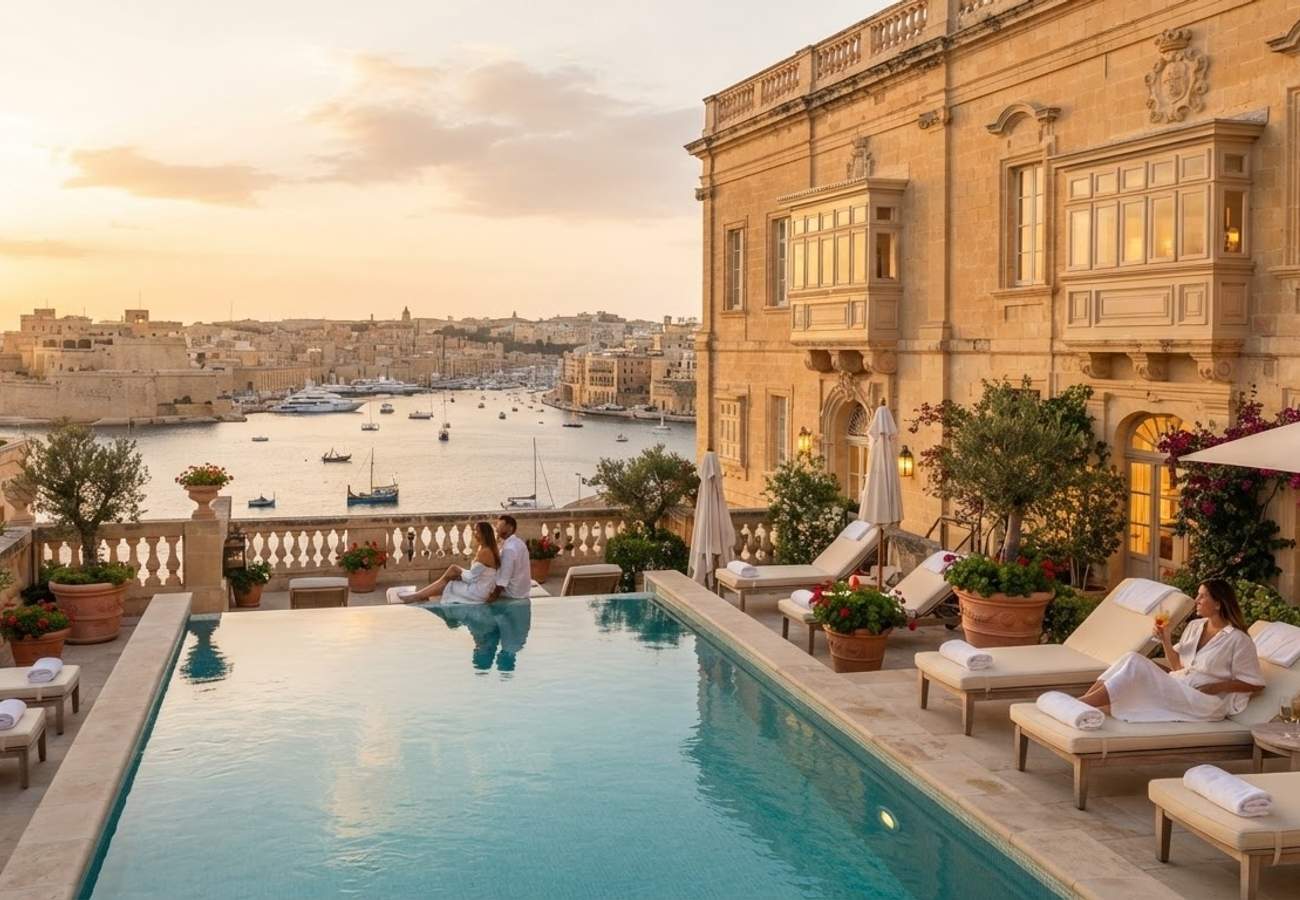
Image generated by AI
Malta is transitioning into a high-end tourism powerhouse as leading resorts and boutique properties execute a massive infrastructure overhaul to attract premium international travelers in 2026.
The island's hospitality sector is moving away from mass-market volume, focusing instead on "high-value" tourism. This strategic pivot is characterized by the restoration of historic palazzos, multi-million euro refurbishments of established resorts, and a systemic integration of wellness and heritage experiences.
The Shift Toward Boutique Heritage
A centerpiece of this transformation is the opening of Casa Bonavita in Attard. This project converts an 18th-century palazzo into a 17-room luxury boutique hotel. By blending antique furniture and artisan craftsmanship with a modern wellness sanctuary and Mediterranean gardens, the property exemplifies the "adaptive reuse" trend currently sweeping the Mediterranean.
This movement is most visible in Valletta, where the conversion of historic palazzos into boutique hotels—complete with rooftop pools and private terraces—is redefining the capital's luxury offering.
Strategic Capital Investments
Beyond boutique entries, Malta's established luxury anchors are deploying significant capital to maintain competitiveness:
- The Phoenicia Malta (Valletta): Implementing a €50 million redevelopment program to overhaul historic fortifications, add rooms, and install a new swimming pool.
- The Westin Dragonara Resort (St Julian’s): Following a €40 million makeover, the resort continues to target the high-end family and luxury market with redesigned suites and upgraded facilities.
- Malta Marriott Hotel & Spa (St Julian’s): Recently completed a €30 million refurbishment focusing on expanded premium accommodation and enhanced spa leisure zones.
- Corinthia Hotel & Spa (Attard): Expanding its wellness footprint with a redesigned spa concept featuring vitality and thermal pools.
Hospitality Investment and Development Matrix 2026
| Hotel / Project | Location | Status/Investment | Key Upgrades | Tourism Impact |
|---|---|---|---|---|
| Casa Bonavita | Attard | Opening 2026 | 17 rooms, restored palazzo, wellness sanctuary | Boosts boutique heritage appeal |
| The Phoenicia | Valletta | €50M Overhaul | Fortification restoration, new pool, added rooms | Reinforces Valletta as cultural luxury hub |
| Malta Marriott | St Julian's | €30M Investment | Redesigned suites, upgraded spa/leisure | Strengthens business & luxury segments |
| Westin Dragonara | St Julian's | €40M Makeover | Luxury suites, upgraded pools & restaurants | Supports high-end resort & family market |
| Corinthia Hotel | Attard | Wellness Expansion | Thermal pools, experience showers, vitality pool | Targets global wellness tourism demand |
| Seashells Resort | Qawra | Refurbished | Updated rooms and entertainment areas | Maintains family/leisure competitiveness |
Why This Matters: Industry Analysis
From a logistical and market perspective, Malta is attempting to decouple its economy from the volatility of mass tourism. By prioritizing "experience-driven" stays over room count, the island is targeting a specific demographic: high-net-worth individuals from North America and Europe who prioritize authenticity over standardization.
Our analysis of the current development pipeline suggests three primary drivers:
- Differentiation via Architecture: While competitors in the Mediterranean offer modern beach resorts, Malta is leveraging its limestone heritage. This creates a "destination within a destination" effect, where the hotel itself is a primary draw.
- The Wellness Pivot: The heavy investment in thermal pools and "wellness sanctuaries" (notably at Corinthia and Casa Bonavita) indicates a shift toward longer-stay guests who utilize hotels for health and recuperation, increasing the average length of stay (ALOS).
- Sustainability through Preservation: Using existing 18th-century structures reduces the environmental impact of new construction, aligning with the Malta Tourism Authority's Product Development Framework.
Forward Outlook
Expect a continued surge in "micro-luxury" developments across the coastal regions. The long-term pipeline indicates a move toward AI-integrated guest services and sustainable luxury. As the boutique sector in Valletta matures, the focus will likely shift toward integrating these luxury stays with curated, high-end cultural itineraries to maximize the spend-per-visitor ratio.
Malta is no longer just a stopover; it is positioning itself as a primary luxury destination.
Related Travel Guides
Disclaimer
This article is for informational and educational purposes only. It does not constitute legal, financial, or professional advice. While we strive to provide accurate and up-to-date information, travel policies, regulations, and conditions change rapidly. Always verify information with official sources before making travel decisions. Nomad Lawyer makes no representations about the accuracy, reliability, completeness, or suitability of the information provided. Readers should consult qualified professionals for advice specific to their circumstances. The views expressed in this article are those of the author and do not necessarily reflect the views of Nomad Lawyer.
Kunal K Choudhary
Co-Founder & Contributor
A passionate traveller and tech enthusiast. Kunal contributes to the vision and growth of Nomad Lawyer, bringing fresh perspectives and driving the community forward.
Learn more about our team →