
Malta Joins With Denmark and Others as EU Fuel Prices Hit Records Impacting Travel Costs and Tourism in 2026
Malta Joins With Denmark and Others as EU Fuel Prices Hit Records Impacting Travel Costs and Tourism in 2026

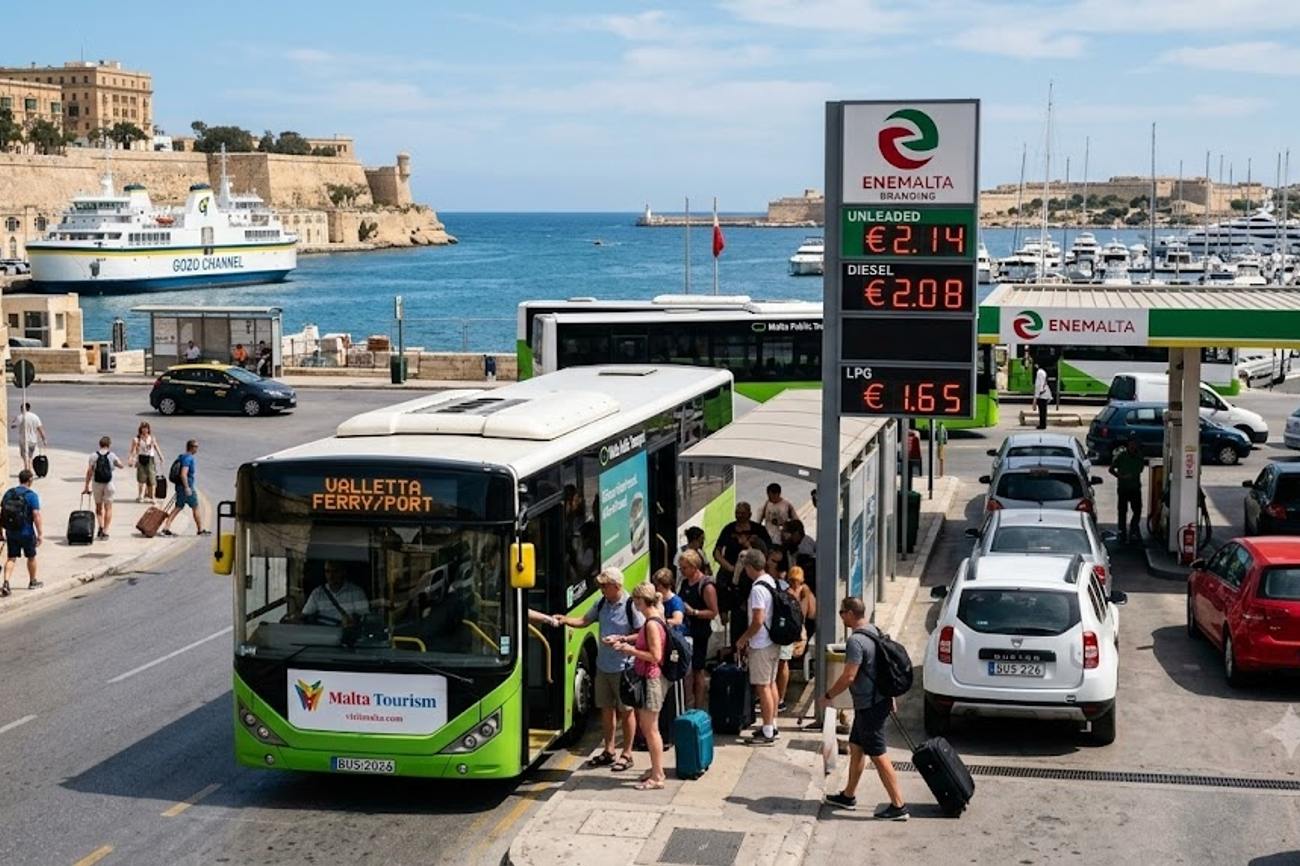
Image generated by AI
EU petrol prices averaged €2.063 per litre as of September 14, 2026, representing a stark contrast to Malta’s €1.34 per litre—a price gap of €0.723 per litre that is fundamentally altering how tourists allocate their mobility budgets across the continent. This divergence signals a shift in European tourism where fuel affordability is no longer a marginal expense but a primary driver of destination selection and itinerary design.
The 2026 Fuel Surge in Numbers
The current volatility in European energy markets has pushed fuel costs to the highest levels ever recorded in the European Commission’s long-term monitoring series. As of mid-September 2026, the weighted EU average for petrol stands at €2.063 per litre, while diesel has climbed to €2.159 per litre. The most aggressive movement has occurred within the diesel sector, which has seen a price increase of nearly 40% since the start of 2026.
This spike is not merely a result of crude oil volatility but is heavily influenced by refining margins. Data from the European Central Bank indicates that during the third week of September, refining margins added approximately €0.41 per litre to the cost of diesel. This specific component now represents roughly 19% of the total retail diesel price. With margins expected to peak in October 2026, the pressure on transport-dependent tourism services is projected to intensify before the end of the fiscal year.
The impact is unevenly distributed across the EU, creating "fuel havens" and "cost hotspots." In Denmark, petrol prices have reached a peak of €2.56 per litre, the highest among monitored countries. Conversely, Finland has seen diesel prices hit €2.51 per litre, a critical figure for a market where long-distance travel between natural attractions is a core component of the tourist experience.
Comparative Mobility Benchmarks: High-Cost vs. Low-Cost Hubs
The disparity in fuel pricing is creating a fragmented tourism landscape. While some nations are seeing a decline in road-based tourism due to prohibitive costs, others are becoming more attractive for independent explorers. The following table illustrates the extreme variance in fuel costs across key European markets as of September 2026.
| Metric | Denmark (High-Cost) | Finland (High-Cost) | EU Average | Malta (Low-Cost) |
|---|---|---|---|---|
| Petrol Price (per litre) | €2.56 | Not Specified | €2.063 | €1.34 |
| Diesel Price (per litre) | Not Specified | €2.51 | €2.159 | €1.21 |
| Price Delta vs. EU Avg (Petrol) | +€0.497 | N/A | Baseline | -€0.723 |
| Price Delta vs. EU Avg (Diesel) | N/A | +€0.351 | Baseline | -€0.949 |
| Primary Tourism Risk | Road Trip Budgeting | Long-Distance Access | General Mobility | Low (Competitive Advantage) |
When comparing these figures to historical norms, the 40% surge in diesel costs since January 2026 represents one of the most rapid inflationary periods for transport fuel in recent history. For an industry that operates on thin margins—particularly coach tour operators and airport transfer services—these costs cannot be absorbed internally. According to data patterns tracked by IATA, fuel costs consistently represent one of the largest variable expenses for any transport-related service, and the current trajectory suggests a permanent shift in the pricing floor for European ground transport.
What This Means for Travelers
The data indicates that the "spontaneous road trip" is becoming a luxury good in Northern Europe. For travelers planning trips in Q4 2026 and into 2027, the following strategic adjustments are necessary:
- Budget Reallocation for Scandinavia: If visiting Denmark or Finland, travelers must increase their transport budget by at least 25-30% compared to 2025 levels. The €2.56 petrol price in Denmark makes rental car usage significantly more expensive than rail or shared mobility options.
- Pivot to "Micro-Destinations": Malta’s low fuel prices (€1.34 petrol / €1.21 diesel) combined with its small geographical footprint make it an ideal destination for those who prefer independent exploration without the financial burden of high fuel costs.
- Avoid Diesel-Heavy Packages: Travelers should scrutinize "all-inclusive" coach tours. Since diesel has risen nearly 40% this year, operators are likely to implement "fuel surcharges" or increase base prices. Booking rail-based itineraries via platforms monitored by OAG may offer more price stability.
- Rental Car Strategy: In high-cost zones like Finland, prioritize electric vehicle (EV) rentals. The gap between diesel (€2.51/L) and electricity costs is now wide enough to justify the potentially higher daily rental rate of an EV.
The Trajectory of European Mobility
The current data suggests that the European tourism industry is entering a phase of "forced efficiency." The fact that refining margins contribute 19% to the pump price indicates that the cost is not just about raw material but about processing capacity. As these margins are expected to peak in October 2026, we anticipate a short-term spike in the cost of group travel packages.
Long-term, this trend will likely accelerate the transition of rural tourism. Destinations in Finland and Denmark that rely exclusively on road access may see a dip in visitor numbers unless they integrate more robust public transport links. We are seeing a market shift where "fuel-efficient destinations" become a marketing point. Malta is currently positioned to capitalize on this, as its lower fuel costs lower the barrier to entry for self-drive tourists.
Furthermore, the reliance on diesel for long-distance coach tourism is becoming a liability. Industry data from Statista suggests a growing trend toward fleet electrification in the EU. The 40% increase in diesel costs serves as a catalyst for tour operators to accelerate the retirement of internal combustion engines in favor of electric or hybrid fleets to stabilize their operational expenses.
FAQ: European Fuel Trends 2026
Will car rental prices increase because of fuel costs? Yes. While the rental fee is separate from fuel, operators often increase daily rates to offset the higher cost of maintaining and refueling their fleets. Expect higher "delivery" and "drop-off" fees in Denmark and Finland.
Is it cheaper to travel by coach or train in 2026? Trains are currently more price-stable. Coach operators are facing a 40% increase in diesel costs, which is being passed to the consumer through surcharges. Rail is the more predictable budget option for Q4 2026.
Why is fuel so much cheaper in Malta than in Denmark? Fuel pricing varies based on national taxes, refining agreements, and import logistics. Malta’s current pricing (€1.34 petrol) provides a significant competitive advantage for independent travelers compared to Denmark’s €2.56.
When will fuel prices stabilize? Refining margins are projected to peak in October 2026. While a slight dip may follow, the 40% year-to-date increase in diesel suggests a new, higher baseline for European transport costs.
The era of cheap European road exploration has ended; mobility is now a strategic budget item.
#EUFuelPrices2026 #EuropeanTourismCosts #DieselInflation2026 #MaltaTourismMobility #DenmarkPetrolRates #TransportEconomicsEU
Related Travel Guides
- US Teams Up With South Korea To Deepen Cooperation And Transform Tourism With Stronger Investment And Travel Links
- Vietnam Airlines Boosts Hanoi Tourism With Unique Autumn Campaign Celebrating Culture and Experiences
- Abu Dhabi’s Yas Island Unveils Dh6 Billion Tourism Magnet With Luxury Marina And World Class Entertainment Experiences
Disclaimer
This article is for informational and educational purposes only. It does not constitute legal, financial, or professional advice. While we strive to provide accurate and up-to-date information, travel policies, regulations, and conditions change rapidly. Always verify information with official sources before making travel decisions. Nomad Lawyer makes no representations about the accuracy, reliability, completeness, or suitability of the information provided. Readers should consult qualified professionals for advice specific to their circumstances. The views expressed in this article are those of the author and do not necessarily reflect the views of Nomad Lawyer.
Naina Thakur
Contributor & Travel Specialist
Travel enthusiast and legal writer covering visa regulations, responsible tourism, and cultural journeys across global destinations.
Learn more about our team →