
Beyond Sioux Falls: Why Madison, South Dakota Offers a Masterclass in Autumn Shoulder-Season Travel
An in-depth travel analysis of Madison, South Dakota in October, examining glacial lake parks, waterfowl migration corridors, and frontier heritage sites.

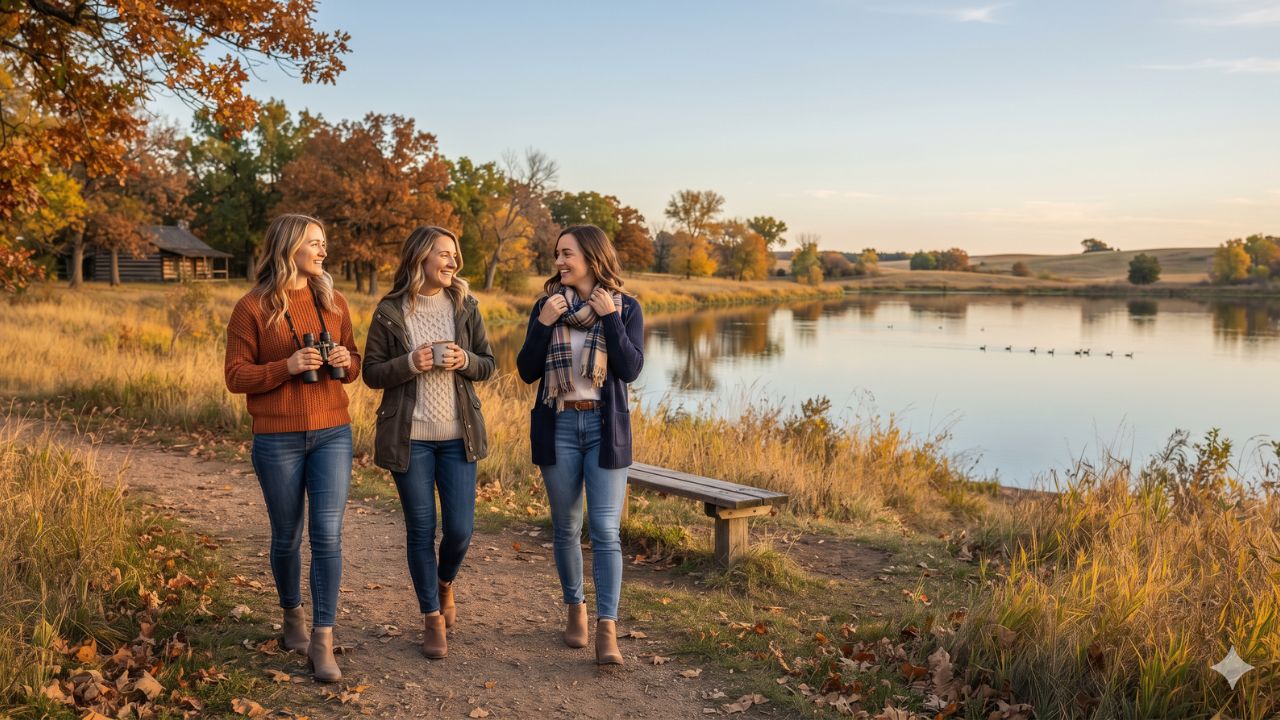
Framed by more than 40 preserved frontier structures, two glacial lake basins, and thousands of acres of protected waterfowl production wetlands, Madison, South Dakota, offers an instructive model for off-peak shoulder-season travel. Located 50 miles northwest of Sioux Falls in Lake County, this quiet prairie community transitions each October from high-density summer aquatic recreation into a tranquil autumn refuge. While mass tourism corridors across the Upper Midwest experience post-Labor Day shutdowns, Madison leverages open freshwater expanses, native oak woodlands, and rich migratory flyways to sustain high-quality, low-impact nature travel.
The destination's appeal lies in its unhurried pace and authentic prairie heritage. By positioning outdoor exploration around Lake Herman and Lake Madison, travelers avoid commercialized amusement crowds while gaining access to critical ecological and historical waypoints. However, traveling through rural South Dakota during late autumn requires logistical awareness. From seasonal state park utility winterizations to overlapping public hunting seasons on federal waterfowl tracts, successful autumn itineraries demand careful advance planning and an understanding of regional environmental cycles.
Glacial Topography and Frontier Settlement: The Heritage of Lake Herman and Lake Madison
The geographic foundation of Lake County was shaped thousands of years ago during the late Pleistocene epoch, when receding glacial ice sheets gouged out natural depressions that filled with pristine meltwater. Today, Lake Herman and Lake Madison anchor the regional ecosystem, offering deep freshwater habitats surrounded by tallgrass prairie and native bur oak forests.
Two miles west of the city along South Dakota Highway 34, Lake Herman State Park occupies a prominent peninsula jutting directly into the glacial lake. Beyond its recreational assets—which include walking trails, lakeshore fishing access, disc golf courses, and shoreline picnic groves—the park preserves a foundational artifact of Dakota pioneer history. In 1870, Herman Luce and his son William arrived on the eastern shore, constructing a sturdy log cabin in 1871 from hand-hewn native oak timber. The structure subsequently served as an official United States Land Office, processing homestead claims as European settlers moved into the Dakota Territory. Recognized for its historical integrity, the Luce Cabin was officially listed on the National Register of Historic Places in 1977.
Approximately nine miles southeast of the city center lies Lake Madison, a significantly larger body of water bordered by Walker’s Point Recreation Area. Unlike commercialized resort developments, Walker’s Point provides direct, low-impact public access to Lake Madison’s expansive open water. The facility features an accessible public fishing pier, modern boat ramps, sandy beaches, and lakeside campsites. Anglers targeting the lake during autumn pull active populations of walleye, northern pike, black crappie, yellow perch, and bullhead as fish feed aggressively ahead of the winter freeze.
Seasonal Transition Matrix: Park Operations, Facility Status, and Wildlife Windows
Navigating Madison’s outdoor attractions during October requires awareness of seasonal operating calendars, as state agencies begin preparing infrastructure for sub-zero prairie winters.
The following data table breaks down operational statuses, seasonal facility restrictions, and wildlife viewing windows across Lake County:
| Attraction / Site Node | Location & Distance | Operational Season / Calendar | October Facility Status & Restrictions | Primary Traveler Appeal & Activity |
|---|---|---|---|---|
| Lake Herman State Park | 2 miles west via SD Highway 34 | Open 365 days year-round | Flush toilets and showers close 1 Oct – 30 April; vault toilets remain open | Luce Cabin (1871), hiking trails, shoreline fishing, camping |
| Walker’s Point Recreation Area | 9 miles southeast on Lake Madison | Open year-round (seasonal utility) | Pressurized water winterized; boat ramps and fishing piers accessible | Fall angling (walleye, pike, crappie), lakeside photography |
| Prairie Village | 2 miles west near Lake Herman | Early May through Labor Day | Regular camping and Pumpkin Train concluded on 3 October 2026 | 40+ restored heritage buildings, steam carousel, railroad |
| Madison Wetland District | HQ 2 miles east of downtown | Year-round access during daylight | Public hunting season active; high-visibility blaze orange required | Migratory birding across Waterfowl Production Areas (WPAs) |
| Downtown Cultural Centers | Egan Avenue and civic district | Year-round (seasonal hours) | Lake County Museum, Smith-Zimmermann Museum, John C. Green Studio | Settler history, regional wildlife art, live music at BrickHouse |
A central consideration for campers and day visitors is the winterization policy enforced by South Dakota Game, Fish and Parks (GFP). Starting 1 October and extending through 30 April, modern comfort stations, shower facilities, and pressurized domestic water hookups are shut down and drained to prevent catastrophic frost damage to subterranean pipes. However, rustic camping cabins and primitive sites remain reservable, supported by clean vault toilets that remain operational year-round.
Concurrently, visitors must note the hard seasonal closures of major cultural institutions. Prairie Village—an impressive open-air living history complex spanning more than 40 historic structures, including an operational steam railroad, a classic 1893 carousel, and a rare railroad chapel car—concluded its formal 2026 operating season on 3 October following its annual Pumpkin Train event. While the village grounds close to regular daily walk-up admissions until spring, its external presence continues to define the architectural character of the surrounding farmland.
Expert Analysis: Shoulder-Season Yields, Waterfowl Migration Dynamics, and Co-Existing Outdoor Rights
The seasonal transition in Lake County illustrates the complex balance between environmental conservation, agricultural stewardship, and recreational access.
For travelers booking this route, the direct consequence of October travel is access to world-class avian migration without summer heat or mosquito activity. Situated within the prairie pothole region—often referred to as North America's "duck factory"—the network of wetlands surrounding Madison serves as a vital staging post along the Central Flyway. Between March and October, birders visiting Lake Herman and the Madison Wetland Management District can observe diverse species, including the elusive Virginia Rail, Marsh Wren, Ruddy Duck, Hooded Merganser, Ring-necked Duck, and resident Great Horned Owls, alongside massive southward-bound flocks of Canada and snow geese.
The pricing pressure this creates means that regional accommodations and outdoor services in Madison offer exceptional value compared to peak summer tariffs. Hotel rates and cabin rental fees drop significantly below summer rates, allowing travelers from regional metropolitan centers like Sioux Falls, Omaha, and Minneapolis to secure budget-friendly weekend breaks. Furthermore, local cultural institutions—such as the John C. Green Art Studio at 111 Egan Avenue South and the historic Smith-Zimmermann Museum—offer relaxed, uncrowded access to local pioneer history and regional wildlife paintings.
However, autumn nature lovers must recognize that the federal Waterfowl Production Areas (WPAs) overseen by the U.S. Fish and Wildlife Service are multi-use public lands. In South Dakota, October marks the opening of competitive resident and non-resident waterfowl and upland game bird hunting seasons. Non-hunting travelers venturing into wetland borders or prairie grasslands must check current hunting regulations, schedule excursions during midday hours when shooting activity is lowest, and wear conspicuous blaze orange safety apparel to ensure safe co-existence with sportsmen.
Key Takeaways
- Ideal Autumn Shoulder-Season Destination: Madison offers an uncrowded nature retreat 50 miles northwest of Sioux Falls, anchored by Lake Herman and Lake Madison.
- National Historic Landmark: Lake Herman State Park protects the 1871 Luce Cabin, an oak-log frontier homestead and former US Land Office listed on the National Register of Historic Places.
- Winterized Park Operations: Between 1 October and 30 April, pressurized water systems and shower houses are shut down, though camping cabins and vault toilets remain accessible.
- Prime Avian Migration Corridor: March through October marks the prime birding window, drawing Virginia Rails, Hooded Mergansers, Ring-necked Ducks, and migratory geese.
- Multi-Use Safety Protocols: Travelers exploring federal Waterfowl Production Areas during October must maintain awareness of active hunting seasons and wear protective blaze orange.
FAQ: Madison South Dakota Fall Travel 2026
What state parks are located near Madison, South Dakota?
Lake Herman State Park is located two miles west of Madison, while Walker’s Point Recreation Area on Lake Madison is situated nine miles southeast of the city.
Are campgrounds and restrooms open at Lake Herman in October?
Campsites and cabins remain open year-round, but modern flush toilets and shower facilities close from 1 October through 30 April for winterization; vault toilets stay open.
Can visitors tour Prairie Village in late October?
No. Prairie Village closes its regular daily operations and camping season after Labor Day, with its final 2026 special event (the Pumpkin Train) concluding on 3 October.
What fish species are caught in Lake Madison during autumn?
Anglers frequently catch walleye, northern pike, black crappie, yellow perch, and bullhead from Lake Madison’s shorelines and public fishing piers during October.
By trading crowded highways for quiet prairie waters, autumn travelers in Madison discover a serene corner of South Dakota where history, wildlife, and open skies meet.
Related Travel Guides
Disclaimer
This article is for informational and educational purposes only. It does not constitute legal, financial, or professional advice. While we strive to provide accurate and up-to-date information, travel policies, regulations, and conditions change rapidly. Always verify information with official sources before making travel decisions. Nomad Lawyer makes no representations about the accuracy, reliability, completeness, or suitability of the information provided. Readers should consult qualified professionals for advice specific to their circumstances. The views expressed in this article are those of the author and do not necessarily reflect the views of Nomad Lawyer.
Preeti Gunjan
Contributor & Community Manager
A passionate traveller and community builder. Preeti helps grow the Nomad Lawyer community, fostering engagement and bringing the reader experience to life.
Learn more about our team →