
Brisbane’s Luxury Travel Boom: Island Escapes, Urban Architecture, and the Road to the 2032 Olympics
Brisbane accelerates its global luxury transformation, pairing 50-cent public transit and 2032 Olympic projects with boutique hotels, Moreton Island, and fine dining.

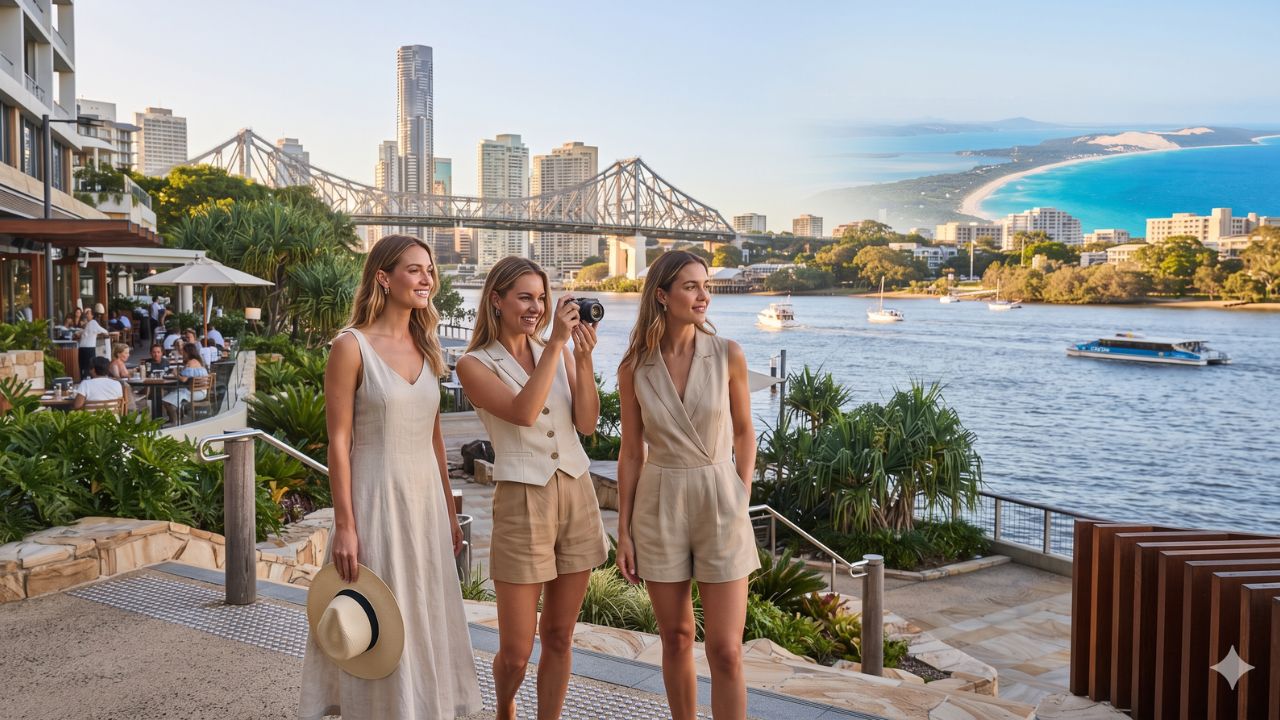
Backed by a statewide 50-cent public transport fare initiative that covers river CityCat catamarans and commuter rail, alongside a multibillion-dollar urban redevelopment pipeline ahead of the 2032 Olympic and Paralympic Games, Brisbane has transitioned from a transit stopover into Australia’s fastest-growing luxury travel capital. Historically dismissed by international travelers as a quiet provincial waypoint—often referred to by the ironic colloquialism "Brisvegas"—Australia’s third-largest city is executing a high-yield tourism repositioning. By combining architectural design hotels, globally exported pop-culture attractions, protected marine parks, and an influx of fine-dining talent, the Queensland capital now competes directly against Sydney and Melbourne for premium international visitor expenditure.
Promoted internationally by Tourism Australia and coordinated across the state by Tourism and Events Queensland, the municipal strategy leverages Brisbane's year-round subtropical climate. Rather than isolating luxury inside enclosed enclaves, the city integrates high-end hospitality directly into open-air urban waterfronts, coastal islands, and heritage entertainment precincts.
Urban Architectural Luxury and Precinct Development: From James Street to Queen's Wharf
The architectural transformation of Brisbane is centered on the subtropical indoor-outdoor design movement. Nowhere is this clearer than in the James Street precinct in Fortitude Valley. Once a light-industrial warehouse zone, the tree-lined boulevard has become Australia's premier outdoor lifestyle and fashion corridor.
Anchoring this precinct is The Calile Hotel, an internationally celebrated property designed by architects Richards and Spence. With 175 guest rooms, private cabanas surrounding a resort-style pool deck, lush palm plantings, and the integrated Kailo Medispa, the hotel serves as the social epicenter of Queensland’s design community. The surrounding avenue hosts flagship retail spaces for major Australian fashion houses and industrial designers, including Zimmermann, Venroy, P. Johnson, Mud Australia, and Dinosaur Designs, alongside curated multi-brand fashion boutiques like Camargue and Samantha Ogilvie.
Beyond James Street, Brisbane’s luxury hotel stock spans distinctive heritage and riverfront developments:
- Miss Midgley’s: An intimate, five-suite boutique retreat occupying a carefully restored 1860s former schoolhouse in New Farm, featuring self-contained kitchens, heritage verandas, and pet-friendly ground-floor accommodations.
- Emporium Hotel South Bank: Featuring 143 suites overlooking the central business district, accompanied by a 23-meter rooftop infinity pool and bespoke cocktail lounges.
- Spicers Balfour Hotel: Preserving historic Queenslander residential architecture with wraparound timber verandas, an intimate rooftop bar, and French-Vietnamese dining at Balfour Kitchen & Bar.
- Queen's Wharf Brisbane: A multibillion-dollar integrated waterfront precinct delivering luxury hotels, elevated public skydecks, high-end retail, and international gaming facilities along the riverfront.
The city’s nightlife and dining ecosystems have expanded in parallel. Along the northern riverbank, Howard Smith Wharves has transformed abandoned 1930s shipping warehouses beneath the Story Bridge into a riverfront dining destination. Craft beer enthusiasts gather at Felons Brewing Co., while cocktail patrons frequent Mr Percival’s, an overwater octagonal lounge. For wine connoisseurs, Winnifred’s curates an extensive cellar featuring approximately 14,000 bottles and hundreds of distinct Champagne cuvées.
Cultural Capital, Family Pop Icons, and Coastal Sanctuary Access
Brisbane’s cultural development has gained global momentum through family entertainment and major visual arts institutions. The international success of the Emmy Award-winning animated series Bluey has spurred the opening of Bluey’s World, an interactive family attraction recreating the iconic Heeler home, driving influxes of international family travel.
Concurrently, animal welfare standards across Australian ecotourism have evolved significantly. At Lone Pine Koala Sanctuary, established in 1927 as the world’s first and largest koala reserve, direct koala holding is no longer permitted. The sanctuary has transitioned entirely to low-stress observational encounters, educational keeper talks, and open-paddock kangaroo feeding, establishing an ethical wildlife model for regional tourism.
Across the Brisbane River, South Bank integrates 17 hectares of parklands, public promenades, and Streets Beach—Australia's only inner-city, man-made freshwater swimming lagoon. The precinct also hosts the Queensland Art Gallery and Gallery of Modern Art (QAGOMA), housing the nation’s foremost collection of contemporary Indigenous Australian and Asia-Pacific art.
For sports tourists, Suncorp Stadium and the surrounding Caxton Street hospitality precinct become energetic staging grounds during home fixtures for the Brisbane Broncos (National Rugby League), Queensland Reds (Super Rugby), and Brisbane Lions (Australian Football League).
A distinct competitive advantage of Brisbane is its direct marine gateway to pristine sand islands:
| Marine & Regional Destination | Distance & Transit Mode | Primary Natural & Wildlife Experiences | Visitor Regulations & Seasonal Notes |
|---|---|---|---|
| Moreton Island (Mulgumpin) | 75-minute passenger or vehicle ferry | Giant sand dunes, Tangalooma shipwrecks, snorkelling, sandboarding | Humpback whale migration passes June to October; wild dolphin feeding at Tangalooma Resort |
| North Stradbroke Island (Minjerribah) | 25-minute water taxi or 45-minute ferry | Pristine ocean beaches, Brown Lake, coastal gorge walks | Point Lookout offers headland whale watching; accessible via Cleveland rail connection |
| Gold Coast Enclave | 60 minutes south via Pacific Motorway | World-class surfing breaks, Mondrian Gold Coast luxury | High-end coastal dining at Rick Shores and Labart; bustling resort nightlife |
| Noosa & Cooloola Coast | 120 minutes north via Bruce Highway | Noosa National Park, Double Island Point, coloured sand cliffs | Coastal biosphere walks; 4WD access permits required for beach driving |
The city's culinary boundaries continue to broaden through imaginative independent dining rooms. Andrew McConnell’s Supernormal brings contemporary Asian dishes and local Moreton Bay bugs to the river edge, while Phil Marchant’s Essayist presents refined tasting courses highlighted by spanner crab beignets. Regional European traditions appear at Mosconi, serving handmade pasta in a converted World War II warehouse, and at August, where chef Brad Cooper plates modern cuisine inside a deconsecrated stone church.
Expert Analysis: Olympic Capital Injections, Subsidized River Mobility, and Post-Pandemic Luxury Consolidation
The rapid elevation of Brisbane’s hospitality economy is driven by long-term government infrastructure funding and aggressive aviation capacity expansion.
For travelers booking this route, the direct consequence of recent airline negotiations is seamless transpacific access. Brisbane Airport has secured direct, non-stop services from major North American hubs, including Los Angeles (LAX) and San Francisco (SFO), on carriers such as United Airlines and Qantas. This allows travelers heading to Queensland’s reef, rainforest, and island destinations to bypass the customs congestion and domestic transfer terminals of Sydney Kingsford Smith Airport.
From an urban transit standpoint, the Queensland Government’s 50-cent public transport initiative, administered across the Translink Queensland network, provides extraordinary traveler utility. Passengers can board CityCat catamarans to cruise the entire length of the Brisbane River—from the university grounds of St Lucia down to the dining docks of Northshore Hamilton—for just AU$0.50 per journey. While the privately operated Airtrain link to the airport remains separately tariffed, local urban transit costs are virtually non-existent for visiting tourists.
The pricing pressure this creates means established international hotel brands must continually upgrade their guest services to match the design-led standards set by independent operators like The Calile. As five-star room rates in Brisbane climb toward AU$450 to AU$700 per night during peak events, properties are heavily investing in wellness spas, curated retail partnerships, and celebrity-chef dining concessions.
Travelers must also structure itineraries around Queensland’s seasonal climate patterns. The optimal window for travel spans the southern hemisphere autumn, winter, and spring (April through October). During these months, daily temperatures average a comfortable 21°C to 26°C with minimal humidity, coinciding with the annual Brisbane Festival in September and the winter humpback whale migration. Conversely, the summer months (December through February) experience high heat, extreme humidity, and intense subtropical rainstorms that can disrupt outdoor island excursions.
Key Takeaways
- Olympic Tourism Pipeline: Preparations for the Brisbane 2032 Olympic and Paralympic Games are driving major infrastructure, luxury hotel construction, and precinct revamps.
- Subsidized Public Transit: Queensland’s Translink network offers 50-cent fares across CityCat river ferries, commuter trains, and the new Brisbane Metro, dramatically reducing local transit expenses.
- Design-Led Urban Luxury: The James Street precinct anchors the city's fashion and lifestyle sector, led by The Calile Hotel, fine boutiques, and acclaimed dining spots.
- Ethical Wildlife and Family Culture: Home to the global attraction Bluey’s World and Lone Pine Koala Sanctuary, where animal welfare reforms have ended koala holding in favor of educational observation.
- Island and Coastal Gateways: Provides direct ferry access to Moreton Island and North Stradbroke Island, alongside convenient road links to the Gold Coast and Noosa.
FAQ: Brisbane Luxury Travel 2026
What is the 50-cent transit fare in Brisbane and does it cover river ferries?
Yes. Queensland’s Translink 50-cent fare initiative covers all standard bus, train, and CityCat river ferry journeys across Greater Brisbane, excluding the privately run Airtrain.
Can visitors still hold koalas at Lone Pine Koala Sanctuary?
No. In accordance with updated wildlife welfare protocols, Lone Pine Koala Sanctuary has discontinued koala holding, focusing instead on close-up viewing, education, and kangaroo feeding.
When is the best time of year to visit Brisbane and its offshore islands?
The ideal period is between April and October, offering mild temperatures, clear skies, low humidity, and prime conditions for whale watching and island excursions.
How do travelers get to Moreton Island from Brisbane?
Moreton Island is accessed via a 75-minute passenger or vehicle ferry departing from the Port of Brisbane, arriving near the Tangalooma Island Resort and shipwrecks.
By pairing breezy subtropical riverfront living with uncompromising architectural ambition, Brisbane demonstrates that Olympic host cities can build authentic, world-class travel identities long before the opening ceremony arrives.
Related Travel Guides
Disclaimer
This article is for informational and educational purposes only. It does not constitute legal, financial, or professional advice. While we strive to provide accurate and up-to-date information, travel policies, regulations, and conditions change rapidly. Always verify information with official sources before making travel decisions. Nomad Lawyer makes no representations about the accuracy, reliability, completeness, or suitability of the information provided. Readers should consult qualified professionals for advice specific to their circumstances. The views expressed in this article are those of the author and do not necessarily reflect the views of Nomad Lawyer.
Preeti Gunjan
Contributor & Community Manager
A passionate traveller and community builder. Preeti helps grow the Nomad Lawyer community, fostering engagement and bringing the reader experience to life.
Learn more about our team →