
UK, Italy, Maldives, and India Redefine Luxury Travel as Hotels Transform into Wellness and Art Hubs: New Travel Alert
Luxury travel in 2026 moves beyond rooms, with hotels in the UK, Italy, Maldives, and India launching longevity programs, art exhibitions, and sports retreats.

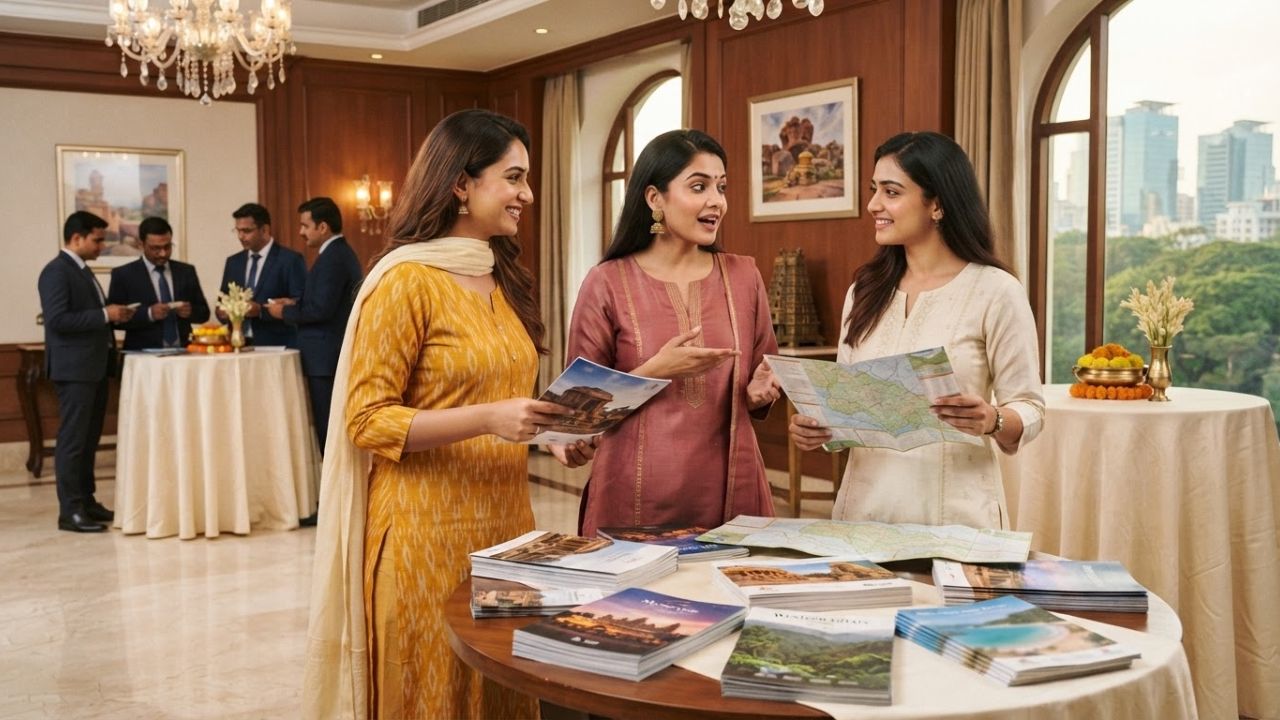
Image generated by AI
Luxury travel in 2026 moves beyond five-star rooms into complete lifestyle experiences. Across the UK, Italy, Maldives, and India, high-end hotels are integrating contemporary art galleries, medical wellness, longevity programs, and sports coaching directly into the stay itself.
High-end hotels in major international destinations are expanding beyond standard lodging options to establish integrated lifestyle, wellness, and art exhibitions. Highlighting key luxury travel trends 2026 travelers are prioritizing, premium properties across the United Kingdom, Italy, the Maldives, and India are combining diagnostics, cultural salons, and active racket sports directly into the stay experience. Supported by high occupancy figures and national wellness tourism frameworks, this transition from room-only services to complete destination-led programming is redefining traveler expectations and encouraging longer stays in local communities.
Hotels Realign Strategic Focus Toward Complete Lifestyle Programming
Luxury travel is increasingly built around what travelers can experience beyond the bedroom. High-end hotels are integrating contemporary art, heritage, medical wellness, longevity programs, members' clubs, and racket sports. The wider tourism data gives this shift commercial weight. England recorded 83% hotel room occupancy in June 2026, Italy registered 71.6 million accommodation nights in the first quarter, the Maldives had received 1.35 million tourists by August 18, while India is implementing a national medical and wellness tourism strategy.
These figures cover the wider tourism market rather than luxury alone, but they show why hotels are competing through richer, destination-led experiences. The table below outlines how hotels are responding to changing traveler demands:
| Luxury travel trend | How hotels are responding | Travel relevance |
|---|---|---|
| Cultural tourism | Art exhibitions, heritage experiences, artist programmes | Gives visitors more reasons to spend time inside and around hotels |
| Wellness tourism | Diagnostics, recovery and personalised programmes | Supports health-focused and longer-stay travel |
| Lifestyle membership | Private clubs, restaurants, gyms and events | Creates year-round local and visitor demand |
| Active travel | Tennis, padel and coaching | Converts recreation into bookable travel experiences |
| Experiential luxury | Hotel-led cultural and destination activities | Differentiates properties in competitive tourism markets |
United Kingdom Properties Integrate Curated Art Salons and Racket Sports
The United Kingdom luxury hotel market provides a clear example of this transition. Mandarin Oriental Mayfair's Living Square program uses rotating exhibitions, installations, and gallery collaborations to turn hotel spaces into a contemporary cultural salon. Corinthia London's Biome combines thermal facilities and treatments with contemporary wellness, while The Ned links hotel rooms with a members' club, restaurants, gym, spa, and rooftop facilities.
In Scotland, Gleneagles has placed padel alongside its established country pursuits and is offering a dedicated Padel Retreat on November 13–15, 2026. These developments sit within a substantial hotel market. Reports indicate that England's June 2026 hotel room occupancy reached 83%, with an average daily rate (ADR) of £187 and revenue per available room (RevPAR) of £156.
| United Kingdom indicator | Latest verified position | Luxury travel connection |
|---|---|---|
| England hotel occupancy, June 2026 | 83% | Strong utilisation of hotel inventory |
| Average daily rate | £187 | Shows significant accommodation pricing power |
| RevPAR | £156 | Measures room revenue performance |
| Jan–June 2026 occupancy | 76% | In line with the comparable 2025 period |
| UK tourism economic impact | £147 billion | Demonstrates tourism’s wider national importance |
The transformation of UK luxury hotels into art and wellness hubs matches established traveler behavior. Inbound travel activity datasets show that 11.816 million visits involved museums or art galleries, associated with £12.659 billion of spending. Around 1.013 million visits included a spa or beauty-center experience, associated with £1.718 billion of expenditure.
| Visitor experience | Visits involving activity | Associated visitor spending |
|---|---|---|
| Museums or art galleries | 11.816 million | £12.659 billion |
| Restaurants | 25.689 million | £20.523 billion |
| Traditional afternoon tea | 5.604 million | £5.927 billion |
| Spa or beauty centre | 1.013 million | £1.718 billion |
| Live sporting event | 2.248 million | £2.309 billion |
Italy Combines Heritage Restoration with Diagnostics and Coaching
Italy luxury travel is combining heritage with new forms of high-value hospitality. Orient Express Venezia opened at Palazzo Donà Giovannelli on March 30, 2026, turning a historic Venetian palazzo into an ultra-luxury hotel centered on Venetian history and contemporary artistry. Airelles Palladio on Giudecca similarly places guests inside a restored 16th-century setting and connects stays with exclusive cultural experiences.
At The Lake Como EDITION, the Longevity Spa applies diagnostics, holistic therapies, and biohacking to hotel wellness, while Borgo Egnazia in Puglia offers structured tennis training for different skill levels. The market backdrop remains strong. Figures from Italy's national statistics office recorded 23 million arrivals and 71.6 million overnight stays in Q1 2026, with overnight stays growing 7.5% year on year.
| Italy Q1 2026 tourism indicator | Result | Year-on-year movement |
|---|---|---|
| Accommodation arrivals | 23 million | +4.2% |
| Overnight stays | 71.6 million | +7.5% |
| Foreign share of nights | 54.6% | — |
| Foreign tourist nights | — | +12.3% |
| Hotel nights | 46.3 million | +3.9% |
Venice provides an important travel and tourism management angle for the luxury-hotel evolution. The city's Access Fee experiment operated for 60 non-consecutive days from April 3 to July 26, 2026. Provisional municipal figures showed more than 650,000 paid vouchers and revenue exceeding €5 million.
Travelers staying overnight in registered accommodation within the municipality were exempt from the Access Fee. The experiment has ended, so visitors arriving from July 27, 2026, no longer need to pay or request an exemption. Against this background, hotels that combine accommodation with art, heritage, private access, and longer cultural experiences occupy a different position from high-volume day tourism, encouraging visitors to experience Venice beyond a short sightseeing stop.
| Venice 2026 measure | Verified detail | Tourism significance |
|---|---|---|
| Access Fee period | 3 April–26 July | Targeted peak visitor management |
| Application | 60 non-consecutive days | Focused on selected high-demand days |
| Paid vouchers | 650,000+ | Shows scale of day-visitor management |
| Revenue | €5 million+ | Provisional city total |
| Overnight hotel guests | Exempt subject to rules | Separates staying visitors from day-trip fee system |
Maldives Island Resorts Differentiate Through Ceramic Art and Studio Spaces
The Maldives luxury hotel market shows how immersive experiences can strengthen a destination already dominated by resorts. JOALI Maldives on Muravandhoo Island integrates interactive artwork across the island and maintains an Art Studio where ceramics and other creative activities form part of the stay. Its art collection includes installations associated with artists such as Porky Hefer and Gabriela-Noelle González, while its summer program continued the model through visiting artists and cultural workshops.
This experiential strategy operates inside a large resort economy. Maldives Ministry of Tourism and Civil Aviation data updated August 19, 2026, showed 1,352,320 tourist arrivals through August 18, of which 992,462, or 73.4%, were distributed to resorts.
| Maldives tourism indicator, as of 18 August 2026 | Latest figure |
|---|---|
| Tourist arrivals | 1,352,320 |
| Change versus comparable 2025 period | -3.9% |
| Tourists staying in resorts | 992,462 |
| Resort share | 73.4% |
| Operational resort beds | 45,115 |
Through August 18, 2026, the United Kingdom was the Maldives' third-largest tourist source market, with 105,785 arrivals and a 7.8% share. Italy ranked fourth with 88,622 visitors and 6.6%, while India ranked sixth with 76,762 arrivals and 5.7%. Together, these three markets supplied 271,169 tourists, or roughly one-fifth of Maldives tourist arrivals over the period.
| Source market | Maldives arrivals | Market share | 2026 rank |
|---|---|---|---|
| United Kingdom | 105,785 | 7.8% | 3 |
| Italy | 88,622 | 6.6% | 4 |
| India | 76,762 | 5.7% | 6 |
| Combined | 271,169 | 20.1% | — |
India Establishes Policy Roadmaps for Ayurveda and Medical Value Hubs
India wellness tourism has a clear policy foundation behind the wider luxury-health trend. The Government confirmed that the Ministry of Tourism has formulated a National Strategy and Roadmap for Medical and Wellness Tourism, while Kerala is being developed within the country’s broader Ayurveda and AYUSH tourism ecosystem. The system includes a dedicated Ayush Visa category for international visitors seeking approved traditional treatments.
Kerala-based Tulåh reflects the private hospitality side of this movement, combining Ayurveda and other traditional systems with genome and microbiome analysis, cardiovascular assessment, and sound-based wellness experiences.
| India wellness tourism element | Current position |
|---|---|
| National medical and wellness strategy | In place |
| Ayush Visa | Available to facilitate eligible treatment travel |
| Kerala Ayurveda positioning | Government-supported |
| Research programmes | At NHRIMH Kottayam |
| Medical Value Travel collaboration | Ministry of Ayush and ITDC |
India’s Union Budget 2026–27 proposes support for five Regional Medical Hubs developed with private-sector participation. The hubs are designed as integrated complexes combining healthcare, research, and education with AYUSH centers, Medical Value Tourism Facilitation Centers, diagnostics, post-care, and rehabilitation infrastructure.
Official updates reported 9.15 million foreign tourist arrivals in 2025, including 507,244 arrivals specifically for medical purposes, equivalent to about 5.5% of FTAs.
| India medical and wellness indicator | Latest official figure/update |
|---|---|
| Foreign tourist arrivals, 2025 | 9.15 million |
| Medical-purpose arrivals, 2025 | 507,244 |
| Medical tourism share of FTAs | ~5.5% |
| Regional Medical Hubs proposed | 5 |
| Iconic-site guides proposed for upskilling | 10,000 |
Why This Matters: Immersive Stays Reshape the Luxury Guest Journey
For the traveler, this means that selecting a hotel in 2026 is no longer just about room amenities or location, but about alignment with personal wellness and cultural goals. Booking a stay at properties like the Lake Como EDITION or Corinthia London allows travelers to access advanced longevity diagnostics and custom spa treatments that were previously restricted to private clinics. However, because specialized programs like Gleneagles' Padel Retreat or JOALI's ceramic workshops have limited capacity, travelers must secure reservations and schedule their sessions well in advance.
From a logistical standpoint, the integration of these activities within the hotel framework simplifies travel planning. Travelers can organize medical diagnostics, cultural excursions, and sports coaching through a single hotel concierge, reducing the need to coordinate with third-party operators. Additionally, for international visitors traveling to India, the availability of the dedicated Ayush Visa makes it easier to enter the country for extended traditional treatments, ensuring that all health-focused travel is legally and logistically streamlined.
Related Travel Guides
- Germany Implements Stricter Schengen Border Controls and Heightened Security at Polish and French Borders: New Travel Alert
- Belgium Elevates Travel Safety Warning for Urban Centers Citing Rising Security Concerns and Organized Crime: New Travel Alert
- Adelaide Airport Deploys Amadeus Cloud and Hybrid Self-Service Bag Drops to Streamline Passenger Journeys: New Travel Alert
Disclaimer
This article is for informational and educational purposes only. It does not constitute legal, financial, or professional advice. While we strive to provide accurate and up-to-date information, travel policies, regulations, and conditions change rapidly. Always verify information with official sources before making travel decisions. Nomad Lawyer makes no representations about the accuracy, reliability, completeness, or suitability of the information provided. Readers should consult qualified professionals for advice specific to their circumstances. The views expressed in this article are those of the author and do not necessarily reflect the views of Nomad Lawyer.
Preeti Gunjan
Contributor & Community Manager
A passionate traveller and community builder. Preeti helps grow the Nomad Lawyer community, fostering engagement and bringing the reader experience to life.
Learn more about our team →