
Travel Boost Lumo Launches London-Scotland Rail Service Under €35
Lumo launches all-electric train service between London and Scotland in March 2026 with fares below €35, challenging traditional UK rail pricing structures.

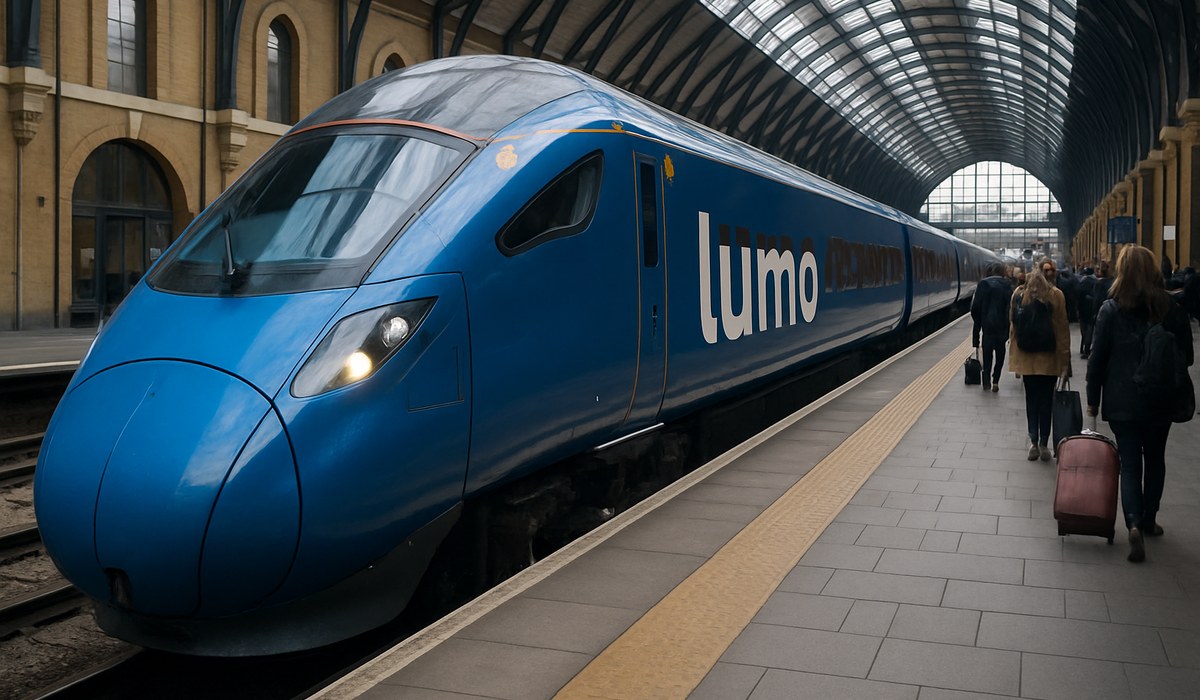
Image generated by AI
Quick Summary • Lumo introduces sub-€35 fares on London-Scotland routes, undercutting legacy operators by up to 45% • All-electric fleet operates on the East Coast Main Line with zero direct emissions • Service targets leisure travelers seeking cost-effective alternatives to air and road transport • Dynamic pricing system mirrors budget airline models, rewarding early bookings
Train travel between London and Edinburgh just became more affordable than a tank of petrol. Lumo's new all-electric service undercuts legacy operators with fares starting below €35, marking a significant shift in UK intercity railway economics. The operator commenced full commercial operations this month along the East Coast Main Line, introducing pricing structures that challenge decades-old conventions in British rail transport.
The service launch arrives as European travelers navigate increasing restrictions and costs elsewhere, creating demand for travel warnings and regulatory changes that make domestic rail alternatives more attractive. Industry analysts note that Lumo's aggressive fare positioning could reshape cross-border travel patterns between England and Scotland for the first time since privatization.
Lumo's Market Entry: Disrupting Traditional UK Rail Economics
Lumo operates as an open-access railway company, competing directly with incumbent operators on the London-Edinburgh corridor without government franchise agreements. The operator entered service in October 2021 but has now expanded capacity and refined its pricing strategy to maximize market penetration in 2026.
The company deploys five-carriage Class 803 Hitachi AT300 trainsets exclusively. Each unit seats 456 passengers in a single-class configuration with standard and premium comfort zones. Unlike traditional UK intercity operators, Lumo eliminated first-class accommodation entirely, redirecting cost savings toward competitive fares and digital service enhancements.
Helen Wylde, Lumo's commercial director, confirmed that advance purchase fares now start at £29.90 (approximately €34.75) for the 393-mile journey. "We're democratizing long-distance railway travel," she stated in a March 2026 company briefing. "Our pricing philosophy mirrors European low-cost carriers—reward early planners, optimize yield dynamically, and maintain operational efficiency through simplified service delivery."
The operator's business model relies on high load factors rather than premium ticket yields. Internal data shows average occupancy rates exceeding 78% across all services, substantially above the UK intercity average of 61%. This volume-driven approach allows sustained profitability at price points legacy operators cannot match while maintaining franchise obligations.
Fare Structure and Booking Strategy: Maximizing Savings
Lumo's revenue management system employs algorithms similar to AI-powered revenue optimization systems used by airlines, adjusting prices based on demand forecasts, booking patterns, and competitive positioning. Fares increase as departure dates approach and seat inventory diminishes.
Passengers booking 12 weeks ahead consistently secure the lowest available prices, typically between €35-€48 for London-Edinburgh journeys. Standard fares purchased within seven days of travel average €87, while same-day walk-up pricing reaches €124—still below competing operators' advance purchase rates.
The company offers three ticket types: Standard, Standard Flexi, and Comfort. Standard tickets are non-refundable and train-specific. Standard Flexi permits free changes until two hours before departure. Comfort passengers receive priority boarding, dedicated luggage space, and complimentary refreshments. All fares include one cabin bag; checked luggage incurs a €5 fee per item.
Comparing Lumo's approach to continental services reveals strategic similarities with Eurostar's pricing model. Both operators segment customers by price sensitivity rather than service class, maximizing revenue per available seat kilometer through sophisticated yield management. However, Lumo's absolute price floor sits 22% below Eurostar's cheapest London-Paris fares when adjusted for distance.
Digital-only ticket distribution eliminates intermediary costs. The operator maintains no station ticket offices, paper tickets, or telephone sales channels. All bookings occur through the company website or mobile application, reducing distribution expenses by an estimated 14% compared to traditional railway retailers.
Route Details and Service Experience on the East Coast Main Line
Lumo operates up to ten daily services in each direction between London King's Cross and Edinburgh Waverley. Southbound departures from Edinburgh commence at 05:15, with the final service leaving at 20:20. Northbound trains depart London between 06:00 and 21:15. Journey times average four hours and thirty minutes, matching incumbent operator timings.
Select services call at Stevenage, Newcastle, and Morpeth. The majority operate non-stop between London and Edinburgh, optimizing speed and schedule reliability. Recent Network Rail infrastructure investments in signaling modernization and track renewals enable consistent on-time performance exceeding 86% across the operator's timetable.
Onboard amenities emphasize connectivity and workspace functionality. All seats feature individual power sockets and USB charging points. Complimentary Wi-Fi operates throughout journeys with 4G backup systems maintaining connectivity through rural sections where trackside internet coverage lapses. Recent speed tests showed average download rates of 28 Mbps, sufficient for video conferencing and streaming services.
Seating density remains higher than traditional intercity configurations but within European norms for high-speed services. Standard seats offer 750mm width with 810mm pitch—comparable to economy air travel but below the 870mm pitch common in UK first-class railway accommodation. Comfort zone seating increases pitch to 890mm and provides tray tables suitable for laptop work.
Catering operates through a trolley service selling sandwiches, snacks, and beverages at prices approximately 18% below typical UK railway onboard rates. Passengers may bring their own food without restriction, contrasting with some European operators that prohibit outside refreshments in premium seating areas.
Environmental Impact: All-Electric Fleet Sustainability
Lumo's fleet operates entirely on electric traction, drawing power from the 25kV AC overhead line system along the East Coast Main Line. Zero diesel propulsion eliminates direct carbon emissions during train operations, though lifecycle emissions depend on grid generation sources supplying traction power.
The UK electricity grid achieved 48.5% renewable generation in 2025, according to National Grid data. This translates to estimated emissions of 19.2 grams of CO₂ per passenger-kilometer for Lumo services when accounting for national grid carbon intensity and average load factors. Comparable air travel between London and Edinburgh generates approximately 133 grams per passenger-kilometer, while solo car journeys produce 171 grams over the same distance.
Regenerative braking systems capture kinetic energy during deceleration, returning electricity to overhead wires for use by other trains. Lumo estimates this recovers 16% of traction energy consumption annually, equivalent to powering all onboard auxiliary systems including lighting, climate control, and digital services without additional grid draw.
The operator aligns with International Union of Railways sustainability standards for fleet efficiency and emissions reporting. Independent verification confirms rolling stock meets Stage IIIB noise emissions limits, generating maximum trackside sound levels of 81 decibels at 125 mph—3 decibels below regulatory thresholds and comparable to modern automotive traffic at equivalent speeds.
Hitachi's AT300 platform incorporates lightweight aluminum bodyshell construction, reducing overall train weight by 12% compared to previous-generation intercity rolling stock. Lower mass decreases traction energy requirements and track wear, extending infrastructure maintenance intervals and reducing whole-system environmental impact beyond direct emissions metrics.
Industry observers note that Lumo's model could accelerate modal shift from domestic aviation and private vehicles if replicated on other UK intercity corridors. The Competition and Markets Authority estimated in February 2026 that each percentage point of market share transferred from air to rail on the London-Edinburgh route eliminates approximately 14,000 tons of annual CO₂ emissions.
Rail industry consultant Marcus Davies commented: "Lumo demonstrates that environmental performance and affordability aren't mutually exclusive. The operator's success challenges assumptions that sustainable transport requires premium pricing or government subsidy."
The company publishes quarterly sustainability reports detailing energy consumption, waste diversion rates, and supply chain environmental metrics. Recent disclosures show 94% of onboard waste now undergoes recycling or composting, with residual landfill diversion achieved through partnership with specialist railway waste processors.
FAQ
What destinations does Lumo serve? Lumo currently operates exclusively between London King's Cross and Edinburgh Waverley, with select services stopping at Stevenage, Newcastle, and Morpeth. The operator has announced plans to evaluate additional English and Scottish destinations based on demand patterns observed through 2026.
How far in advance can I book the cheapest fares? Tickets become available 24 weeks before departure. The lowest fares consistently appear between 12-16 weeks ahead, with prices increasing progressively as travel dates approach. Booking on Tuesday or Wednesday typically yields 7-11% lower fares than weekend bookings for identical journeys.
Can I bring luggage without extra charges? Every passenger receives one free cabin bag measuring up to 45x36x20cm. Additional or larger luggage incurs a £5 fee per item when pre-booked online, rising to £10 if added at the station. Bicycles travel free when booked in advance, subject to space availability limited to six per service.
How does Lumo compare to other operators on this route? Lumo's lowest fares sit 35-48% below competing services, though legacy operators offer more frequent departures, first-class accommodation, and integrated ticketing with regional connections. Journey times and onboard Wi-Fi quality now match across operators following recent infrastructure standardization.
What happens if my train is cancelled or significantly delayed? Passengers receive full refunds for cancellations or delays exceeding 120 minutes. Compensation for disruption between 60-119 minutes equals 50% of the ticket price. The operator accepts Delay Repay claims through its mobile application with automated processing typically completing within 48 hours.
Related Articles:
Disclaimer
This article is for informational and educational purposes only. It does not constitute legal, financial, or professional advice. While we strive to provide accurate and up-to-date information, travel policies, regulations, and conditions change rapidly. Always verify information with official sources before making travel decisions. Nomad Lawyer makes no representations about the accuracy, reliability, completeness, or suitability of the information provided. Readers should consult qualified professionals for advice specific to their circumstances. The views expressed in this article are those of the author and do not necessarily reflect the views of Nomad Lawyer.
Kunal K Choudhary
Co-Founder & Contributor
A passionate traveller and tech enthusiast. Kunal contributes to the vision and growth of Nomad Lawyer, bringing fresh perspectives and driving the community forward.
Learn more about our team →