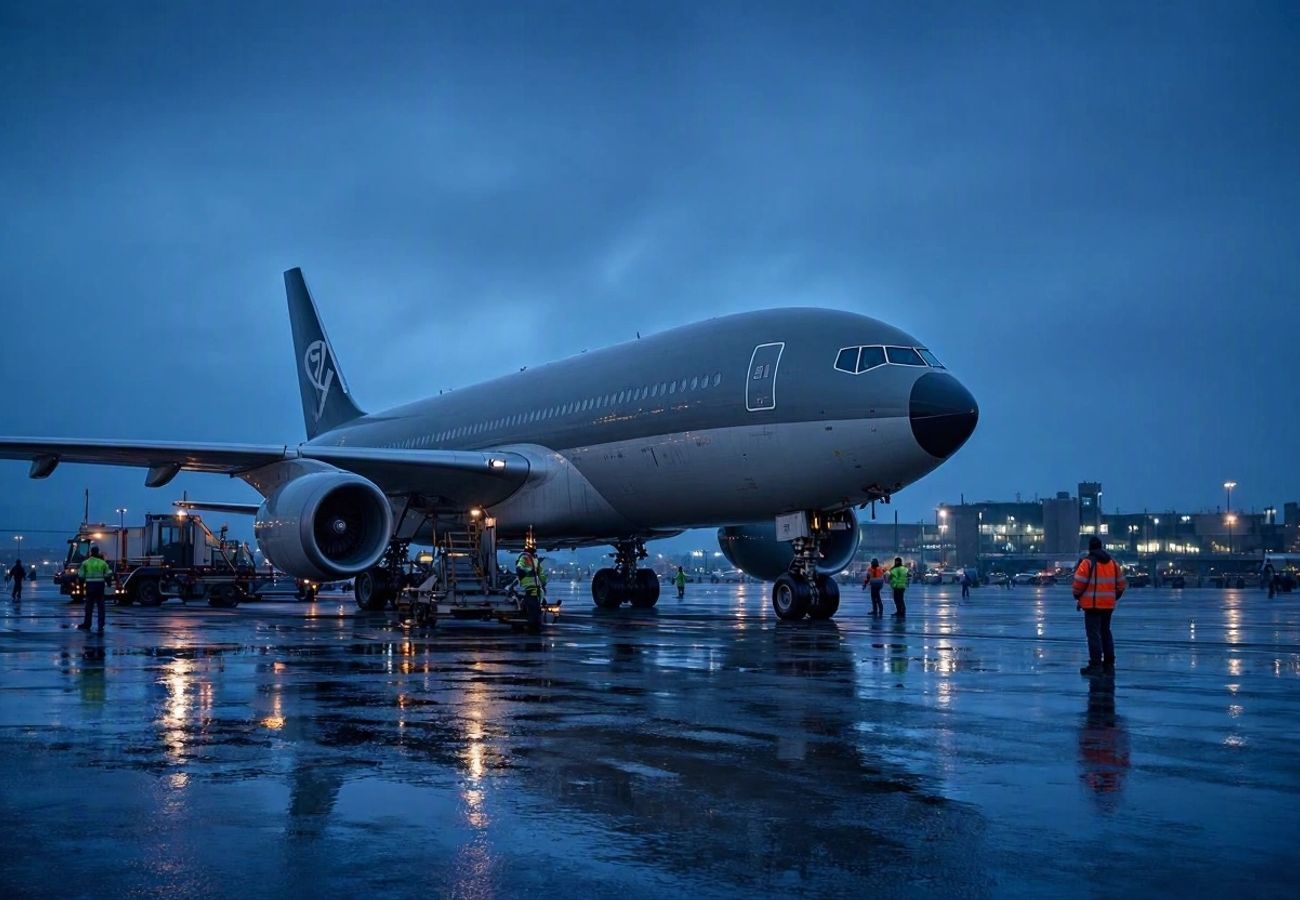
Lufthansa Negotiates Larger Boeing 787-9 Business Class Cabins as 26 Dreamliners Await Delivery for Global Routes


FRANKFURT — Europe’s largest aviation conglomerate, the Lufthansa Group, has entered advanced commercial negotiations with Boeing to install significantly expanded Business Class and Premium Economy cabins across a substantial portion of its incoming Boeing 787-9 Dreamliner orderbook. Confirmed by Lufthansa Chief Executive Officer Carsten Spohr on November 3, 2026, the high-stakes cabin reconfiguration strategy seeks to realign the carrier’s widebody fleet architecture with an unprecedented structural surge in global premium travel demand. With 26 Boeing 787-9 aircraft currently awaiting final assembly and delivery following a single airframe handover in October, the German flag carrier is moving proactively to resolve acute premium capacity shortages across its long-haul network.
The decision to redesign factory-floor aircraft specifications reflects the complex realities confronting European network carriers. Due to multi-year delivery delays affecting larger widebody flagships—specifically the delayed Boeing 777-9 and the upcoming 49-business-seat Airbus A350-1000—Lufthansa has been forced to deploy its mid-sized Dreamliners onto high-yield intercontinental corporate trunk routes connecting Frankfurt and Munich with North American and Asian financial centers. However, with its current Allegris-equipped 787-9s configured with just 28 Business Class seats, premium cabins are routinely selling out weeks in advance, forcing the airline to turn away lucrative corporate travelers. Concurrently, Lufthansa is working to resolve regulatory hurdles with the US Federal Aviation Administration (FAA) to secure full commercial clearance for three uncertified Allegris business seats before the end of 2026.
       LUFTHANSA BOEING 787-9 CAPACITY REALIGNMENT STRATEGY (2026–2027)
       ================================================================

       [ THE STRATEGIC BOTTLENECK ]
       * Industry-wide delays on Boeing 777-9 & Airbus A350-1000 deliveries
       * Boeing 787-9 substituted onto heavy transatlantic corporate trunk routes
       * Current 28-seat Allegris Business Class cabin routinely oversold
                                      |
                                      v
       [ THE PIPELINE OPPORTUNITY: 26 AIRCRAFT PENDING DELIVERY ]
       * 27 Dreamliners pending at end-September 2026; 1 delivered in October
       * 26 airframes remaining on Boeing Charleston production line
       * Direct factory-floor modification avoids costly post-delivery retrofits
                                      |
                                      v
       +---------------------------------------------------------------+
       |             CABIN RECONFIGURATION ARCHITECTURE                |
       |  * Expansion of Business Class: Scaled beyond 28 seats        |
       |  * Expansion of Premium Economy: Substantial row additions    |
       |  * Reduction of standard Economy Class: Sacrificing low yield |
       |  * FAA certification push: Releasing 3 blocked Allegris seats |
       +---------------------------------------------------------------+
                                      |
       +------------------------------+------------------------------+
       |                                                             |
       v                                                             v
[ REVENUE & YIELD OPTIMIZATION ]               [ SUBSIDIARY FLEET REALLOCATION ]
* Captures high-margin corporate travel        * Transfers 3 ex-Hainan 787-9s
* Maximizes RASK across North Atlantic           to Austrian Airlines long-haul fleet
The Premium Capacity Deficit: Why 28 Business Class Seats Fall Short
The commercial imperative driving Lufthansa’s negotiations with Boeing is a severe mismatch between installed cabin capacity and high-end market demand. Across the global airline industry, the post-pandemic recovery has been characterized by an extraordinary structural expansion in premium travel. High-net-worth leisure travelers, corporate executives, and remote professionals are increasingly willing to pay substantial premiums for lie-flat beds, dedicated workspaces, and personal privacy.
For Lufthansa, this demand surge has intersected with severe widebody delivery bottlenecks. The airline originally intended to serve its densest international business routes—such as Frankfurt to New York JFK, Chicago O'Hare, San Francisco, and Tokyo Haneda—with next-generation ultra-widebody aircraft. Chief among these was the Boeing 777-9, an aircraft designed to carry over 400 passengers with expansive premium sections, and the Airbus A350-1000, which Lufthansa has configured with an immense 49-seat Business Class cabin.
LUFTHANSA LONG-HAUL WIDEBODY PREMIUM CAPACITY COMPARISON
| Entity / Facility | Delays | Cancellations | Details |
|---|---|---|---|
| Aircraft Platform | Business Class | Premium Economy | Strategic Role & |
| & Interior Program | Seating Allocation | Seating Allocation | Network Deployment |
| Boeing 787-9 | 28 seats (3 seats | 28 seats | Mid-sized long-haul; |
| (Current Allegris) | blocked pending FAA | (2-3-2 layout) | substituted on heavy |
| certification) | corporate trunk routes | ||
| Boeing 787-9 | Proposed expansion | Proposed expansion | Factory-modified for |
| (Negotiated Concept) | to 36–42 seats | to 35–42 seats | high-yield North |
| (Targeted layout) | (Targeted layout) | Atlantic business pairs | |
| Airbus A350-1000 | 49 suites | 32 seats | Intercontinental |
| (Incoming Flagship) | (Dedicated premium | (Dedicated cabin | flagship; high-density |
| long-haul tier) | divider screens) | corporate flagship | |
| Boeing 787-9 | 26 seats | 21 seats | Non-Allegris interior; |
| (Ex-Hainan Airframes) | (Reverse herringbone | (Standard layout) | planned transfer to |
| configuration) | Austrian Airlines fleet |
However, with the Boeing 777-9 delayed until at least 2027 and Airbus A350-1000 deliveries unfolding gradually, Lufthansa has been forced to deploy its newly delivered Boeing 787-9 Dreamliners as substitutes on flagship business routes. In these markets, the current 28-seat Business Class cabin is fundamentally undersized.
During peak corporate travel periods, corporate travel managers routinely find Lufthansa's business cabins completely booked out weeks prior to departure. When an airline cannot offer premium inventory to corporate contract holders paying upwards of $6,000 to $9,000 for a transatlantic round-trip ticket, those high-value accounts migrate to competing alliance carriers like British Airways, Air France, or Delta Air Lines. Spohr recognized that operating a 287-seat widebody with only 28 Business Class seats on routes like Munich to Boston or Frankfurt to Washington Dulles leaves millions of dollars in uncaptured revenue on the table.
The Dual-Fleet Reality: Ex-Hainan Airframes vs. The Allegris Architecture
To understand the complexity of Lufthansa’s 787 fleet planning, one must examine the divergent cabin interiors currently flying under the Lufthansa crane livery. The airline’s existing Dreamliners do not feature a uniform passenger experience; rather, they represent two completely distinct interior generations.
When global supply chain disruptions severely constrained aircraft deliveries in 2022, Lufthansa moved opportunistically to acquire five "white-tail" Boeing 787-9 airframes that had originally been manufactured for China’s Hainan Airlines but were never delivered. These initial five aircraft were inducted into service with an interim cabin layout featuring 26 Business Class seats in a standard 1-2-1 reverse-herringbone configuration, 21 Premium Economy seats, and 247 Economy seats, totaling 294 passenger accommodations.
       LUFTHANSA BOEING 787-9 INTERIOR CONFIGURATION DIVERGENCE
       ========================================================

       [ EARLIER EX-HAINAN CONFIGURATION (294 SEATS TOTAL) ]
       +-----------------------------------------------------------------+
       |  26 Business Class   | 21 Prem Econ |      247 Economy Seats    |
       +-----------------------------------------------------------------+
       * Standard reverse-herringbone seating; non-Allegris
       * Destined for fleet transfer to Austrian Airlines
                                      |
                                      v
       [ CURRENT ALLEGRIS CONFIGURATION (287 SEATS TOTAL) ]
       +-----------------------------------------------------------------+
       |  28 Business Class   | 28 Prem Econ |      231 Economy Seats    |
       +-----------------------------------------------------------------+
       * Modular Allegris design with 5 seat variants
       * 16 fewer economy seats to accommodate expanded premium zones
       * 3 business seats temporarily blocked awaiting final FAA sign-off
                                      |
                                      v
       [ PROPOSED EXPANDED FACTORY RECONFIGURATION (CONCEPTUAL) ]
       +-----------------------------------------------------------------+
       | 36-40 Business Seats | 35-42 Prem Econ |    170-190 Economy     |
       +-----------------------------------------------------------------+
       * Substantial reduction of rear economy cabin
       * Premium-heavy architecture tailored for high-yield transatlantic routes
Lufthansa has formally confirmed that three of these five earlier-generation aircraft will be transferred to group subsidiary Austrian Airlines to revitalize the Vienna-based carrier’s aging long-haul Boeing 777-200ER and 767-300ER fleet.
The remaining and incoming Dreamliners feature Lufthansa’s flagship Allegris generation. Designed as a comprehensive €2.5 billion brand overhaul across the group's long-haul fleet, the standard Allegris Dreamliner layout provides 28 Business Class seats, 28 Premium Economy seats, and 231 Economy Class seats, for a total capacity of 287 passengers. While the Allegris configuration adds two Business Class seats and seven Premium Economy seats compared to the Hainan configuration, it achieves this by eliminating 16 standard Economy seats.
Lufthansa’s ongoing negotiations with Boeing represent a continuation of this spatial trade-off: evaluating how many additional economy rows can be sacrificed to install another two or three rows of Allegris Business Class suites.
The FAA Certification Saga: Unlocking the Blocked Allegris Suites
Lufthansa’s push to expand Business Class capacity coincides with an intricate regulatory challenge involving the certification of its active Allegris cabin. While published seat maps show 28 Business Class seats on the Allegris 787-9, passengers flying on the aircraft have noticed that three specific business class seats remain permanently blocked and unavailable for booking.
The source of this limitation is regulatory certification by the US Federal Aviation Administration. Under federal aviation safety statutes (FAR 25.562), all commercial passenger seats must pass rigorous dynamic crash-testing standards to ensure that occupants survive dynamic deceleration forces of up to 16 times gravity (16G) without head injury or spinal compression.
ALLEGRIS 787-9 BUSINESS CLASS CERTIFICATION PHASING
| Certification Phase | Regulatory Scope | Operational Status | Passenger Inventory |
|---|---|---|---|
| & Clearance Agency | & Seat Typology | & Timeline | Availability |
| Initial March 2026 | 25 of 28 Business | Formally approved | Opened for commercial |
| Commercial Release | Class seats | for international | booking across North |
| (FAA / EASA) | certified | revenue operations | American & Asian routes |
| Final Pending Phase | Remaining 3 seats | Awaiting final FAA | Currently blocked in |
| (Target: End-2026) | (complex monument | dynamic safety | booking engine; opens |
| installations) | sign-off | full 28-seat capacity |
The Allegris Business Class cabin is not a uniform sea of identical seats; it is an intricate mosaic comprising five completely distinct seat typologies:
- Front Row Suites: Enclosed suites with chest-high sliding privacy doors, individual wardrobes, and oversized 4K monitors.
- The "Throne" Extra Space Seats: Central seats offering expansive lateral side tables and storage cubbies on both sides.
- Privacy Window Seats: Positioned flush against the fuselage wall, providing maximum isolation from aisle foot traffic.
- Extra Long Beds: Specialized ergonomic seats providing an extended flat sleeping surface measuring 2.2 meters (7 feet 2 inches).
- Classic Double Sleeper Suites: Central seat pairs that can be converted into a shared sleeping compartment for couples.
Because each of these seat typologies utilizes distinct structural shells, varying seatbelt airbag geometries, and different clearances to surrounding monuments, each seat variant required separate dynamic test modeling. In early 2026, 25 of the 28 seats received full European Union Aviation Safety Agency (EASA) and FAA certification, enabling Lufthansa to begin commercial sales in March 2026.
However, three specific seats—associated with complex structural bulkheads—remained in regulatory review. Carsten Spohr stated on November 3 that Lufthansa expects to receive final FAA certification for these remaining three seats before the close of 2026. Securing this clearance will instantly unlock approximately 11 percent more salable business class inventory on every active Allegris Dreamliner flight without altering a single piece of hardware.
The Premium Economy Boom: Maximizing Floor-Space Profitability
Lufthansa’s discussions with Boeing extend beyond Business Class. The airline is actively evaluating proposals to remove several rows of standard Economy to install a substantially larger Premium Economy cabin on incoming 787-9s.
In modern commercial aviation economics, Premium Economy is widely recognized as the most profitable real estate on a widebody aircraft. While Business Class generates the highest absolute fare revenue, the physical footprint of modern lie-flat suites with direct aisle access consumes immense floor area. Conversely, Premium Economy occupies only slightly more floor space than standard economy—utilizing a comfortable 2-3-2 seating layout on the 787 with 38 to 39 inches of pitch—while commanding fares that are typically 60 to 100 percent higher than standard economy tickets.
       CABIN FLOOR-SPACE PROFITABILITY & YIELD DYNAMICS
       ================================================

       [ ECONOMY CLASS: HIGH VOLUME / LOW MARGIN ]
       * 3-3-3 seating layout on Boeing 787-9 (9 seats per row)
       * Highly price-sensitive leisure passengers; low seat yields
       * Fierce competition from low-cost long-haul carriers
                                      |
                                      v
       [ PREMIUM ECONOMY: THE SWEET SPOT OF AIRLINE RASK ]
       * 2-3-2 seating layout on Boeing 787-9 (7 seats per row)
       * Generates 30% to 40% higher revenue per square meter than Economy
       * Captures cost-conscious corporate travelers & affluent leisure flyers
                                      |
                                      v
       [ BUSINESS CLASS (ALLEGRIS): HIGH MARGIN / HIGH FOOTPRINT ]
       * 1-2-1 modular luxury layout; enclosed suites & private doors
       * Multi-thousand-dollar corporate fares; highly sensitive to economic cycles
       * Requires substantial floor space per passenger
The surge in Premium Economy demand is propelled by structural shifts in corporate travel procurement. In the wake of corporate cost-rationalization programs and strict Environmental, Social, and Governance (ESG) carbon-reporting frameworks, many multinational corporations and mid-tier enterprises have revised their internal travel policies. Standard business class travel is increasingly restricted to executive leadership or flights exceeding eight to ten hours, while middle management and consultants are directed to book Premium Economy.
Simultaneously, affluent leisure travelers—often described as "premium leisure" or "bleisure" passengers—are driving record load factors in the intermediate cabin. Holidaymakers embarking on long-haul vacations to North America, South Africa, or Asia view an additional $400 to $700 per segment as a worthwhile investment to secure wider seats, greater legroom, dedicated footrests, upgraded dining served on porcelain china, and double the checked baggage allowance.
By expanding Premium Economy from its current 28-seat allocation to 35 or 42 seats on selected incoming Dreamliners, Lufthansa can capture these lucrative traveler segments while simultaneously shielding its operating margins from low-yield economy fare discounting.
The physical architecture of Lufthansa's Allegris Premium Economy reinforces this profitability advantage. Engineered with a rigid fixed-back shell design, the seat mechanism reclines entirely within its own structure. When a passenger in front reclines their seat, the shell remains motionless, preserving valuable living space, knee clearance, and laptop screen angles for the traveler seated behind. Combined with personal wireless charging cradles, noise-reducing acoustic headrests, and dedicated multi-course dining presented on ceramic tableware, the product bridges the traditional divide between cramped economy cabins and multi-thousand-dollar business suites.
Factory-Floor Logistics: Modifying 26 Dreamliners in the Boeing Pipeline
Lufthansa’s strategic timing is dictated by the status of its aircraft orderbook. At the conclusion of September 2026, the Lufthansa Group had 27 Boeing 787-9s awaiting delivery. With the handover of a single aircraft in October, exactly 26 Dreamliners remain in Boeing’s production and pre-delivery pipeline at its final assembly facility in North Charleston, South Carolina.
Executing cabin modifications while aircraft are still in the production queue represents a masterclass in capital efficiency. If an airline accepts delivery of an aircraft with a standard interior and subsequently decides to reconfigure the cabin, the process is exorbitantly expensive. The aircraft must be withdrawn from commercial service for several weeks, incurring hundreds of thousands of dollars in lost operating revenue, while engineering teams strip out seats, reroute electrical harnesses, reposition overhead oxygen lines, and modify lavatory monuments.
AIRCRAFT CABIN RECONFIGURATION: FACTORY VS. RETROFIT
| Entity / Facility | Delays | Cancellations | Details |
|---|---|---|---|
| Modification Stage | Capital Outlay | Aircraft Downtime | Engineering & Assembly |
| & Execution Timing | & Financial Cost | & Lost Revenue | Structural Complexity |
| Factory-Floor Line-Fit | Modest engineering | Zero operational | Wiring, seat tracks & |
| (Current Negotiation) | change fee paid to | downtime; aircraft | oxygen monuments built |
| airframe maker | enters service ready | directly into assembly | |
| Post-Delivery Fleet | Millions of euros | 3 to 5 weeks out | Tearing up cabin deck; |
| Retrofit Program | per airframe for | of commercial | structural recertification |
| (Alternative Route) | secondary labor | flight schedules | and heavy scrap waste |
By negotiating directly with Boeing before structural interior installations commence, Lufthansa can implement a factory "line-fit" modification. Boeing engineers can adjust the primary seat-track positioning, modify overhead passenger service units (PSUs), and alter cabin divider bulkheads directly on the assembly line.
This pipeline flexibility gives Lufthansa enormous tactical versatility. While the airline has not confirmed the exact number of aircraft that will receive the expanded premium layout, industry observers expect Lufthansa to create a sub-fleet of premium-dense 787-9s specifically dedicated to premium transatlantic routes (such as Frankfurt–New York and Munich–Chicago), while retaining standard three-class configurations for routes with broader leisure demand.
This assembly coordination is especially significant given broader aerospace manufacturing headwinds. Boeing's South Carolina assembly facility has faced ongoing supply chain adjustments as it targets a production ramp-up toward five to ten Dreamliners per month. Global aerospace seat manufacturers and cabin monument fabricators have similarly navigated component shortages. Securing cabin modification agreements directly with Boeing early in the manufacturing cycle insulates Lufthansa from secondary retrofitting backlogs, ensuring that new aircraft arrive at Frankfurt and Munich ready for immediate commercial revenue service.
This near-term fleet optimization complements Lufthansa’s broader long-range modernization program. In 2026, the group solidified its long-term fleet roadmap by ordering ten additional Airbus A350-900s and ten additional Boeing 787-9s scheduled for delivery between 2032 and 2034, ensuring continuous fleet renewal into the next decade.
The Allegris Seating Dilemma: Navigating Pricing and Surcharges
For prospective passengers, the expansion of Lufthansa's 787-9 Business Class and the rollout of Allegris introduces both exciting comfort choices and complex commercial booking rules.
Under the Allegris commercial architecture, Lufthansa has moved away from treating all business class seats as equal commodities. Instead, the airline has implemented a dynamic seat-assignment pricing model that monetizes specific physical attributes within the Business Class cabin:
       ALLEGRIS BUSINESS CLASS SEAT ATTRIBUTE MONETIZATION
       ===================================================

       [ TIER 1: FRONT ROW BUSINESS SUITES ]
       * Full-height closing privacy doors & personal wardrobe
       * Generous 27-inch 4K monitor & premium bedding
       * Requires highest seat-selection surcharge (or HON Circle / Senator waiver)
                                      |
                                      v
       [ TIER 2: "THRONE" EXTRA SPACE SEATS ]
       * Dual-sided console tables & dedicated workstation storage
       * Ideal for solo corporate travelers conducting business aloft
       * Available for reservation fee during booking window
                                      |
                                      v
       [ TIER 3: EXTRA LONG BED SEATS ]
       * Certified 2.2-meter (7'2") flat sleeping length
       * Specifically engineered for tall passengers
       * Surcharge applies for advance reservation
                                      |
                                      v
       [ TIER 4: STANDARD ALLEGRIS BUSINESS SEATS ]
       * Direct aisle access, wireless charging, tablet controls
       * Complimentary seat selection at online check-in (24 hours prior)
Travelers booking Allegris Business Class must recognize that purchasing a business class ticket guarantees a lie-flat bed with direct aisle access, but securing a specific high-demand seat—such as a Front Row Suite with closing doors or a center Throne Seat—may require an additional seat-reservation fee ranging from €100 to over €300 depending on route length.
Top-tier frequent flyers in the Miles & More loyalty program, specifically HON Circle members and Senator cardholders, enjoy complimentary advance seat reservations for selected premium Allegris seats, insulating corporate loyalty elites from supplementary fees.
Traveler Action Plan: Booking Lufthansa Boeing 787-9 Flights in 2026/2027
To navigate Lufthansa’s evolving Boeing 787-9 fleet and ensure you secure your preferred onboard experience, adhere to the following operational booking guidelines:
        LUFTHANSA DREAMLINER BOOKING & VERIFICATION WORKFLOW
        ====================================================

        [ 1. IDENTIFY SPECIFIC 787-9 CABIN INTERIOR ]
        * Review seat map in booking engine before purchasing
        * 28 Business Seats = Allegris Generation (Modular 5-seat layout)
        * 26 Business Seats = Interim ex-Hainan Generation (Slated for Austrian)
                               |
                               v
        [ 2. VERIFY ALLEGRIS SEAT RELEASE STATUS ]
        * Note that 3 of 28 Business seats may show as blocked
        * Full 28-seat inventory expected following late-2026 FAA certification
                               |
                               v
        [ 3. EVALUATE PREMIUM ECONOMY FARE DIFFERENTIALS ]
        * Check Premium Economy fares (28-seat cabin; expanding in future)
        * Often costs 40% less than Business while providing 38" pitch and upgraded meals
                               |
                               v
        [ 4. MONITOR AIRCRAFT ASSIGNMENTS LEADING TO DEPARTURE ]
        * Operational equipment swaps can occur due to maintenance
        * Recheck seat assignments 48 hours and 24 hours prior to departure
- Carefully Inspect the Published Seat Map: Before finalizing a flight reservation on Lufthansa, open the interactive seat selection map. If the Business Class cabin displays 28 seats arranged in alternating rows of 1-2-1 and 1-1-1, the flight is operated by an Allegris-equipped aircraft. If the cabin displays 26 seats in a uniform reverse-herringbone layout, it is an interim ex-Hainan airframe.
- Account for the Blocked Seat Status: If you are traveling on an Allegris 787-9 prior to the conclusion of 2026, be aware that three business class seats may appear permanently grayed out on the seat map due to pending FAA certification. Do not rely on gate agents being able to assign these seats during airport check-in until Lufthansa formally issues its commercial release notification.
- Compare Premium Economy Upgrade Costs: On transatlantic daytime flights (such as Frankfurt to New York or Munich to Chicago), evaluate the price of Premium Economy. Lufthansa’s 2-3-2 Premium Economy product delivers significant comfort advantages over standard economy, making it an exceptional value if Business Class fares are prohibitively expensive or sold out.
- Re-Verify Assigned Seats After Schedule Updates: Because Lufthansa continues to accept new 787-9 deliveries and transfer older airframes to Austrian Airlines, aircraft substitutions can occur. Set a calendar reminder to review your assigned seat 48 hours prior to departure and again when online check-in opens 24 hours before flight time to ensure you have not been reassigned following an equipment swap.
Lufthansa’s negotiations with Boeing highlight how commercial aviation is adapting to an era of high-yield travel. By transforming its incoming Boeing 787-9 fleet into premium-heavy flagships, Europe’s largest airline group is positioning itself to capture the future of luxury and corporate travel across the world's most lucrative flight corridors.
Related Travel Guides
- Brunei Unveils Centralized Tourism Booking Platform Ahead of Visit Brunei Year 2027
- Auckland Advances New Zealand's Long-Haul Travel with Economy Skynest Sleep Cabins
- Calgary International Airport Transforms Domestic Travel with Nine Security Lanes and CT Technology
- USA Air Travel Costs Surge as JetBlue Increases Baggage Fees to Fifty Dollars
- Vietnam Airlines Implements Strict US Travel Rules and CDC Ebola Health Declarations
This article is for informational purposes. Flight routes, passenger regulations, visa rules, and transit advisories are subject to change by airlines and aviation authorities. Readers are advised to verify schedules and travel documentation with relevant carriers and border agencies before departure.
Related Stories
Lufthansa Group Mandates Travel ID for Online Check-In: Phased Rollout Guide Across Seven European Airlines
Lufthansa Restores Kuala Lumpur-Frankfurt Route in 2026 as European Traffic Surges 29.7%