
European Winter Aviation Shift: Widebody Fleet Arbitrage and Slot Realignment for 2026
A severe widebody aircraft shortage is forcing major carriers to pivot long-haul capacity from traditional sun destinations to European Alpine resorts and Christmas markets to offset the year-end corporate travel slump.

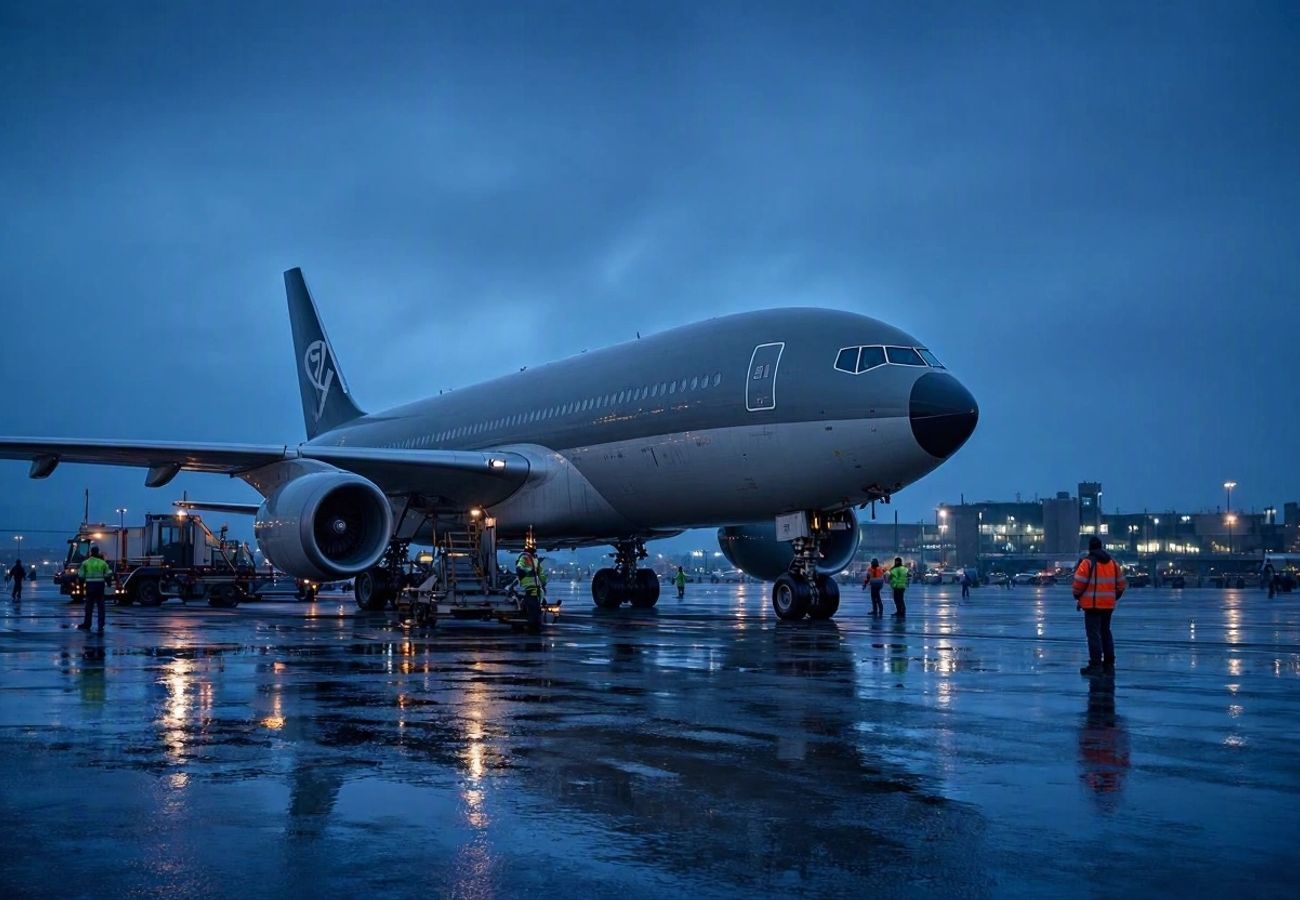
Image generated by AI
Zero remaining surplus in widebody aircraft production has transformed winter scheduling into a high-stakes exercise in fleet arbitrage. Rather than responding to organic passenger demand, tier-one carriers are now forced to strategically relocate their limited twin-aisle assets to maximize yield during the year-end corporate travel slump.
The Mechanics of Fleet Arbitrage and Supply Chain Failure
The current aviation environment is defined by chronic aerospace supply chain bottlenecks. Production delays and component shortages for the Airbus A350 and Boeing 787 Dreamliner, alongside the delayed entry of the Boeing 777X, have created a structural capacity deficit. Consequently, network carriers—including the Lufthansa Group, Air France-KLM, Delta Air Lines, United Airlines, and Emirates—cannot simply add aircraft to meet holiday surges.
Instead, they are practicing "fleet arbitrage." This involves pulling scarce long-haul assets away from marginal intercontinental sectors—historically the Caribbean or Southeast Asia—and deploying them toward high-yield European winter gateways. This shift is incentivized by regional authorities offering fee rebates and night-operation waivers to lure widebody airframes into the continent during the fourth quarter.
Strategic Slot Management Under EU Law
The movement of these massive aircraft is not a simple scheduling change; it is a legal maneuver governed by European Union aviation law. Specifically, Level 3 coordinated airports operate under Council Regulation (EEC) No 95/93 and Regulation (EC) No 793/2004.
These regulations enforce a "use it or lose it" policy. To maintain "grandfather rights"—the historical right to a specific takeoff or landing slot—airlines must operate the slot series throughout the winter season. Because these slots are irreplaceable operational capital, carriers cannot simply cancel flights during the corporate lull. Instead, they "upgauge" the route. They replace narrowbody aircraft with high-capacity widebodies, such as the Boeing 777-300ER or Airbus A350-1000, allowing them to increase seat volume for luxury leisure travelers without increasing the number of flight movements.
Infrastructure Pressure at European Megahubs
The concentration of long-haul traffic into a few primary hubs creates intense logistical pressure. At London Heathrow, strict annual movement ceilings and night quotas force British Airways and its partners to optimize every single slot. By swapping smaller widebodies for the A350-1000, they maximize the "Visiting Friends and Relatives" (VFR) traffic from North America.
Parallel relief is found at London Gatwick and Paris-Charles de Gaulle. Groupe ADP has specifically prioritized capital upgrades at Paris Aéroport TGV, creating a streamlined pipeline where intercontinental passengers can transition from a long-haul flight to a high-speed train bound for Alpine ski zones, bypassing road congestion entirely.
Winter Capacity and Gateway Distribution
The following data outlines how the industry is redistributing its assets to capture the "premium leisure" market.
| European Destination / Gateway | Primary Winter Demand Catalyst | Critical Infrastructure & Capacity Enabler |
|---|---|---|
| Swiss Alps (Zurich/Geneva) | Luxury ski resorts (St. Moritz, Zermatt) | High-capacity B777-300ER/A380 rotations from Gulf carriers |
| Austrian Alps (Innsbruck/Salzburg) | Tyrol and Salzburg regional tourism | Synchronized feeder banks from Frankfurt, Munich, and Vienna |
| Finnish Lapland (Rovaniemi/Kittilä) | Arctic safaris and Aurora excursions | Seasonal widebody charters and regional terminal expansions |
| Central Europe (Various) | Traditional Festive Advent Markets | Air-rail integration and airport incentive schemes |
Expert Analysis: The Death of the "Winter Sun" Monopoly
For the modern traveler, the direct consequence of this shift is a volatile pricing environment for traditional winter escapes. As carriers pull widebody capacity from the Caribbean and Florida to feed the Alps and Arctic resorts, we are seeing a "premiumization" of winter travel.
The pricing pressure created by this reallocation means that luxury leisure travel is now competing for the same limited aircraft that once served business hubs. When a carrier replaces a corporate-heavy route with a luxury-leisure widebody, they are betting on "spending elasticity"—the idea that affluent travelers from the GCC, North America, and East Asia are willing to pay a significant premium for exclusive winter experiences regardless of the price hike.
Furthermore, the reliance on "feeder banks" in cities like Munich and Vienna means that any disruption at a primary hub now has a cascading effect on the entire Alpine tourism chain. The logistical fragility is high; a single weather event at a hub can paralyze access to the mountains for thousands of high-net-worth passengers.
Key Takeaways
- Fleet Scarcity: Production delays in A350 and B787 models have ended the era of organic capacity growth, forcing airlines to steal seats from one route to serve another.
- Slot Preservation: EU "use it or lose it" laws prevent airlines from cancelling winter flights, leading to the "upgauging" of aircraft to maximize profit per slot.
- Infrastructure Pivots: Major hubs like Paris-CDG are integrating TGV rail links to move intercontinental passengers directly to ski resorts.
- Yield Shift: High-margin luxury leisure travel (Arctic/Alpine) is now the primary financial hedge against the year-end decline in corporate business travel.
FAQ: European Winter Aviation 2026
Why are flight prices to the Alps increasing in 2026? Prices are rising due to "fleet arbitrage." Airlines are using a limited number of widebody aircraft to serve high-demand luxury routes, creating a supply-demand imbalance that drives up ticket costs for premium winter destinations.
What is "upgauging" in aviation? Upgauging is when an airline replaces a smaller aircraft (narrowbody) with a larger one (widebody) on the same route. This increases the number of seats available without requiring additional landing slots at congested airports.
How does EU slot regulation affect my flight? Under Regulation (EEC) No 95/93, airlines must use their slots or lose them. This ensures that flights are maintained during the winter, but it often leads to aircraft swaps that can change the cabin configuration of your flight.
The era of predictable winter scheduling has vanished, replaced by a cold calculation of slot rights and aircraft scarcity.
Related Travel Guides
Disclaimer
This article is for informational and educational purposes only. It does not constitute legal, financial, or professional advice. While we strive to provide accurate and up-to-date information, travel policies, regulations, and conditions change rapidly. Always verify information with official sources before making travel decisions. Nomad Lawyer makes no representations about the accuracy, reliability, completeness, or suitability of the information provided. Readers should consult qualified professionals for advice specific to their circumstances. The views expressed in this article are those of the author and do not necessarily reflect the views of Nomad Lawyer.
Kunal K Choudhary
Co-Founder & Contributor
A passionate traveller and tech enthusiast. Kunal contributes to the vision and growth of Nomad Lawyer, bringing fresh perspectives and driving the community forward.
Learn more about our team →