
Long Island Stingray Migration Drives Coastal Wildlife Tourism in 2026
Vast schools of cownose rays are migrating along Long Island's south shore, creating a seasonal wildlife spectacle for Atlantic travelers.
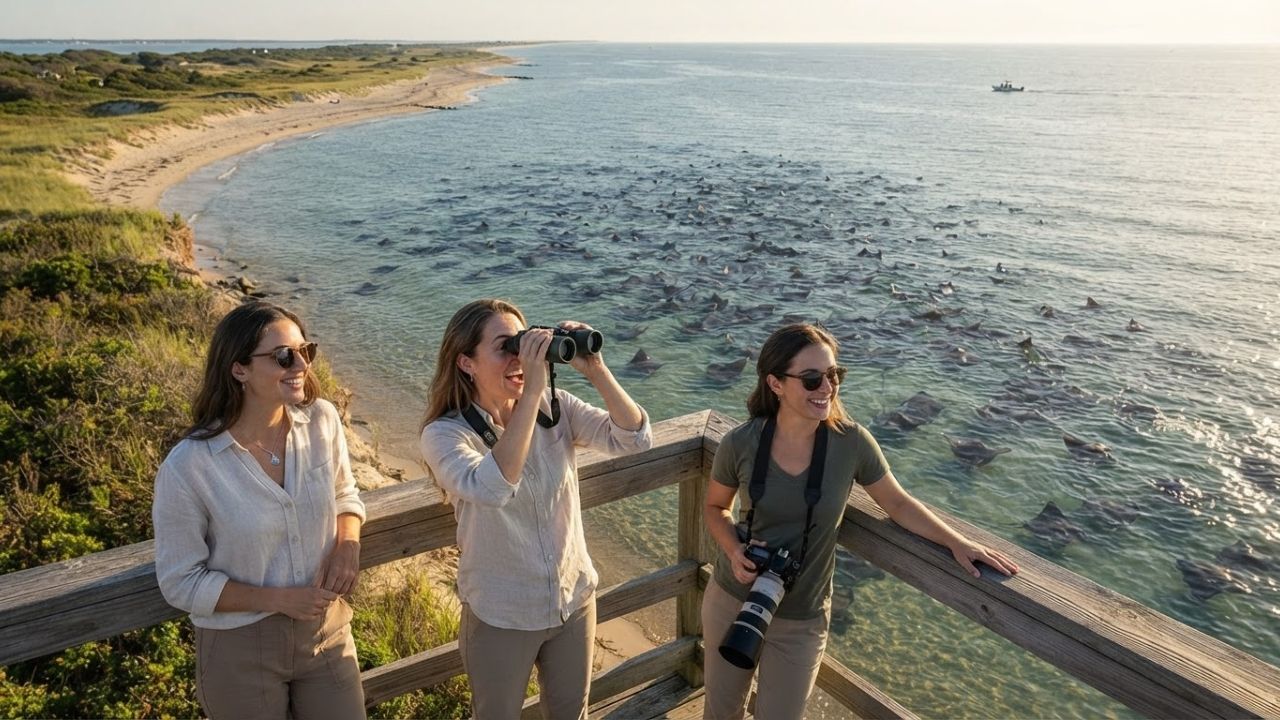
Image generated by AI
Creating a seasonal spectacle along New York's Atlantic coast, thousands of cownose rays are migrating through the shallow waters south of Long Island, drawing wildlife travelers and photographers.
The Core Transit Update
Atlantic marine corridors and coastal wildlife zones are experiencing a significant seasonal influx of cownose rays (Rhinoptera bonasus). Confirmed by nearshore trawl surveys from the New York Department of Environmental Conservation (DEC), large schools of these gregarious rays move along the south shore of Long Island, including the Hamptons and Fire Island National Seashore.
Acoustic-tagging research led by the Smithsonian Environmental Research Center tracks these seasonal movements, showing that the rays travel between summer estuarine habitats in the Mid-Atlantic and wintering waters near Cape Canaveral and Port St. Lucie in Florida.
Ray Biology & Coastal Transit Gateways
Planning an Atlantic marine safari requires comparing species migration profiles alongside local transport gateways. The following tables outline cownose ray specifications and Long Island viewing locations.
| Cownose Ray Travel Parameter | Scientific / Research Detail | Strategic Conservation Status |
|---|---|---|
| Scientific Name | Rhinoptera bonasus (Eagle ray family) | IUCN: Vulnerable (2019 assessment) |
| Group Behavior | Gregarious; forms schools ("fevers") | Can number in the thousands |
| Atlantic Range | Long Island, NY to Port St. Lucie, FL | Tracking shows strong site fidelity |
| Wintering Grounds | Cape Canaveral coastal waters, Florida | Smithsonian Environmental Research Center data |
| Reproductive Rate | Females generally produce one pup annually | Limits population recovery |
| Feeding Style | Benthic feeding on hard-shelled molluscs | Uses crushing plates for crustaceans |
Cownose ray biological and migration specifications.
| Long Island Viewing Base | Primary Transport Access Route | Local Facility / Sighting Zone | Strategic Traveler Advice |
|---|---|---|---|
| South Shore (Hamptons) | Sunrise Highway (Route 27) | Nearshore Atlantic beaches | Best for aerial drone photography |
| Fire Island Seashore | Ferries from Patchogue / Sayville | 26 miles of protected shoreline | National Park rules apply; no cars |
| Riverhead Hub | Long Island Expressway (I-495) | Long Island Aquarium (Ray Bay) | Guaranteed educational ray encounters |
| North Shore (Huntington) | Northern State Parkway | Town of Huntington bay beaches | Sighted in local bay waters in August |
Long Island coastal transit corridors and viewing hubs.
Traveler Logistics Guide
From a ground-level perspective, the best way to navigate this is to schedule your coastal hikes along the south shore during warm late-summer days when the ocean is calm, as cownose rays swim close to the surface in shallow nearshore zones, making their wing tips and large shadows visible from elevated dunes or boardwalks. Checking local weather updates is recommended.
To plan your stingray observation journey:
- Ferry Access to Fire Island: Fire Island is car-free. Park your vehicle at ferry terminals in Sayville or Patchogue and board the passenger ferry to reach the National Seashore.
- Observe Safe Distances: Cownose rays possess defensive tail spines. Keep a safe distance when swimming or boating. If their wing tips appear, avoid wading into the water to get close-up photos.
- Aquarium Backups in Riverhead: If sea conditions prevent surface sightings, visit the Long Island Aquarium in Riverhead. Their "Ray Bay" features cownose, southern, and Atlantic stingrays.
- Town of Huntington Advisories: Rays have also been recorded in northern bays. The Town of Huntington monitors bay waters in August, advising boaters to watch for surface activity.
Infrastructure Impact Assessment
The development of seasonal marine safaris supports the diversification of Long Island's tourism economy outside conventional beach holidays.
By linking stingray sightings with migratory birdwatching along the Atlantic Flyway and whale-watching tours, local destination planners and the National Park Service protect delicate coastal dune ecosystems while encouraging regional conservation tourism.
Related Travel Guides
Raja Ampat Launches New Environmental Conservation Fee in 2026
Disclaimer
This article is for informational and educational purposes only. It does not constitute legal, financial, or professional advice. While we strive to provide accurate and up-to-date information, travel policies, regulations, and conditions change rapidly. Always verify information with official sources before making travel decisions. Nomad Lawyer makes no representations about the accuracy, reliability, completeness, or suitability of the information provided. Readers should consult qualified professionals for advice specific to their circumstances. The views expressed in this article are those of the author and do not necessarily reflect the views of Nomad Lawyer.