London Museums Surge in Global Attendance Rankings as Natural History and British Museum Draw 13.5 Million Visits

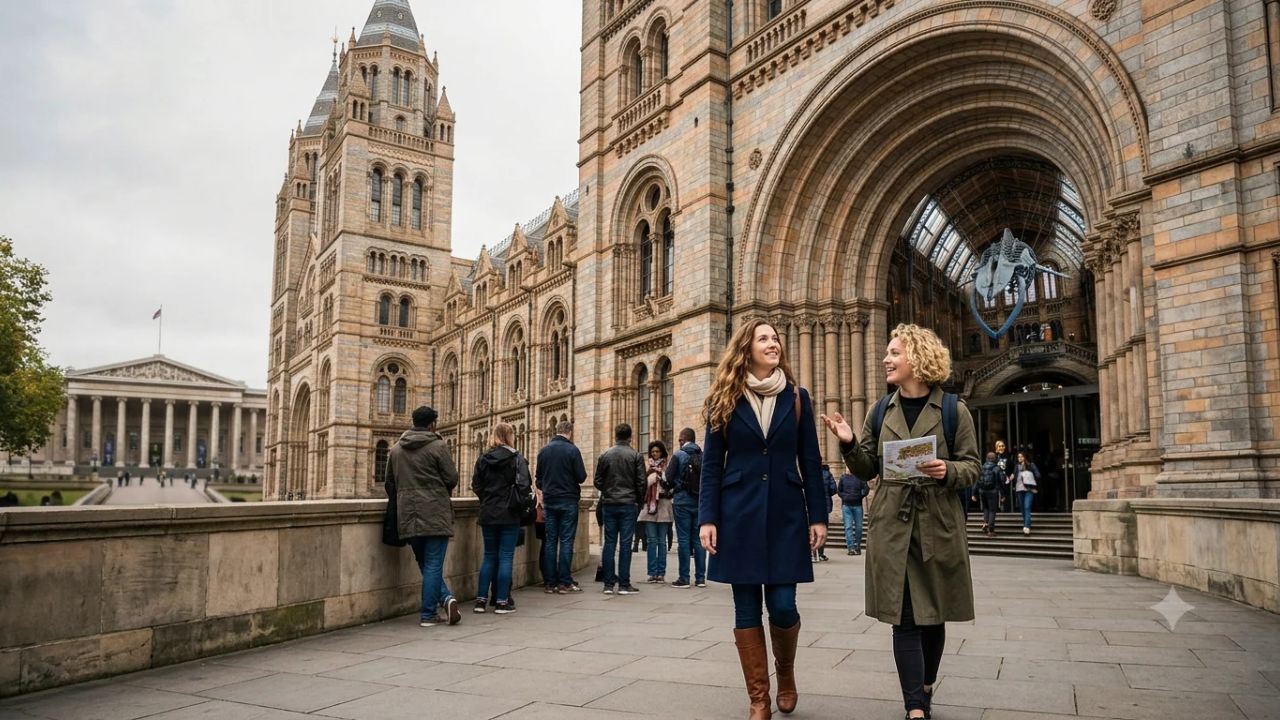
The Natural History Museum and British Museum drew over 13.5 million combined visits as the UK government confirms continued universal free admission
[LONDON, Oct 30, 2026] — London’s premier cultural institutions have reaffirmed their global preeminence after official sector audits revealed that the Natural History Museum and the British Museum welcomed a combined 13,557,049 visits during 2025, powering the United Kingdom’s strong showing in the newly announced Global Museum Attendance Rankings alongside formal government confirmation that universal free admission to national permanent collections will remain permanently protected for domestic and international travelers alike.
[!NOTE] Key Attendance and Policy Verification: Official museum sector records confirm robust cultural demand in the British capital, led by the Natural History Museum with 7,116,929 visits (a 13% year-on-year increase marking its third consecutive record-breaking year) and the British Museum with 6,440,120 visits. Released on October 27, 2026, the Themed Entertainment Association (TEA) Global Experience Index demonstrated that the world's top twenty cultural attractions recorded 161.4 million visits in 2025—a 5.4% annual expansion, with 80% of top institutions experiencing positive growth. This performance is reinforced by the UK Department for Culture, Media and Sport (DCMS) announcement on September 29, 2026, confirming that national museums will maintain universal free admission, rejecting proposals to levy entry fees on overseas tourists. The government has simultaneously committed a £600 million national infrastructure fund alongside £160 million for regional and local cultural organizations.
LONDON MUSEUM ATTENDANCE & POLICY VERIFICATION ARCHITECTURE
| Column 1 |
|---|
| [ DUAL FLAGSHIP TOTALS: 13,557,049 COMBINED VISITS (2025) ] |
| - British Museum (Bloomsbury): 6,440,120 Visits (47.5% share) |
| +----------------------------+-----------------------------+ |
| v v |
| [ GLOBAL TEA INDEX FINDINGS ] [ NATIONAL POLICY SAFEGUARDS ] |
| - Top 20 Global Attractions: 161.4M Visits (+5.4% vs 2024) - Universal Free Admission Confirmed |
| - Institutional Growth Rate: 80% (16 of 20 sites expanded) (Sept 29, 2026 Government Ruling) |
| - Inclusions: Palaces, curated heritage sites, art museums - Overseas Tourist Fee REJECTED |
| - Index Released: October 27, 2026 - £600M National Infrastructure Fund |
| - £160M Regional Museum Support Fund |
| +----------------------------+-----------------------------+ |
| v |
| [ SECTOR RECOVERY & PRACTICAL VISITOR MANDATES ] |
| - Advance timed ticketing strongly recommended to guarantee entry during peak seasons |
| - Separate geographic transit required between South Kensington and Bloomsbury districts |
| - Transit accessibility distinction: South Kensington Tube lacks step-free access; museums have |
The Anatomy of London's Cultural Attendance Dominance
Cultural tourism represents the primary pillar of the United Kingdom's inbound visitor economy, with London serving as its undisputed gravitational center. For international holidaymakers, independent city-break travelers, and multi-generational families planning vacations in the British capital, museums are not incidental rainy-day diversions; they represent primary trip motivators.
The magnitude of this engagement is demonstrated by verified attendance statistics compiled by the Association of Leading Visitor Attractions (ALVA) and institutional annual audits covering the 2025 operating year. Across just two institutions—the Natural History Museum on Cromwell Road in South Kensington and the British Museum on Great Russell Street in Bloomsbury—visitor turnout reached an astonishing 13,557,049 visits.
Within this dual-institution footprint, the Natural History Museum accounted for approximately 52.5% of the total volume with 7,116,929 visits, while the British Museum captured 47.5% with 6,440,120 visits.
From an analytical standpoint, it is essential to distinguish total visit counts from unique individual tourists. In high-density cultural capitals like London, millions of visits are generated by local residents, regional commuters, academic researchers, and school educational groups making repeat trips throughout the academic year. Similarly, international tourists on five-day or seven-day London itineraries frequently tour both institutions, meaning an individual traveler is counted multiple times across institutional turnstiles.
While these figures do not correlate to 13.5 million distinct vacationers or guarantee direct gains for specific hotel corridors, they provide undeniable empirical proof of sustained cultural magnetism. Together, these two institutions process more footfall than the entire populations of many European nations, underscoring the operational scale required to host global travelers in historic spaces.
DUAL-INSTITUTION ATTENDANCE DISTRIBUTION MATRIX
| Column 1 |
|---|
| Institution Name Location & Street Address 2025 Verified Visits Proportion |
| -------------------------------------------------------------------------------------------- |
| Natural History Museum (NHM)Cromwell Road, South Kensington7,116,929 Visits 52.5% of total |
| British Museum Great Russell St, Bloomsbury 6,440,120 Visits 47.5% of total |
| -------------------------------------------------------------------------------------------- |
| COMBINED DUAL TOTAL Central London Cultural Core 13,557,049 Visits 100.0% Footprint |
Inside the Natural History Museum's Record-Breaking Expansion
Securing the position of the most visited cultural attraction in the United Kingdom, the Natural History Museum (NHM) achieved an extraordinary 13% annual growth rate in 2025. This milestone marked the institution’s third consecutive year of record-breaking attendance, cementing its status as a global powerhouse of public scientific engagement.
The architectural grandeur of the Waterhouse Building—opened in 1881 as a cathedral to nature with its Romanesque terracotta facade—remains a bucket-list visual experience for visitors. However, the institution's recent attendance surge has been catalyzed by forward-looking spatial transformations:
The Transformed Nature Discovery Gardens
A transformative catalyst behind the museum’s recent public success was the unveiling of its redesigned five-acre green sanctuary surrounding the South Kensington site. Incorporating living laboratories, accessible sunken pathways, outdoor educational plazas, and evolutionary garden exhibits tracking millions of years of plant history, the transformed gardens recorded more than five million visits throughout 2025.
While museum management correctly emphasizes that garden visits form part of the broader visitor journey and should not be added on top of the 7.1 million headline indoor museum attendance, this green infrastructure has dramatically broadened the institution’s public appeal. Families with young children, local office workers, and tourists seeking tranquil outdoor rest utilize the grounds, creating a smooth transition between public parkland and scientific exploration.
Permanent Gallery Revitalizations Through 2031
Rather than relying passively on heritage collections, the Natural History Museum is executing a multi-year master redevelopment program. Under an announced strategic capital roadmap, the institution has committed to opening or completely revitalizing at least one major permanent gallery annually through the year 2031.
This rolling renewal program ensures that repeat visitors continually encounter cutting-edge display technologies, interactive scientific interfaces, and updated climate and biodiversity research. From the dramatic soaring expanse of Hintze Hall—dominated by the suspended 25-meter skeleton of "Hope" the blue whale—to modernized paleontology halls housing world-renowned dinosaur fossils, the museum balances historic Victorian curation with urgent contemporary environmental science.
NATURAL HISTORY MUSEUM PERFORMANCE METRICS
| Operational Dimension Statistical / Strategic Metric Operational Significance |
|---|
| -------------------------------------------------------------------------------------------- |
| Total Annual Visits (2025) 7,116,929 Indoor Visits #1 Most Visited UK Attraction |
| Year-on-Year Attendance Rise+13.0% Expansion Third consecutive record year |
| Outdoor Garden Engagement Over 5.0 Million Visits Living biodiversity laboratory |
| Capital Development Window Annual Gallery Opening to 2031 Long-term permanent renewal masterplan |
| Physical Location Cromwell Road, South KensingtonMuseum quarter anchor alongside V&A |
The British Museum: Universal Heritage in the Heart of Bloomsbury
While the Natural History Museum explores the evolution of the natural world, the British Museum on Great Russell Street in Bloomsbury stands as a monument to human civilization, art, and archaeology. Welcoming 6,440,120 visits in 2025, the institution remains one of the world's premier cultural destinations.
Founded in 1753 as the world’s first national public museum, the British Museum houses a vast encyclopedic collection spanning more than two million years of human history. Spanning across ancient Mesopotamia, Egypt, Greece, Rome, the Islamic world, Africa, the Americas, and Asia, its permanent galleries contain some of the most famous archaeological artifacts in existence.
Iconic Collections and Architectural Marvels
International visitors enter the museum through the magnificent Queen Elizabeth II Great Court, a two-acre covered public square designed by Foster and Partners, featuring a breathtaking tessellated glass roof constructed from 3,312 uniquely cut glass panes surrounding the historic Round Reading Room.
From the Great Court, travelers branch out to view legendary historical treasures that span the continents. Among the most visited is the Rosetta Stone, the foundational multilingual slab carved in 196 BC that unlocked ancient Egyptian hieroglyphic translation in 1799. Nearby, the Parthenon Sculptures display architectural and sculptural masterpieces created for the Athenian Acropolis in fifth-century BC Greece. In the Egyptian Sculpture Gallery, towering granite representations of Pharaoh Amenhotep III stand alongside the colossal bust of Ramesses II, drawing international scholars and history enthusiasts alike.
British domestic antiquity is anchored by the treasures of the Sutton Hoo Ship Burial, where Anglo-Saxon gold, garnet jewelry, and the iconic iron helmet have reshaped modern understanding of early medieval Britain. Further along, visitors encounter the Lewis Chessmen, elaborate twelfth-century walrus ivory gaming pieces discovered in the Outer Hebrides of Scotland.
To handle these massive visitor volumes while safeguarding delicate historic stone galleries, the British Museum has implemented digital crowd-management strategies. The institution strongly encourages visitors to reserve free timed-entry slots online, allowing travelers to bypass extended general standby queues during peak midday windows and school holiday periods.
THE BRITISH MUSEUM VISITOR PROFILE & ASSETS
| Collection / Metric Operational Specification Visitor Engagement Dynamic |
|---|
| -------------------------------------------------------------------------------------------- |
| 2025 Total Footfall 6,440,120 Verified Visits Consistently in global top rankings |
| Architectural Centerpiece Great Court by Norman Foster Two-acre covered glass quadrangle |
| Permanent Highlights Rosetta Stone, Sutton Hoo Global historical archaeological icons |
| Ticketing Architecture Free Advance Timed Booking Mitigates outdoor pavement queuing |
| Neighborhood Footprint Great Russell St, Bloomsbury Central access near Holborn & Russell Sq |
The Economics of Free Admission: Why the UK Rejected Overseas Tourist Fees
One of the most consequential policy developments for international cultural travel occurred on September 29, 2026, when the UK Department for Culture, Media and Sport (DCMS) formally confirmed that England’s national museums will maintain universal free admission for all visitors, explicitly rejecting proposals to impose mandatory ticket fees on foreign tourists.
The Debate Over Overseas Tourist Surcharges
In the wake of mounting public sector fiscal constraints, policy analysts and fiscal think-tanks had proposed introducing entrance charges for non-UK passport holders, citing models employed by major international institutions. For example, the Louvre in Paris charges €22 for standard adult entry, the Metropolitan Museum of Art in New York levies a mandatory $30 general admission fee for all out-of-state and international visitors, and the Rijksmuseum in Amsterdam charges €22.50 per adult ticket. Proponents argued that levying a £15 to £20 entry fee on the millions of overseas tourists visiting the British Museum and Natural History Museum could generate tens of millions of pounds in direct operational revenue for the public purse.
The Broader Economic Multiplier Rationale
Following extensive government reviews and consultations with national tourism leaders, the government decided against introducing an overseas visitor charge. The decision was rooted in sophisticated macroeconomic tourism logic.
First, preserving city-break competitiveness was deemed essential. Imposing substantial entry fees on a family of four visiting three London museums would add over £200 to their sightseeing budget. Government modeling indicated that ticket charges would reduce London’s competitive edge against rival European city-break capitals, potentially deterring overseas visitors or shortening their length of stay.
Second, the spillover spending effect delivers immense economic returns. When international travelers enjoy free access to world-class cultural institutions, their disposable vacation capital is redirected into the wider hospitality economy. Tourists spend money in nearby restaurants, cafes, pubs, retail stores, West End theater box offices, and on the Transport for London transit network. The tax revenues generated across these commercial sectors far exceed the revenue that direct museum admissions would generate.
Third, protecting administrative simplicity protects the visitor experience. Implementing a two-tier admission system would require burdensome passport verification checks at museum entry portals, generating severe bottlenecks, extending security screening lines, and adding operational staffing costs that would erode fee revenues.
While general admission to permanent galleries remains completely free, museums capture voluntary commercial revenue through premium temporary exhibitions, specialized audio tours, on-site dining, and museum gift shops, allowing affluent international guests to contribute financially while keeping public education universally accessible.
THE POLICY CHOICE: FREE ACCESS VS. TOURIST CHARGES
| Column 1 |
|---|
| Policy Dimension Universal Free Admission Model Proposed Overseas Ticket Charge |
| -------------------------------------------------------------------------------------------- |
| Direct Financial Barrier £0 for all visitors worldwide Estimated £15 - £25 per foreign guest |
| International CompetitivenessMaximizes London city breaks Risk of diverting tourists to rivals |
| Hospitality Spillover Spend High spend in dining & hotels Sightseeing budgets squeezed by fees |
| Operational Processing Fast digital entry & walk-ups Labor-intensive passport checks |
| Official Status CONFIRMED PERMANENT POLICY Formally rejected on Sept 29, 2026 |
The Global Museum Attendance Rankings: Contextualizing the TEA Index
The performance of London’s flagship institutions gained international validation on October 27, 2026, with the official publication of the annual Global Museum Attendance Rankings, compiled within the Themed Entertainment Association (TEA) Global Experience Index.
A Worldwide 5.4% Attendance Surge
The 2025 TEA global evaluation revealed that cultural tourism is experiencing a robust worldwide expansion. Across the twenty most visited cultural institutions on earth, attendance reached a collective 161.4 million visits during 2025, expanding by 5.4% compared to the 153.2 million visits recorded at the same institutions in 2024. Among the top twenty international sites, sixteen institutions experienced positive year-on-year attendance growth, demonstrating an 80% growth rate across the global elite tier.
Definitional Scope: Beyond Fine Art Galleries
Travelers and sector analysts must recognize the specific methodological parameters governing the TEA index. Unlike surveys restricted exclusively to fine art museums, the TEA Global Experience Index encompasses a broader definition of cultural attractions.
The evaluation includes historical royal palaces, ancient archaeological complexes, natural science centers, and specialized history sites with curated permanent collections. Consequently, institutions like the Natural History Museum and the British Museum compete alongside global landmarks such as the Louvre in Paris, the Palace of Versailles, the Vatican Museums in Rome, the National Museum of China in Beijing, and the Metropolitan Museum of Art in New York.
While the TEA assessment confirms collective global expansion, sector specialists emphasize that attendance volume should not be conflated with exhibition quality, visitor satisfaction, or individual holiday value. High visitor volume reflects institutional accessibility, city connectivity, and global brand recognition, but the most rewarding travel experiences often occur in smaller, uncrowded regional galleries.
TEA GLOBAL EXPERIENCE INDEX BENCHMARKS (OCTOBER 2026)
| Evaluation Metric 2024 Baseline 2025 Realized Finding |
|---|
| -------------------------------------------------------------------------------------------- |
| Total Top 20 Global Visits 153.2 Million Visits 161.4 Million Visits (+5.4% Growth) |
| Institutions Recording Rise -- 16 out of 20 Sites (80% Positive) |
| Scope of Cultural Assets Fine art, natural science, historic royal palaces, and monuments |
| London Presence Natural History Museum & British Museum among global top institutions |
The Uneven National Recovery: London Flagships vs. Regional Realities
While the 13.5 million visits recorded by London’s two leading attractions project an image of effortless cultural strength, official government statistics demonstrate that the broader national museum sector faces an uneven, nuanced recovery.
According to statistical data published by DCMS on September 3, 2026, government-sponsored museums and galleries across England recorded approximately 11.5 million visits between April and June 2026. While comparable-site attendance inched upward by 0.7% compared to the same period in 2025, overall visitation across government-sponsored institutions remained 11.8% below the equivalent pre-pandemic baseline recorded in 2019.
This disparity reveals a distinct two-speed recovery within the United Kingdom. Global London megahubs like the Natural History Museum, the British Museum, and Tate Modern benefit from immense international inbound tourist flows, high-capacity international air connectivity via Heathrow and Gatwick, and high local population density, driving attendance to record heights. In contrast, regional and local museums located outside the capital across the Midlands, northern England, and coastal regions rely primarily on domestic travelers and school excursions. Rising operating costs, elevated energy bills, and reduced local council funding have made their post-pandemic recovery significantly more challenging.
The £760 Million Public Capital Intervention
Recognizing this regional divergence, the UK government paired its free admission confirmation with substantial capital funding commitments. The plan allocates a £600 million National Infrastructure Fund dedicated to vital structural maintenance, roof repairs, climate-control modernization, and collection storage upgrades at national museums and sponsored cultural bodies. Simultaneously, a £160 million Regional Support Fund is targeted specifically at local, municipal, and independent museums across England to protect vulnerable civic collections, improve digital accessibility, and support local tourism economies.
THE UK MUSEUM SECTOR TWO-SPEED RECOVERY DIVIDE
| Column 1 |
|---|
| Sector Segment Attendance Trajectory Financial & Structural Reality |
| -------------------------------------------------------------------------------------------- |
| London Flagship Megahubs Surging to record highs (NHM +13%) International tourist magnet |
| English Sponsored Sector Q2 2026 rose 0.7% annually Still 11.8% below 2019 pre-pandemic |
| Regional & Local CollectionsStruggling with local budgets Supported by £160M government funding |
| National Infrastructure Capital renewals required Supported by £600M structural fund |
Strategic Visitor Planning: Navigating London's Cultural Core
For travelers planning a London itinerary inspired by the Global Museum Attendance Rankings, smooth sightseeing depends on practical logistical preparation rather than simply arriving at the front door.
Understanding Geographic Distance: Cromwell Road vs. Great Russell Street
Because the Natural History Museum and the British Museum are frequently mentioned together in national news reports, first-time visitors occasionally assume they occupy a shared museum campus. In reality, they are located in distinct central London boroughs situated four miles apart. The Natural History Museum is located on Cromwell Road in South Kensington within the Royal Borough of Kensington and Chelsea, clustered alongside the Victoria and Albert Museum and the Science Museum. The British Museum is situated on Great Russell Street in Bloomsbury within the Borough of Camden, near Covent Garden and the historic university district.
Traveling between the two institutions requires navigating central London transit, typically taking 25 to 35 minutes via the London Underground Piccadilly Line direct between South Kensington and Holborn or Russell Square. Travelers should never attempt to cram both institutions into a rushed single morning; each warrants at least three to four dedicated hours of exploration.
Advance Timed Ticketing and Peak Crowd Management
While general admission is free, both institutions utilize digital advance timed ticketing portals. Reserving a free digital ticket online guarantees entry and allows visitors to access priority entry lanes.
During peak travel periods—including summer holidays, bank holiday weekends, and October school half-term breaks—unbooked standby visitors face long outdoor pavement queues that can exceed forty-five minutes. In addition, blockbuster temporary exhibitions (such as the British Museum’s specialized archaeological retrospectives or NHM’s Wildlife Photographer of the Year) require separate paid tickets that should be purchased weeks in advance.
Accessibility Realities and Public Transit Nuances
Navigating London’s historic public transport network requires careful attention to accessibility. While the Natural History Museum provides full step-free street entrances, tactile exhibits, wheelchair hire, and elevators across all gallery zones, the nearest Underground station—South Kensington—is not step-free. Passengers with mobility challenges or strollers must navigate stairs between the train platforms and street level.
To reach South Kensington smoothly, accessible travelers should utilize step-free stations such as Green Park, Earl's Court, or King's Cross St Pancras, connecting to low-floor accessible London buses (such as Routes 14, 74, or 414) that drop passengers directly outside the Cromwell Road entrance. In Bloomsbury, the British Museum provides accessible entry via a dedicated elevator gate on Great Russell Street, with level access throughout the Great Court and major galleries. Nearby Tottenham Court Road station offers comprehensive step-free access from the Elizabeth Line and Northern Line.
PRACTICAL TRAVELER LOGISTICS & ACCESS MATRIX
| Column 1 |
|---|
| Practical Parameter Natural History Museum (NHM) The British Museum |
| -------------------------------------------------------------------------------------------- |
| Physical Address Cromwell Road, SW7 2BD Great Russell Street, WC1B 3DG |
| Nearest Underground Station South Kensington (Not step-free)Tottenham Court Road (Step-free) |
| Advance Booking Portal nhm.ac.uk/visit (Free timed) britishmuseum.org/visit (Free timed) |
| Recommended Visit Dwell Time3.0 to 4.0 Hours 3.5 to 5.0 Hours |
| Paid Add-On Highlights Wildlife Photographer of Year Major international loan exhibitions |
| Step-Free Street Access Exhibition Road & Cromwell Rd Front main entrance via power lift |
Albertopolis: The South Kensington Victorian Cultural Heritage
The enduring success of the Natural History Museum cannot be separated from the historical legacy of "Albertopolis"—the grand cultural and scientific quarter established in South Kensington in the mid-nineteenth century. Envisioned by Prince Albert following the international triumph of the 1851 Great Exhibition of the Works of Industry of All Nations in Hyde Park, profits from that historic expo were reinvested to purchase an expansive estate dedicated to public education, industrial arts, and natural sciences.
Today, Exhibition Road forms a pedestrian-friendly cultural thoroughfare where three of the world's most distinguished institutions sit side by side: the Natural History Museum, the Science Museum, and the Victoria and Albert Museum. Visitors wandering down this shared promenade can explore Alfred Waterhouse's Romanesque architecture at the Natural History Museum, examine George Stephenson's Rocket and Apollo spacecraft at the Science Museum, and view centuries of decorative applied arts and couture fashion at the V&A—all without paying a single penny in general admission fees. This clustering effect creates a world-class educational campus where international families, students, and scholars spend multiple consecutive days immersed in global knowledge.
Economic Multipliers: How Free Museums Fuel London's Urban Economy
The continued provision of universal free museum admission generates powerful economic multiplier effects that benefit London's wider commercial ecosystem.
When cultural tourists save on admission fees, those funds circulate directly through neighboring service businesses. In South Kensington, the pedestrianized restaurant district around Exhibition Road and South Kensington station thrives on museum visitors dining at local bistros, artisanal bakeries, and historic mews pubs before and after gallery visits. In Bloomsbury, visitors departing the British Museum filter naturally into independent bookstores, historic tea rooms along Museum Street, and the vibrant retail and dining clusters of Covent Garden and Soho.
This financial dynamic extends to London's performing arts. Free daytime cultural sightseeing allows travelers to allocate vacation budgets toward evening West End musical and theater productions, fine dining, and boutique hotel accommodations. Far from being a drain on public finances, free national museums serve as high-yield economic catalysts that attract millions of affluent international visitors, supporting tens of thousands of jobs across hospitality, transit, and retail.
CULTURAL TOURISM URBAN VALUE DISPERSION
| Column 1 |
|---|
| Economic Beneficiary Mechanism of Value Capture Commercial Sector Impact |
| -------------------------------------------------------------------------------------------- |
| Kensington & Bloomsbury F&B Lunch, afternoon tea, & dinner Direct revenue to independent cafes |
| West End Theaters Redirection of admission savingsHigher box office ticket sales |
| Transport for London (TfL) Underground & bus fare capture Increased off-peak public transit rev |
| Central London Retail Museum shops & local shopping Strong sales of books, gifts & crafts |
Strategic Outlook: The Future of British Cultural Tourism
The resurgence of the Natural History Museum and the British Museum within global attendance rankings underscores the enduring vitality of the United Kingdom's cultural assets.
As global tourism normalizes, international travelers increasingly prioritize destinations that offer world-class cultural authenticity without exploitative pricing. By confirming the permanent protection of universal free museum admission, the UK government has preserved one of the most enlightened cultural policies in modern history.
With the Natural History Museum advancing its multi-year gallery renewal through 2031 and the British Museum executing forward-looking masterplans for architectural restoration and digital collection access, London’s cultural institutions are not resting on historical laurels. They are evolving into dynamic, inclusive, and forward-looking centers of global knowledge, ready to inspire the next generation of international travelers.
Frequently Asked Questions (PAA)
Are national museums in London free for international tourists?
Yes. On September 29, 2026, the UK government officially confirmed that national museums in England will maintain universal free admission for all visitors, explicitly rejecting proposals to introduce mandatory ticket charges for overseas travelers. Visitors can enter the permanent galleries of the Natural History Museum, the British Museum, the Science Museum, the National Gallery, and Tate Modern without paying an admission fee.
How many people visited the Natural History Museum and British Museum in 2025?
In 2025, the Natural History Museum recorded 7,116,929 visits—a 13% annual increase representing its third consecutive record-breaking year. The British Museum welcomed 6,440,120 visits. Combined, the two central London institutions recorded 13,557,049 visits during the twelve-month period.
Do I need to book advance tickets to visit the British Museum and Natural History Museum?
While admission is free, both institutions strongly recommend reserving free advance timed-entry tickets online through their official websites. Advance booking guarantees entry and provides access to priority lanes, allowing travelers to bypass extended general standby queues during peak weekends and school holidays.
How far apart are the Natural History Museum and the British Museum?
The two museums are located in different neighborhoods approximately four miles apart. The Natural History Museum is situated on Cromwell Road in South Kensington, while the British Museum is located on Great Russell Street in Bloomsbury. Traveling between them via the London Underground (Piccadilly Line between South Kensington and Holborn or Russell Square) takes approximately 25 to 35 minutes.
Is South Kensington Tube station accessible for travelers with mobility challenges?
No. Although the Natural History Museum provides fully step-free street entrances, elevators, and accessible facilities throughout its galleries, the nearest London Underground station—South Kensington—does not have step-free platform-to-street access. Travelers requiring step-free transport should use accessible bus routes (such as Routes 14, 74, or 414) or arrive via step-free stations like Green Park or Earl's Court.
Related Travel Guides
This article is for informational purposes. Flight routes, passenger regulations, visa rules, and transit advisories are subject to change by airlines and aviation authorities. Readers are advised to verify schedules and travel documentation with relevant carriers and border agencies before departure.
Related Stories
UAE Tourism Strategy 2031: How Abu Dhabi, Dubai, and Sister Emirates Drive a 40-Million-Guest Hospitality Boom

China Overtakes South Korea to Lead Vietnam Autumn Tourism Surge as Hanoi Targets 50 Million Visitors by 2030