
Germany Reopens Berlin-Hamburg Rail Corridor After 10-Month Upgrade: Direct Trains, 165km Track Renewal Restored June 2026
Germany's critical Berlin-Hamburg railway corridor returns to full operation after a massive ten-month infrastructure overhaul, restoring 278km of direct passenger and freight rail connectivity between the nation's two largest cities.

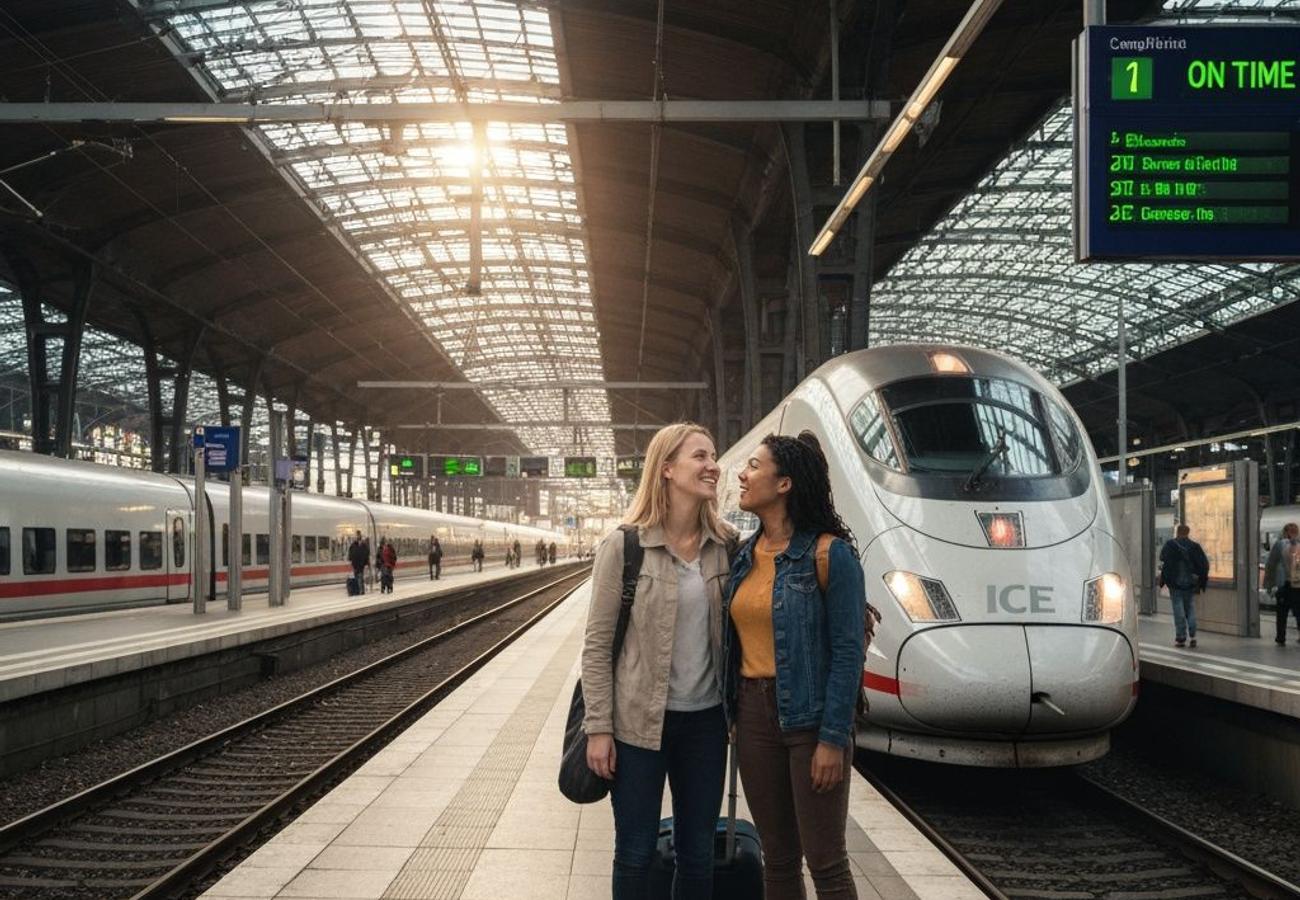
Image generated by AI
One of Europe's Busiest Rail Corridors Comes Roaring Back
Germany has officially restored full operations on the Berlin-Hamburg railway corridor as of June 14, 2026—marking the end of a ten-month intensive infrastructure programme that ranks among the country's most significant rail modernization efforts in recent years.
The 278-kilometre corridor, connecting Germany's two largest cities, is no longer a construction site. Long-distance trains, regional services, and freight operations are running their regular routes again. For travelers, logistics companies, and rail operators across northern Europe, this is genuinely transformative infrastructure news.
The Scale of What Just Reopened
Let's talk numbers, because they tell the real story here.
Deutsche Bahn completed a deep infrastructure reset—not a light repair job. The project renewed 165 kilometres of track, replaced 249 switches, upgraded 678 signals, modernised 28 stations, and renewed 25 platforms. New track-changing and crossing facilities were added. Interlocking technology was upgraded. The entire operational flexibility of the line shifted forward.
The closure began August 1, 2025. Instead of spreading repairs over years in smaller chunks, Deutsche Bahn bundled the modernisation into one concentrated construction window. That concentrated pain upfront means concentrated recovery now.
Why This Matters Beyond Railway Enthusiasts
Berlin and Hamburg aren't just any two cities. Berlin is Germany's capital—a major cultural and business hub pulling international visitors and conference delegates year-round. Hamburg is Europe's major port city and a powerful commercial centre with deep links to the Baltic region and beyond.
For business travelers, the corridor reopening means same-day rail movement between two economic powerhouses is restored. For leisure travelers, it means direct rail access to Berlin's museums, government quarter, and creative districts—plus easy onward movement to Hamburg's port, waterfront districts, and northern German tourism zones.
Reddit: "Direct trains between Berlin and Hamburg just came back. No more replacement buses for my monthly business trips. Game changer." — r/germantrain
The corridor also serves intermediate towns including Büchen, Ludwigslust, and Wittenberge—regional nodes that rely on through-corridor connectivity.
A Staged Return: Smart Infrastructure Planning
The reopening wasn't a flipped switch. It was a two-phase operation.
Phase one began May 15, 2026: The northern section between Hamburg and Hagenow Land reopened, allowing services towards Schwerin and Mecklenburg-Western Pomerania to return to near-normal patterns. This staged approach allowed planners to manage final commissioning while restoring useful mobility early.
Phase two arrived June 14, 2026: Full corridor restoration. Regional trains returned to regular timetables. Replacement buses ended on affected local links. Freight capacity was fully restored on the route and connecting approaches.
This isn't accident—it's sophisticated infrastructure project management. You bring back what you can, while finishing what remains.
What Exactly Was Upgraded
The investment was comprehensive across every layer of rail infrastructure:
Track work accounted for the bulk of physical labour—165 kilometres completely renewed. That's roughly 59% of the entire corridor replaced. Switches numbered 249 units. Signals came in at 678 units. Stations underwent modernisation at 28 locations. Platforms were renewed at 25 stations.
The project also added operational flexibility through new track-changing and crossing facilities, plus modernised interlocking technology. Future-proofing was built in: the upgrades prepare the corridor for modern train control systems and rail communications standards.
According to Deutsche Bahn's infrastructure timeline, this represents one of the largest single-corridor investments in the current five-year rail modernisation programme.
The Passenger Experience: What Changes Now
For travelers, the practical gains are immediate:
Direct routing returns: No more reliance on diversion routes and replacement bus services. Regional passengers see normal timetables restored. Intermediate stops are served again without the detours that characterized the closure period.
Long-distance capacity increases: Deutsche Bahn has signalled a stronger long-distance offer on the route. Daily direct services between Berlin and Hamburg rise compared with construction-period patterns. Modern high-speed train types are operating on the corridor.
City-break accessibility improves: Tourists moving between Berlin, Hamburg, the North Sea, and wider northern Germany regain direct rail connectivity. Onward travel options towards European routes linked through Germany strengthen.
For corporate travel managers, this means easier schedule choice for same-day trips. For tour operators, improved rail planning becomes possible again. For conference and event logistics, the restored corridor cuts travel friction significantly.
Freight: The Overlooked Winner
During the ten-month closure, freight trains were diverted onto alternative routes. This created pressure across connected parts of the network.
Full reopening restores freight capacity between Hamburg and Berlin, including on approach routes. This matters because Hamburg functions as one of Europe's major port and logistics centres. Container movement, industrial supply chains, and lower-emission inland transport all depend on reliable rail freight links.
The restored corridor therefore strengthens Germany's wider logistics infrastructure—a benefit that extends well beyond passenger travel statistics.
Long-Distance Timing: Minor Adjustments Remain
The reopening is real, but Deutsche Bahn has flagged that some long-distance train timings will carry temporary adjustments in the first operating phase. This is standard practice—infrastructure projects of this scale typically require operational fine-tuning as new systems come fully online.
Travelers should expect normal service patterns by mid-summer 2026, with optimisations continuing through Q3.
The Bigger European Rail Picture
This corridor reopening matters beyond Germany's borders. Berlin-Hamburg is a key node in broader European rail connectivity. Better north-south movement through northern Germany improves east-west European rail flows.
According to recent European rail infrastructure reports, restored corridors like Berlin-Hamburg strengthen continental rail competitiveness against road and air transport on high-volume domestic and regional routes.
For the travel industry, rail regains competitive ground. For logistics, carbon-intensive road transport faces renewed rail alternatives. For tourists and business travelers, European mobility gets simpler.
What This Signals About German Rail Investment
This project reflects Deutsche Bahn's broader modernisation strategy: concentrate major works, refresh entire corridors, upgrade systems holistically, and future-proof infrastructure.
It's the opposite of perpetual patchwork repair. Whether that strategy succeeds long-term depends on execution consistency and funding continuity—but the Berlin-Hamburg reopening is, for now, evidence that large-scale German rail infrastructure investment can be completed on schedule.
The Berlin-Hamburg corridor is open. Europe's rail network just got stronger.
Related Travel Guides
Disclaimer
This article is for informational and educational purposes only. It does not constitute legal, financial, or professional advice. While we strive to provide accurate and up-to-date information, travel policies, regulations, and conditions change rapidly. Always verify information with official sources before making travel decisions. Nomad Lawyer makes no representations about the accuracy, reliability, completeness, or suitability of the information provided. Readers should consult qualified professionals for advice specific to their circumstances. The views expressed in this article are those of the author and do not necessarily reflect the views of Nomad Lawyer.
Kunal K Choudhary
Co-Founder & Contributor
A passionate traveller and tech enthusiast. Kunal contributes to the vision and growth of Nomad Lawyer, bringing fresh perspectives and driving the community forward.
Learn more about our team →