
Loganair Signs Deal with Beta Technologies for Five Alia CX300 Electric Aircraft to Launch Zero-Emission Scottish Flights by 2026
Loganair signs a term sheet for five Alia CX300 electric aircraft from Beta Technologies, aiming to bring zero-emission regional aviation to Scotland.

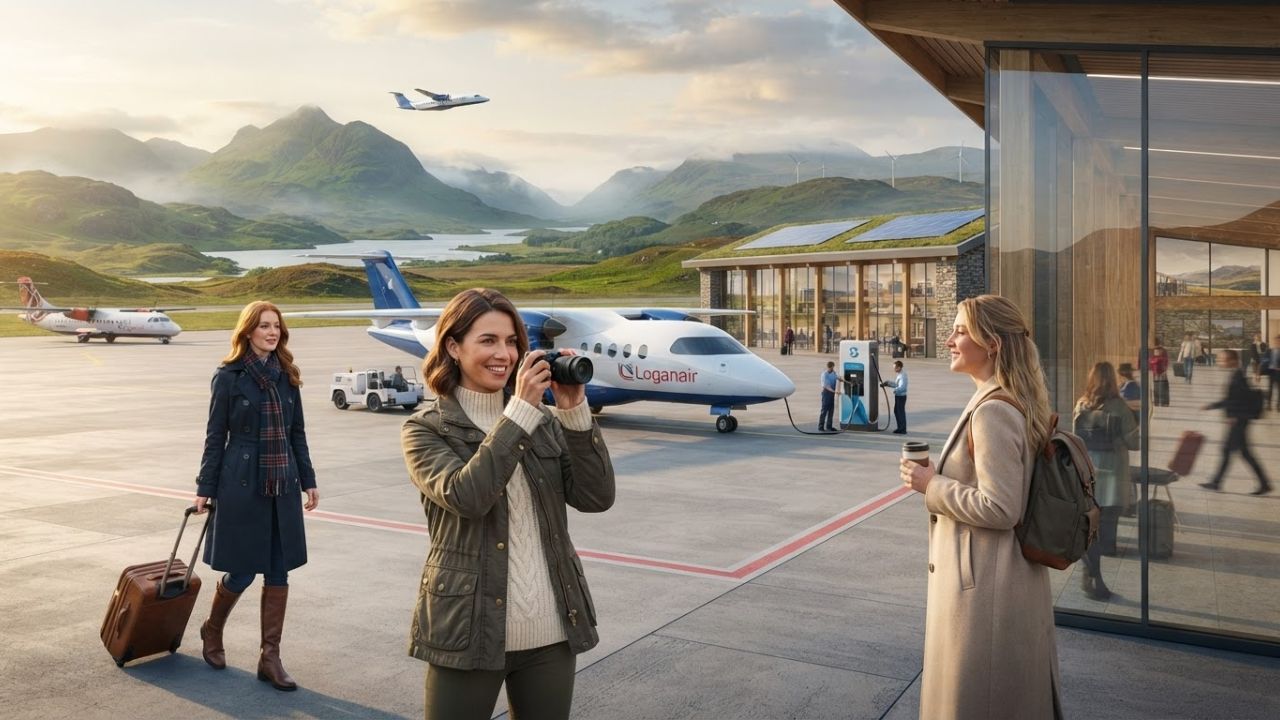
Image generated by AI
Loganair Signs Deal with Beta Technologies for Five Alia CX300 Electric Aircraft to Launch Zero-Emission Scottish Flights by 2026
Loganair has signed a agreement to acquire next-generation electric aircraft to bring zero-emission regional flight operations to the Scottish Highlands and Islands. The carrier plans to integrate battery-powered planes into its short-haul network to lower operating expenses and maintain vital community links.
[GLASGOW, 21 July 2026] — Regional carrier Loganair has signed a term sheet for five Alia CX300 electric aircraft from Beta Technologies, with options for five additional aircraft. According to reports, this Loganair electric aircraft deal with Beta Technologies could make the airline one of the first commercial operators in Europe to introduce battery-powered regional flights. The conventional take-off and landing (eCTOL) aircraft are designed to carry up to five passengers, utilizing a fully electric propulsion system supported by rapid charging technology that allows recharging within 20 to 40 minutes.
The agreement represents a major step for regional connectivity in Scotland, where short-distance flights link remote island communities with the mainland. Because road and rail alternatives are not available in these coastal areas, regional aviation is considered an essential service for healthcare, education, and commerce. The introduction of zero-emission flight technology is expected to lower operating costs on routes that are currently financially challenging.
Loganair Partners with Beta Technologies to Build Electric Transport Network
The partnership with Beta Technologies focuses on replacing smaller, older aircraft currently used on economically challenging routes. Loganair operates one of the United Kingdom's largest regional networks, connecting cities, islands, and remote regions. High operating costs and volatile fuel prices have placed significant financial pressure on routes such as those connecting Inverness with Stornoway, and flights between Inverness, Kirkwall, and Sumburgh.
To verify the suitability of the Alia CX300 for these operations, the airline completed demonstration flights across its Scottish network. The test flight program connected key locations including Glasgow, Dundee, Aberdeen, Inverness, Wick, and Kirkwall. The demonstration flights allowed the carrier to evaluate the aircraft's performance in challenging weather conditions, which are common in the Highlands and Islands.
The table below outlines the fleet specifications and regional test routes for the new electric aircraft:
| Aircraft Model | Passenger Capacity | Propulsion System | Battery Recharge Window | Regional Test Cities |
|---|---|---|---|---|
| Alia CX300 | 5 Passengers | Fully Electric (eCTOL) | 20 to 40 Minutes | Glasgow, Dundee, Aberdeen, Inverness, Wick, Kirkwall |
Unlike vertical take-off designs engineered for urban air mobility, the Alia CX300 is a fixed-wing aircraft designed to operate from existing regional runways and airport infrastructure.
Sustainable Regional Connectivity for Remote Scottish Communities
The development of electric aviation in Scotland is directly linked to the geography of the Highlands and Islands. Short island-hopping routes are ideally suited for battery-powered aircraft, which require less energy storage than long-haul flights. The low cost of electric charging compared to aviation fuel could help the carrier maintain services to smaller communities without increasing ticket prices or requiring additional public subsidies.
Aviation officials have suggested that Scotland could benefit from adopting funding models similar to those used in Norway. In Norway, government support and target subsidies help carriers maintain essential regional flights while transitioning to zero-emission technology. A similar framework in the UK could accelerate the deployment of charging infrastructure at remote airports, helping airlines meet sustainability targets.
Impact of Zero-Emission Flights on Scottish Island Tourism
Tourism is expected to be a primary beneficiary of sustainable aviation in Scotland. The Highlands and Islands attract international visitors, but limited transport options and concerns over the carbon footprint of short flights can deter eco-conscious travelers. Sustainable electric flights will provide a low-emission option for visitors looking to explore remote coastal communities and historical heritage sites.
By maintaining frequent connections between regional airports, electric flights will make it easier for travelers arriving through major gateways like Glasgow and Edinburgh to reach remote destinations. This improved accessibility will support local hospitality businesses, tour guides, and independent craft shops that rely heavily on visitor spending.
Regulatory Approval and Infrastructure Challenges for Electric Aviation
While the agreement represents progress, the commercial launch of electric flights will require extensive testing, regulatory approvals, and infrastructure investments. Before carrying passengers, the Alia CX300 must obtain safety certifications from civil aviation authorities, verifying its airworthiness in regional commercial operations.
Additionally, regional airports must install rapid charging stations capable of replenishing the aircraft's batteries within the target 20 to 40-minute window. This requires cooperation between airport operators, local energy grids, and government departments to ensure reliable power delivery. The carrier plans to roll out electric flights gradually as regulatory approvals and airport charging networks are established.
Why This Matters (Information Gain)
The Loganair and Beta Technologies agreement demonstrates how regional airlines can serve as early adopters of zero-emission technology. Short, low-density routes are ideal testing grounds for battery-powered flight because they bypass the range limitations that currently prevent the electrification of large commercial jets. By targeting these routes, the aviation sector can gain operational data on battery wear, fast-charging logistics, and weather performance.
Over the long term, the transition to electric aviation will help preserve transport links for remote communities that might otherwise lose air services due to rising operating costs. The success of this project could establish Scotland as a leading testing ground for commercial electric flight, providing a template for regional carriers across Europe looking to decarbonize short-haul travel.
Meta Description
Loganair signs a term sheet with Beta Technologies for five Alia CX300 electric aircraft to establish zero-emission flights across Scotland by 2026.
Disclaimer
This article is for informational and educational purposes only. It does not constitute legal, financial, or professional advice. While we strive to provide accurate and up-to-date information, travel policies, regulations, and conditions change rapidly. Always verify information with official sources before making travel decisions. Nomad Lawyer makes no representations about the accuracy, reliability, completeness, or suitability of the information provided. Readers should consult qualified professionals for advice specific to their circumstances. The views expressed in this article are those of the author and do not necessarily reflect the views of Nomad Lawyer.
Kunal K Choudhary
Co-Founder & Contributor
A passionate traveller and tech enthusiast. Kunal contributes to the vision and growth of Nomad Lawyer, bringing fresh perspectives and driving the community forward.
Learn more about our team →