
The SR-71 Blackbird: The Cold War Speed Record That Still Dominates Aviation Nearly 50 Years Later
Breaking airline news and aviation industry updates for 2026.

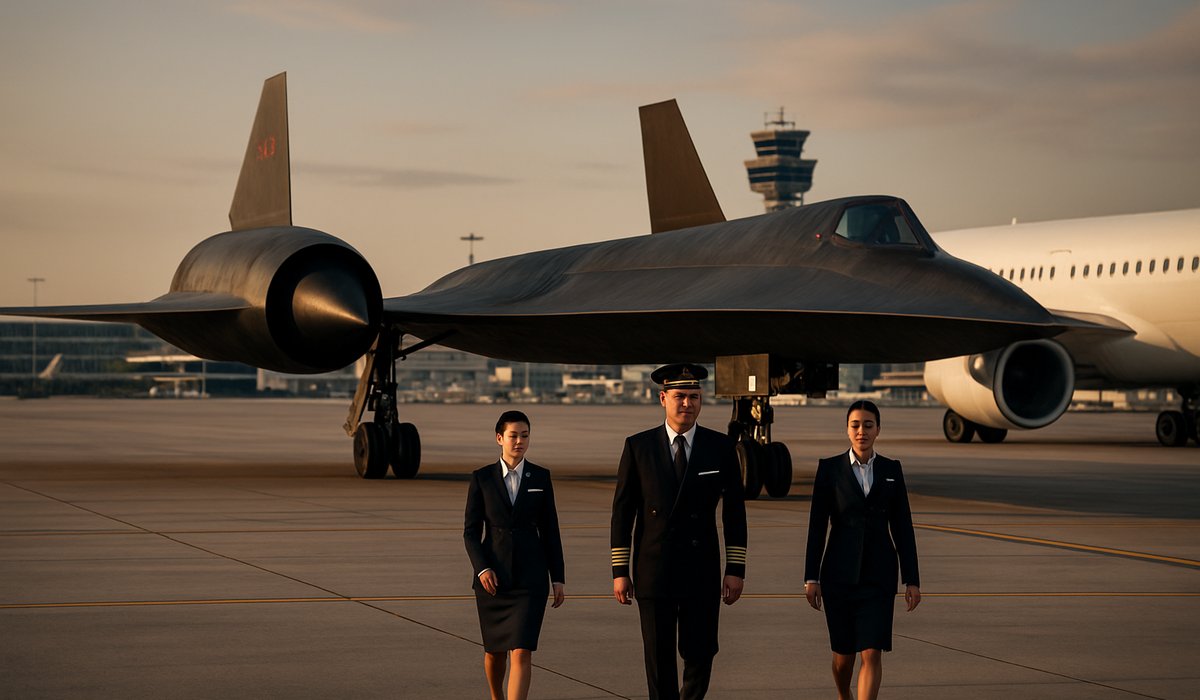
Image generated by AI
The SR-71 Blackbird: The Cold War Speed Record That Still Dominates Aviation Nearly 50 Years Later
Lockheed's legendary reconnaissance jet remains unmatched by any crewed aircraft in sustained flight velocity
A Record That Defies Modern Aviation
Nearly five decades after its final operational flight, the Lockheed SR-71 Blackbird continues to hold an aviation distinction that no crewed jet has managed to surpass: an air speed record established in 1976 that fundamentally redefined what was thought possible for manned flight. This sleek, delta-winged reconnaissance platform—born from the secretive Skunk Works division during the height of Cold War tensions—remains the fastest crewed aircraft ever to operate in Earth's atmosphere, a testament to engineering excellence that modern aviation technology has yet to eclipse.
Engineering for Survival, Not Combat
Developed throughout the 1960s and introduced during an era of intensifying geopolitical rivalry, the SR-71 represented a radical departure from conventional aircraft design philosophy. Rather than prioritizing defensive armaments or combat capabilities, Lockheed's engineers designed the Blackbird around a singular principle: speed and altitude as survival mechanisms. By operating at velocities and heights beyond the reach of contemporary air defense systems, the aircraft could complete reconnaissance missions across hostile territory while remaining virtually invulnerable to interception.
The jet's distinctive black titanium construction, designed to withstand extreme aerodynamic heating at high velocities, became iconic in aviation circles. Its ability to gather strategic intelligence—combining advanced imagery and electronic surveillance capabilities—made it invaluable to U.S. intelligence operations throughout the Cold War era.
The 1976 Milestone and Its Legacy
The speed record achieved in 1976 represents the apex of the aircraft's operational achievements. Flying at velocities exceeding Mach 3—roughly 2,193 miles per hour—the SR-71 demonstrated capabilities that would influence aircraft design philosophy for generations. Despite revolutionary advances in jet propulsion, materials science, and aerodynamics over the subsequent decades, no production crewed aircraft has managed to replicate this performance envelope.
Why Modern Aviation Hasn't Matched It
Contemporary aviation development has shifted priorities away from pure speed records. Modern military jets prioritize maneuverability, fuel efficiency, reduced radar signatures, and sustained operational range over maximum velocity. The SR-71's specific design parameters—requiring specialized fuel systems, cooling mechanisms, and titanium airframes—made it economically and operationally unsustainable beyond the Cold War's conclusion.
The Blackbird's eventual retirement reflected evolving intelligence-gathering technologies, including satellite surveillance systems that could accomplish similar reconnaissance objectives without the operational costs and risks associated with manned flight over defended territory.
FAQ: SR-71 Blackbird Speed Records and Aviation History
What was the SR-71 Blackbird's maximum speed? The aircraft achieved speeds exceeding Mach 3, approximately 2,193 miles per hour, setting records in 1976 that remain unmatched by any crewed jet aircraft today.
Why hasn't any crewed aircraft broken this record since 1976? Modern aviation priorities emphasize maneuverability, efficiency, and stealth over maximum velocity. The extreme engineering demands and costs of building faster crewed aircraft made further pursuit economically impractical.
When was the SR-71 Blackbird retired? The aircraft was retired from service in 1990, as satellite technology advanced and Cold War tensions diminished, making sustained manned reconnaissance flights unnecessary.
What makes the SR-71 unique compared to modern fighter jets? Unlike contemporary combat aircraft, the SR-71 was designed purely for reconnaissance and high-speed escape, not combat engagement, resulting in a radically different engineering approach focused on speed and altitude rather than weapons systems.
Could modern technology build a faster crewed aircraft? While theoretically possible, the economic, practical, and strategic rationale for developing such an aircraft has disappeared, with unmanned and satellite-based systems proving more cost-effective for reconnaissance missions.
Related Travel Guides
Flight Delay Compensation Guide 2026
Understanding Airline Route Changes
Airport Security Process Updated (2026)
External Resources
Disclaimer
This article is for informational and educational purposes only. It does not constitute legal, financial, or professional advice. While we strive to provide accurate and up-to-date information, travel policies, regulations, and conditions change rapidly. Always verify information with official sources before making travel decisions. Nomad Lawyer makes no representations about the accuracy, reliability, completeness, or suitability of the information provided. Readers should consult qualified professionals for advice specific to their circumstances. The views expressed in this article are those of the author and do not necessarily reflect the views of Nomad Lawyer.
Kunal K Choudhary
Co-Founder & Contributor
A passionate traveller and tech enthusiast. Kunal contributes to the vision and growth of Nomad Lawyer, bringing fresh perspectives and driving the community forward.
Learn more about our team →