
Delta Air Lines Charts Bold New Course With Airbus Widebody Strategy for Long-Haul Expansion
Breaking airline news and aviation industry updates for 2026.

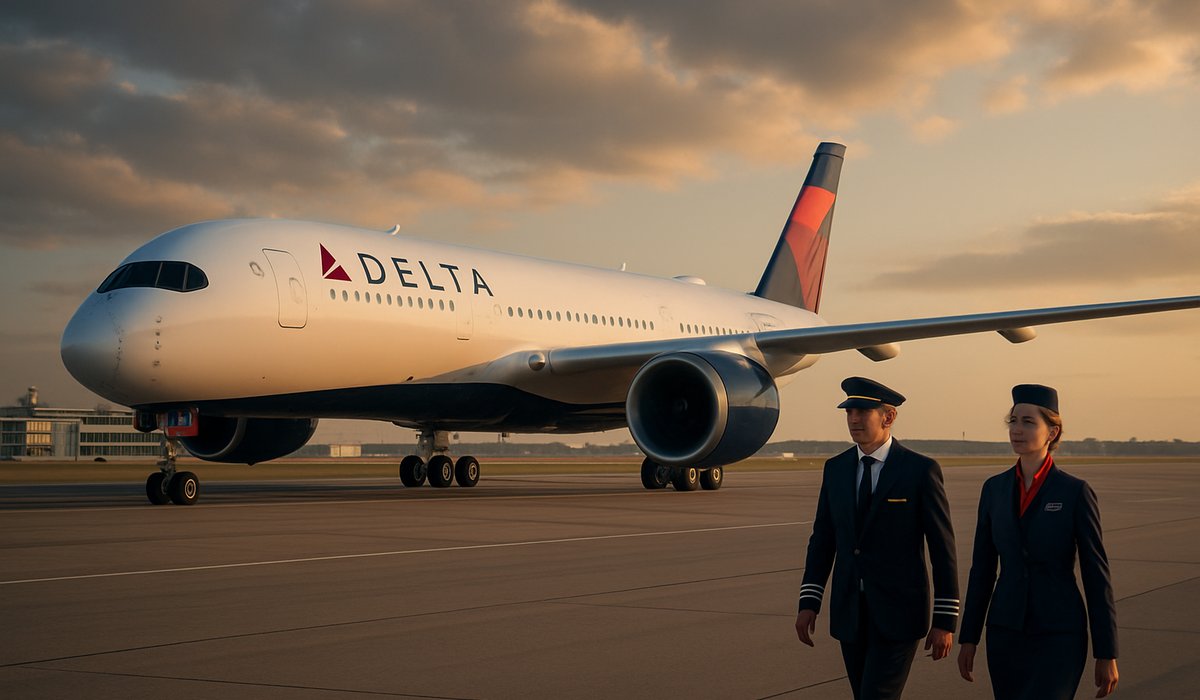
Image generated by AI
Delta Air Lines Charts Bold New Course With Airbus Widebody Strategy for Long-Haul Expansion
The carrier diverges from US rivals by committing to Airbus twin-aisle fleet as competitive pressures reshape transatlantic and Asia-Pacific operations
Delta's Strategic Widebody Bet Separates It From Boeing-Dependent Competitors
Delta Air Lines is charting a distinctly different trajectory in the global widebody aircraft market, bucking the trend established by its major US competitors American Airlines and United Airlines. While both American and United have doubled down on Boeing's 777-300ER jets as their flagship long-haul aircraft, Delta has committed to an Airbus-centric strategy that positions the Atlanta-based carrier uniquely within the industry's competitive landscape.
The strategic divergence underscores deepening divisions in how America's "Big Three" carriers are approaching fleet modernization and long-haul capacity planning. American operates 20 Boeing 777-300ERs, while United maintains 22 of the same aircraft type. Delta, by contrast, has selected Airbus's twin-aisle platform for its widebody expansion, with the Airbus A350-900 currently serving as its largest aircraft—a model that occupies a comparable market segment to Boeing's smaller 777-200ER variant.
Fleet Composition and Operational Implications
This widebody selection carries substantial implications for Delta's operational efficiency, seat configuration, and route economics. The A350-900's advanced aerodynamics and fuel-efficiency features position Delta differently on long-haul routes spanning the Atlantic and Pacific regions, where fuel consumption directly impacts profitability amid volatile jet fuel prices that have reshaped aviation economics since 2022.
The divergence reflects broader fragmentation within the US aviation industry as carriers pursue competing visions for future international expansion. While Boeing's 777-300ER remains the flagship choice for American and United, Delta's confidence in Airbus technology signals competitive differentiation in passenger experience, operational costs, and network strategy.
Competitive Landscape and Industry Trends
Delta's approach arrives amid significant industry headwinds, including persistent supply chain disruptions affecting aircraft delivery timelines, inflationary pressures on airline operating costs, and shifting consumer demand for long-haul premium cabin services. The airline industry continues navigating elevated fuel surcharges and dynamic baggage fee structures, factors that influence route profitability calculations for carriers planning widebody deployments.
The strategic decision underscores how the three largest US carriers are increasingly pursuing independent paths on fleet modernization, potentially reshaping competitive dynamics on transatlantic and Asia-Pacific routes throughout this decade.
FAQ: Delta Air Lines Fleet Strategy and Widebody Aircraft
Why is Delta choosing Airbus instead of Boeing for widebody aircraft? Delta has selected Airbus's twin-aisle fleet to differentiate its long-haul operations, emphasizing fuel efficiency and operational cost advantages, while American and United rely on Boeing 777-300ERs as flagship aircraft.
How does the Airbus A350-900 compare to Boeing's 777-300ER? The A350-900 is more comparable in size to the Boeing 777-200ER than the larger 777-300ER, offering advanced fuel-efficiency features but different seating capacity configurations.
What impact will this have on airline ticket prices and baggage fees? Widebody fleet modernization typically improves operational efficiency, but ticket pricing and baggage charges remain driven by fuel costs, competition, and demand rather than aircraft type alone.
When will Delta's new long-haul aircraft enter service? Delta's widebody expansion is scheduled for delivery beginning in 2027, allowing the carrier to gradually modernize its international fleet.
How does fuel efficiency affect airline profitability on long routes? Modern widebody aircraft like the A350-900 consume significantly less jet fuel per passenger, directly reducing operating costs on expensive long-haul routes and improving profit margins amid volatile fuel pricing.
Related Travel Guides
Flight Delay Compensation Guide 2026
Understanding Airline Route Changes
Airport Security Process Updated (2026)
External Resources
Disclaimer
This article is for informational and educational purposes only. It does not constitute legal, financial, or professional advice. While we strive to provide accurate and up-to-date information, travel policies, regulations, and conditions change rapidly. Always verify information with official sources before making travel decisions. Nomad Lawyer makes no representations about the accuracy, reliability, completeness, or suitability of the information provided. Readers should consult qualified professionals for advice specific to their circumstances. The views expressed in this article are those of the author and do not necessarily reflect the views of Nomad Lawyer.
Kunal K Choudhary
Co-Founder & Contributor
A passionate traveller and tech enthusiast. Kunal contributes to the vision and growth of Nomad Lawyer, bringing fresh perspectives and driving the community forward.
Learn more about our team →