
India's Vande Bharat Sleeper Train Arrives in Bengaluru for Final Testing Before Bengaluru-Mumbai Launch 2026
India's Vande Bharat Sleeper trainset has reached Bengaluru for critical pre-launch testing. The 823-capacity premium train will revolutionize overnight rail travel on the strategic Bengaluru-Mumbai corridor.

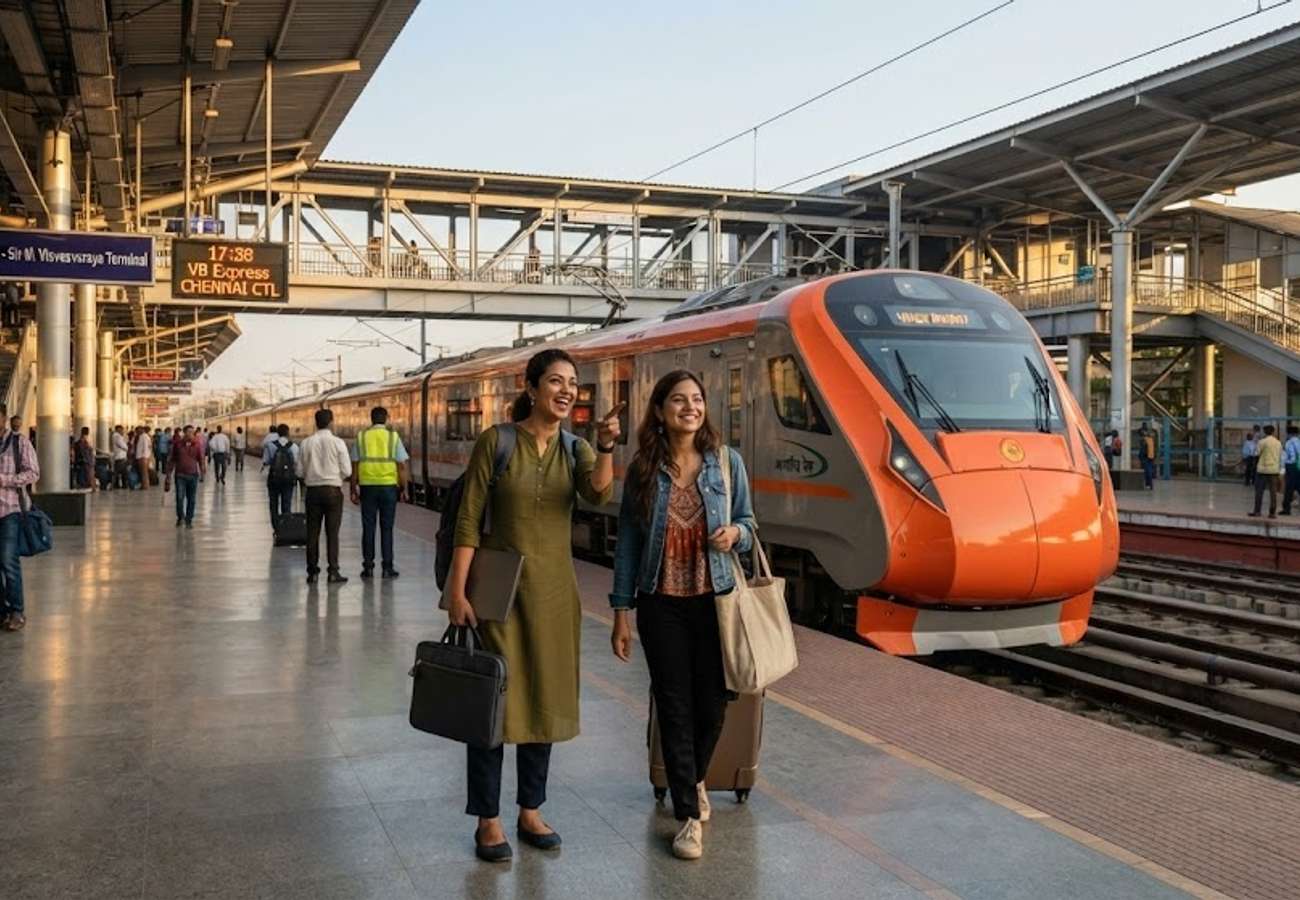
Image generated by AI
Premium Rail Revolution Arrives: What's Actually Happening in Bengaluru Right Now
India's Vande Bharat Sleeper trainset has just touched down in Bengaluru, and this isn't just another railway milestone—it's a fundamental reshaping of how Indians will travel overnight between two of the country's most economically vital cities.
The orange-and-grey rake, developed by BEML Limited with design support from the Integral Coach Factory, is now stationed at SMVT Bengaluru undergoing rigorous final validation. What makes this moment significant: this is only the second Vande Bharat Sleeper configuration in active development for Indian Railways, and it's destined for one of Asia's most strategically important rail corridors.
The Bengaluru–Mumbai route isn't just any commuter line—it connects India's tech capital to its financial heart, threading through Hubballi-Dharwad, Belagavi, and Pune along the way. This corridor currently serves business travellers, IT professionals, students, and long-distance commuters who've relied on conventional overnight express trains for decades.
Reddit: "Finally a sleeper option that doesn't feel like a time machine backward. 180 kmph overnight trains? That's game-changing for anyone doing Bangalore to Mumbai regularly." — r/IndianRailways
The Testing Phase: Why Bengaluru Matters
Right now, technical teams are conducting structured evaluations of critical systems—braking response, propulsion performance, onboard electrical integration, safety mechanisms, and ride stability under controlled conditions. This isn't ceremonial—this phase determines whether the train clears for actual passenger operations.
The Vande Bharat Sleeper introduces a redesigned overnight rail architecture. Unlike conventional sleeper services, this platform combines semi-high-speed capability with upgraded safety systems and enhanced passenger comfort into one integrated framework. Officials have been explicit: the train will only enter commercial service after full regulatory clearance and completion of all required trial phases.
Think of this testing as the final gate. Every subsystem must demonstrate compliance with safety and performance standards before a single paying passenger boards.
The Hardware: 823 Passengers, Premium Engineering
The 16-coach configuration represents careful capacity-comfort balance:
Sleeper Composition:
- 11 coaches configured as 3-tier sleeper (611 passengers)
- 4 coaches configured as 2-tier sleeper (188 passengers)
- 1 dedicated First AC coach (24 passengers)
Total capacity: approximately 823 passengers distributed across three distinct comfort tiers, allowing the train to serve a genuinely wide passenger base while maintaining premium standards for higher-paying travellers.
The internal design prioritizes berth accessibility, reduces corridor congestion, and enhances passenger ergonomics during extended overnight journeys—practical engineering that directly impacts sleep quality on 13+ hour trips.
Speed, Safety, and Systems: The Technology Stack
The Vande Bharat Sleeper represents a technical leap forward for Indian long-distance rail:
Speed Performance: Designed for up to 180 kmph (subject to track readiness, signalling upgrades, and route certification)—positioning it among India's fastest sleeper systems.
Safety Architecture: The train is equipped with Kavach, India's indigenous automatic train protection system, along with emergency communication units enabling direct passenger-to-staff interaction during critical situations.
Passenger Comfort: Redesigned berths feature improved cushioning, better structural support, and enhanced spacing. Automatic entry doors and vestibule connections allow smoother passenger flow while improving safety and climate control.
Air Quality and Hygiene: Advanced sanitation technologies and disinfectant systems maintain cleanliness during extended travel cycles—critical for overnight operations where passengers spend 12-14 hours onboard.
Driver Interface: The cabin features upgraded digital controls and integrated monitoring systems designed to improve operational accuracy and safety response times.
Aerodynamic Design: The exterior body is shaped to reduce air resistance, supporting smoother movement and improved energy efficiency at higher speeds.
Why This Moment Matters for India's Travel Landscape
The Howrah-Kamakhya Vande Bharat Sleeper already operates successfully, demonstrating measurable improvements in journey efficiency and reduced travel time. The Bengaluru–Mumbai service will become only the second sleeper variant in active deployment—expanding the high-speed concept from daytime chair-car operations into overnight long-distance travel.
This shift reflects a critical market reality: growing demand for faster, more comfortable rail options that directly compete with premium bus services and short-haul air routes on major intercity corridors. For business travellers currently flying between Bengaluru and Mumbai, this train positions itself as a genuine alternative—faster than traditional sleeper trains, more convenient than aviation, and significantly cheaper than premium flights.
Indian Railways' ongoing network upgrade strategy treats this corridor as a critical focus area, aiming to reshape intercity connectivity across high-demand routes. The Bengaluru–Mumbai service is expected to become a flagship corridor for overnight semi-high-speed rail travel, strengthening connectivity between southern technology centres and western financial hubs.
The Timeline Ahead
Currently, the trainset remains under manufacturer control—not yet formally inducted into railway operations. Testing is intensive and non-negotiable. Officials have provided no confirmed launch date, emphasizing only that passenger operations begin following full regulatory clearance.
This cautious approach reflects lessons learned from India's high-speed rail initiatives: rushing premium service launches creates operational headaches and passenger frustration. The Vande Bharat programme has learned from those experiences.
With continued development by BEML Limited and ongoing design refinement from the Integral Coach Factory, the sleeper Vande Bharat programme is positioned for broader expansion across India's major intercity routes. What happens on the Bengaluru–Mumbai corridor will likely determine expansion speed across other corridors—Delhi-Mumbai, Chennai-Bengaluru, and potentially northern routes.
The future of Indian overnight rail travel is being tested in Bengaluru right now—and it's faster, safer, and more comfortable than anything that came before it.
Related Travel Guides
Disclaimer
This article is for informational and educational purposes only. It does not constitute legal, financial, or professional advice. While we strive to provide accurate and up-to-date information, travel policies, regulations, and conditions change rapidly. Always verify information with official sources before making travel decisions. Nomad Lawyer makes no representations about the accuracy, reliability, completeness, or suitability of the information provided. Readers should consult qualified professionals for advice specific to their circumstances. The views expressed in this article are those of the author and do not necessarily reflect the views of Nomad Lawyer.
Kunal K Choudhary
Co-Founder & Contributor
A passionate traveller and tech enthusiast. Kunal contributes to the vision and growth of Nomad Lawyer, bringing fresh perspectives and driving the community forward.
Learn more about our team →