
LATAM Airlines Secures US$505 Million Loan for Airbus and Embraer Fleet Expansion in 2026
LATAM Airlines Group has finalized a US$505 million long-term financing deal to integrate 11 next-generation Airbus and Embraer aircraft into its fleet starting in late 2026.

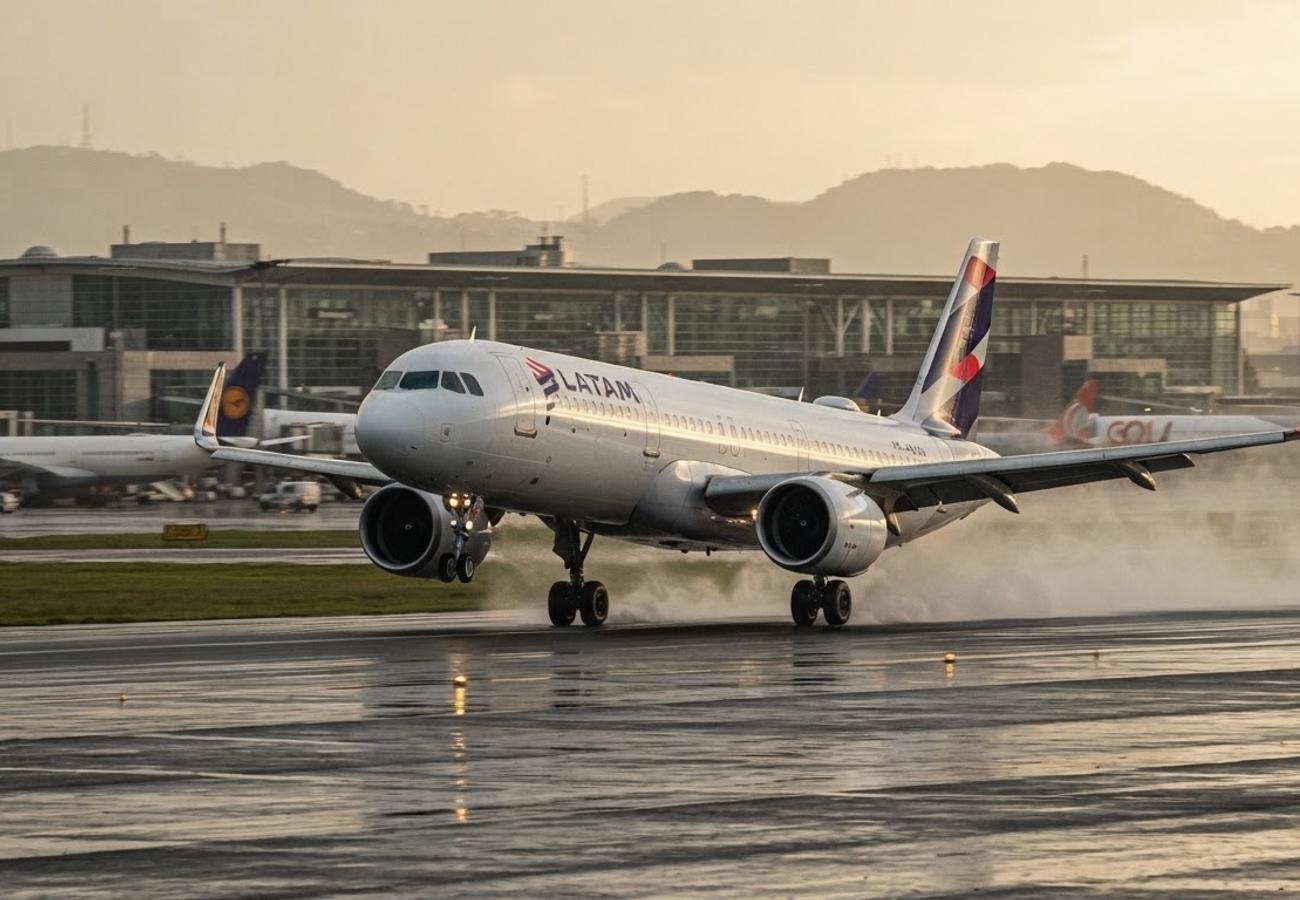
Image generated by AI
LATAM Airlines Group has finalized a US$505 million long-term financing agreement to integrate 11 next-generation Airbus and Embraer aircraft into its fleet starting in late 2026. This strategic capital injection, led by BNP Paribas, accelerates the carrier's post-restructuring growth and its transition toward a more fuel-efficient operational model across South America.
The move comes as the aviation sector faces a volatile environment of fluctuating fuel prices and high interest rates. By securing this long-term facility, the airline is positioning itself to stabilize capital requirements while fulfilling multi-year delivery commitments with global aircraft manufacturers. This financing is a critical component of a broader strategy to replace aging narrowbody jets with models that offer significantly lower operating costs and reduced carbon footprints.
Strategic Financing for Airbus and Embraer Deliveries
Industry reports indicate that the US$505 million loan is specifically structured to facilitate the arrival of 11 new aircraft during the second half of 2026. This transaction is not an isolated purchase but rather a targeted funding mechanism for a larger pipeline of aircraft commitments involving Airbus, Boeing, and Embraer that extend through 2030.
The funding is allocated across three specific aircraft models, prioritizing fuel efficiency and passenger capacity:
| Aircraft Model | Quantity | Primary Use Case |
|---|---|---|
| Airbus A320neo | 1 | Short to medium-haul regional routes |
| Airbus A321neo | 4 | High-density trunk routes and select international services |
| Embraer E195 E2 | 6 | Medium-density domestic routes, primarily in Brazil |
By utilizing a secured, long-term facility, the airline is able to mitigate the risks associated with current economic instability, ensuring that the delivery of these assets does not place undue immediate pressure on its liquid capital.
Expanding Network Capacity in Brazil and South America
The deployment of the six Embraer E195 E2 jets is a calculated move to strengthen the airline's foothold in the Brazilian domestic market. With a seating capacity ranging from 136 to 146 passengers, these regional jets allow the carrier to compete more effectively against rivals like Azul and Gol. The E2s provide the necessary flexibility to serve mid-sized cities where a full-sized Airbus would be inefficient, yet demand exceeds the capacity of smaller regional planes.
Simultaneously, the four A321neo and one A320neo aircraft will bolster the airline's primary network across the continent. Industry data suggests that by the end of 2026, the group's total fleet will exceed 400 aircraft. The A321neo, in particular, is becoming the workhorse for high-traffic corridors, offering the capacity needed to sustain increased frequencies on intra-South American routes.
This expansion is part of a wider recovery effort following the airline's Chapter 11 restructuring in the United States. The group is now aggressively rebuilding its network, increasing point-to-point connectivity and selectively expanding its reach into North American and European markets. Furthermore, this fleet growth paves the way for the introduction of the Airbus A321XLR in 2027, which will enable longer-range, narrowbody flights from hubs in Chile and Brazil to new leisure and transcontinental destinations.
Prioritizing Sustainability and Operational Efficiency
A central pillar of this fleet upgrade is the reduction of unit costs and environmental impact. The transition from "ceo" (current engine option) to "neo" (new engine option) models represents a significant leap in aerodynamic efficiency and noise reduction. The Airbus A320neo family delivers a substantial decrease in fuel burn, which directly translates to lower CO2 emissions per seat.
The Embraer E195 E2 contributes similarly to this goal, boasting double-digit fuel savings compared to the previous E1 generation. For an airline operating in regions where currency volatility and jet fuel costs can rapidly erode profit margins, these efficiencies are not just environmental goals but financial imperatives.
Notably, this US$505 million loan includes a sustainability-linked component. This follows a precedent set by a revolving credit line secured in late 2024, where borrowing costs are tied to the achievement of specific environmental or social targets. This financial structure aligns the airline's balance sheet with global decarbonization trends, rewarding the company for meeting its green milestones.
Financial Stability and Market Competition
The ability to secure such a large-scale loan less than two years after completing a major restructuring process serves as a strong indicator of lender confidence. By leveraging the collateral value of the new aircraft and its diversified hub network—spanning Chile, Brazil, Peru, Colombia, and Ecuador—the airline has demonstrated a stabilized balance sheet.
From a competitive standpoint, this move is a race for delivery slots. As Airbus and Embraer backlogs grow, securing financing and delivery positions now ensures the airline can capture market demand before production capacity becomes even more constrained toward 2030.
For the end-user, these corporate financial maneuvers manifest as tangible improvements in the travel experience. Passengers can expect a higher frequency of flights, the introduction of newer cabin interiors, and more reliable scheduling as more efficient aircraft replace older models across the network.
Why This Matters: The Impact on the Modern Traveler
For the frequent flyer or digital nomad in Latin America, this investment signals a shift toward more accessible and sustainable regional travel. The introduction of the Embraer E195 E2, specifically, means that "thinner" routes—flights between smaller cities that were previously underserved or overpriced—may become more viable and frequent.
From a logistical perspective, the move toward the A321neo and the upcoming A321XLR suggests that the airline is moving away from a reliance on massive, fuel-heavy widebody jets for mid-range international flights. This allows for more direct, point-to-point connectivity, reducing the need for time-consuming layovers in major hubs.
Ultimately, the US$505 million loan is more than a financial transaction; it is a commitment to operational modernization. By lowering the cost per seat through efficiency, the airline can maintain competitive pricing even in a volatile economic climate, while offering a more modern, quieter, and environmentally conscious flight experience.
The race for fleet modernization in South America is accelerating, leaving little room for carriers that fail to innovate.
Related Travel Guides
Disclaimer
This article is for informational and educational purposes only. It does not constitute legal, financial, or professional advice. While we strive to provide accurate and up-to-date information, travel policies, regulations, and conditions change rapidly. Always verify information with official sources before making travel decisions. Nomad Lawyer makes no representations about the accuracy, reliability, completeness, or suitability of the information provided. Readers should consult qualified professionals for advice specific to their circumstances. The views expressed in this article are those of the author and do not necessarily reflect the views of Nomad Lawyer.
Kunal K Choudhary
Co-Founder & Contributor
A passionate traveller and tech enthusiast. Kunal contributes to the vision and growth of Nomad Lawyer, bringing fresh perspectives and driving the community forward.
Learn more about our team →