LATAM Brasil Flight LA3321 Emergency Alert: Fortaleza to São Paulo Route Guide 2026

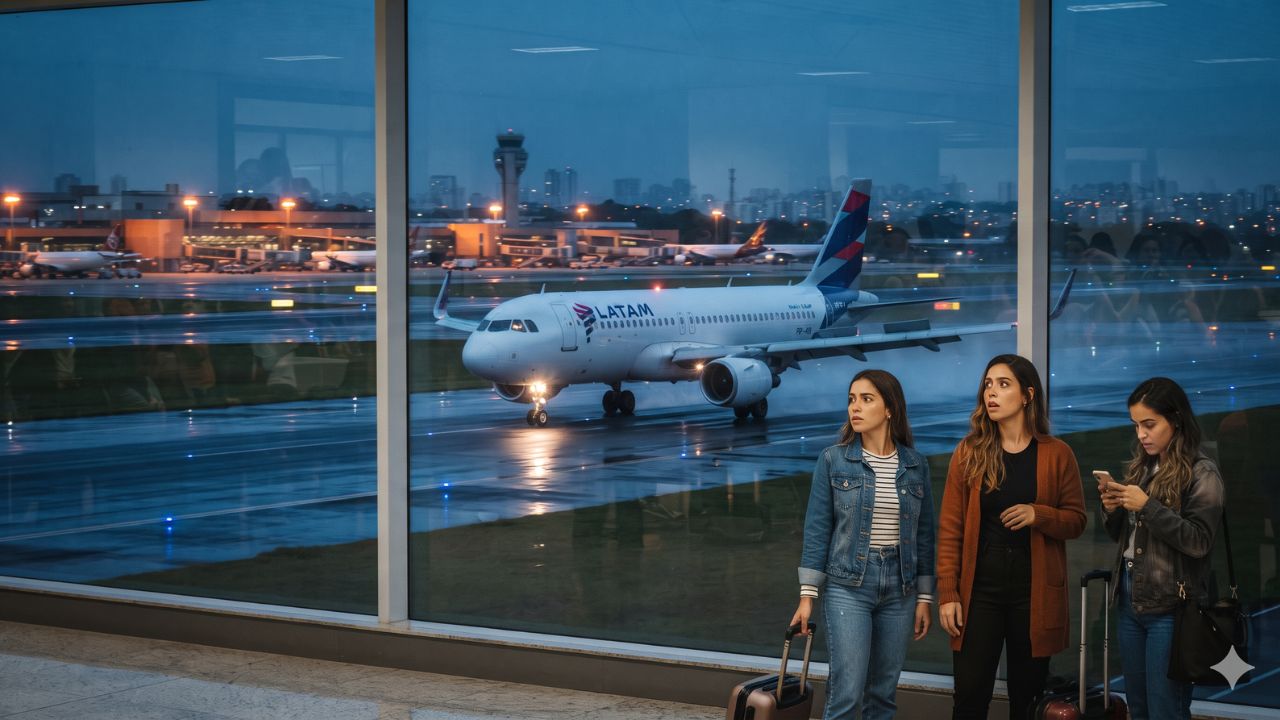
Despite triggering an in-flight emergency alert at 34,000 feet, LATAM Airlines Brasil flight LA3321 did not divert, touching down at São Paulo Guarulhos 14 minutes ahead of schedule. Operating on November 28, 2026, the Airbus A320-214 completed its 2,432-kilometer journey from Fortaleza Pinto Martins International Airport, landing at 9:21 pm Brazilian time against a scheduled arrival of 9:35 pm.
While third-party flight trackers flagged the aircraft during its descent into Brazil’s primary gateway, neither engine failure, cabin depressurization, hydraulic issues, nor medical emergencies have been verified by authorities. For travelers, understanding how flight crews evaluate abnormal events explains why aircraft often proceed to their destination rather than making sudden diversions.
Deconstructing the Flight Path of LATAM LA3321
The recorded flight history of LA3321 establishes a precise operational sequence between northeastern Brazil and São Paulo. Departing Fortaleza at 6:07 pm BRT (seven minutes past its scheduled 6:00 pm slot), the aircraft tracked south across the country.
Live tracking feeds flagged an alert when the aircraft cruised at roughly 34,000 feet with approximately 36 minutes remaining in its flight plan. Rather than diverting toward secondary airfields, the crew maintained course into São Paulo Guarulhos International Airport, landing safely after an airborne duration of 3 hours and 14 minutes.
The table below outlines the verified parameters and flight timeline of LA3321:
| Flight Milestone | Verified Flight Record | Scheduled Baseline | Operational Implication |
|---|---|---|---|
| Operating Carrier | LATAM Airlines Brasil | Scheduled Service | Major domestic trunk carrier |
| Flight Number | LA3321 | Passenger service | Direct interstate link |
| Aircraft & Registration | Airbus A320-214 (PR-MYQ) | Twin-engine jetliner | Unverified 180-seat configuration |
| Departure Airport | Fortaleza Pinto Martins (FOR) | 6:00 pm BRT | Ceará coastal gateway |
| Actual Departure Time | 6:07 pm BRT | 7-minute variance | Standard pushback buffer |
| Arrival Airport | São Paulo Guarulhos (GRU) | 9:35 pm BRT | Brazil's primary international hub |
| Recorded Touchdown | 9:21 pm BRT | 14 minutes early | Favorable routing and winds |
| Duration & Distance | 3h 14m / 2,432 km | 2,346 km great-circle | Standard arrival airway path |
| Diversion Status | Zero diversion recorded | Straight-in approach | Priority landing without diversion |
Aviation records confirm the airframe registration as PR-MYQ, an Airbus A320-214. However, circulated claims regarding the airframe's manufacturing date, approximate 14-year age, and exact 180-seat passenger load remain unverified by carrier releases.
Brazilian Aviation Protocols for In-Flight Alerts
Under the regulatory oversight of the Agência Nacional de Aviação Civil (ANAC), Brazil enforces strict aviation safety communication standards. Guidelines from the Brazilian General Aviation Safety Team (BGAST) outline how flight crews categorize non-standard airborne events:
- MAYDAY (Distress Condition): Signals imminent danger requiring immediate priority handling, airspace clearance, and emergency services standby.
- PAN-PAN (Urgency Condition): Applied when an aircraft encounters an abnormal situation that alters procedures without imminent danger to occupants.
- Transponder Squawk Codes: Standardized codes alert radar to specific contingencies: Squawk 7700 (general emergency), 7600 (radio communications failure), and 7500 (unlawful interference).
In the case of LA3321, tracking platforms observed an alert, but records do not confirm whether pilots transmitted code 7700 or issued a voice MAYDAY declaration. When an alert occurs close to destination, crews evaluate airport capabilities, weather, fuel, and runway lengths before deciding whether to divert or proceed into a major hub like Guarulhos.
Connecting Fortaleza and São Paulo: Strategic Travel Corridors
The air corridor linking Fortaleza and São Paulo spans 2,346 kilometers in a straight line, connecting two fundamentally different Brazilian economies:
Fortaleza: Northeastern Beaches and Coastal Dunes
The capital of Ceará serves as the primary tourism entry point for the beaches of northeast Brazil. Beyond urban coastlines like Praia de Iracema and Meireles, travelers transit through Pinto Martins Airport to access the windsurfing and dune reserves of Jericoacoara and the seafood culture of Canoa Quebrada.
São Paulo: Financial Powerhouse and Cultural Hub
São Paulo represents Brazil's economic heart, housing celebrated dining in Jardins, MASP art collections on Avenida Paulista, and rich immigrant heritage in Liberdade. Guarulhos Airport functions as the central clearinghouse for international flights connecting North America, Europe, and South American capitals.
Beyond urban hubs, Brazil's Atlantic forest reserves and historic mining towns, like Ouro Preto protected by the UNESCO World Heritage Centre, depend on domestic trunk routes connecting Guarulhos with regional centers.
Visitor Insider Tips: Navigating Brazilian Aviation
- Know ANAC Resolution 400 Protections: Under ANAC Resolution 400, if an operational delay exceeds one hour, airlines must provide communication assistance; past two hours, food vouchers are mandatory; and past four hours, passengers receive hotel accommodations and rebooking options.
- Buffer Connecting Flights at Guarulhos: GRU Airport features three large terminals. Connecting from domestic Terminal 2 to international Terminal 3 requires at least two hours to clear security and passport control.
- Rely on Official Airline Channels: Third-party tracking applications often display automated alerts that reflect radar anomalies rather than mechanical emergencies. Verify flight status directly through official airline applications.
- Use Authorized Airport Transport: When arriving at Guarulhos late, avoid unlicensed curbside taxi solicitations. Take official Guarucoop desk cabs, rideshare apps from designated pick-up zones, or the CPTM Airport-Express train line into central Luz Station.
Cultural and Environmental Context: Sustainable Aviation in Brazil
Covering an expansive continental landmass, Brazil relies on domestic aviation to connect regional communities where highway infrastructure is limited. Expanding domestic trunk routes like Fortaleza–São Paulo places added focus on carbon reduction and fleet modernization.
Brazil’s aviation sector is investing in sustainable aviation fuel (SAF) derived from domestic sugarcane and agricultural residues. Additionally, modernizing operational management at regional gateways like Fortaleza helps reduce holding patterns and ground taxi emissions, balancing growing domestic tourism with environmental preservation across coastal biomes.
FAQ: Visiting Brazil and Flight LA3321
Did LATAM flight LA3321 make an emergency landing?
The aircraft landed safely at its scheduled destination of São Paulo Guarulhos Airport 14 minutes early, without reporting a diversion or passenger injuries.
What is the flight time between Fortaleza and São Paulo?
The scheduled block time is typically three hours and 35 minutes, with actual airborne duration averaging three hours and 14 minutes across the 2,432-kilometer flight path.
What should passengers do if an in-flight alert occurs?
Follow all crew instructions calmly. Once landed, confirm onward flight connections and baggage carousels directly through official airline service desks.
Do international travelers need a visa to visit Brazil?
Tourists from the European Union and the United Kingdom enter Brazil visa-free for up to 90 days. Travelers should verify the latest e-Visa requirements for US, Canadian, and Australian passport holders before booking.
Rigorous flight protocols and modern air traffic coordination ensure passengers traverse Brazil’s vast distances safely from coastal dunes to metropolitan skylines.
Related Travel Guides
This article is for informational purposes. Flight routes, passenger regulations, visa rules, and transit advisories are subject to change by airlines and aviation authorities. Readers are advised to verify schedules and travel documentation with relevant carriers and border agencies before departure.
Related Stories

Japan Airlines Flight JL287 Turnback: Tokyo Haneda to Izumo Wind Disruption Guide 2026
Utair Flight UT731 Diversion: St Petersburg to Baku Passenger Rights Guide 2026