
LATAM Airlines AI Integration Accelerates Alongside Lufthansa, Delta, and Emirates to Elevate Global Hangar Maintenance and Passenger Experience: New Travel Alert
LATAM Airlines expands its AI strategy, partnering with Google Cloud, Viasat, and Lufthansa Technik to optimize fleet maintenance and passenger services.

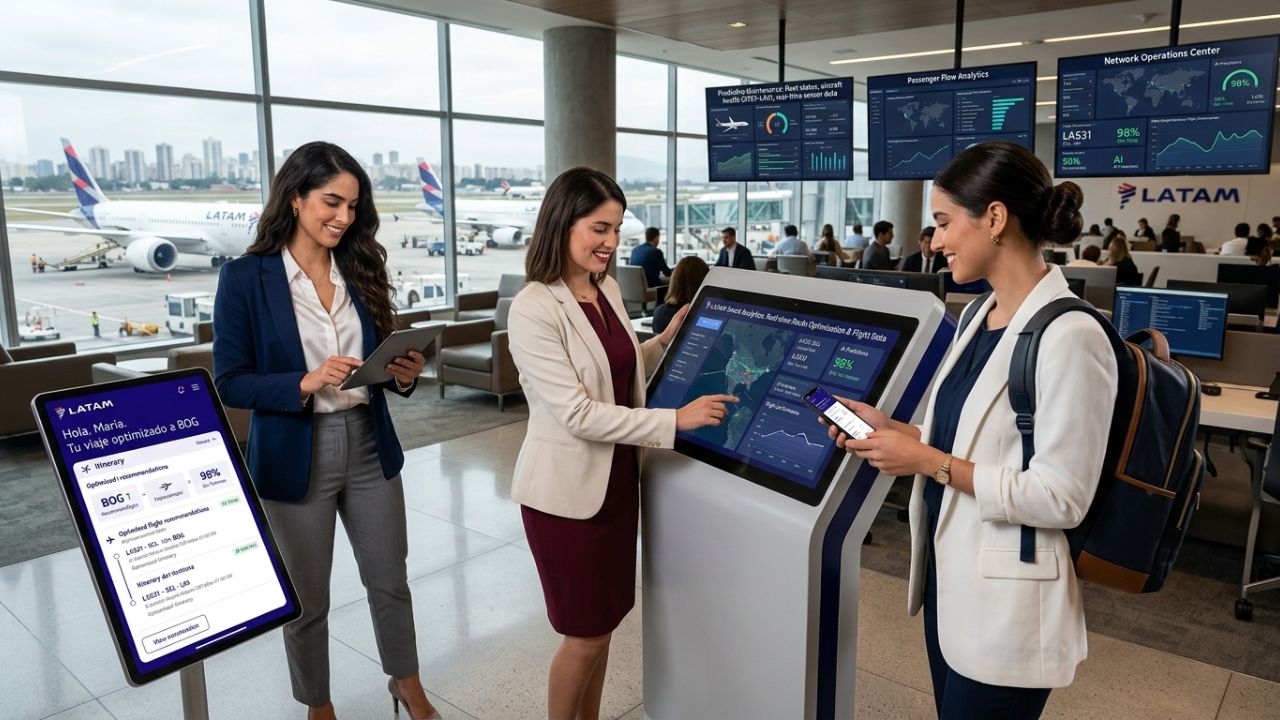
Image generated by AI
Published on June 20, 2026
On June 20, 2026, South American aviation giant LATAM Airlines expanded its digital transformation strategy by launching a series of advanced machine learning and cloud-native services. The group's new LATAM Airlines AI integration model aligns it with global carriers like Lufthansa, Delta, Emirates, Air France-KLM, and Singapore Airlines, which are similarly leveraging automated technologies. Passengers and aviation employees will notice significant operational updates as carriers work to streamline flight routing, reduce hangar delays, and upgrade inflight services.
Quick Summary
- Digital Shift: LATAM Airlines is accelerating its AI-native strategy to match technology deployments at Lufthansa, Delta, and Emirates.
- Cosmos Platform: The carrier deployed its proprietary "Cosmos" middleware system built on Google Cloud's Vertex AI and BigQuery data lakes.
- Hangar Efficiency: Through the new "eMantto" platform and Lufthansa Technik's AVIATAR system, the airline saved $50 million and unlocked 1,440 revenue service days.
- Passenger Improvements: A $60 million Viasat partnership brings high-speed satellite Wi-Fi to intercontinental flights, boosting NPS scores.
- Capacity Management: The operational upgrades support the carrier's capacity demands as it processes approximately 250,000 daily travelers.
Commercial aviation is experiencing a profound technological transition in June 2026 as carriers connect South America, North America, Europe, Asia, and Oceania with data-driven platforms. Under the digital leadership of Chief Information and Digital Officer Juliana Rios and Chief Data Officer Andrés Bucchi, LATAM has set a new benchmark for corporate efficiency. By moving legacy data structures to cloud platforms, the group achieved a 49% increase in net income, showing how digital tools yield high financial returns.
Context and Background: Understanding Flight Safety Decisions
Commercial short-haul and long-haul routes require careful flight management, as intercontinental airports handle thousands of daily arrivals and departures. Under the LATAM digital transformation strategy, the carrier is working to transition into a technology company that happen to fly planes. This vision requires natively embedding cloud computing and machine learning deep into its business model.
By coordinating schedule adjustments and fleet rotations via automated databases, the airline can significantly reduce aircraft ground delays. In addition to improving daily passenger volumes, standardizing data systems allows operations to run efficiently. This shift is critical as the combined airline group manages flight schedules for hundreds of thousands of daily travelers.
Event and Incident Details: Core Mechanics of the LATAM Tech Overhaul
The central pillar of the LATAM Airlines AI integration strategy is "Cosmos," a custom middleware platform built on top of Google Cloud Vertex AI and BigQuery data lakes. Through this unified ecosystem, departments from finance and marketing to tarmac logistics can deploy automated predictive models. Company data executives state that Cosmos allows workflows that once required months of manual research to be processed in seconds.
| Business Performance Metric | Legacy Operating Base | Post-Digital Transformation Era | Measurable Efficiency Shift |
|---|---|---|---|
| Daily Passenger Volume | ~222,000 Flyers | 240,000+ Active Passengers | 8.1% Annual Volume Growth |
| Maintenance Overhead Costs | Baseline Expenditure | $50 Million Annual Savings | Strategic Resource Optimization |
| Digital Channel Customer NPS | Standard Industry Baseline | 70+ Customer Score Rating | Significant Brand Loyalty Lift |
| Annual Fleet Availability | Standard Turnaround Base | 1,500 Extra Flying Days | Higher Aircraft Asset Utilization |
| Year-over-Year Corporate Net Income | Historic Standard Margins | 49% Net Profit Improvement | Record Financial Growth Profile |
Hangar maintenance operations have been optimized via the "eMantto" mobile engineering application. By connecting live aircraft telemetry and flight histories directly to predictive algorithms, the airline can accurately schedule routine checks. Mechanics use mobile tablets to log issues via voice-to-text, allowing the AI to scan notes and instantly catch recurring technical patterns.
Risk and Impact: Challenges of Shifting to Automated Workflows
Shifting a massive 41,000-person organization over to automated workflows introduces real corporate friction and operational challenges:
- Training and Integration Overhead: Training cabin crews, mechanics, and ground handlers on machine learning interfaces requires constant supervision and retraining.
- Rigid Legacy IT Constraints: Connecting cutting-edge predictive systems with older, legacy databases can introduce synchronization errors and data transfer friction.
- NPS and Customer Trust Concerns: While automated tools like dynamic pricing improve yield margins, carriers must monitor them to ensure pricing remains transparent and fair.
- Hangar Coordination Limits: Relying on live telemetry requires high-speed, stable data links across maintenance hangars to avoid processing delays.
LATAM has established a specialized internal team to monitor these systems, ensuring that automated tools enhance rather than replace the human elements of travel.
What Authorities and Industry Experts Are Saying
Juliana Rios and Andrés Bucchi have highlighted that digital tools are essential for protecting margins and maintaining punctuality in a competitive market. By partnering with Lufthansa Technik to integrate the AVIATAR platform, LATAM has demonstrated how data-driven fleet management reduces overhead costs.
Aviation analysts note that the success of this approach highlights a broader trend toward standardization. Global airlines must adopt integrated data systems to handle evolving security regulations, passenger volume growth, and fleet rotation demands.
Practical Traveler Advice: How Travelers Benefit from Digital Upgrades
If you are planning to travel with LATAM or other tech-driven carriers, take note of these practical updates:
- Take Advantage of Concierge Chatbots: Use natural-language concierge apps to get custom recommendations for hotels, activities, and dining months before departure.
- Connect to Satellite Wi-Fi: Take advantage of next-generation Viasat inflight connectivity, which brings high-speed internet to intercontinental long-haul routes.
- Familiarize Yourself with Digital Channels: Use the airline's upgraded mobile app to monitor status updates and track boarding gates, which boast customer NPS ratings above 70.
- Leverage Disruption Rebookings: In case of scheduling bottlenecks, use automated rebooking channels to bypass customer service queues at the terminal.
- Verify Dynamic Pricing Fluctuations: Book flights early to avoid price swings driven by automated pricing algorithms.
Relying on digital check-in and communication channels remains the most effective way to track real-time travel changes.
Broader Context: How Technology Advancements in Aviation Reshape Hangar Operations
Fleet availability is the key driver of airline profitability. By connecting aircraft telemetry directly to predictive systems, LATAM added 1,440 revenue service days back to its 380-strong fleet and unlocked 1,500 extra flying days.
This data-driven hangar optimization saves the airline $50 million in annual maintenance overhead. The ability to catch recurring technical patterns via voice-logged reports ensures that regional and international routes operate with fewer unscheduled ground delays.
What to Expect Next / Looking Ahead
In the coming years, global airlines will continue to expand their predictive maintenance capabilities and integrate more natural-language AI concierges. Tech teams will focus on refining data lakes and resolving legacy IT issues. Commuters can expect more personalized and standardized travel experiences across long-haul networks.
Conclusion
While the transition to automated workflows introduces organizational adjustments, LATAM Airlines' AI integration establishes a resilient framework for global aviation. By optimizing fleet availability and passenger connectivity, digital tools help ensure that flights depart safely and on schedule. Staying proactive, utilizing airline apps, and remaining flexible are essential as carriers continue to digitize travel networks.
Related Travel Guides
- Alaska Air Group Unveils New Alaska Airlines Interisland Boeing 737 Transition Plan for Hawaiian Airlines to Retire Aging Boeing 717 Fleet, Impacting Pacific Air Commuters: New Travel Alert
- Orlando International Airport Flight Delays and Cancellations Cripple Florida Travel as FAA Monitors National Airspace Disruptions Affecting Major Carriers: New Travel Alert
- The Best Airline Mobile Applications for Passenger Experience, According To Reddit
FAQ
How does LATAM Airlines use AI in its operations?
LATAM Airlines utilizes its custom "Cosmos" platform, powered by Google Cloud, to process data lakes and run predictive models for fleet maintenance and passenger services.
What is the "eMantto" platform used by LATAM Airlines?
The "eMantto" system is a mobile engineering app that connects live flight data with predictive hangar logistics, helping mechanics inspect aircraft and avoid delays.
Which other global airlines are accelerating their digital transformations?
Other major carriers leading the digital overhaul include Lufthansa, Delta Air Lines, Emirates, Air France-KLM, and Singapore Airlines.
How does LATAM's digital transition affect the passenger experience?
Passengers benefit from next-generation high-speed satellite Wi-Fi via a $60 million Viasat partnership, AI concierge chatbots, and automated mobile check-in channels.
Disclaimer
This article is for informational and educational purposes only. It does not constitute legal, financial, or professional advice. While we strive to provide accurate and up-to-date information, travel policies, regulations, and conditions change rapidly. Always verify information with official sources before making travel decisions. Nomad Lawyer makes no representations about the accuracy, reliability, completeness, or suitability of the information provided. Readers should consult qualified professionals for advice specific to their circumstances. The views expressed in this article are those of the author and do not necessarily reflect the views of Nomad Lawyer.
Raushan Kumar
Founder & Lead Developer
Full-stack developer with 11+ years of experience and a passionate traveller. Raushan built Nomad Lawyer from the ground up with a vision to create the best travel and law experience on the web.
Learn more about our team →