Las Vegas Harry Reid Airport Operations Face Scrutiny as Unverified Runway Incident Video Draws FAA Clarification

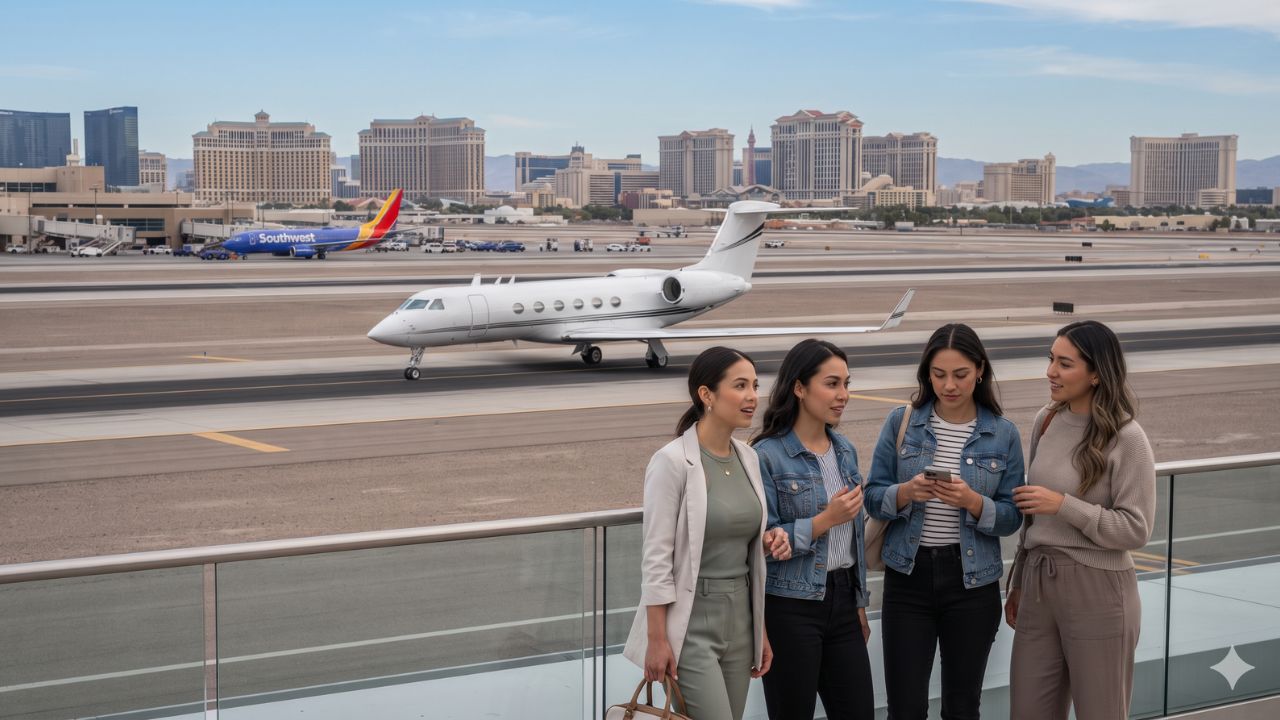
Airfield operations at Harry Reid International Airport in Las Vegas supporting regional flight corridors
Serving more than 57 million annual travelers as the principal aviation gateway to Southern Nevada, Harry Reid International Airport became the focus of intense scrutiny after an unverified social media claim intersected with documented federal air traffic ground restrictions on 16 October 2026. Circulated via a Facebook video uploaded by an account titled Operation Iraqi Freedom, the footage alleged that a private business jet had overran a designated runway at the Las Vegas airfield. However, an exhaustive audit of official dispatch logs reveals zero confirmed tail numbers, operator identities, flight plans, emergency response dispatches, or structural airfield damage associated with the clip.
The episode highlights the growing operational vulnerability of major international airports in an era of rapid digital information dispersion. Operating in close proximity to the Las Vegas Strip, Harry Reid International Airport anchors Clark County's hospitality and convention economy. While independent aviation advisories confirmed that actual operational restrictions occurred on 16 October, those flow management measures stemmed entirely from planned pavement maintenance and severe desert crosswinds rather than an unverified general aviation mishap.
Anatomy of a Digital Rumor: Deconstructing the Unverified Runway Overrun
In aviation journalism, establishing the boundary between verified air traffic occurrences and unauthenticated digital media is essential to prevent widespread traveler panic. The viral posting asserted that a private jet had breached runway safety margins, prompting speculative online commentary regarding closed taxiways and canceled holiday departures. Yet, despite widespread sharing, the video lacked foundational forensic markers: no tail registration was visible, no air traffic control tower audio from the date confirmed an alert, and local airport fire rescue services logged no active deployment.
A runway overrun occurs when an aircraft fails to stop before the end of the paved landing strip or aborts a takeoff beyond the runway threshold. When such events take place, federal reporting statutes are unambiguous. Both the Federal Aviation Administration (FAA) and the National Transportation Safety Board (NTSB) maintain strict statutory mandates requiring immediate notification, incident logging, and public preliminary reporting whenever an aircraft suffers structural damage or leaves a paved surface.
No such regulatory docket exists for the alleged 16 October event. Misinterpreting normal operational ground stops as emergency crash responses represents a recurring challenge for travelers monitoring social feeds during flight delays.
Operational Breakdown: Documented FAA Ground Controls vs. Incident Claims
Archived air traffic control management advisories confirm that Harry Reid International Airport did experience meaningful flight constraints on 16 October 2026. However, official records demonstrate that these restrictions were routine flow-control protocols designed to safeguard airspace capacity during challenging meteorological conditions.
Specifically, the FAA implemented a temporary ground stop tied to scheduled runway maintenance, followed by a formal Ground Delay Program (GDP) triggered by sustained gusting desert winds. A ground stop pauses departures bound for a designated destination at their origin airports, while a ground delay program assigns metered departure slots to manage hourly arrival rates. Neither administrative tool indicates an aircraft crash or airfield disaster.
| Aviation Operational Metric | 16 October 2026 Documented Status | Alleged Social Media Narrative | Authoritative Aviation Protocol |
|---|---|---|---|
| FAA Ground Stop Status | Implemented for scheduled runway maintenance | Claimed as emergency response to crash | Standard flow management for pavement upkeep |
| Ground Delay Program (GDP) | Active due to gusting desert wind shears | Attributed to disabled private aircraft | Regulates hourly arrivals to prevent holding |
| Aircraft Identity / Tail | None identified in official FAA logs | Completely unspecified in viral post | NTSB mandates immediate tail logging on damage |
| Emergency Response Log | Normal airfield security standing | Social media claimed mass emergency response | Clark County Fire logs show no runway call |
| August 2026 Comparison | Canadian air ambulance left runway during takeoff | Confused with historic summer incident | Prior incident resolved with zero passenger injuries |
| February 2023 Comparison | WestJet 737 struck edge lights during takeoff | Used historically to prove runway risks | TSB Canada concluded formal safety investigation |
| Commercial Passenger Impact | Controlled arrival sequencing and delays | Rumors of systemic multi-day cancellations | Routine weather delays absorbed within 24 hours |
Historical runway excursions at Las Vegas provide helpful operational context without validating current rumors. In August 2026, a Canadian air ambulance aircraft experienced a runway excursion during its takeoff roll at Harry Reid, resulting in no passenger injuries and localized airfield inspection delays. Similarly, in February 2023, the Transportation Safety Board of Canada investigated a WestJet Boeing 737 departure that was misaligned with the runway edge and struck lighting equipment before flying onward to Edmonton. These documented investigations demonstrate that genuine runway incidents generate rigorous public evidentiary trails.
Expert Analysis: The High-Stakes Physics of Harry Reid’s Runway Intersections
Harry Reid International Airport operates four interconnected runways—1L/19R, 1R/19L, 8L/26R, and 8R/26L—configured in intersecting pairs. Because the runways physically cross, taking one strip out of service for routine resurfacing immediately reduces overall hourly arrival acceptance rates.
For travelers booking this route, the direct consequence is that crosswind-induced ground delay programs cascade rapidly across domestic connection banks, even in the complete absence of an actual airfield incident. When gusting winds from the surrounding Mojave Desert shift velocity, air traffic controllers must realign arrival streams, forcing inbound flights from Denver, Los Angeles, and Chicago into airborne holding patterns.
The pricing pressure this creates means that last-minute hotel stay-overs on the Las Vegas Strip surge in cost whenever ground delay programs strand evening departure banks. Because hotel room inventory along Las Vegas Boulevard operates at over 90% occupancy during major convention weeks, hundreds of delayed airline passengers seeking unplanned overnight accommodation face extreme room rate spikes.
Simultaneously, travelers reacting to unverified social media reports risk premature cancellation of prepaid hotel rooms or show tickets. Relying on verified FAA Operations Command Center advisories rather than algorithmic video posts protects consumers from forfeiting non-refundable travel investments.
Passenger Travel Guidance and Ground Transportation Realities
Navigating Harry Reid International Airport effectively requires understanding its unique landside and airside logistics. Airport authorities recommend that passengers arrive at least two hours prior to scheduled domestic departures and three full hours ahead of international flights. The facility features two distinct terminal complexes—Terminal 1 and Terminal 3—connected by automated transit systems that require sufficient transit buffers.
On the ground, ongoing Clark County roadway improvements and connector construction projects during late 2026 have created intermittent traffic congestion along airport access corridors. Visitors utilizing taxi queues, rideshare apps, or rental car shuttles from the consolidated rental facility on Gilespie Street should add a 30-minute buffer to their airport transit window.
In cases where legitimate weather delays or flow-control ground stops disrupt travel itineraries, federal passenger consumer rules obligate airlines to rebook ticket holders on the next available flight without change fees. Maintaining active smartphone notifications through official airline applications ensures travelers receive immediate timetable revisions rather than reacting to unfounded online rumors.
Key Takeaways
- Unverified Social Video: Claims alleging a private jet overrun at Harry Reid International Airport stem from an unverified Facebook post lacking tail numbers, flight data, or emergency response logs.
- Documented FAA Ground Measures: Actual flight restrictions on 16 October 2026 were caused by scheduled runway maintenance and strong desert crosswinds, not an aircraft crash.
- Strict Federal Investigation Mandates: Legitimate runway overruns trigger mandatory, immediate incident logging and public preliminary reporting by the FAA and NTSB.
- Intersecting Runway Vulnerability: Harry Reid's four intersecting runways mean routine pavement work combined with shifting winds automatically reduces airport arrival capacity.
- Passenger Diligence Required: Travelers should rely on official FAA Command Center advisories and direct airline alerts rather than unauthenticated video posts when planning travel.
FAQ: Las Vegas Harry Reid Airport Runway Operations 2026
Did a private jet crash or overrun a runway at Las Vegas Airport on 16 October 2026?
No official evidence supports the social media claim. Neither the FAA, the NTSB, nor Clark County airport authorities logged any private jet runway overrun, injury, or emergency deployment on that date.
Why did the FAA issue a ground stop at Harry Reid Airport on 16 October?
The FAA implemented a brief ground stop due to scheduled runway maintenance, followed by a ground-delay program managed around challenging desert crosswinds that restricted airfield capacity.
What should passengers do when social media reports airport disruptions?
Check your flight status directly through your airline's official application and cross-reference national airspace conditions on the official FAA Air Traffic Control System Command Center website before making changes.
How early should travelers arrive at Harry Reid International Airport?
Airport authorities advise arriving at least two hours prior to domestic flight departures and three hours before international flights to navigate terminal transit and ongoing road construction.
[Separating verified air traffic control data from algorithmic social media panic remains the modern air traveler's most critical survival skill.]
Related Travel Guides
- Delta Restores Boston–Reykjavik Flights for Summer 2027 with Boeing 757-200 as American Inbound Tourism Surges to 29.2% of Iceland's Market
- Grand Canyon Enforces $100 Foreign Visitor Surcharge as US National Parks Adopt Two-Tier Pricing
- Top 10 Las Vegas Harry Reid Airport Transit and Ride-Hail Connector Hacks According to Reddit
This article is for informational purposes. Flight routes, passenger regulations, visa rules, and transit advisories are subject to change by airlines and aviation authorities. Readers are advised to verify schedules and travel documentation with relevant carriers and border agencies before departure.
Related Stories
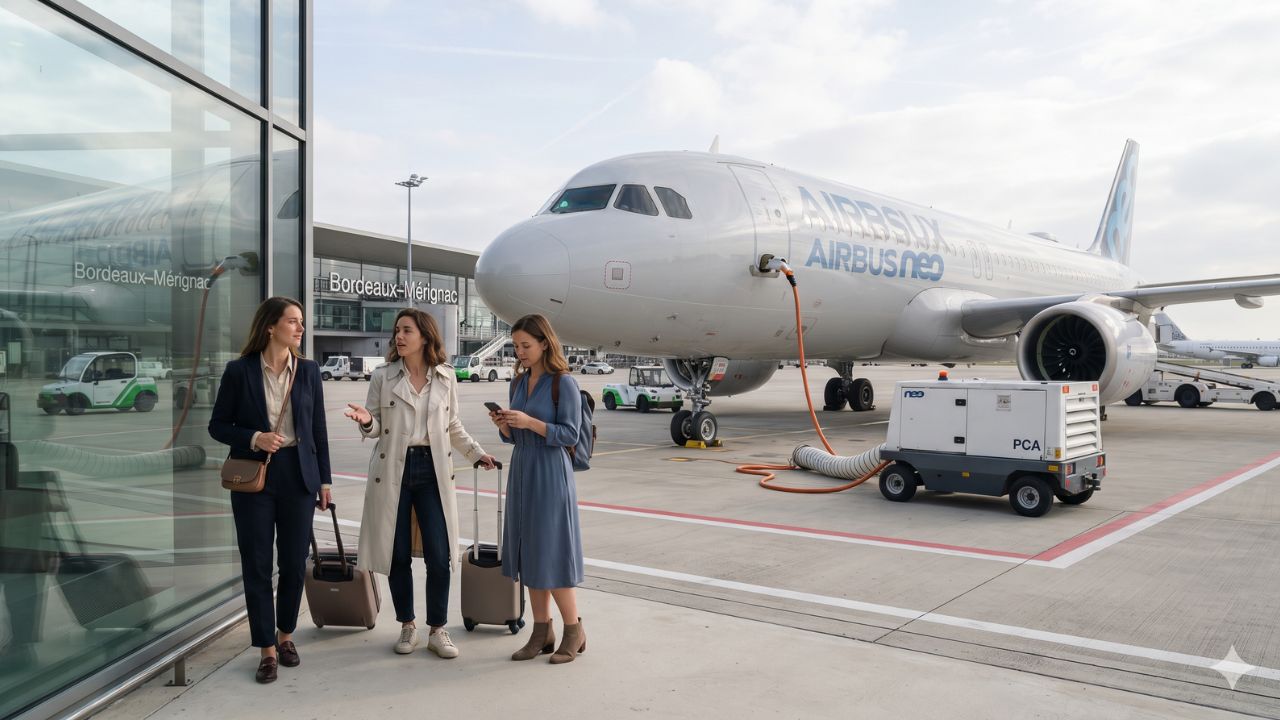
Bordeaux Airport Electrifies All 29 Aircraft Stands in €6.5M Overhaul to Cut 4,100 Tonnes of CO2 by 2027

Australia’s First Mass Timber Terminal Takes Shape as Sunshine Coast Airport Advances $170M Redevelopment for 2027