
Grand Canyon Enforces $100 Foreign Visitor Surcharge as US National Parks Adopt Two-Tier Pricing
The National Park Service enforces a $100 nonresident surcharge at the Grand Canyon and 10 other parks, increasing entrance costs for international families.

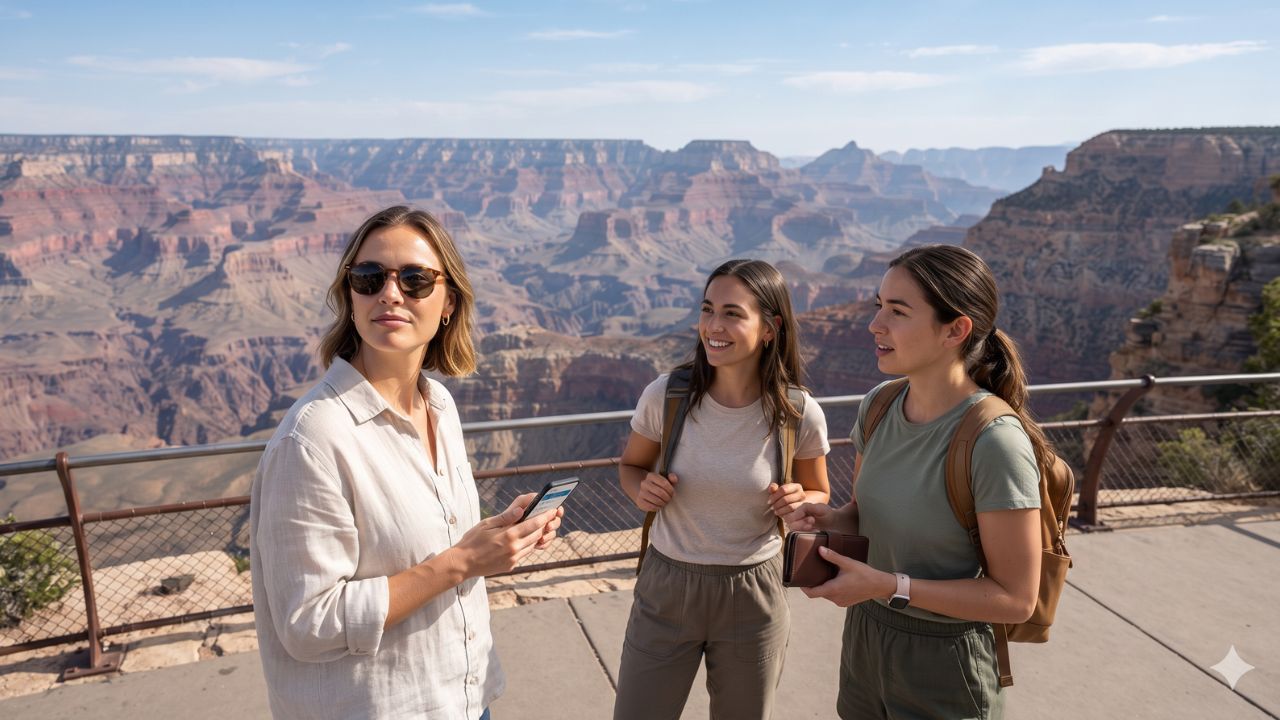
The Grand Canyon South Rim where new National Park Service nonresident fees took effect
Imposing a $100 per-person surcharge on foreign travelers aged 16 and older on top of standard vehicle entrance charges, the National Park Service’s two-tier tariff has escalated entry costs for an overseas family of four visiting the Grand Canyon from $35 to $435. Effective since 1 January 2026, the sweeping fee adjustment targets international visitors entering 11 of the most iconic federal park sites across the American West and Eastern Seaboard. What was historically a uniform admission structure funded through domestic tax appropriations and nominal gate fees has evolved into an overt cost-recovery mechanism aimed squarely at international tourists.
First announced by the U.S. Department of the Interior in November 2025, the policy revision departs from decades of uniform access principles. While domestic United States residents continue to access federal parklands under standard baseline vehicle rates, overseas vacationers face steep per-passenger surcharges unless they purchase a newly introduced $250 nonresident annual pass. The resulting financial shock is reverberating across international tour operators, European self-drive holidaymakers, and gateway communities across Arizona, Utah, and Nevada.
Two-Tier Tariffs: The Department of the Interior's Revenue Pivot
The federal government's rationale for the price restructuring centers on addressing multi-billion-dollar deferred maintenance backlogs across the national park system. Aging wastewater networks, crumbling access roads, and overcrowded shuttle fleets have stretched federal operating budgets to their limits. Interior officials argued that foreign visitors, who do not contribute to the federal income tax base that underwrites park operations, should pay a higher proportion of capital maintenance expenditures.
Administered by the National Park Service (NPS), the surcharge is explicitly residency-based rather than nationality-dependent. United States citizens living abroad without domestic residency documentation face the higher non-resident fee, whereas foreign nationals possessing valid United States green cards, work visas, or student visas qualify for domestic pricing upon presenting verifiable proof of residency. This requirement places entrance gate rangers in the position of inspecting residency credentials alongside entry passes, creating processing delays during peak arrival waves at the Grand Canyon South Rim.
Pricing Comparison: 11 Targeted Parks and Pass Economics
The $100 surcharge does not apply uniformly across all 430 National Park Service units, but focuses on 11 crown-jewel destinations with high international leisure arrivals. Understanding the financial mechanics between single-park entry fees and annual passes is now essential for travelers planning an American holiday.
Under the current pricing scheme, a standard private non-commercial vehicle entry permit at Grand Canyon National Park costs $35, valid for seven consecutive days. For international visitors, the park adds $100 per passenger aged 16 and older. Consequently, two adult international vacationers pay $235, three adults pay $335, and four adults pay $435 for a single park visit. Children under 16 remain exempt from the surcharge.
| National Park System Fee Tier | Domestic US Resident Rate | Nonresident / Foreign Visitor Rate | Eligibility & Coverage Rules |
|---|---|---|---|
| Standard Grand Canyon Private Vehicle | $35 (Covers vehicle & all passengers) | $35 baseline + $100 per adult (16+) | Valid for 7 consecutive days; South & North Rims |
| Two Adults in Private Vehicle | $35 total entrance fee | $235 total ($35 vehicle + $200 surcharge) | Single park entrance without annual pass |
| Three Adults in Private Vehicle | $35 total entrance fee | $335 total ($35 vehicle + $300 surcharge) | Single park entrance without annual pass |
| Family of Four Adults (16+) | $35 total entrance fee | $435 total ($35 vehicle + $400 surcharge) | Single park entrance without annual pass |
| Children Under 16 Years | Free entry with paying adults | Exempt from $100 surcharge | Surcharge applies strictly to visitors aged 16+ |
| America the Beautiful Annual Pass | $80 per year | $250 per year (Nonresident Pass) | Covers driver & all vehicle passengers at all parks |
| Grand Canyon North Rim Entry | Included in standard fee | Surcharge applies equally at both rims | North Rim access subject to post-fire recovery |
The policy applies across 11 designated national parks: Grand Canyon, Yellowstone, Yosemite, Zion, Bryce Canyon, Glacier, Grand Teton, Rocky Mountain, Everglades, Acadia, and Sequoia and Kings Canyon. Annual passes purchased prior to 1 January 2026 continue to be honored under their original terms until expiration.
Expert Analysis: The Chilling Effect on Multi-Park Fly-Drive Road Trips
The structural escalation of entrance costs transforms the traditional American road trip from an economical family vacation into a premium leisure expenditure. For decades, international travelers landed in gateway hubs like Las Vegas (LAS) or Phoenix (PHX) and embarked on multi-week circuits across the desert Southwest, visiting several national parks in a single journey.
For travelers booking this route, the direct consequence is an immediate mathematical necessity to abandon single-park gate tickets in favor of the $250 nonresident annual pass. Because three adult travelers pay $335 at the gate of just one park, purchasing the $250 America the Beautiful Nonresident Pass saves $85 on the very first day. For a family of four adults, the pass delivers immediate savings of $185 at the first park entrance.
The pricing pressure this creates means that international tour operators and fly-drive vacationers are fundamentally restructuring classic Grand Circle road trips. Tour wholesalers in Germany, the United Kingdom, and Japan are re-evaluating whether to retain secondary federal parks on their scheduled itineraries. Some operators are substituting state parks, national monuments, or tribal parks—such as Monument Valley Navajo Tribal Park—to shield clients from compounded federal fee increases.
Concurrently, inbound tourism advocates represented by the U.S. Travel Association caution that punitive entry pricing risks depressing international visitor spending in rural gateway communities. Towns such as Tusayan, Williams, and Flagstaff rely on foreign tourists who spend lavishly on lodging, helicopter excursions, dining, and crafts. If higher gate charges induce travelers to shorten their stays or bypass Arizona entirely, the economic losses to regional small businesses could eclipse the extra revenue collected at the gate.
Operational Realities: North Rim Recovery and Gateway Logistics
The price shock arrives at a difficult operational moment for Arizona tourism. While the South Rim operates year-round with established shuttle loops and observation facilities, the Grand Canyon's North Rim continues to grapple with infrastructure repairs following the 2025 Dragon Bravo Fire. The wildfire inflicted severe damage on park facilities, access routes, and nearby commercial operations, with recovery efforts extending through late 2026 as documented by regional monitors including Cronkite News.
International travelers planning visits must recognize that paying the $100 nonresident surcharge provides access to the park, but guarantees neither open trails nor available lodging. Distances between gateway airports and the South Rim are substantial: driving from Phoenix Sky Harbor International Airport requires roughly 3.5 hours, while the transit from Las Vegas Harry Reid International Airport spans over four hours. Visitors arriving during peak summer months face extensive vehicle queues at entrance stations, where verifying residency documentation compounds gate delays.
Key Takeaways
- $100 Per-Person Nonresident Fee: Non-US residents aged 16 and older must pay an additional $100 surcharge alongside standard entrance fees at the Grand Canyon and 10 other major national parks.
- Severe Single-Visit Cost Spike: A family of four adult nonresidents entering in one vehicle faces $435 at the gate, compared to $35 for domestic United States residents.
- $250 Annual Pass Delivers Critical Savings: The nonresident America the Beautiful Annual Pass costs $250 and covers all passengers in a private vehicle, providing immediate savings for parties of three or more adults.
- 11 Flagship Parks Affected: Surcharges apply at Grand Canyon, Yellowstone, Yosemite, Zion, Bryce Canyon, Glacier, Grand Teton, Rocky Mountain, Everglades, Acadia, and Sequoia and Kings Canyon.
- Residency-Based Verification: Eligibility depends on verifiable residential address rather than passport citizenship alone; US green card and visa holders qualify for domestic rates with valid documentation.
FAQ: Grand Canyon and US National Parks Foreign Visitor Surcharge 2026
What is the new foreign visitor fee at the Grand Canyon?
Non-US residents aged 16 and older must pay a $100 surcharge in addition to the standard $35 private vehicle entrance fee, making total entry $235 for two adults or $435 for four adults.
Which other US national parks charge the $100 nonresident surcharge?
The fee applies at 11 parks: Grand Canyon, Yellowstone, Yosemite, Zion, Bryce Canyon, Glacier, Grand Teton, Rocky Mountain, Everglades, Acadia, and Sequoia and Kings Canyon.
Is the $250 America the Beautiful Nonresident Pass worth buying?
Yes. Any travel group containing three or more adult nonresidents saves money immediately at a single park, as three individual gate admissions total $335 compared to the $250 annual pass.
Are international children under 16 required to pay the $100 fee?
No. Children under the age of 16 are completely exempt from the $100 nonresident surcharge, paying only the standard vehicle baseline charge when traveling with adult companions.
[Navigating America's crown-jewel national parks now demands financial strategy, where purchasing the $250 nonresident annual pass separates savvy travelers from those paying hundreds at the gate.]
Related Travel Guides
Disclaimer
This article is for informational and educational purposes only. It does not constitute legal, financial, or professional advice. While we strive to provide accurate and up-to-date information, travel policies, regulations, and conditions change rapidly. Always verify information with official sources before making travel decisions. Nomad Lawyer makes no representations about the accuracy, reliability, completeness, or suitability of the information provided. Readers should consult qualified professionals for advice specific to their circumstances. The views expressed in this article are those of the author and do not necessarily reflect the views of Nomad Lawyer.
Preeti Gunjan
Contributor & Community Manager
A passionate traveller and community builder. Preeti helps grow the Nomad Lawyer community, fostering engagement and bringing the reader experience to life.
Learn more about our team →