Bordeaux Airport Electrifies All 29 Aircraft Stands in €6.5M Overhaul to Cut 4,100 Tonnes of CO2 by 2027


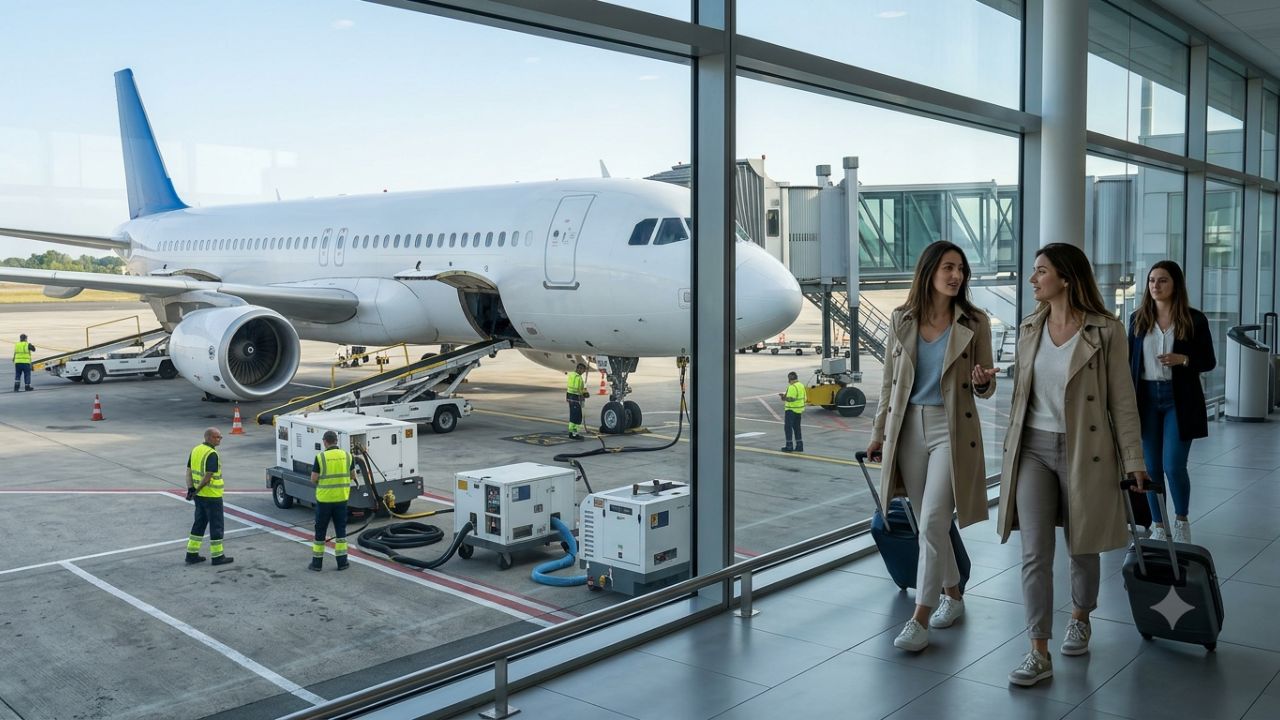
Bordeaux Airport apron equipped with fixed 400 Hz electrical power and mobile Pre-Conditioned Air units
Slashing 4,100 tonnes of annual carbon emissions by 2027 across a €6.5 million airside overhaul, Bordeaux Airport has completed full ground electrification across all 29 of its commercial passenger aircraft stands. The infrastructure project forces arriving airliners to shut down their auxiliary power units (APUs)—the fuel-burning mini-turbines located in aircraft tails—substituting them with 100% renewable electricity during turnarounds. Supported by the European Climate, Infrastructure and Environment Agency (CINEA) and structured through a €2.2 million mezzanine facility from Banque des Territoires, the modernization establishes a new operational baseline for regional European aviation hubs adjusting to strict environmental mandates.
Rather than remaining an abstract climate commitment, this fixed ground electrical overhaul transforms tarmac operations across the primary gateway to France's Nouvelle-Aquitaine region. Certified by the European Union Aviation Safety Agency (EASA) and monitored by the French Civil Aviation Authority (DGAC), the project eliminates toxic kerosene fumes and high-decibel acoustic pollution around terminal gates. As airlines face mounting scrutiny under the EU’s "Fit for 55" framework and the Alternative Fuels Infrastructure Regulation (AFIR), Bordeaux’s early completion demonstrates how infrastructure investments directly mitigate carrier compliance risks and passenger disruption costs.
Technical Execution: Outfitting 29 Stands with Fixed 400 Hz Power and Mobile PCA Units
Bordeaux's airside transformation centers on eliminating fossil-fuel dependency during aircraft turnarounds. Commercial airliners require constant electrical power while parked at the gate to run avionics, flight-deck displays, and passenger cabin systems, alongside continuous airflow to regulate internal temperatures. Traditionally, flight crews satisfy these energy demands by running onboard APUs or relying on mobile diesel ground power units (GPUs), both of which generate heavy localized emissions.
Bordeaux Airport solved this dual requirement by installing 400 Hz electrical outlets across all 29 of its passenger parking positions, including 20 newly electrified stands. These fixed systems draw directly from the electrical grid, supplying certified zero-emission green electricity directly to parked aircraft. To handle environmental control, the airport deployed 20 mobile Pre-Conditioned Air (PCA) units. These specialized units pump cooled or heated air directly into aircraft ventilation ducts, maintaining cabin comfort without burning jet fuel.
By addressing Scope 3 emissions—the indirect emissions generated by tenant airlines on airport property—Bordeaux Airport directly aids carrier sustainability ratings. The projected reduction of 4,100 tonnes of CO2 annually by 2027 has earned formal recognition from the World Travel & Tourism Council (WTTC), providing a scalable blueprint for regional gateways throughout southern Europe.
Continental Benchmarks: How European Hubs Compare on Ground Decarbonization
Bordeaux's completed installation reflects a wider continental scramble among airport operators to comply with statutory AFIR deadlines. Across Europe, major aviation nodes are implementing parallel electrification schemes to prepare for mandatory APU phase-outs.
| European Airport & Country | Investment / Scope | Electrified Stands / Technology | Emission Reduction Target | Oversight Body |
|---|---|---|---|---|
| Bordeaux Airport (BOD, France) | €6.5M (€2.2M loan) | 29 stands (20 new 400 Hz positions) + 20 PCA units | 4,100 tonnes CO2 yearly by 2027 | CINEA / DGAC / EASA |
| Amsterdam Schiphol (AMS, Netherlands) | Capital investment fund | 73 stands with fixed power + e-GPUs at Pier D | Zero-emission ground ops by 2030 | Dutch Transport Ministry |
| Paris Charles de Gaulle (CDG, France) | CLEARCDG28 framework | Heavy widebody terminal electrification | Airside electrification by 2028 | DGAC / Transport Ministry |
| Venice Marco Polo (VCE, Italy) | Mobility Enhancement Project | Airside ground fleet & stand electrification | UNESCO lagoon heritage protection | Italian Civil Aviation (ENAC) |
While mega-hubs like Amsterdam Schiphol operate at higher volumes with 73 electrified stands and zero-emission goals for 2030, regional airports face tighter capital constraints. Bordeaux’s blended financing structure—combining EU AFIF grant capital with regional mezzanine debt—proves that medium-sized airports can achieve complete airside compliance ahead of statutory deadlines.
Expert Analysis: Ground Power Reliability, Tarmac Delays, and EU261 Liabilities
In modern aviation logistics, gate turnarounds represent one of the most volatile segments of flight operations. When an aircraft relies on aging internal APUs or faulty diesel generators, mechanical breakdowns frequently delay air-conditioning pressurization or avionics boot sequences. In extreme summer heat across southern France, an inoperative APU quickly pushes cabin temperatures beyond statutory safety limits, forcing airlines to deplane passengers and cancel flights.
For travelers booking this route, the direct consequence is a marked reduction in tarmac-related departure delays and boarding cancellations. Because fixed 400 Hz electrical lines and dedicated PCA units deliver constant, surge-protected power, cockpit crews encounter fewer electronic faults during pre-flight checks. For airlines operating under International Air Transport Association (IATA) standards, this reliability protects flight banks and preserves tight transfer schedules.
The pricing pressure this creates means that airlines operating out of Bordeaux can significantly lower their statutory compensation liabilities under EU Regulation 261/2004. Ground power failures and mechanical APU aborts are classified as carrier-controllable delays, exposing airlines to mandatory compensation claims between €250 and €600 per passenger. By virtually eliminating APU-related tarmac cancellations, carriers protect operational margins and avoid costly overnight passenger hotel vouchers. These efficiency gains help insulate consumer ticket prices from the infrastructure surcharges often levied during major airport renovations.
Passenger Experience, Health Standards, and Cross-Border Transit Flows
Beyond technical economics, the electrification of Bordeaux's apron brings immediate physical improvements to the traveler experience. Boarding via open tarmac stairs has historically exposed passengers to high concentrations of particulate matter, unburned hydrocarbons, and noxious jet exhaust fumes produced by idling APUs. Eliminating these auxiliary engines clears apron air quality, benefiting both travelers and ground handling personnel.
Acoustic comfort is another noticeable improvement. Operating APUs produce a deafening, high-frequency whine that permeates boarding gates and adjacent airport lounges. Deactivating these engines lowers ramp decibel levels dramatically, reducing auditory fatigue and creating a calmer boarding environment.
Punctual ground operations also relieve downstream congestion across border control and regional hospitality. When flights arrive and depart on schedule, French border control officials process passenger queues without the severe crowd surges caused by cascading flight delays. International travelers, including British holidaymakers bound for regional wine tours or Atlantic beach resorts, avoid missing regional train connections or late-night hotel check-ins. A resilient airside infrastructure translates into stability across the entire regional visitor economy.
Key Takeaways
- €6.5 Million Overhaul Completed: Bordeaux Airport has fully electrified all 29 commercial aircraft parking stands, adding 20 new 400 Hz connections and 20 mobile PCA units.
- 4,100-Tonne CO2 Reduction: The elimination of APU fossil fuel combustion will reduce Scope 3 carbon emissions by 4,100 tonnes annually by 2027.
- 100% Renewable Energy Supply: Ground power infrastructure draws entirely from certified renewable electrical sources, cutting airport ground emissions to zero.
- EU Fit for 55 Compliance: The project fulfills EU Alternative Fuels Infrastructure Regulation (AFIR) mandates well ahead of continental enforcement deadlines.
- Lower Delay and EU261 Risks: Reliable electrical and cooling connections minimize gate technical aborts, protecting airlines and passengers from cascading compensation disputes.
FAQ: Bordeaux Airport Ground Electrification 2027
Why are aircraft auxiliary power units (APUs) being turned off at Bordeaux Airport?
Aircraft shut down their APUs to eliminate jet fuel consumption while parked, reducing local air pollution, acoustic noise, and carbon emissions by utilizing 100% renewable electrical ground power.
What are PCA units and why are they important for passengers?
Pre-Conditioned Air (PCA) units pump climate-controlled air directly into aircraft cabins, ensuring passenger comfort during boarding without burning jet fuel or generating toxic tarmac fumes.
How does ground electrification impact flight punctuality?
Fixed electrical connections provide stable power during turnarounds, preventing technical startup faults and cabin overheating, which reduces tarmac delays and EU261 compensation disputes.
What is the annual carbon reduction expected from this project?
Bordeaux Airport projects an annual reduction of 4,100 tonnes of CO2 emissions by 2027 as airlines eliminate APU usage across all 29 parking stands.
[By silencing polluting auxiliary engines across its tarmac, Bordeaux Airport demonstrates that regional aviation decarbonization is no longer a distant ambition, but an immediate operational reality.]
Related Travel Guides
This article is for informational purposes. Flight routes, passenger regulations, visa rules, and transit advisories are subject to change by airlines and aviation authorities. Readers are advised to verify schedules and travel documentation with relevant carriers and border agencies before departure.
Related Stories
Bordeaux Airport Ground Electrification: €6.5M 400 Hz Upgrade Eliminates APU Emissions Across 29 Aircraft Stands

Australia’s First Mass Timber Terminal Takes Shape as Sunshine Coast Airport Advances $170M Redevelopment for 2027