
LaGuardia Airport Chaos: 89 Flights Delayed, 6 Cancelled Across United, Delta, American, Southwest, Air Canada on June 6, 2026
Major travel disruption hits LaGuardia Airport as 89 flights delay and 6 cancel across United, Delta, American, Southwest, Air Canada, and regional carriers, impacting routes between NYC, Chicago, Boston, Toronto, and beyond.

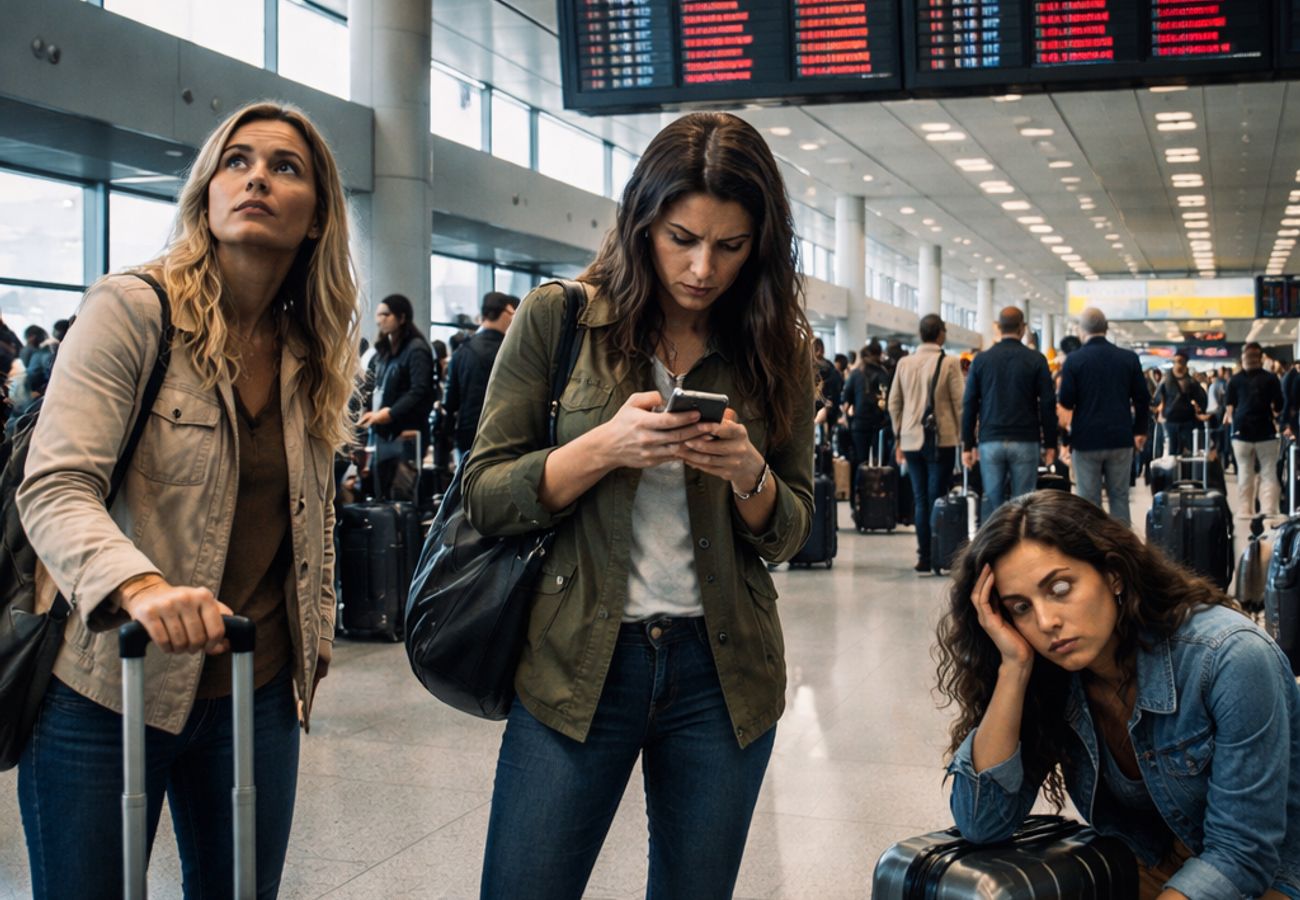
Image generated by AI
The Day LaGuardia Ground to a Halt
Chaos erupted at LaGuardia Airport on June 6, 2026, as a perfect storm of operational congestion and scheduling conflicts crippled one of America's busiest travel hubs. What started as routine morning operations escalated into a travel nightmare affecting thousands of passengers across North America.
The damage was staggering: 89 flights delayed and 6 cancelled across multiple carriers, leaving stranded travelers desperately refreshing flight status pages and desperately hunting for rebooking options. The ripple effect stretched from coast to coast—from Chicago to Boston, from Fort Lauderdale to Toronto—as major airlines including United, Delta, American, Southwest, Air Canada, JetBlue, Jazz, and regional carriers scrambled to restore normal operations.
When Major Airlines Stumble Simultaneously
What made June 6 particularly brutal was the simultaneous operational struggles across carriers that rarely falter in unison.
United Airlines bore the heaviest burden, with 2 cancellations (3% of operations) and 14 delayed flights (23%). The carrier's transcontinental and domestic routes took the brunt of the disruption, stranding connecting passengers throughout its network.
Air Canada reported 1 cancellation affecting 25% of its LaGuardia operations, hitting international travelers heading north to Canada particularly hard. Regional carriers didn't escape either—Jazz, Porter, and Republic experienced delays ranging from 2% to a staggering 33%, devastating regional connectivity from the New York hub.
Delta Air Lines managed to avoid cancellations but still faced 19 delayed flights (10%) as its key connecting hubs became gridlocked. American Airlines posted 16 delayed flights (15%) on primarily domestic routes, while Southwest reported 13 delays (19%).
Reddit: "Stuck at LaGuardia for 6 hours. United says my 2pm flight is now at 8pm. No updates, no communication. This is ridiculous." — r/travel
The Origin Point Breakdown: Where Trouble Started
The disruptions didn't originate solely at LaGuardia—they cascaded from arriving flights, creating a domino effect that compounded throughout the day.
Chicago O'Hare International (ORD) sent 1 cancelled flight plus 10 delayed (29%), clogging Midwest connections. Houston Hobby (HOU) hit hardest for Gulf Coast travelers with 3 delayed flights representing 75% of that route, while Toronto City Centre (YTZ) reported 3 delays affecting 75% of Canadian short-haul operations.
Dallas Love Field (DAL) saw 2 delayed flights (40%), and Toronto Pearson International (YYZ) reported 2 delays (8%) for international travelers. Secondary disruptions trickled in from Beijing, Nashville, Cleveland, Charlotte, Denver, Dallas-Fort Worth, Detroit, Fort Lauderdale, Indianapolis, and Kansas City, revealing the scope of the operational pressure.
The pattern was unmistakable: LaGuardia was drowning in a flood of incoming traffic it couldn't efficiently process.
Where Passengers Needed to Go (And Couldn't)
Outbound disruptions were equally severe, with certain destinations experiencing complete route shutdowns.
Austin-Bergstrom International (AUS) faced 1 delayed flight representing 100% disruption on that route—complete operational paralysis. Dallas-Fort Worth International (DFW) posted 5 delayed flights (26%), while Kansas City International (MCI) reported 3 delays (37%) affecting Texas and Midwest connections.
Miami International (MIA) saw 3 delayed flights (18%), hampering Southeastern and Caribbean-bound travelers. Secondary destinations like Montreal-Trudeau, Chicago Midway, Denver, Raleigh-Durham, Richmond, Fort Lauderdale, Reagan National, and Dallas Love Field all faced cascading delays, demonstrating how a single airport's dysfunction spreads across the entire North American network.
Which Cities Were Hit Hardest
The geographic footprint of disruption painted a stark picture of which travelers got hammered hardest.
The New York City metropolitan area bore the obvious weight, but the impact extended far beyond. Major U.S. hubs including Chicago, Dallas, Houston, Denver, Miami, Austin, Kansas City, Nashville, Boston, and Detroit all had passengers caught in the LaGuardia bottleneck. Cities like Raleigh-Durham, Richmond, and Fort Lauderdale weren't spared either.
International disruptions weren't limited to the U.S. side of the border. Toronto and Montreal, Canada, saw their cross-border traffic severely compromised, affecting the flow of business and leisure travelers who depend on seamless U.S.–Canada connectivity.
For anyone with a LaGuardia connection, checking real-time flight status through official airline portals became essential reading.
What Stranded Passengers Actually Did
Survival mode kicked in for thousands facing delays and cancellations. The response playbook became clear:
Real-time flight tracking became obsessive—passengers camped on airline apps refreshing status every 60 seconds. Airline rebooking teams fielded an avalanche of calls, working frantically to reroute passengers on alternative flights or connecting carriers. Smart travelers abandoned LaGuardia entirely, pivoting to JFK or Newark for urgent travel needs.
Gate change announcements triggered airport-wide stampedes as passengers hunted for updated boarding information. Security lines, already congested from volume, extended even further as rebooked passengers rushed to catch their rescheduled departures.
Patience wore thin. Frustration boiled over. Customer service representatives absorbed the brunt of passenger anger—much of it justified, none of it within their control.
The Operational Lesson
LaGuardia's June 6 meltdown wasn't a single-point failure—it was a cascading systems breakdown triggered by high air traffic volume, operational congestion, and the airline industry's razor-thin scheduling margins. When one major flight delays, it impacts the next scheduled aircraft and crew assignment. When six flights cancel, hundreds of passengers need rebooking. When this happens simultaneously across seven major carriers, the system doesn't just strain—it fractures.
The New York area's three-airport system (LaGuardia, JFK, Newark) remains among the world's most congested aviation networks. Days like June 6 remind us why industry leaders continue advocating for capacity improvements and operational modernization.
What You Should Do If Caught in Similar Disruption
For travelers facing comparable airport chaos moving forward:
Check flight status obsessively. Use airline apps, FlightAware, or airport websites—refresh every 15 minutes during disruptions.
Contact your airline immediately. Don't wait in airport queues. Call the airline's customer service line to explore rebooking before crowds overwhelm the system.
Arrive earlier than normal. Security lines swell during disruptions. Budget an extra 45 minutes to an hour.
Monitor gate assignments ruthlessly. Last-minute gate changes are common during operational chaos. Don't assume your gate is final.
Consider nearby airports strategically. For urgent travel, check if alternative airports serve your destination.
Document everything. Keep flight confirmations, receipts, and communications. You may be eligible for compensation under passenger rights regulations.
The skies aren't always clear, but informed passengers navigate disruption far better than those caught flat-footed.
Related Travel Guides
Business Class Travel Surges Among Leisure Passengers as Corporate Spending Tightens
Disclaimer
This article is for informational and educational purposes only. It does not constitute legal, financial, or professional advice. While we strive to provide accurate and up-to-date information, travel policies, regulations, and conditions change rapidly. Always verify information with official sources before making travel decisions. Nomad Lawyer makes no representations about the accuracy, reliability, completeness, or suitability of the information provided. Readers should consult qualified professionals for advice specific to their circumstances. The views expressed in this article are those of the author and do not necessarily reflect the views of Nomad Lawyer.
Raushan Kumar
Founder & Lead Developer
Full-stack developer with 11+ years of experience and a passionate traveller. Raushan built Nomad Lawyer from the ground up with a vision to create the best travel and law experience on the web.
Learn more about our team →