
Business Class Travel Surges Among Leisure Passengers as Corporate Spending Tightens
Breaking airline news and aviation industry updates for 2026.

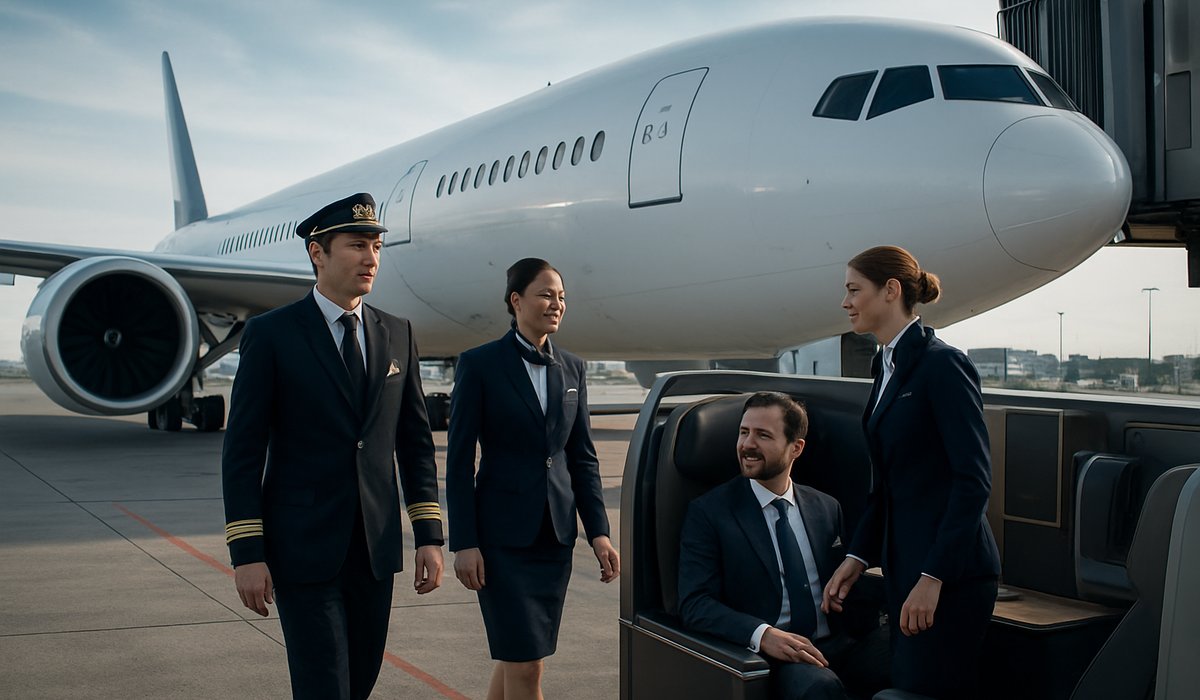
Image generated by AI
Business Class Travel Surges Among Leisure Passengers as Corporate Spending Tightens
The premium cabin is experiencing a fundamental transformation as vacation travelers increasingly book upscale seating while expense-conscious companies ground their executive travel ambitions
A Dramatic Shift in Premium Travel Demographics
The business class cabin—traditionally the exclusive domain of corporate executives and frequent flyers—is undergoing a seismic restructuring as leisure travelers now dominate premium seat bookings. This represents a fundamental reordering of the aviation market's upper tier, driven largely by corporations' aggressive pullback on executive travel budgets in response to ongoing economic pressures.
Airlines report a notable demographic inversion in first and business class cabins, where vacation-bound passengers now frequently outnumber traditionally loyal business travelers. This shift reflects a broader recalibration across the industry as companies implement stricter travel policies to control operational costs, effectively ceding premium market share to leisure passengers willing to invest personal wealth in enhanced comfort.
Cabin Crew Reporting Visible Service Changes
Flight attendants working premium cabins have become frontline witnesses to this transformation, noting observable differences in passenger composition, service requests, and onboard behavior. The traditionally buttoned-up executive demographic—characterized by work-focused cabin activity and minimal social interaction—has given way to vacation-oriented travelers who engage differently with premium amenities and crew services.
Crew members report increased demand for leisure-oriented services, from meal customization requests to heightened interest in in-flight entertainment and destination information. The social dynamics of premium cabins have noticeably shifted as well, with passengers prioritizing relaxation over productivity.
Economic Forces Reshaping Aviation's Premium Segment
The structural realignment reflects difficult macroeconomic realities. Rising fuel costs, inflationary pressures, and shareholder demands for profitability have forced multinational corporations to scrutinize discretionary spending, with business travel emerging as an immediate cost-cutting target. Meanwhile, leisure consumers—particularly high-net-worth individuals and affluent families—have filled the revenue gap by purchasing premium fares using personal funds.
Airlines, facing sustained pressure from volatile jet fuel prices and operational expenses, have strategically encouraged leisure premium bookings through targeted promotions and dynamic pricing strategies. This demand from non-corporate travelers has partially offset revenue losses from declining corporate bookings.
Implications for the Aviation Industry
The premiumization of leisure travel signals a long-term recalibration of airline revenue models. While business class continues generating substantial per-seat revenue, the traditional loyalty patterns and booking predictability of corporate accounts are eroding. Airlines must now balance premium product positioning with accessibility to leisure consumers, fundamentally altering service design and marketing strategies.
Frequently Asked Questions
Q: Why are corporations reducing business class travel? A: Economic headwinds and inflationary pressures have prompted companies to implement stricter travel policies, treating premium airfare as discretionary spending that can be curtailed without operational impact.
Q: Are business class fares becoming cheaper? A: Dynamic pricing strategies have created opportunities for leisure travelers to access premium cabins at more competitive rates, particularly through advance bookings and promotional periods.
Q: How is this affecting airline profitability? A: While leisure premium bookings generate significant revenue, they lack the booking predictability and volume consistency of traditional corporate accounts, creating volatility in airline revenue forecasting.
Q: Will business class eventually disappear? A: Industry experts project business class will persist but evolve significantly, with airlines potentially redesigning products to appeal more directly to leisure and hybrid-work demographics.
Q: How does jet fuel pricing impact premium cabin availability? A: Rising fuel costs compress airline margins, making premium cabin revenue increasingly critical—airlines are thus more aggressive in filling these seats regardless of passenger type.
Related Travel Guides
- Breaking Airline News: United Airlines Flight UAL1317 Suddenly Diverts to Los Angeles After Massive Delay
- Allegiant Air Slashes 61 Routes in Major Network Restructuring, Signaling Consolidation Pressures Across Ultra-Low-Cost Carriers
- LaGuardia Airport Collapse: 404 Cancelations Halt 615+ Flights as Endeavor, Delta, American, JetBlue Network Fails
Disclaimer
This article is for informational and educational purposes only. It does not constitute legal, financial, or professional advice. While we strive to provide accurate and up-to-date information, travel policies, regulations, and conditions change rapidly. Always verify information with official sources before making travel decisions. Nomad Lawyer makes no representations about the accuracy, reliability, completeness, or suitability of the information provided. Readers should consult qualified professionals for advice specific to their circumstances. The views expressed in this article are those of the author and do not necessarily reflect the views of Nomad Lawyer.
Raushan Kumar
Founder & Lead Developer
Full-stack developer with 11+ years of experience and a passionate traveller. Raushan built Nomad Lawyer from the ground up with a vision to create the best travel and law experience on the web.
Learn more about our team →