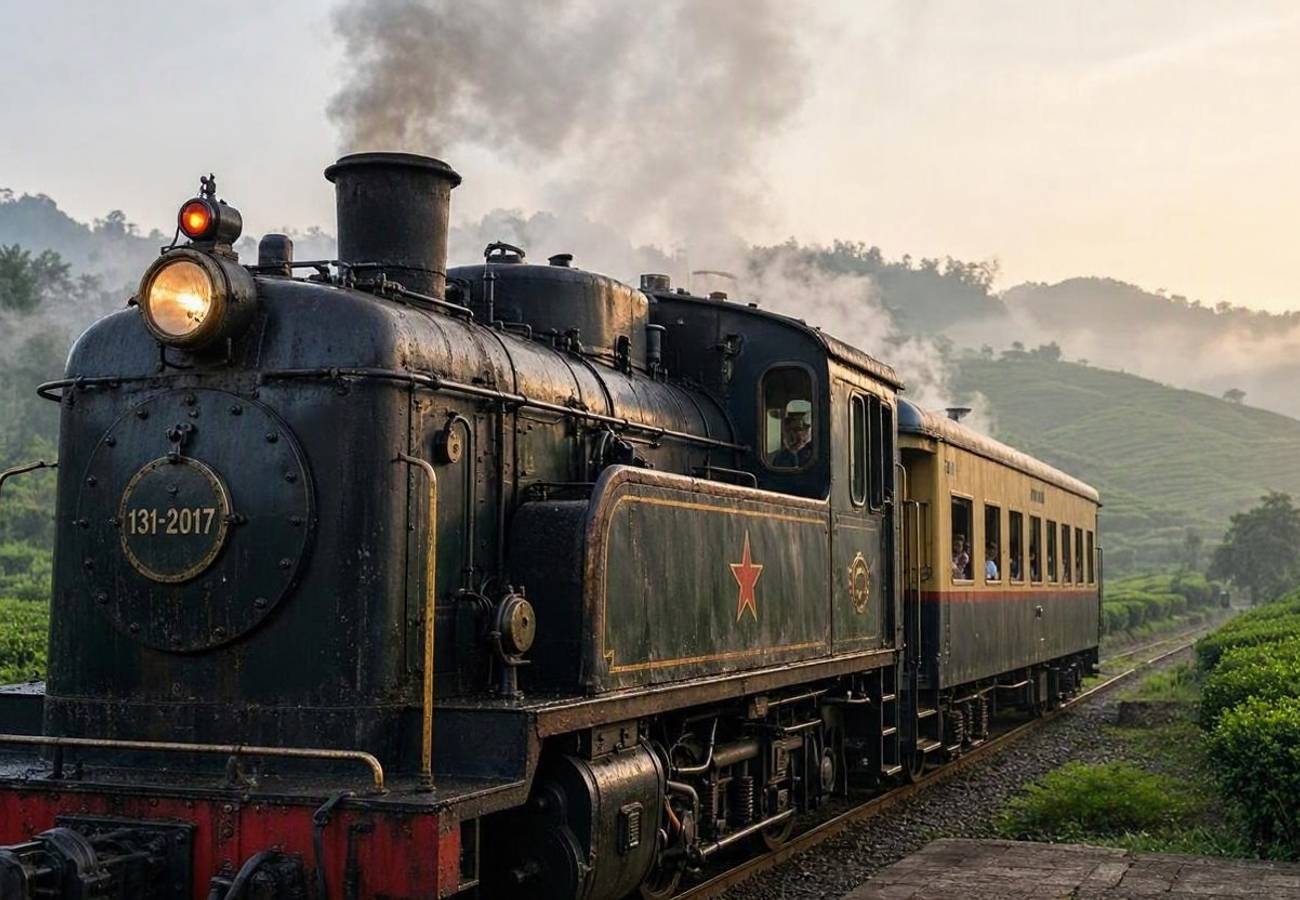
Kyoto Sagano Romantic Train Enters Final Season as Historic Rolling Stock Retires Ahead of 2027 Modernization

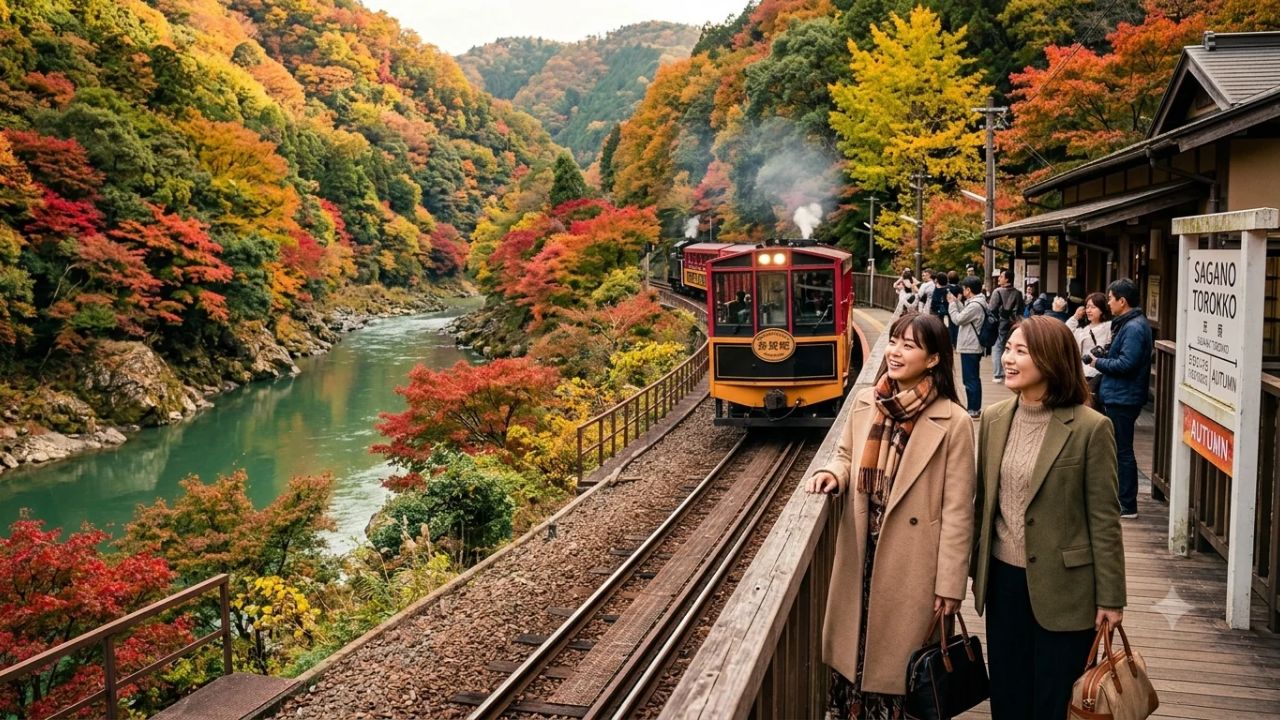
KYOTO / ARASHIYAMA — The iconic crimson-and-black carriages of Kyoto’s Sagano Scenic Railway have officially entered their final operational season, marking the emotional conclusion of a 35-year heritage rail era that has welcomed more than thirty million passengers through the forested gorges of the Hozu River. Operating along an abandoned, winding 7.3-kilometer spur of the former San'in Main Line between the scenic western gateway of Arashiyama and rural Kameoka, the Sagano Romantic Train (嵯峨野観光鉄道, Sagano Kankō Tetsudō) will permanently retire its foundational fleet of open-sided passenger cars at the close of December 2026. The impending decommission has triggered extraordinary demand among international and domestic sightseers, with autumn reservations completely sold out weeks in advance as travelers converge on western Kyoto’s Ukyo Ward to witness the historic rolling stock make its final passages through peak maple foliage (kōyō).
The retirement of this legendary fleet marks a pivotal transition in Japanese railway preservation. Unlike routine maintenance overhauls, the 2026 farewell paves the way for a comprehensive modernization program slated for debut in spring 2027. Under the supervision of railway operator Sagano Scenic Railway—a dedicated subsidiary of West Japan Railway Company (JR West)—the line will introduce a completely redesigned, next-generation fleet engineered to satisfy contemporary crashworthiness standards, improve universal barrier-free accessibility, and integrate climate-resilient structural enhancements while safeguarding the open-air, nostalgic aesthetic that transformed an obsolete freight corridor into one of Asia’s most celebrated scenic rail excursions.
       SAGANO SCENIC RAILWAY: HOZU RIVER GORGE PASSAGE & STATIONS (2026)
       ================================================================

       [ TOROKKO SAGA STATION (嵯峨) ]
       * Elevation: 30m | Direct connection to JR Saga-Arashiyama Station
       * Historic 19th-Century Locomotive Display & 19th Century Hall
       * Departure point for 70% of inbound international passengers
                                       |
                                       v (1.0 km)
       [ TOROKKO ARASHIYAMA STATION (嵐山) ]
       * Situated at the mouth of the Sagano Bamboo Grove & Tenryu-ji
       * Tunnels through Ogurayama (Mount Ogura maple slopes)
                                       |
                                       v (3.4 km)
       [ TOROKKO HOZUKYO STATION (保津峡) ]
       * Isolated suspension bridge access across Hozu Gorge
       * Mountain gorge microclimate; early maple coloration
       * Statue of Tanuki (Japanese raccoon dog) mascots on platform
                                       |
                                       v (2.9 km)
       [ TOROKKO KAMEOKA STATION (亀岡) ]
       * Rural terminus; shuttle links to Hozugawa Kudari boat dock
       * Direct connection to JR Umahori Station for return rail transit
The Industrial Rebirth of the Hozu Gorge Line: From Abandoned Track to Heritage Icon
The narrative of the Sagano Romantic Train is one of the most successful adaptive reuse projects in global railway history. The trackage utilized by the tourist railway was originally constructed in the late 19th century by the private Kyoto Railway, opening for commercial traffic in 1899 before being nationalized into the Imperial Japanese Government Railways (later Japanese National Railways, or JNR) as part of the San'in Main Line connecting Kyoto with the Sea of Japan coast. For nearly nine decades, passenger and freight locomotives threaded the precipitous, single-track rock ledges carved directly into the bedrock above the turbulent waters of the Hozu River (Hozugawa).
However, by the late 1980s, the tortuous alignment—characterized by eight tight-radius curves and narrow tunnels subject to rockfalls and torrential rain closures—became an acute operational bottleneck for modern intercity express trains. In March 1989, JR West completed a major engineering modernization: a double-track, electrified bypass running through long, straight tunnels deep inside the mountain ridges. The new alignment cut travel times between Saga-Arashiyama and Kameoka to mere minutes, leaving the original 7.3-kilometer riverside line redundant and slated for immediate abandonment and track removal.
SAGANO SCENIC RAILWAY TECHNICAL SPECIFICATIONS MATRIX
| Entity / Facility | Delays | Cancellations | Details |
|---|---|---|---|
| Technical Parameter | Current Fleet (Retiring 2026) | Next-Gen Fleet (Entering 2027) | Operational Purpose |
| Route Distance | 7.3 Kilometers | 7.3 Kilometers | Single-track narrow- |
| gauge (1,067 mm) line | |||
| Running Time | 25 to 30 Minutes | 25 to 30 Minutes | Average speed: 25 km/h |
| Traction Power | Class DE10 Diesel- | Modernized Clean | Dedicated push-pull |
| Hydraulic (DE10 1104) | Low-Emission Diesel | locomotive operation | |
| Rolling Stock Cars | SK100 / SK200 / | Purpose-Built | Converted from 1970s |
| SK300 Series (5 Cars) | Lightweight Alloy | JNR Toki 25000 wagons | |
| Car No. 5 Design | "The Rich" Open-Air | Next-Gen Open-Air | Removable mesh floor; |
| Glass Canopy Roof | Transparent Vista | No window glass panes | |
| Capacity per Train | ~330 Passengers | ~340 Passengers | Fixed transverse wooden |
| (All Reserved) | (Enhanced ADA Bays) | bench seating units | |
| Cumulative Ridership | 30+ Million (1991–2026) | Targeted 1.2M/yr | High-density seasonal |
| from Spring 2027 | tourist throughput |
Rather than surrendering the historic asset to scrap merchants, a forward-looking group of veteran railwaymen within JR West recognized the extraordinary aesthetic and cultural value of the scenic gorge. Led by railway manager Nobuyuki Kume, they argued that the very physical attributes that made the line unsuitable for high-speed transit—its slow, serpentine curves, dramatic river-level exposure, and proximity to steep maple and cherry blossom canopies—made it an unmatched canvas for leisure tourism.
In December 1990, the Sagano Scenic Railway was incorporated as an independent operating subsidiary, with nine dedicated railway employees clearing landslides, weeding overgrown ballast, and reinforcing tunnel portals by hand. Service commenced on April 27, 1991. The initial rolling stock was assembled by converting surplus JNR Toki 25000-series open-top freight gondola wagons into open-plan passenger coaches, designated the SK100, SK200, and SK300 series. Fitted with varnished wooden bench seats, classic brass luggage racks, and vintage incandescent interior lamps, the train was finished in a distinctive crimson-and-black livery accented with gold trim.
The defining passenger innovation arrived with the introduction of Carriage No. 5, affectionately named "The Rich" (Za Ritchi-gō). To give sightseers an unmediated sensory experience of the mountain gorge, engineers removed the side window panes entirely, replaced the solid steel ceiling with transparent polycarbonate panels, and installed a heavy-duty perforated metal mesh floor through which passengers could watch the railway sleepers and rushing riverbed passing directly beneath their feet. Powered by a dedicated Class DE10 diesel-hydraulic locomotive operating in a push-pull configuration, the train quickly captured national and international acclaim, transforming Arashiyama from a half-day excursion into a cornerstone of the Kansai regional tourism circuit.
Autumn Foliage Dynamics and the Kōyō Phenomenon Across Ukyo and Arashiyama
The retirement of the historic carriages in late 2026 coincides with kōyō—Japan’s revered autumn leaf season—creating an intense emotional convergence between natural transience and industrial farewell. In Japanese cultural philosophy, the concept of mono no aware (the bittersweet pathos of impermanence) is closely tied to both the fleeting beauty of falling maple leaves and the graceful retirement of cherished tools and machines that have faithfully served human society.
The dramatic visual transformation of the Hozu Gorge is driven by distinctive biometeorological conditions. As cool mountain air drains down from the Tamba Highlands (Tamba Kōgen) into the deep river canyon, steep diurnal temperature variations occur between cold nocturnal river mists and warm afternoon sunlight. This microclimatic thermal shock triggers intense synthesis of anthocyanin pigments within the leaves of wild Japanese maples (Acer palmatum, or irohamomiji) and Japanese mountain maples (yamamomiji), producing brilliant gradations of scarlet, amber, copper, and vermilion that mantle the gorge walls.
       HOZU GORGE MICROCLIMATIC FOLIAGE COLORATION TIMELINE (AUTUMN)
       =============================================================

       [ PHASE 1: EARLY AUTUMN (LATE OCTOBER TO EARLY NOVEMBER) ]
       * Mountain Crests & Cold Drainage Gorges begin color shift
       * Torokko Hozukyo: First hints of gold and yellow ginkgo/birch
       * City shrines (Kitano Tenmangu, Tenryu-ji) remain predominantly green
                                       |
                                       v
       [ PHASE 2: PEAK FOLIAGE WINDOW (MID-NOVEMBER TO EARLY DECEMBER) ]
       * Deep Gorge Anthocyanin Spike: 100% full maple canopy coloration
       * Riverbed reflections along Hozu Rapids reach peak intensity
       * Evening Floodlighting: 1,000+ LED illumination arrays active
       * Historic Carriages make 8 daily sold-out round-trip farewell runs
                                       |
                                       v
       [ PHASE 3: LATE FOLIAGE & DECOMMISSIONING (MID TO LATE DECEMBER) ]
       * Russet leaves cover trackbed; crisp sub-zero winter mornings
       * Final ceremonial runs of original SK-series rolling stock
       * Decommissioning ceremonies at Torokko Saga before 2027 fleet overhaul
Because the microclimate within the enclosed mountain canyon is significantly cooler than the urban Kyoto basin, foliage along the rail corridor turns deep red roughly seven to ten days earlier than lowland city monuments such as Kitano Tenmangu Shrine or the central temple complexes of Higashiyama. The 25-minute journey between Torokko Saga and Torokko Kameoka provides passengers with a moving panoramic vantage point through this vivid natural landscape.
As the train enters the narrowest segments of the gorge near Torokko Hozukyo Station, the engine driver deliberately throttles back the locomotive, reducing train speed to a walking pace across high-girder railway bridges. Here, passengers in Carriage No. 5 can reach out toward overhanging maple branches and feel the chilled updraft from the river rapids.
During the peak seasonal weeks, the railway operates an extended evening schedule featuring the "Fantasy Train" (Yūyake Torokko). Over 1,000 specialized floodlights and low-glare LED spotlights installed along the cliff edges and riverbanks illuminate the scarlet maple canopy against the pitch-black night sky, casting surreal reflections across the river water and creating a nocturnal sensory spectacle that has made tickets among the most contested travel commodities in East Asia.
The 2026 Farewell Rush: Demographics, Over-Tourism Management, and Ticketing Realities
The announcement that 2026 represents the definitive final chapter for the original red-and-black fleet has caused booking requests to surge to historic highs. According to operational disclosures from Sagano Scenic Railway management, approximately 70 percent of all passengers riding the trains during the autumn 2026 peak are foreign independent travelers and international tour groups. Travelers from Taiwan, Hong Kong, mainland China, the United States, Australia, and Western Europe represent the dominant demographic cohorts, drawn by widespread coverage across social media platforms, rail enthusiast networks, and international travel guides.
SAGANO SCENIC RAILWAY: PASSENGER PROFILE & LOGISTICS (2026)
| Entity / Facility | Delays | Cancellations | Details |
|---|---|---|---|
| Dimension | Operational Data | Traveler Strategy | Administrative Action |
| Passenger Breakdown | 70% International | Advance online | Multilingual signage |
| 30% Domestic | booking 1 month out | (JA, EN, ZH, KO) | |
| Car No. 5 Allocation | Strictly reserved; | Booked on release | Active platform safety |
| weather-dependent | or queue at 08:30 | enforcement teams | |
| Daily Service Cap | 8–9 Round-Trips | Fixed departure | Punctual boarding; |
| (~2,700 seats/day) | slots; no changes | strict dwell timers | |
| Luggage Limitations | Severe coach space | Leave large bags at | Locker expansions at |
| constraints | Kyoto/Saga lockers | Torokko Saga concourse | |
| Terminal Etiquette | Open-air railing; | Remain seated for | Mandatory bilingual PA |
| track edge hazards | entire 25 min run | warnings before arrival |
This heavy demand has made securing seats an exacting logistical exercise. Every passenger seat across the five-car train is individually numbered and reserved. Tickets become available precisely thirty days prior to departure at 10:00 AM Japan Standard Time through the official JR-West Online Train Reservation portal and authorized ticketing distributors. During peak maple season, entire train allocations are routinely snapped up within three to five minutes of server release.
While the railway historically held back Car No. 5 ("The Rich") exclusively for same-day walk-up window sales at Torokko Saga Station—ensuring that visitors could assess rainfall conditions before purchasing an unglazed open-air ticket—the overwhelming volume of tourists has forced station authorities to strictly manage queue formations. Sightseers arriving without advance bookings frequently queue outside Torokko Saga Station from 07:30 in the morning, only for the remaining daily allocation of walk-up tickets to sell out within forty minutes of ticket window opening at 08:30.
To maintain passenger safety and mitigate over-tourism pressures around the station concourses, station management has implemented comprehensive crowd control measures:
First, station platforms at Torokko Saga and Torokko Kameoka have been fitted with distinct queuing corrals and high-contrast tactile ground indicators. Public address announcements are broadcast continuously in Japanese, English, Mandarin, and Korean, firmly instructing sightseers to remain behind the yellow safety line as the Class DE10 locomotive enters the platform. Due to the high density of selfie sticks, telephoto camera rigs, and mobile phones, safety marshals patrol the narrow platform perimeters to prevent passengers from stepping into the clearance envelope of arriving trains.
Second, strict onboard conduct regulations are enforced throughout the trip. Because Car No. 5 is completely open to the elements, onboard train conductors and multilingual automated audio broadcasts explicitly instruct passengers to remain seated for the entire journey. Standing on wooden seats, hanging arms or camera equipment over the steel safety railings, or leaning across other seated guests to photograph the opposite side of the canyon is strictly prohibited. These safety protocols prevent traumatic collisions with projecting tunnel rock walls, catenary poles, and overhanging tree branches, ensuring that the final operating season concludes without incident.
Third, station staff actively divert passengers carrying oversized luggage. The vintage coaches were engineered around 1970s freight wheelbases, featuring narrow 60-centimeter center aisles and compact four-person bench seating bays that cannot accommodate large rolling suitcases. International travelers are directed to utilize the expanded electronic coin-locker facilities installed inside the Torokko Saga 19th Century Hall or leave luggage at central Kyoto Station luggage delivery counters before heading to Arashiyama.
The Multi-Modal Hozugawa Circuit: Heritage Rail Meets River Rafting Tradition
A foundational reason for the enduring international appeal of the Sagano Scenic Railway is its seamless integration into a legendary multi-modal sightseeing circuit: the combined Torokko rail and Hozugawa riverboat loop. Rather than taking the train on a simple out-and-back journey, experienced travelers pair the railway ascent with the traditional Hozugawa Kudari (保津川下り)—a thrilling two-hour descent of the river rapids aboard flat-bottomed wooden skiffs.
       THE ICONIC HOZU RIVER MULTI-MODAL SIGHTSEEING CIRCUIT
       =====================================================

       [ LEG 1: SCENIC RAIL ASCENT (TOROKKO SAGA TO TOROKKO KAMEOKA) ]
       * Board historic Sagano Romantic Train at Torokko Saga
       * 25-minute scenic climb through mountain tunnels and gorge ledges
       * Elevated perspective looking DOWN onto Hozugawa rapids
                                       |
                                       v
       [ INTER-MODAL TRANSIT LINK: KAMEOKA INTERCHANGE ]
       * Alight at Torokko Kameoka Station
       * 15-minute connecting bus or traditional horse-drawn carriage
       * Arrival at Hozugawa Kudari Departure Wharf
                                       |
                                       v
       [ LEG 2: TRADITIONAL RIVER RAPIDS DESCENT (KAMEOKA TO ARASHIYAMA) ]
       * Board 12-meter wooden flat-bottom boats manned by 3–4 boatmen
       * 16-kilometer descent traversing Class II–III white-water rapids
       * River-level perspective looking UP at towering maple cliffs
                                       |
                                       v
       [ TERMINATION: TOGETSUKYO BRIDGE, ARASHIYAMA ]
       * Disembark directly at Arashiyama Riverside Promenade
       * Immediate access to Tenryu-ji gardens, bamboo paths & tea houses
This multi-modal pairing creates an extraordinary geographical and historical dialogue. While the railway carries passengers up the gorge from east to west along the mountain ridges, the riverboat carries them back down from west to east along the churning watercourse. The boat journey spans sixteen kilometers of pristine canyon, steered by a team of three to four skilled boatmen who control the long wooden craft using traditional bamboo poles (sao), balancing oars (ro), and a wooden stern rudder.
The riverboat journey possesses deep cultural roots that predate the railway by nearly three centuries. In 1606, during the early Edo Period, the wealthy merchant engineer Suminokura Ryōi undertook an immense civil engineering project, spending personal wealth to blast out submerged boulders and excavate a navigable passage through the impassable Hozugawa rapids. For centuries thereafter, this waterway served as the primary economic lifeline for Kyoto and Osaka, floating logs of Tamba cedar and cypress, grain, charcoal, and agricultural produce directly into the heart of the ancient capital.
When freight transitioned to commercial railways in the late 19th and 20th centuries, the boatmen redirected their generational navigation skills toward passenger tourism. Today, travelers descending the rapids gaze upward at the dramatic steel bridges where the crimson-and-black Sagano Romantic Train rumbles past overhead, with passengers and boatmen exchanging enthusiastic waves across the canyon.
This circuit represents an exceptional example of environmental and cultural stewardship. The Hozugawa River basin operates under strict municipal conservation ordinances that safeguard local wildlife, including the rare Japanese giant salamander (Andrias japonicus) and native river kingfishers. Local boatmen and railway workers regularly conduct joint riverbank cleanups, removing plastic debris from the riverbed and preserving the pristine ecology that attracts millions of visitors to western Kyoto every year.
Engineering the 2027 Transition: Safety Modernization Without Erasing Heritage Aesthetics
While global travelers mourn the impending loss of the current rolling stock, the transition concluding in December 2026 is driven by pressing engineering imperatives. Railway machinery, particularly equipment operating in demanding alpine environments, has finite structural fatigue lifespans. For thirty-five consecutive years, the converted Toki 25000 freight underframes have endured continuous operational cycling through high summer humidity, torrential typhoon downpours, severe freezing winter frosts, and heavy passenger weight loads across eight daily return trips.
According to technical statements from Sagano Scenic Railway senior manager Atsushi Yoshida, the upcoming fleet renewal is centered on upgrading structural safety margins while preserving the intangible cultural heritage of the line:
       OPERATIONAL REALITY: BALANCING HERITAGE PRESERVATION & SAFETY
       ============================================================

       [ RETIRING 1991 FLEET: AGEING MECHANICAL LIMITATIONS ]
       * Converted 1970s freight wagons approaching 50-year structural life
       * High-maintenance mechanical linkages and leaf-spring suspensions
       * Step-up floor boarding creating barriers for disabled & elderly guests
       * Manual mechanical braking linkages requiring intense daily tuning
                                       |
                                       v
       [ 2027 NEXT-GEN ROLLING STOCK: STRUCTURAL ENHANCEMENTS ]
       * Lightweight corrosion-resistant alloy underframes with extended fatigue life
       * Universal barrier-free design: low-floor boarding & dedicated wheelchair bays
       * Advanced anti-climber crash buffers & dual-circuit electro-pneumatic brakes
       * Clean low-emission propulsion reducing diesel particulates in Hozu gorge
       * Preserved Aesthetic: Classic wooden seating, brass fittings & open vista canopy
First, modern rail safety engineering demands enhanced crashworthiness. The next-generation 2027 rolling stock will incorporate state-of-the-art energy-absorbing crumple zones, anti-climber buffers to prevent car overriding during derailments, and advanced dual-circuit electro-pneumatic braking systems that provide superior deceleration rates on the railway's 20-per-mil track gradients. Additionally, modern wheelset monitoring sensors and hot-box detection systems will be integrated into the bogie assemblies, transmitting real-time mechanical telemetry to the driver’s cab.
Second, universal design and barrier-free accessibility are central pillars of the 2027 redesign. Japan’s domestic demographic reality—characterized by a rapidly aging society—alongside international accessibility benchmarks has made the step-up design of the original 1991 carriages increasingly problematic. The current cars feature narrow vestibule steps that require manual lifting of wheelchairs and present formidable obstacles for elderly sightseers. The 2027 carriages will introduce low-floor platform alignment, wider automated sliding access doors, dedicated wheelchair securement bays with companion seating, and high-visibility digital passenger information displays providing route commentary in five languages.
Third, the propulsion architecture is undergoing a modern overhaul. While the distinctive rumble of the Class DE10 diesel-hydraulic locomotive is celebrated by rail enthusiasts, older diesel powerplants emit significant levels of particulate matter and carbon dioxide into the enclosed river canyon. The 2027 operating plan explores clean-diesel hybrid technology and advanced catalytic filtration systems that drastically reduce tailpipe emissions, aligning the railway’s environmental footprint with Kyoto Prefecture’s carbon neutrality mandates.
Significantly, railway leadership emphasizes that modern engineering will not come at the expense of sensory nostalgia. The new carriages will retain the classic crimson, black, and gold exterior livery that has defined the Arashiyama landscape for three and a half decades. Inside, the passenger compartment will preserve authentic polished wooden bench seating crafted from sustainably sourced local timber, brass luggage racks, and retro ambient lighting.
Car No. 5 will remain the open-air centerpiece of the train. The 2027 iteration will utilize advanced structural acrylics and high-tensile architectural wire mesh to preserve the unobstructed breeze, mountain scents, and river sounds that travelers cherish, while incorporating deployable transparent weather shields that can quickly protect passengers in the event of sudden severe mountain storms.
Strategic Travel Blueprint: Experiencing the Final Season and Regional Kyoto Alternatives
For international visitors planning to travel to Japan before the current carriages are retired in late December 2026, disciplined pre-trip coordination is essential to navigating western Kyoto’s peak season:
       STRATEGIC RECOMMENDATION MATRIX: WESTERN KYOTO AUTUMN TRAVEL
       ===========================================================

       [ SAGANO ROMANTIC TRAIN SUCCESS CHECKLIST ]
       * Target Booking Window: Exactly 30 days prior at 10:00 JST via JR-West
       * Preferred Seating: Car No. 5 (The Rich) for open-air panorama; Car 4 for shelter
       * Optimal Timetable: 10:00–14:00 for luminous daylight; 16:30+ for illuminated night run
       * Luggage Protocol: Forward bags via Takkyubin; utilize lockers at JR Kyoto Station
                                       |
                                       v
       [ REGIONAL HERITAGE RAIL & CULTURAL ALTERNATIVES ]
       * Eizan Electric Railway (叡山電鉄): "Kirara" panoramic train through Maple Tunnel
       * Randen Tramway (京福電鉄): Historic streetcar linking Shijo-Omiya and Arashiyama
       * Kitano Tenmangu Shrine (北野天満宮): Renowned Momiji-en maple garden along river
       * Otagi Nenbutsu-ji & Daikaku-ji: Quiet northern Sagano temples avoiding dense crowds
- Master the JR-West Online Reservation Window: Create a user profile on the official JR-West Online Train Reservation platform well in advance of your travel date. Synchronize your booking attempt to 10:00 AM JST exactly thirty days before your desired ride date. If initial allocations sell out, monitor the platform for cancellation drops forty-eight to twenty-four hours before departure, when tour operators release unassigned blocks.
- Synchronize Transit with the Hozugawa Kudari: For the definitive Kansai excursion, book the westbound Sagano Romantic Train departure from Torokko Saga to Torokko Kameoka during the late morning. From Torokko Kameoka, take the direct connecting shuttle bus to the Hozugawa boarding wharf, completing the two-hour white-water descent back to Arashiyama in time for afternoon tea along the Togetsukyo river promenade.
- Explore the Eizan Railway Maple Tunnel as an Alternative: Travelers unable to secure Sagano Romantic Train tickets can experience world-class autumn rail scenery in northern Kyoto via the Eizan Electric Railway (Eiden). Operating from Demachiyanagi Station toward Kurama, the "Kirara" panoramic observation train features outward-facing seats that pass through the famous "Momiji no Tonneru" (Maple Tunnel) between Ichihara and Ninose stations, complete with evening floodlighting.
- Venture Beyond Central Arashiyama into Northern Sagano: While central Arashiyama around the Bamboo Grove and Tenryu-ji experiences intense pedestrian congestion during November and December, the peaceful rural temples of northern Sagano—including Giō-ji, Adashino Nenbutsu-ji, and Daikaku-ji—offer serene maple vistas, historic moss gardens, and deep historical resonance away from tour bus corridors.
The permanent retirement of Kyoto’s original Sagano Romantic Train carriages marks the bittersweet close of an iconic chapter in Japanese heritage tourism. For thirty-five years, these rugged red-and-black cars breathed new life into an abandoned industrial corridor, connecting millions of global travelers with the timeless natural rhythms of the Hozu River Gorge. As the line prepares to welcome its next generation in 2027, this final autumn foliage season stands as a magnificent, well-deserved farewell to one of the world's most beloved scenic railways.
Related Travel Guides
- Global Travel Spending to Hit $1.8 Trillion in 2026 as International Arrivals Reach 1.57 Billion
- Australia and Oceania Shift Regional Tourism and Major Events Into Twilight to Beat Diurnal Heatwaves
- Asia Road Travel Expansion: How Rising Flight Costs Drive Overland Journeys in Vietnam & Thailand
- Texas Cruise Market Shift: Why 76 Percent of Travellers Choose Human Advisors Over Digital Platforms
- Dominican Republic Opens Port Samaná as Caribbean Nations Invest Billions in Ports
This article is for informational purposes. Flight routes, passenger regulations, visa rules, and transit advisories are subject to change by airlines and aviation authorities. Readers are advised to verify schedules and travel documentation with relevant carriers and border agencies before departure.
Related Stories
Japan Announces Major Narita Express Service Changes for November 6–8 as Tokyo Tunnel Repairs Sever Direct Lines
UK Celebrates 25 Years of Harry Potter: Five Magical Rail Journeys Across Famous Filming Sites