
Kuwait, UAE, Saudi Arabia, Iraq, China, Singapore Face Deepening Shipping Crisis as Strait of Hormuz Drone Strike on Singapore-Flagged Vessel Ever Lovely Amplifies Global Energy and Travel Industry Alarm
Strait of Hormuz drone strike on Singapore-flagged vessel Ever Lovely escalates shipping crisis for Kuwait, UAE, Saudi A

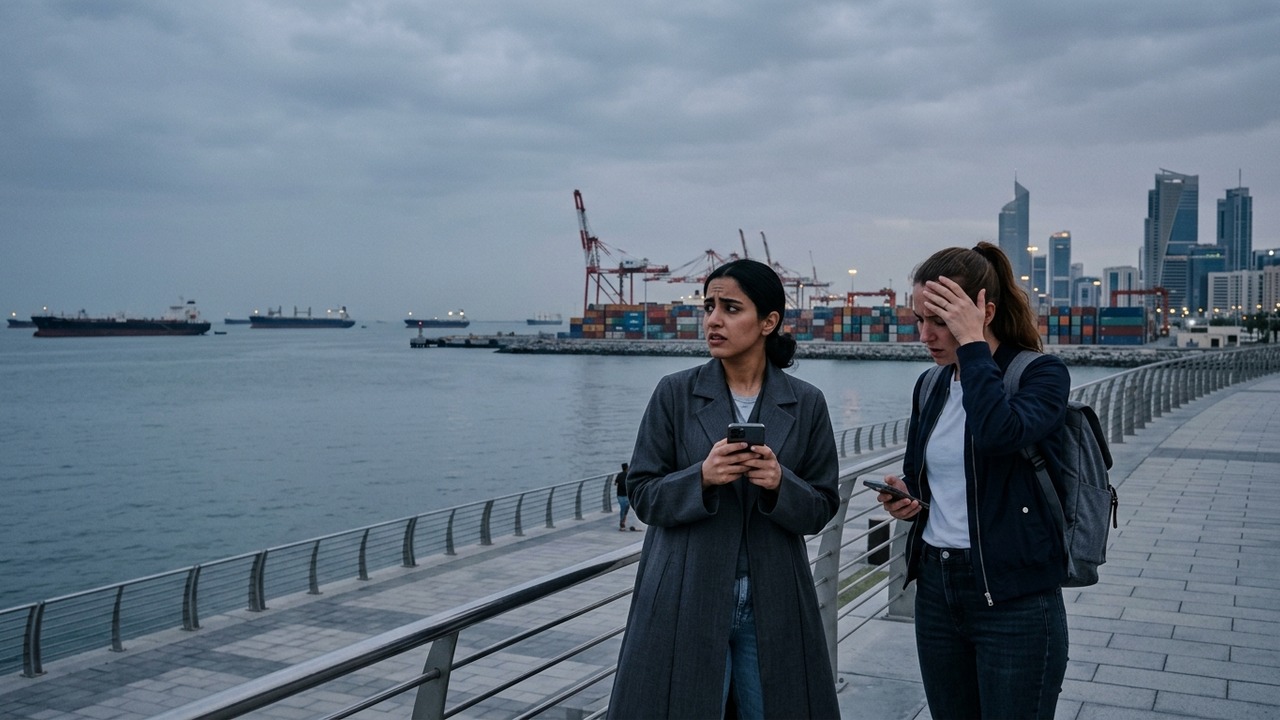
Image generated by AI
[Dubai, June 27, 2026] — A Singapore-flagged cargo vessel, Ever Lovely, was struck by an IRGC-linked drone in the Strait of Hormuz within the past 24 hours, damaging the ship's bridge and sending shockwaves through global maritime, energy, and tourism sectors as Kuwait, the UAE, Saudi Arabia, Iraq, China, and Singapore confront mounting shipping crisis exposure amid renewed US–Iran military escalation.
The strike on Ever Lovely — which damaged critical navigation systems but caused no crew casualties — has triggered immediate reassessments of commercial shipping risk across the Gulf corridor, where nearly 20% of the world's daily oil supply transits. Maritime security agencies including the UK Maritime Trade Operations (UKMTO) have elevated threat advisories, and the incident is compounding fears of supply chain disruption, insurance cost spikes, and route reconfigurations across Asia-Europe trade corridors already strained by geopolitical volatility.
Strait of Hormuz Tensions Escalate as US and Iran Military Exchanges Intensify
Over the past 24 hours, the United States and Iran have engaged in renewed military exchanges across the broader Gulf region, significantly amplifying maritime security risks in and around the Strait of Hormuz. While no official blockade has been declared, the escalation has raised alarm among commercial shipping operators and regional governments alike.
The interaction between active military operations and civilian shipping lanes has created an environment of deep uncertainty. Vessels transiting the Gulf now face heightened risk of collateral targeting, and maritime authorities have issued cautionary advisories across multiple commercial corridors. The situation remains fluid, with officials monitoring whether further escalation could directly impede the free flow of crude oil and container traffic through one of the planet's most economically vital waterways.
The International Energy Agency (IEA), the Organization of the Petroleum Exporting Countries (OPEC), and the U.S. Energy Information Administration (EIA) all classify the Strait of Hormuz as a critical global energy chokepoint. Even limited security incidents in this corridor can transmit rapidly into global oil price volatility, systemic trade instability, and cascading economic effects that reach far beyond the Gulf itself.
| Indicator | Status |
|---|---|
| Military activity | Active |
| Shipping risk | Elevated |
| Blockade status | None confirmed |
| Escalation level | High |
Kuwait Confronts Rising Export Vulnerability as Hormuz Shipping Volatility Deepens
Kuwait stands as one of the most exposed Gulf economies in the current crisis. The nation's crude oil exports depend almost entirely on uninterrupted maritime passage through the Strait of Hormuz, making it acutely sensitive to even minor disruptions in the corridor.
Maritime security advisories issued within the past 24 hours have confirmed increased operational risk levels for Kuwaiti shipping interests. Any further escalation in US–Iran tensions directly threatens Kuwait's export continuity, drives up war-risk insurance premiums, and destabilizes crude pricing in international markets. Kuwait's fiscal planning and national revenue flow are structurally tied to the free movement of tankers through Gulf waters, leaving little margin for sustained instability.
| Indicator | Status |
|---|---|
| Export route dependency | Very High |
| Risk level (24h update) | Elevated |
| Insurance pressure | Rising |
| Operational disruption | Moderate |
UAE Shipping and Logistics Hubs Face Heightened Hormuz Security Pressure
The United Arab Emirates is experiencing intensified maritime security sensitivity as tanker movement through the Strait of Hormuz becomes increasingly unpredictable. Reports from the past 24 hours confirm elevated caution advisories for vessels operating near the corridor, following the confirmed projectile strike on a commercial vessel.
The UAE's exposure is compounded by its dual reliance on both energy exports and its position as a global logistics hub. Jebel Ali Port — one of the Middle East's largest container terminals — depends on uninterrupted shipping flows to maintain throughput efficiency and re-export competitiveness. Dubai's broader trade ecosystem is similarly tethered to Gulf maritime stability, making any disruption in the Strait a direct economic concern.
Shipping insurance costs are rising for UAE-linked operators, and maritime caution advisories have become more frequent as the security situation evolves.
| Indicator | Status |
|---|---|
| Logistics exposure | High |
| Maritime risk trend | Increasing |
| Shipping delays | Possible |
| Trade sensitivity | Elevated |
Saudi Arabia Oil Export Security Strained by Hormuz Escalation
Saudi Arabia, the world's largest oil exporter, remains structurally dependent on the Strait of Hormuz for a significant share of its crude shipments. Maritime security updates linked to US–Iran tensions over the past 24 hours have increased perceived risk for very large crude carriers (VLCCs) passing through Gulf waters.
While Saudi Arabia maintains alternative export infrastructure — including pipeline networks that can partially bypass the Strait — Hormuz remains a critical global shipping corridor for its oil. Any sustained instability in the waterway increases volatility in global oil benchmarks and raises freight costs for Saudi crude shipments. The kingdom's exposure to insurance cost escalation and transit security concerns adds another layer of complexity to its already intricate production and export coordination strategies.
| Indicator | Status |
|---|---|
| Export dependency on sea route | High |
| Alternative routing | Partial |
| Price volatility risk | High |
| Security exposure | Elevated |
Iraq Oil Export Stability Threatened by Gulf Maritime Tension Surge
Iraq's crude exports, primarily routed through southern Gulf terminals, are heavily dependent on maritime passage through or near the Strait of Hormuz. Maritime alerts from the past 24 hours indicate heightened regional caution due to escalating military exchanges between US and Iranian-linked forces.
This development increases operational uncertainty for Iraqi oil shipments, particularly those bound for Asian markets where demand remains strong. Iraq's export revenues are directly tied to uninterrupted shipping flows, making the country highly sensitive to geopolitical instability in the Gulf maritime corridor. Rising insurance costs and potential transit delays pose immediate challenges to Iraq's fiscal stability and its ability to maintain consistent export volumes.
| Indicator | Status |
|---|---|
| Export vulnerability | High |
| Route dependency | Critical |
| Insurance impact | Rising |
| Operational risk | Elevated |
China Energy Supply Chain Under Pressure from Hormuz Shipping Disruptions
China, the world's largest crude importer, faces indirect but significant exposure to disruptions in the Strait of Hormuz. Maritime intelligence from the past 24 hours indicates rising risk perception for oil shipments passing through the Gulf corridor.
Any disruption in this waterway directly affects China's energy import diversification strategy and increases freight volatility across long-haul shipping routes. China's heavy dependence on Middle Eastern crude makes stability in Hormuz essential for sustaining industrial production and maintaining energy pricing stability. The country's strategic petroleum reserves provide a buffer, but prolonged instability would test the limits of that cushion and potentially force adjustments to import sourcing and logistics planning.
| Indicator | Status |
|---|---|
| Import dependency | Very High |
| Supply chain risk | Elevated |
| Freight cost trend | Rising |
| Energy sensitivity | High |
Singapore Maritime Sector Shaken as IRGC Drone Strike on Ever Lovely Exposes Vulnerability
Singapore's maritime sector has been thrust into the spotlight following a verified drone strike on the Singapore-flagged cargo vessel Ever Lovely while it transited the Strait of Hormuz. According to confirmed maritime authority reporting within the past 24 hours, the vessel was targeted by a drone attributed to Iran's Islamic Revolutionary Guard Corps (IRGC).
The strike damaged the ship's bridge structure — a critical navigation control zone — though no injuries or fatalities were reported among crew members. The vessel maintained stability and continued operations after the incident. The Maritime and Port Authority of Singapore confirmed it is monitoring the situation closely, as global shipping risk levels across the Gulf corridor continue to rise due to escalating US–Iran tensions and increased maritime targeting activity.
The incident underscores the direct physical risk facing Singapore-linked commercial assets in the Gulf and highlights the broader implications for global insurance exposure and maritime traffic management.
| Indicator | Status |
|---|---|
| Vessel name | Ever Lovely |
| Flag state | Singapore |
| Damage type | Bridge impact |
| Casualties | None |
| Operational outcome | Continued transit |
Global Shipping Industry Responds to 24-Hour Hormuz Tanker Strike
The global shipping industry has entered a heightened alert phase following confirmation of the tanker strike in the Strait of Hormuz within the last 24 hours. Maritime security agencies, including UKMTO, reported vessel damage consistent with an unidentified projectile impact, triggering immediate reassessment of risk exposure for commercial fleets operating in the Gulf.
Shipping operators are actively adjusting routes, increasing insurance coverage, and deploying enhanced tracking systems to manage operational uncertainty. The confirmed incident has accelerated a shift in fleet management strategy, with several operators reportedly evaluating alternative transit schedules to avoid peak risk windows.
| Indicator | Status |
|---|---|
| Incident confirmation | Yes |
| Fleet response | Active |
| Insurance trend | Increasing |
| Security level | High |
Global Shipping Networks Face Rising Cost Pressure and Route Disruption Risk
International shipping networks depend on predictability, and the Strait of Hormuz represents one of the most sensitive nodes in the entire global maritime system. Even minor disruptions can create ripple effects across supply chains on multiple continents.
When risk levels increase, shipping operators typically respond by re-routing vessels through longer maritime corridors, adjusting transit schedules to avoid high-risk windows, increasing reliance on naval escort or surveillance support, raising insurance coverage under war-risk clauses, and passing higher freight costs onto global supply chains. These adjustments increase overall logistics costs and can indirectly influence consumer pricing across fuel, transport, and manufactured goods.
For trade hubs like Singapore, which operate as global maritime redistribution centers, even marginal instability in Gulf shipping routes can affect throughput efficiency and re-export competitiveness, with downstream effects on Asian and European markets.
Tourism and Travel Sector Sensitivity to Regional Geopolitical Risk
Although the Strait of Hormuz is primarily an energy corridor, instability there carries indirect but meaningful consequences for global tourism confidence, particularly across the Middle East. Countries such as the UAE and Saudi Arabia — both actively pursuing large-scale tourism diversification strategies — are especially sensitive to regional security perceptions.
Tourism growth depends on stable air corridors, investor confidence, and predictable geopolitical conditions. When maritime tensions rise, risk perception can extend into broader travel sentiment, influencing long-haul booking confidence, regional airline demand forecasts, investor sentiment in hospitality infrastructure, and cruise and maritime tourism routing decisions.
The United Nations World Tourism Organization (UNWTO) identifies geopolitical instability as one of the key external risk variables affecting tourism recovery cycles, particularly in regions undergoing rapid tourism expansion. The current escalation could complicate recovery trajectories for destinations across the Gulf and broader Middle East.
Insurance Markets and Maritime Risk Pricing Acceleration
One of the most immediate consequences of heightened tension in the Strait of Hormuz is the rapid adjustment of maritime insurance pricing. War-risk insurance premiums typically rise when naval conflict risk increases, vessel targeting becomes more probable, geopolitical escalation intensifies, and navigation warnings are issued by maritime authorities.
This directly impacts shipping companies operating VLCCs, LNG tankers, and container vessels passing through Gulf waters. Higher insurance costs are frequently passed down the supply chain, affecting global trade pricing structures and ultimately influencing consumer markets. The speed at which war-risk premiums have adjusted in the past 24 hours reflects the severity with which underwriters are treating the current threat environment.
Energy Security at the Core of Global Economic Stability
Energy security remains the central concern underpinning all developments in the Strait of Hormuz. The corridor is not merely a regional passage — it functions as a structural backbone of global energy distribution.
According to the U.S. Energy Information Administration (EIA), the Strait ranks among the world's most important oil transit chokepoints. Disruptions here carry immediate global price implications, and limited alternative routes exist for Gulf crude exports. This makes stability in the region a core priority for both exporting and importing nations.
OPEC also closely monitors shipping stability in the Gulf, as disruptions can influence production coordination, export planning, and market balance strategies across member states. The interplay between physical shipping security and global energy market equilibrium means that even short-duration incidents in the Strait can produce lasting economic reverberations.
Why This Crisis Matters Beyond the Gulf
The emerging shipping stress in the Strait of Hormuz is not an isolated regional issue — it functions as a global systemic risk indicator with implications spanning multiple industries and continents.
Energy Security Impact: The Strait handles approximately 20% of daily global oil flows. Any sustained disruption directly affects oil and LNG shipments across continents, with immediate consequences for fuel pricing, industrial energy costs, and national energy security strategies from Beijing to Brussels.
Trade Stability Impact: Shipping networks are already reconfiguring routes and schedules in response to the elevated threat environment. Longer transit times, higher insurance premiums, and increased reliance on naval escorts are raising logistics costs across Asia-Europe corridors. These costs ultimately filter down to consumer pricing for fuel, transport, and manufactured goods.
Economic Confidence and Tourism Impact: The crisis extends beyond cargo and crude. For nations like the UAE and Saudi Arabia, which are investing billions in tourism diversification, regional security perceptions directly influence traveler confidence, airline route planning, hospitality investment flows, and cruise itinerary decisions. The UNWTO has explicitly identified geopolitical instability as a primary external risk to tourism recovery — and the current escalation fits that pattern precisely.
For Kuwait, the UAE, Saudi Arabia, Iraq, China, Singapore, and other globally connected economies, the Strait of Hormuz drone strike on Ever Lovely is a stark reminder that a single security incident in a narrow waterway can transmit economic shockwaves across energy markets, shipping networks, insurance pricing structures, and tourism recovery trajectories simultaneously. The interconnected nature of modern trade and travel means that stability in the Gulf is not a regional concern — it is a foundational pillar of global economic continuity.
Related Travel Guides
Disclaimer
This article is for informational and educational purposes only. It does not constitute legal, financial, or professional advice. While we strive to provide accurate and up-to-date information, travel policies, regulations, and conditions change rapidly. Always verify information with official sources before making travel decisions. Nomad Lawyer makes no representations about the accuracy, reliability, completeness, or suitability of the information provided. Readers should consult qualified professionals for advice specific to their circumstances. The views expressed in this article are those of the author and do not necessarily reflect the views of Nomad Lawyer.
Raushan Kumar
Founder & Lead Developer
Full-stack developer with 11+ years of experience and a passionate traveller. Raushan built Nomad Lawyer from the ground up with a vision to create the best travel and law experience on the web.
Learn more about our team →