
TUI Airways Boeing 737 Grounded in Palma After Tail Strike Incident
A TUI Airways Boeing 737-8K2 was forced out of service in Spain after a landing incident triggered an emergency go-aroun

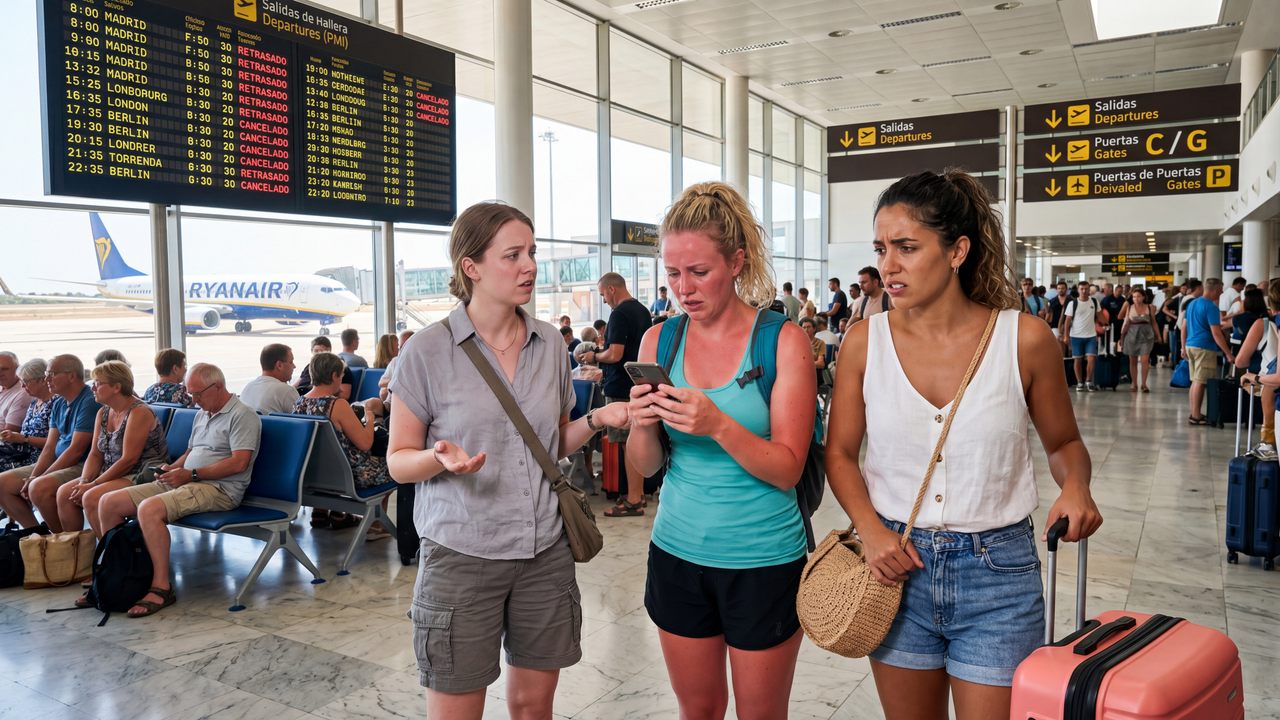
Image generated by AI
TUI Boeing 737 Experiences Tail Strike During Palma Approach
A TUI Airways flight from Dublin to Palma de Mallorca encountered significant operational issues on June 27, 2026, when a Boeing 737-8K2 (registration G-TUKS) suffered a tail strike. The incident occurred during the aircraft's final approach to runway 24L at Palma de Mallorca Airport.
As the aircraft attempted to touch down, the aft fuselage made contact with the runway surface. The flight crew immediately executed a go-around maneuver, climbing away from the runway to ensure the safety of the passengers and crew.
Following the initial incident, the aircraft remained in the traffic pattern. After coordinating with air traffic control, the crew performed a second, successful landing on the parallel runway, 24R, touching down at approximately 19:23 local time.
Mandatory Grounding and Structural Safety Checks
Under European aviation safety protocols, any aircraft that experiences a tail strike must be immediately removed from service. G-TUKS was grounded upon arrival in Palma for a comprehensive engineering assessment.
Technical teams are focusing on several critical areas:
- Aft Fuselage: Checking for structural deformation or skin punctures.
- Tail Skid Assembly: Evaluating the impact-absorbing components.
- Internal Pressure Bulkhead: Ensuring the integrity of the aircraft's pressure containment systems.
The inspection is being conducted under the oversight of European regulatory frameworks and may involve coordination with Spain’s Civil Aviation Accident and Incident Investigation Commission (CIAIAC). The aircraft will remain grounded until flight data recorder analysis and physical inspections confirm it is airworthy.
Network Disruption and Passenger Impact
The grounding of the Boeing 737 had an immediate ripple effect on TUI’s high-demand summer schedule. The aircraft was slated for a return rotation to Birmingham Airport, which was subsequently delayed.
Because this occurred during the peak summer tourism window, the disruption forced airline operations teams to manage:
- Aircraft Reassignment: Sourcing replacement jets to maintain the schedule.
- Passenger Logistics: Coordinating rebookings and handling delays for travelers on the Palma-Birmingham corridor.
- Rotation Efficiency: Managing the "cascade effect" where one grounded plane disrupts multiple subsequent flights.
The Dublin–Palma route is a critical artery for UK and Irish tourism, and such technical failures during peak season highlight the thin margins of aircraft rotation efficiency.
Safety Implications and Regulatory Oversight
Tail strikes are treated as significant safety occurrences. Investigators will analyze cockpit procedures and environmental conditions to determine why the aircraft's pitch angle resulted in fuselage contact.
These findings are typically shared across commercial fleets to refine landing guidance and prevent similar occurrences. The incident underscores the effectiveness of the "go-around" protocol, which prevents a potentially unstable landing from escalating into a more severe accident.
Flight Incident Summary
| Detail | Information |
|---|---|
| Flight Number | BY1624 |
| Route | Dublin (DUB) $\rightarrow$ Palma de Mallorca (PMI) |
| Aircraft Type | Boeing 737-8K2 |
| Registration | G-TUKS |
| Date of Incident | June 27, 2026 |
| Primary Event | Tail Strike on Runway 24L |
| Recovery Action | Go-Around $\rightarrow$ Landing on Runway 24R |
| Final Arrival Time | 19:23 Local Time |
| Current Status | Grounded for Structural Inspection |
Key Takeaways
- Immediate Response: The flight crew successfully utilized a go-around maneuver after the tail strike, ensuring a safe eventual landing.
- Safety First: European regulations mandate the grounding of any aircraft experiencing fuselage-to-runway contact.
- Operational Strain: The incident disrupted the return leg to Birmingham, illustrating the volatility of peak-season charter schedules.
- Regulatory Review: Spanish and European authorities are reviewing flight data to determine the cause.
FAQ
What is a tail strike? A tail strike occurs when the rear section of an aircraft's fuselage makes contact with the runway during takeoff or landing.
Was anyone injured during the TUI flight BY1624 incident? There were no reports of injuries; the crew performed a standard go-around and landed the aircraft safely on a different runway.
Why was the aircraft grounded if it landed safely? Tail strikes can cause hidden structural damage to the pressure bulkhead or fuselage skin, which could lead to catastrophic failure at high altitudes if not repaired.
Related Travel Guides
Disclaimer
This article is for informational and educational purposes only. It does not constitute legal, financial, or professional advice. While we strive to provide accurate and up-to-date information, travel policies, regulations, and conditions change rapidly. Always verify information with official sources before making travel decisions. Nomad Lawyer makes no representations about the accuracy, reliability, completeness, or suitability of the information provided. Readers should consult qualified professionals for advice specific to their circumstances. The views expressed in this article are those of the author and do not necessarily reflect the views of Nomad Lawyer.
Preeti Gunjan
Contributor & Community Manager
A passionate traveller and community builder. Preeti helps grow the Nomad Lawyer community, fostering engagement and bringing the reader experience to life.
Learn more about our team →