
Kuwait and Bahrain Face Escalating Security Risks as Iran Launches Retaliatory Strikes Against US Targets in 2026
Kuwait and Bahrain are experiencing heightened security pressures as Iran implements an 'eye for an eye' strategy against the US, threatening Gulf aviation networks and critical infrastructure.

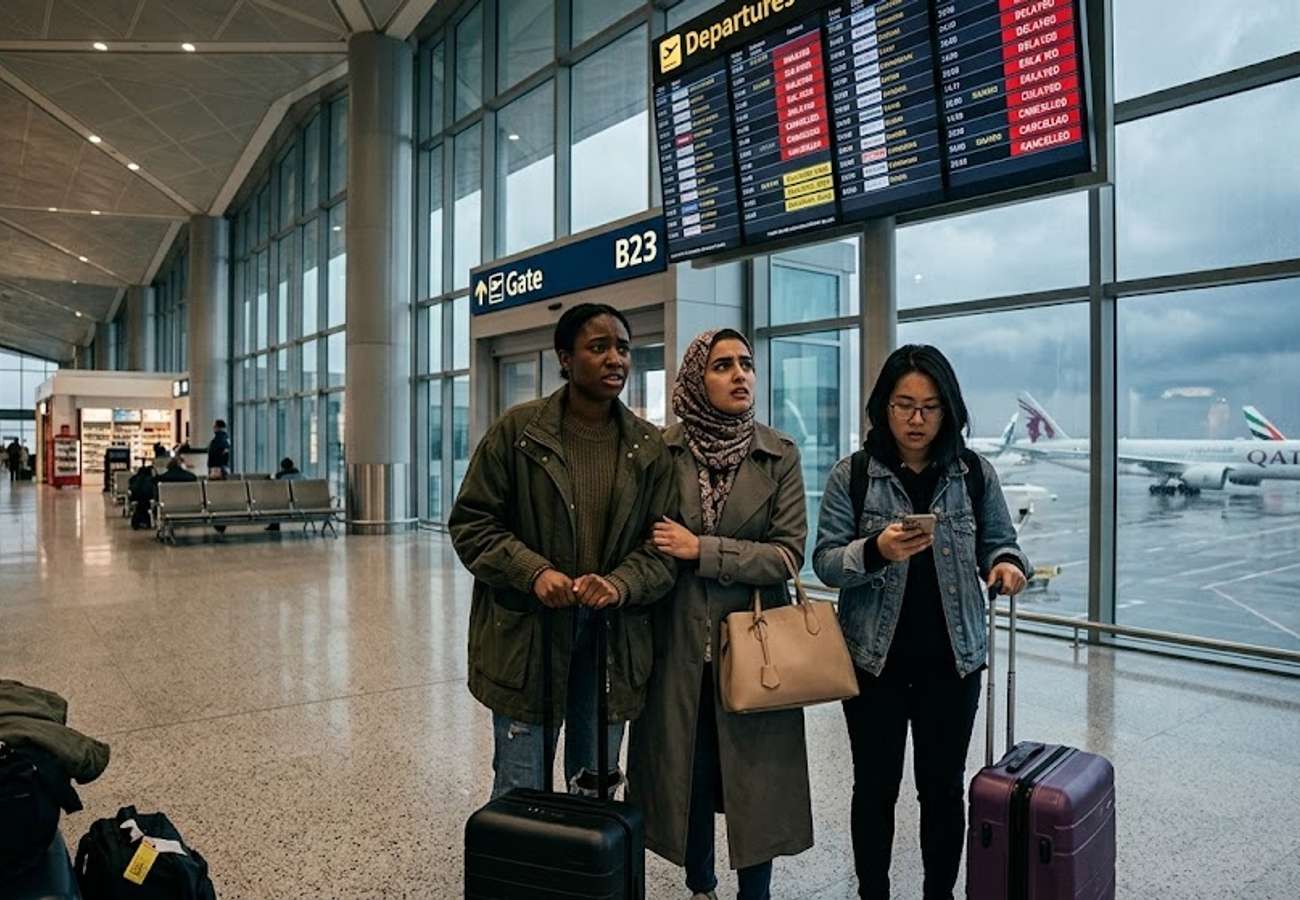
Image generated by AI
[City, Date] — Kuwait and Bahrain are currently grappling with intensified security vulnerabilities as Iran accelerates a retaliatory "eye for an eye" campaign against the United States. This escalation involves continuous strikes targeting airports, water systems, and strategic military installations, triggering widespread alarms across the Gulf regarding aviation safety, international connectivity, and regional stability.
The geopolitical friction has placed the wider Middle East under significant strain, with governments and global carriers monitoring the potential for further disruptions to maritime corridors and critical infrastructure. Because the Gulf serves as a primary artery for global aviation and energy, the current volatility threatens to destabilize flight operations, spike fuel costs, and erode traveler confidence across the region.
Kuwait Faces Infrastructure Threats Amid Rising US-Iran Friction
Kuwait has become a focal point of security monitoring due to its geographic proximity to Iran and its role as a host for major international military operations. The nation's strategic importance makes it a high-priority area for observers tracking the fallout of the Iran-US confrontation.
Industry reports indicate that drone strikes have targeted facilities linked to the US within Kuwait, specifically focusing on military zones, fuel storage sites, and logistics hubs. While civilian aviation infrastructure and tourism sites are generally kept separate from these military targets, the overarching security climate has forced a re-evaluation of travel safety and emergency preparedness.
Kuwait International Airport serves as a vital link between the Gulf and markets in North America, Asia, and Europe. Prolonged instability in the region could compel airlines to implement drastic schedule adjustments, introduce more stringent security screenings, and manage a decline in passenger bookings. For expatriates and business travelers who rely on Kuwait's aviation network, the risk of regional conflict creates a precarious environment for movement across the Middle East.
Bahrain Implements Heightened Security for Aviation Hubs
Bahrain is similarly under pressure, driven by its strategic location and its integration into regional security frameworks. As an island nation, Bahrain's economy is heavily reliant on its financial, tourism, and aviation sectors, all of which are sensitive to regional volatility.
Bahrain International Airport operates as a critical transport node for the region. The current "eye for an eye" escalation increases the risk of disruptions to airport operations and maritime routes. Given Bahrain's position, any instability in Gulf waters could immediately impact fuel supply chains and air connectivity.
The Bahraini government has invested significantly in luxury hospitality and cultural tourism to attract international visitors. However, the persistence of security threats often deters high-value travelers and corporate event planners, potentially stalling the country's tourism growth. Airlines serving Bahrain are now required to maintain constant surveillance of regional airspace to avoid sudden rerouting or increased operational overheads.
UAE Aviation Networks Confront Global Transit Risks
The United Arab Emirates, home to two of the world's busiest aviation hubs in Dubai and Abu Dhabi, faces the complex task of maintaining global traveler confidence while managing escalating regional risks.
Dubai International Airport and Abu Dhabi International Airport are essential transit points for millions of passengers traveling between Africa, Europe, the Americas, and Asia. Because a vast number of international flight paths traverse Gulf airspace, even localized disruptions can trigger a global ripple effect, leading to delays and diverted flights.
The UAE's tourism sector, characterized by high-end shopping and entertainment, remains vulnerable to shifts in visitor sentiment. Beyond passenger numbers, the aviation industry in the UAE is concerned with the volatility of fuel prices. As Gulf-based carriers operate extensive long-haul networks, any spike in aviation fuel costs due to regional instability will likely result in higher ticket prices for consumers.
Saudi Arabia's Vision 2030 Tourism Goals Under Pressure
Saudi Arabia is monitoring the situation closely, as the conflict threatens both its energy export routes and its ambitious tourism expansion. Under the Vision 2030 framework, the Kingdom has developed major destinations including AlUla, Jeddah, Riyadh, and the Red Sea projects to diversify its economy.
The success of these projects depends heavily on the perception of safety among international tourists. Security tensions in neighboring countries often lead to a decrease in bookings as travelers prioritize stability.
Saudi airports in Riyadh and Jeddah remain pivotal for connecting passengers across three continents. An increase in regional hostilities could lead to higher aviation insurance premiums and the implementation of restrictive operational measures by international carriers, complicating the Kingdom's goal of becoming a global tourism powerhouse.
Qatar and Oman Navigate Regional Airspace Volatility
Qatar's aviation strategy revolves around the Hamad International Airport in Doha, a leading global hub powered by the expansive Qatar Airways network. The stability of regional airspace is non-negotiable for Qatar's operational efficiency. Military escalations often result in longer flight paths to avoid conflict zones, which increases fuel consumption and causes significant delays.
Similarly, Oman is leveraging its position near the Arabian Sea and the Strait of Hormuz. Traditionally viewed as a neutral and peaceful destination, Oman’s tourism—focused on heritage and natural landscapes—could suffer if maritime disruptions impact the broader economy.
As a bridge between international destinations and Gulf markets, Oman's airports must remain vigilant. Any disruption to the shipping lanes of the Strait of Hormuz would not only affect energy markets but also the overall economic stability required to sustain tourism growth.
Impact Analysis: The Ripple Effect on Global Travel
The current escalation in the Gulf creates a multifaceted risk profile for the aviation industry. The primary impact is the potential for "airspace fragmentation," where corridors are closed suddenly, forcing aircraft into inefficient routes. This increases the carbon footprint of flights and raises operational costs for airlines.
Furthermore, the psychological impact on the "traveler's psyche" cannot be overstated. The Middle East is a cornerstone of global transit; if passengers perceive the region as a high-risk zone, the resulting drop in transit traffic would affect airlines far beyond the Gulf, impacting carriers in Asia and Europe that rely on these hubs.
Why This Matters (Information Gain)
The transition of the Iran-US conflict into a direct "eye for an eye" strategy targeting infrastructure—rather than just political posturing—marks a dangerous shift in regional risk. For the aviation industry, this represents a move from "predictable volatility" to "unpredictable disruption."
When water systems and airports are targeted, the risk moves from military-to-military engagement to the potential disruption of civilian life and commerce. This creates a "cascading failure" scenario: a strike on a fuel depot leads to higher jet fuel prices, which leads to route cancellations, which then triggers a drop in tourism revenue, ultimately stalling the economic diversification plans of nations like Saudi Arabia and Bahrain. The interdependence of Gulf aviation means that a security breach in Kuwait is effectively a security threat to a passenger flying from London to Sydney via Doha or Dubai.
The stability of the Gulf's skies remains the linchpin for global connectivity in 2026.
Related Travel Guides
Disclaimer
This article is for informational and educational purposes only. It does not constitute legal, financial, or professional advice. While we strive to provide accurate and up-to-date information, travel policies, regulations, and conditions change rapidly. Always verify information with official sources before making travel decisions. Nomad Lawyer makes no representations about the accuracy, reliability, completeness, or suitability of the information provided. Readers should consult qualified professionals for advice specific to their circumstances. The views expressed in this article are those of the author and do not necessarily reflect the views of Nomad Lawyer.
Raushan Kumar
Founder & Lead Developer
Full-stack developer with 11+ years of experience and a passionate traveller. Raushan built Nomad Lawyer from the ground up with a vision to create the best travel and law experience on the web.
Learn more about our team →