Kuala Lumpur Accelerates New Year 2027 Festive Tourism as Luxury Hotels and Retail Corridors Target High-Yield Global Holidaymakers

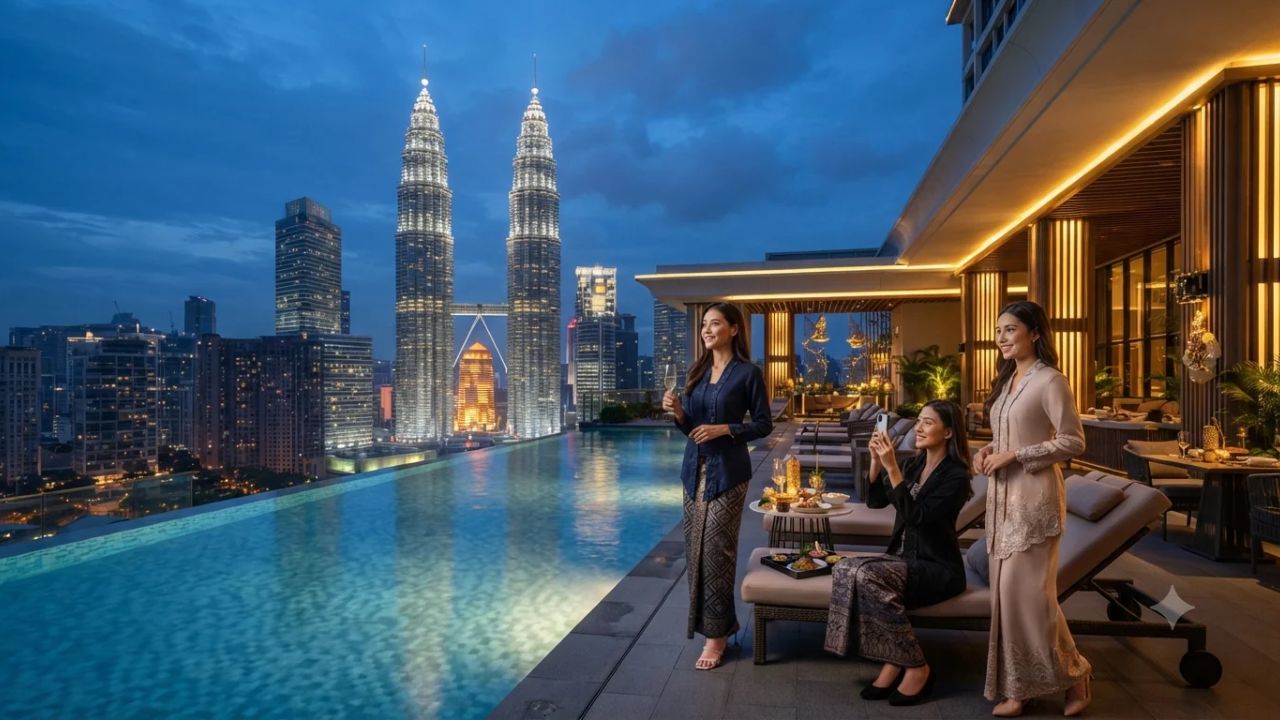
KUALA LUMPUR, Malaysia — The Malaysian capital is mobilizing its hospitality, retail, and entertainment infrastructure ahead of the 2026–2027 New Year travel season, as five-star hotels unveil high-altitude countdown galas and premier shopping districts prepare to capture a major share of international visitor expenditure.
Backed by national border statistics recording 32.3 million international arrivals during the first nine months of 2026 and an annual inbound tourism expenditure reaching RM124.8 billion, Kuala Lumpur enters the festive period as one of Southeast Asia's most commercially dynamic urban destinations. With retail accounting for 35.3% of total inbound visitor spending and a massive pipeline of 1,384 new luxury hotel rooms entering the market in the second half of 2026, hoteliers and municipal planners are coordinating specialized countdown events, multi-district shopping festivals, and international concert itineraries under the banner of the Visit Malaysia 2026–2027 campaign.
            KUALA LUMPUR FESTIVE TOURISM COMMERCIAL ECOSYSTEM

  [ MACRO INBOUND INFLOWS (JAN–SEP 2026) ]
  • 32.3 Million National International Arrivals (+2.4% YoY)
  • RM124.8 Billion Inbound Visitor Spend Baseline (16.5% Annual Growth)
                         |
  +----------------------+-----------------------+
  |                                              |
  v                                              v
  [ RETAIL COMMERCE (35.3% SPEND) ]              [ LUXURY HOSPITALITY SURGE ]
  • Bukit Bintang: Pavilion KL & Starhill        • 1,384 New Hotel Rooms in H2 2026
  • KLCC Precinct: Suria KLCC & Twin Towers      • 60% Concentration in 5-Star Segment
  • The Exchange TRX: Premium Luxury Anchor      • RevPAR +2.6% | Occupancy +2.9 pts
                         |                               |
                         +---------------+---------------+
                                         |
                                         v
  [ EVENT & TRANSIT CATALYSTS (KL HEADLINE SEASON 2026 & KLIA) ]
  • Live Nation Partnership: 25 Concerts Across 5 Arena Venues (600,000 Fans)
  • KLIA International Hub: 4.9M Monthly Passengers | 41.3M YTD International
  • Rapid Transit: KLIA Ekspres (28-Min Airport Link) & Putrajaya MRT Line
Macroeconomic Fundamentals: Malaysia’s 32.3 Million Inbound Arrival Baseline
The commercial momentum heading into the New Year holiday rests upon robust macroeconomic performance across Malaysia’s tourism economy. According to official data from Tourism Malaysia and the Department of Statistics Malaysia (DOSM), national border posts registered 32.3 million international arrivals between January and September 2026, outpacing the 31.5 million recorded during the corresponding period in 2025 by 2.4%.
While national arrival data captures travellers dispersing into secondary regional hubs such as Penang, Langkawi, Sabah, and Johor, Kuala Lumpur serves as the country’s primary economic engine:
- Capital Visitor Volume: Official municipal data presented by Kuala Lumpur City Hall (Dewan Bandaraya Kuala Lumpur - DBKL) confirms that the capital welcomed over 23 million combined domestic and international visitors in 2025, comprising 13.4 million foreign travellers and 10.3 million domestic tourists.
- National Economic Contribution: Tourism Industry Value Added (TIVA) reached RM323 billion in 2025, representing 15.9% of Malaysia’s national gross domestic product (GDP). The sector achieved an annual growth rate of 8.6%, accelerating from 7.8% in 2024.
- Employment Generation: Tourism and hospitality enterprises supported approximately 3.7 million workers, representing 22.1% of total employment nationwide, underscoring the social and economic significance of seasonal holiday travel.
The year-end holiday period represents the high-yield culmination of this annual performance, as holidaymakers from regional markets (Singapore, Indonesia, Thailand, China, and India) and long-haul source markets (the United Kingdom, Australia, Europe, and the Middle East) congregate in the capital for extended multi-night stays.
                 MALAYSIA TOURISM ECONOMIC FOOTPRINT (2025–2026)

   [ TOURISM VALUE ADDED (TIVA) ] ==========================> RM323 Billion (15.9% GDP)
   [ ANNUAL INBOUND EXPENDITURE ] =====================> RM124.8 Billion (+16.5% YoY)
   [ DOMESTIC TOURISM RECEIPTS ]  ====================> RM121.3 Billion (35.1M in KL)
   [ TOURISM WORKFORCE SHARE ]    ===================> 3.7 Million Jobs (22.1% National)
The Retail Powerhouse: How Shopping Generates 35.3% of Inbound Tourism Spending
Unlike European destinations where accommodation and food service traditionally absorb the majority of visitor expenditure, Malaysia’s inbound tourism economy is dominated by retail shopping.
Inbound tourism expenditure reached RM124.8 billion in 2025, marking a sharp 16.5% expansion from RM107.1 billion in 2024. Of this total, retail shopping captured 35.3% of all foreign tourist spending, establishing commercial retail as the country’s primary tourism revenue generator.
| Inbound Expenditure Category | Share of Inbound Spending (2025) | Economic Trajectory & Market Characteristics |
|---|---|---|
| Retail Shopping | 35.3% | Largest expenditure segment; driven by luxury fashion, electronics, and cosmetics |
| Passenger Transport | 18.6% | Domestic flights, rail transit (KLIA Ekspres), ride-hailing, and intercity coach travel |
| Accommodation | 16.4% | Luxury hotel suites, business hotels, serviced apartments, and lifestyle residences |
| Food & Beverage | 14.2% | High-end dining, Michelin-selected eateries, hotel gastronomy, and street food |
| Entertainment & Recreation | 8.5% | Live concerts, nightlife lounges, cultural attractions, and family theme parks |
| Other Spending | 7.0% | Travel agency services, health/medical wellness, and incidental services |
                 INBOUND TOURIST EXPENDITURE DISTRIBUTION (2025)

   [ RETAIL SHOPPING: 35.3% ]
   ===================================================> RM44.05 Billion

   [ PASSENGER TRANSPORT: 18.6% ]
   ==========================> RM23.21 Billion

   [ ACCOMMODATION: 16.4% ]
   =======================> RM20.47 Billion

   [ FOOD & BEVERAGE: 14.2% ]
   ====================> RM17.72 Billion

   [ ENTERTAINMENT & OTHER: 15.5% ]
   ======================> RM19.35 Billion
1. Urban Retail Corridors: Bukit Bintang, KLCC, and TRX
Kuala Lumpur concentrates this national shopping phenomenon into high-density urban shopping precincts connected by elevated air-conditioned walkways and underground transit lines:
- Bukit Bintang: Regarded as the city’s retail epicenter, Bukit Bintang is anchored by Pavilion Kuala Lumpur, which houses international luxury flagship stores (Chanel, Dior, Louis Vuitton, Rolex) alongside sprawling multi-level dining at Pavilion Elite. Across the street, The Starhill caters to bespoke luxury horology and designer couture, while Fahrenheit88 and Lot 10 target younger lifestyle shoppers.
- KLCC Precinct: Located directly beneath the 88-story Petronas Twin Towers, Suria KLCC combines luxury retail with direct access to KLCC Park, the Petrosains Discovery Centre, and the Aquaria KLCC oceanarium, allowing families and festive shoppers to combine retail with sightseeing.
- The Exchange TRX: The newest entrant in Kuala Lumpur’s luxury retail landscape, situated within the Tun Razak Exchange international financial district, features Southeast Asian flagship stores, department store Seibu, and expansive rooftop public gardens.
- Pavilion Bukit Jalil: Situated in the southern metropolitan corridor, this 1.8-million-square-foot mega-mall provides spacious family-focused shopping, ice skating, and exhibition spaces for domestic and regional visitors staying outside the city centre.
Hospitality Supply Surge: Managing 1,384 New Rooms and Luxury Segment Competition
While surging international arrivals create strong demand, the hospitality sector faces intensified competition resulting from a rapid expansion of high-end room inventory.
According to a commercial real estate assessment published by JLL in August 2026, Kuala Lumpur’s hotel market absorbed 1,384 new hotel rooms during 2026, with 100% of these openings concentrated in the second half of the year. Importantly, approximately 60% of this incoming inventory falls directly into the five-star luxury category, elevating standards while exerting downward pressure on average daily rates (ADR).
                     KUALA LUMPUR HOTEL PERFORMANCE DYNAMICS

   [ SUPPLY SURGE: H2 2026 ]
   • 1,384 Total New Rooms Added to Urban Inventory
   • 60% Concentrated in Five-Star Luxury Segment
                         |
                         v
   [ FIRST-HALF 2026 PERFORMANCE BENCHMARKS (JLL DATA) ]
   • Revenue Per Available Room (RevPAR): +2.6% Growth
   • Market Occupancy Rate: +2.9 Percentage Points Increase
   • Average Daily Rate (ADR): -1.6% Slight Contraction
                         |
                         v
   [ OPERATOR STRATEGY FOR NEW YEAR 2027 ]
   • Shift from Room-Only Sales to High-Margin Food & Beverage Packaging
   • Premium Rooftop Countdown Parties & Curated Fireworks Vantage Points
In the first half of 2026, Kuala Lumpur’s luxury hotels achieved a 2.6% increase in RevPAR, supported by a 2.9 percentage point increase in average occupancy, which compensated for a slight 1.6% softening in ADR.
To maximize holiday revenue and absorb the newly delivered capacity, hotel operators are shifting emphasis from basic room nights to high-margin food, beverage, and entertainment packaging, transforming their properties into comprehensive entertainment destinations for New Year’s Eve.
Packaging the Countdown: Rooftop Galas, Gastronomy, and VIP Entertainment
For December 31, 2026, major luxury properties across Kuala Lumpur have structured tiered festive programs catering to high-net-worth international travellers, corporate groups, and affluent local residents:
| Hotel Property & Venue | Event Concept & Operating Hours | Published Starting Price Tier | Distinctive Offerings & Inclusions |
|---|---|---|---|
| Imperial Lexis Kuala Lumpur (Level 51 Poolside Bistro) |
Elevated Skyline Countdown Party (7:00 PM – Midnight, 31 Dec 2026) |
RM250 nett per person (RM200 early-bird before 15 Dec) |
Panoramic city views; Gold VIP tables at RM3,027 (4 guests); Platinum VIP tables at RM5,027 (6 guests) |
| Pullman Kuala Lumpur City Centre (Sedap Restaurant & Pool) |
New Year's Eve Dinner Buffet & Countdown Pool Party | RM268 nett per adult RM134 nett per child (6–12) |
International roast carvery, fresh seafood; complimentary admission to the hotel countdown pool bash |
| Pullman Kuala Lumpur City Centre (Sedap Restaurant) |
New Year’s Day Lunch Buffet (12:30 PM – 3:30 PM, 1 Jan 2027) |
RM208 nett per adult RM104 nett per child (6–12) |
Recovery brunch; optional RM80 supplement for free-flow draft beer, house wines, and chilled juices |
| Four Seasons Hotel Kuala Lumpur (Curate & Bar Trigona) |
High-Altitude Festive Gastronomy & Mixology Countdown | Premium à la carte & festive tasting menus | World-renowned mixology at Bar Trigona; live jazz quartet and international DJ countdown at Curate |
| EQ Kuala Lumpur (Sky51 - Blue & Sabayon) |
Sky-High Fireworks Gala (Level 51 Rooftop Deck) |
Multi-course fine dining & lounge access packages | Unobstructed 360-degree views of fireworks over the Petronas Twin Towers and KL Tower |
              IMPERIAL LEXIS KL LEVEL 51 VIP PRICING STRUCTURE

  [ INDIVIDUAL ACCESS TICKET ]
  • Standard Gate Price: RM250 Nett
  • Early-Bird Special: RM200 Nett (Booked Before 15 December 2026)
  • Inclusions: Welcome Beverage, Poolside Deck Access, Midnight Champagne Toast
                         |
  +----------------------+-----------------------+
  |                                              |
  v                                              v
  [ GOLD VIP TABLE: RM3,027 NETT ]               [ PLATINUM VIP TABLE: RM5,027 NETT ]
  • Dedicated Table for up to 4 Guests           • Prime Perimeter Table for up to 6 Guests
  • Premium Champagne & Spirit Provisions        • Multi-Bottle Vintage Champagne Service
  • Gourmet Canapé & Seafood Platters            • Dedicated Butler Table Service
These festive packages allow hotels to capture significant non-room revenue while creating memorable holiday moments for guests seeking prime vantage points for the capital’s midnight fireworks displays over KLCC Park and Merdeka 118.
Live Entertainment and Concert Tourism: The "KL Headline Season 2026"
A major structural driver distinguishing Kuala Lumpur’s 2026 festive season from prior years is the rapid expansion of international event and concert tourism.
On November 2, 2026, Tourism Malaysia and live entertainment promoter Live Nation Malaysia launched KL Headline Season 2026, a joint strategic initiative establishing Kuala Lumpur as Southeast Asia's premier live entertainment hub:
- Programme Scope: 25 major international stadium and arena concerts staged across five premier venues: the National Stadium Bukit Jalil, Axiata Arena, Mega Star Arena, Zepp Kuala Lumpur, and the Plenary Hall at the Kuala Lumpur Convention Centre.
- Audience Projections: Organizers anticipate hosting over 600,000 live music attendees across the concert series.
- Cross-Border Draw: Verified ticketing data indicates that buyers from 43 international countries purchased seats, with international travellers representing 20% of total ticket sales (equating to over 120,000 foreign visitors).
                 KL HEADLINE SEASON 2026: OPERATIONAL MATRIX

                         [ TOURISM MALAYSIA & LIVE NATION ]
                                         |
                                         v
                         [ 25 MAJOR CONCERTS IN 5 VENUES ]
  +-------------------------+-------------------------+-------------------------+
  |                         |                         |                         |
  v                         v                         v                         v
  [ NATIONAL STADIUM ]     [ AXIATA ARENA ]          [ ZEPP KL & PLENARY ]     [ MEGA STAR ARENA ]
  • Capacity: 85,000+      • Capacity: 16,000        • Intimate Club Venues    • Mid-Size Venue
  • Mega-Concerts          • Arena Tour Staging      • Acoustic Showcases      • Regional Acts
                            |
                            v
       [ 600,000 TOTAL ATTENDEES | 20% INTERNATIONAL TICKET HOLDERS ]
International concertgoers exhibit high discretionary spending, booking premium hotel rooms within walking distance of venues or rail lines, patronizing high-end dining establishments, and extending their trips into multi-day vacations exploring Malaysian heritage destinations.
Intermodal Transit Connectivity: KLIA Flight Networks and Rail Corridors
Kuala Lumpur’s ability to handle intense festive arrivals is facilitated by its integrated aviation and public transit networks.
                 KUALA LUMPUR MULTIMODAL ARRIVAL CORRIDORS

  [ KUALA LUMPUR INTERNATIONAL AIRPORT (KLIA - KUL) ]
  • Terminal 1: Full-Service International Legacy Carriers (98.8% Satisfaction)
  • Terminal 2: Regional Low-Cost & Hybrid Airlines (99.4% Satisfaction)
  • 4.9 Million Passenger Movements in September 2026
                         |
                         +-------------------------------+
                         |                               |
                         v                               v
  [ KLIA EKSPRES HIGH-SPEED RAIL ]                [ HIGHWAY & ROAD CORRIDORS ]
  • 28 Minutes Direct Non-Stop                    • E6 Central Link & MEX Expressway
  • Dedicated Platforms to KL Sentral             • Airport Taxis & Ride-Hailing
                         |                               |
                         +---------------+---------------+
                                         |
                                         v
         [ KL SENTRAL INTEGRATED TRANSIT HUB / DOWNTOWN HOTELS ]
         • Direct Transfers to LRT Kelana Jaya, MRT Kajang, & Monorail
1. Aviation Performance at KLIA
According to performance reports from airport operator Malaysia Airports Holdings Berhad (MAHB), Kuala Lumpur International Airport (KLIA) handled approximately 4.9 million passenger movements in September 2026.
Across MAHB’s wider network, international traffic expanded by 4.5% year-on-year to 41.3 million passengers between January and September 2026, highlighting sustained international flight demand:
- New Air Services: Connectivity expanded in September with Sun PhuQuoc Airways launching flights connecting Phu Quoc with Kuala Lumpur, while Gulf Air reinstated non-stop long-haul service between Bahrain and KLIA on September 30.
- Customer Satisfaction Ratings: The Airport Service Quality (ASQ) assessment for September recorded a 98.8% customer satisfaction score at Terminal 1 and 99.4% at Terminal 2, reflecting smooth baggage processing and customs clearance ahead of peak year-end traffic.
2. High-Speed Rail and Urban Transit Arteries
Arriving passengers benefit from efficient rail links between the airport and downtown commercial districts:
- KLIA Ekspres: Operating at speeds up to 160 km/h, the dedicated non-stop express train connects KLIA Terminal 1 and Terminal 2 directly with KL Sentral station in exactly 28 minutes, bypassing highway gridlock on the Maju Expressway (MEX).
- Rapid KL Urban Network: From KL Sentral, visitors transfer directly to the LRT Kelana Jaya Line (serving KLCC), the KL Monorail (serving Bukit Bintang), and the MRT Kajang and Putrajaya lines, providing access across the city's commercial core.
Long-Term Urban Policy: Kuala Lumpur Tourism Action Plan 2026–2030
The festive preparations align with municipal strategies to secure sustainable urban tourism development. In April 2026, Kuala Lumpur City Hall began drafting the Kuala Lumpur Tourism Action Plan 2026–2030, which succeeds the previous Tourism Master Plan 2015–2025.
The new framework focuses on five strategic priorities:
- Multi-District Geographic Dispersion: Mitigating overcrowding around Bukit Bintang and the Twin Towers by guiding visitors toward heritage districts such as Chinatown (Petaling Street), the historic Malay enclave of Kampung Baru, and Little India (Brickfields).
- Integrating Domestic and International Inflows: Capitalizing on domestic tourism, which generated 35.1 million visitors to Kuala Lumpur in 2025 and contributed RM16.9 billion in domestic receipts—the highest among all Malaysian states and federal territories.
- Smart Pedestrian Infrastructure: Expanding covered, air-conditioned pedestrian bridges and shaded sidewalks connecting hotel clusters directly with transit hubs and retail centers.
- Cultural Tourism Programming: Enhancing evening illumination, heritage walking trails, and artisanal night markets to encourage visitors to extend their average length of stay beyond the current 2.56-night baseline.
- Environmental and Waste Management: Implementing strict recycling and commercial food waste composting mandates across major hotel and retail complexes during peak holiday periods.
           KUALA LUMPUR TOURISM ACTION PLAN 2026–2030 PILLARS

  +-------------------------------------------------------------------------+
  | 1. DISTRICT DISPERSION: Chinatown, Kampung Baru, & Brickfields Links    |
  | 2. INFRASTRUCTURE: Shaded Walkways & Urban Transit Modernization         |
  | 3. NIGHT ECONOMY: Heritage Night Markets & Cultural Performance Pods   |
  | 4. DOMESTIC SYNERGY: Leveraging RM16.9B Capital Domestic Spend Base     |
  | 5. SUSTAINABILITY: Green Hotel Certification & Commercial Waste Control |
  +-------------------------------------------------------------------------+
Strategic Guidance for Festive Travellers, Corporate Planners, and Travel Advisors
To maximize value and avoid operational friction during the peak New Year travel window, industry professionals and independent holidaymakers should apply these practical guidelines:
- Secure Countdown Dining Reservations Before Mid-December: High-altitude rooftop lounges—including Level 51 at Imperial Lexis, Sky51 at EQ, and Bar Trigona at the Four Seasons—have limited seating capacities. Early-booking promotional rates (such as Imperial Lexis's RM200 early-bird pass) expire on December 15, after which gate admission rates increase or sell out entirely.
- Select Hotel Bases Strategically Based on Holiday Focus:
- Luxury Shopping Enthusiasts: Prioritize properties in Bukit Bintang (The Ritz-Carlton, JW Marriott, The Westin, Grand Millennium) or directly attached to Suria KLCC (Mandarin Oriental, Four Seasons).
- Concert and Event Attendees: Properties near KL Sentral (Hilton Kuala Lumpur, Le Méridien, St. Regis) offer the fastest direct rail access to the National Stadium and Axiata Arena via the LRT and MRT networks.
- Plan for Late-Night Transit Disruption on New Year’s Eve: Following midnight fireworks at KLCC Park and Merdeka 118, road traffic across Jalan Ampang, Jalan Sultan Ismail, and Jalan Bukit Bintang experiences severe gridlock. Travellers should rely on the Rapid KL rail network, which extends operating hours past 1:00 AM on January 1, rather than attempting to hail street taxis or ride-share vehicles.
- Factor in Tropical Monsoon Rainfall Patterns: December falls within the Northeast Monsoon season in Peninsular Malaysia. While Kuala Lumpur is shielded from coastal storm surges, afternoon and early-evening tropical thunderstorms are common. Visitors should maintain flexible schedules and utilize covered walkways (such as the Bukit Bintang–KLCC pedestrian bridge) when moving between retail destinations.
Frequently Asked Questions
How many international visitors did Malaysia receive leading into the 2026 festive season?
Malaysia recorded 32.3 million international visitor arrivals between January and September 2026, representing a 2.4% year-on-year increase compared to 31.5 million during the same period in 2025.
Why is retail shopping so significant to Kuala Lumpur's tourism economy?
According to official Department of Statistics Malaysia figures, retail shopping accounted for 35.3% of total inbound tourism expenditure in 2025 (generating over RM44 billion), outpacing passenger transport (18.6%) and accommodation (16.4%) as the largest single contributor to visitor spending.
How many new hotel rooms opened in Kuala Lumpur during 2026?
According to JLL’s commercial hospitality assessment, Kuala Lumpur added 1,384 hotel rooms in 2026, with all openings taking place in the second half of the year. Approximately 60% of this new supply was concentrated in the five-star luxury segment.
What is the "KL Headline Season 2026" event series?
KL Headline Season 2026 is a major entertainment collaboration between Tourism Malaysia and Live Nation Malaysia featuring 25 international concerts across five premier venues, projected to draw over 600,000 attendees, with international visitors accounting for 20% of all ticket sales.
What are the fastest public transport options from KLIA to central Kuala Lumpur?
The fastest transfer option is the non-stop KLIA Ekspres train, which connects KLIA Terminal 1 and Terminal 2 directly with KL Sentral station in exactly 28 minutes. From KL Sentral, passengers can connect directly to the LRT, MRT, and monorail networks.
Related Travel Guides
- France Triumphs as Val Thorens Named World’s Best Ski Resort at the World Ski Awards 2026 Amid Global Alpine Tourism Expansion
- Santorini Drives Winter Tourism Transformation with 32-Video Heritage Campaign to Counter Summer Cruise Overcrowding
- Spain’s Port of Motril Welcomes Windstar Star Legend on Landmark Spanish Mystery Cruise After 18-Year Absence
- TUI Cruises Unveils Nine-Ship Mein Schiff Summer 2028 Programme Across Northern Europe, Mediterranean, and Atlantic
This article is for informational purposes. Flight routes, passenger regulations, visa rules, and transit advisories are subject to change by airlines and aviation authorities. Readers are advised to verify schedules and travel documentation with relevant carriers and border agencies before departure.
Related Stories
Albania Euro Exchange Rate Plummets 35% Against Lek Since 2016 as Tourism Inflows and Property Boom Reshape Travel Costs

Curaçao Posts Record October Inbound Tourism with 68,162 Stayover Arrivals as South American Demand Surges 26 Percent