
Kuala Lumpur KLIA Runway Shutdown Temporarily Sparks Travel Chaos for Malaysia Airlines, Singapore Airlines, and AirAsia Before Rapid Recovery
Breaking airline news: A sudden tire burst forced an emergency runway shutdown at Kuala Lumpur International Airport, temporarily triggering travel chaos for Malaysia Airlines, Singapore Airlines, and AirAsia.

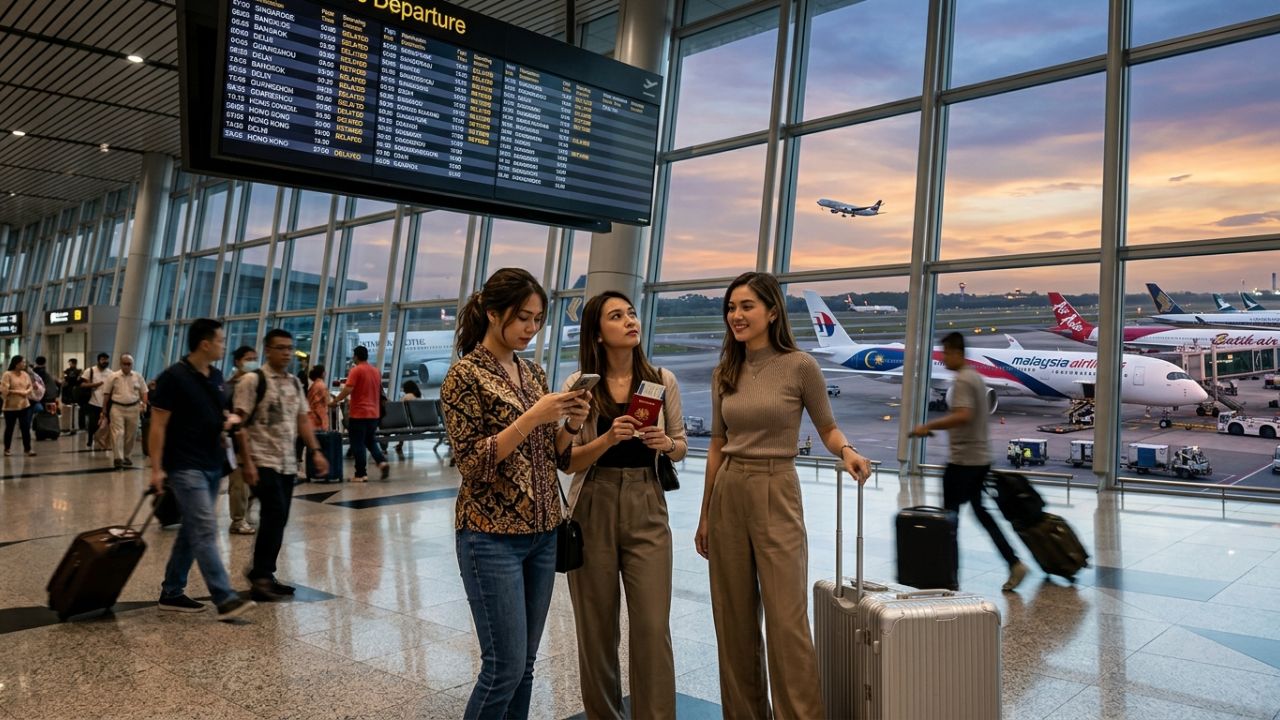
Image representing the intense but brief operational disruption at Kuala Lumpur International Airport (KLIA), where an emergency runway shutdown temporarily sparked localized travel chaos for major carriers like Malaysia Airlines, AirAsia, and Singapore Airlines before rapid, multi-runway recovery protocols were successfully executed. (Image Credit: Asian Aviation Tracking Network)
Kuala Lumpur KLIA Runway Shutdown Temporarily Sparks Travel Chaos for Malaysia Airlines, Singapore Airlines, and AirAsia Before Rapid Recovery
A Sudden Tire Burst at Asia’s Mega Hub Forces an Emergency Runway Closure, Testing the Limits of Modern Aviation Resilience
The incredible fragility and immense resilience of the modern Asian aviation network were simultaneously exposed during a severe, high-stakes operational incident in Malaysia. According to the latest breaking airline news and critical aviation updates, a sudden mechanical failure forced the emergency closure of a primary runway at Kuala Lumpur International Airport (KLIA) on June 13, 2026. The severe disruption was triggered when an aircraft suffered a massive tire burst during a high-speed landing operation. Adhering to strict international safety protocols, aviation authorities immediately shut down the affected runway to conduct emergency inspections and clear the resulting debris. Because this critical failure occurred during peak flying hours at one of Asia's absolute busiest transit mega hubs, the closure instantly injected massive localized travel chaos into the schedules of incredibly prominent carriers, including Malaysia Airlines, AirAsia, Batik Air Malaysia, Singapore Airlines, IndiGo, Thai Airways, and China Southern Airlines.
However, unlike older airports where a single runway closure frequently triggers thousands of devastating flight cancellations, KLIA demonstrated the incredible structural redundancy of a modern mega hub. Processing over 63 million passengers annually, KLIA relies on a highly advanced, multiple parallel runway system consisting of three active landing strips. While the tire burst temporarily severed one vital artery, the rapid collaboration between the airport operator and the Malaysian aviation authority ensured that the remaining two runways absorbed the massive overflow. By 7:40 P.M. that very same evening, the affected runway had been fully cleared, inspected, and reopened. Although the brief shutdown generated highly frustrating airport disruptions and short-term transit congestion, the incident stands as a definitive masterclass in how massive airport infrastructure can successfully absorb severe operational shocks without suffering a total systemic collapse.
Section-Wise Breakdown: The Anatomy of the KLIA Shutdown
The highly detailed operational data exposes exactly how the rapid runway closure rippled across the Asian continent before being successfully contained:
The Emergency Runway Shutdown at KLIA The operational crisis officially began on June 13 when a landing aircraft experienced a sudden, violent tire burst upon touching down at Kuala Lumpur International Airport. A blown tire scatters highly dangerous rubber and metallic debris across the tarmac, presenting an extreme ingestion hazard to the jet engines of subsequent flights. The Malaysian aviation authority immediately triggered a safety-first protocol, declaring a hard closure of the affected runway. For several hours, massive wide-body and narrow-body aircraft descending into Kuala Lumpur were forced into holding patterns or redirected to the remaining active runways. Because this occurred during a peak operational window, the sudden reduction in runway capacity created an immediate, highly congested bottleneck, severely delaying the departure sequences for dominant local operators like Malaysia Airlines and AirAsia.
The Multi-Runway Defense Mechanism If this tire burst had occurred at a structurally constrained, single-runway airport, it would have mathematically guaranteed thousands of rolling flight cancellations. However, KLIA’s architectural design prevented absolute travel chaos. Because the mega hub possesses a three-runway system, air traffic controllers were able to aggressively route inbound international traffic from Singapore Airlines, Thai Airways, and China Southern onto the remaining two operational strips. This intense structural redundancy meant that while aircraft were delayed on the tarmac, the airport itself never suffered a complete operational blackout. The rapid deployment of emergency inspection teams allowed the authorities to sweep the debris and issue a formal safety clearance incredibly quickly, officially resuming normal, three-runway operations by 7:40 P.M.
The Ripple Effect Across the Asian Aviation Network Despite the rapid recovery, the temporary loss of runway capacity generated highly localized airport disruptions across several interconnected international markets. Singapore, which operates a massive, high-frequency air shuttle with KLIA, experienced virtually no long-term impact because the sheer volume of daily flights easily absorbed the displaced passengers. However, the Indian market suffered notable disruptions due to highly sensitive interconnecting flights operated by IndiGo. Thailand experienced negligible delays as passengers resorted to alternative regional flight options, while operations to and from China suffered frustrating schedule modifications. Domestically, Batik Air Malaysia was forced to execute rapid, localized operational changes across its Malaysian network to mitigate the temporary congestion.
Flight Details: The Factual KLIA Runway Disruption Matrix
To provide exact, factual clarity on the operational impact of the tire burst, aviation analysts have mapped the specific airlines and regional markets affected by the June 13 shutdown. The following factual matrix details the precise breakdown of the KLIA disruption:
Factual KLIA Runway Disruption Matrix
| Airline / Regional Market | Factual Disruption Impact |
|---|---|
| Malaysia Airlines & AirAsia | Primary localized delays during peak departure hours |
| Batik Air Malaysia | Localized operational changes for the domestic network |
| Singapore Airlines / Singapore | Virtually no impact due to massive flight volume redundancy |
| IndiGo / India | Disruption specifically linked to tight interconnecting flight schedules |
| Thai Airways / Thailand | Negligible impact; alternative flight options utilized |
| China Southern / China | Disruption strictly limited to short-term schedule modifications |
| Total KLIA Passenger Volume | Airport successfully protects its 63 million annual passenger capacity |
Data reflects the confirmed operational delays and regional market impacts resulting from the runway closure at Kuala Lumpur International Airport (KLIA) on June 13, 2026. (Source: Asian Aviation Tracking)
Passenger Impact: Transit Congestion and Hotel Adjustments
For the millions of passengers relying on KLIA as a massive Asian transit hub, the temporary runway closure generated highly localized, frustrating inconveniences rather than absolute logistical destruction. Because actual flight cancellations were virtually nonexistent at a system scale, travelers primarily experienced agonizingly slow taxi times and delayed departure clearances. The massive volume of transit passengers temporarily bottlenecked inside the KLIA terminals, leading to uncomfortable congestion in the gate areas. Furthermore, the delays forced widespread changes to hotel check-in times across the broader Kuala Lumpur region, though major hotel chains reported absolutely no revenue disruption. Passengers heavily reliant on tight connections—specifically those flying IndiGo back to India—suffered the highest degree of stress, proving that even a highly mitigated delay can sever complex multi-leg itineraries.
Industry Analysis: The Triumph of Structural Redundancy
Aviation analysts closely monitoring the KLIA incident emphasize that this event definitively proves the immense value of massive airport infrastructure investment. In the modern aviation sector, flight hubs are physically designed to handle temporary mechanical blowouts without causing an overall system failure. The Malaysian regulatory response perfectly prioritized safety over speed, focusing exclusively on managing the debris risk rather than recklessly reopening the runway. Furthermore, because Asian airlines schedule flights with incredibly high frequency, the network is fundamentally designed to recover from localized airport disruptions much faster than structurally constrained legacy markets in North America or Europe.
Conclusion: Surviving the Unpredictable at KLIA
The sudden runway closure at Kuala Lumpur International Airport serves as a highly definitive case study in modern operational resilience. While the June 13 tire burst temporarily injected highly frustrating travel chaos into the schedules of Malaysia Airlines, AirAsia, Singapore Airlines, and IndiGo, the massive structural redundancy of KLIA's multiple parallel runway system completely averted an international aviation disaster. By flawlessly executing emergency safety protocols and resuming full operations by 7:40 P.M., the Malaysian aviation authority protected a massive network that processes 63 million annual passengers. As global travel demand continues to explode, passengers are strongly advised to constantly monitor flight applications and maintain flexible connection times, recognizing that even the most highly advanced mega hubs are occasionally forced to briefly pause operations in the absolute pursuit of passenger safety. (Source: Asian Aviation Tracking via Nomad Lawyer)
Key Takeaways
- Emergency Runway Shutdown: A severe tire burst during a landing operation forced the temporary closure of a primary runway at KLIA on June 13, 2026.
- Massive Carrier Impact: The sudden capacity reduction temporarily disrupted massive regional airlines including Malaysia Airlines, AirAsia, Singapore Airlines, and IndiGo.
- Structural Redundancy: Absolute travel chaos was averted because KLIA's multiple parallel runway design allowed the remaining two strips to absorb the diverted traffic.
- Rapid Operational Recovery: Emergency safety clearance was issued incredibly quickly, with normal operations officially resuming by 7:40 P.M. that same evening.
- Global Market Spillovers: The brief closure caused cascading schedule modifications across massive interconnected markets in Singapore, India, Thailand, and China.
✈️ Frequently Asked Questions (Factual Aviation Hub Data)
What exact mechanical failure caused the sudden runway closure at KLIA? A severe tire burst occurred while an aircraft was actively landing, immediately triggering safety protocols and forcing the temporary closure of the affected KLIA runway to clear dangerous debris.
Which major Asian airlines were directly impacted by the localized delays? The temporary shutdown disrupted flight operations for Malaysia Airlines, AirAsia, Batik Air Malaysia, Singapore Airlines, IndiGo, Thai Airways, and China Southern Airlines.
When did the runway closure occur and when were operations officially restored? The incident occurred on June 13, 2026, and full, normal operations officially resumed that same evening at 7:40 P.M.
How did KLIA avoid a massive, complete airport shutdown during the emergency? KLIA utilizes a highly advanced multiple parallel runway system. Because the airport has three runways, the remaining two strips remained fully operational to safely absorb the diverted traffic.
How many passengers does Kuala Lumpur International Airport (KLIA) process annually? KLIA is a massive Asian transit mega hub, processing over 63 million passengers each year.
Did this severe operational disruption negatively impact long-term Malaysian tourism? No. There were absolutely no significant long-term impacts to tourism. The disruption was highly temporary, generated no system-scale cancellations, and did not reduce long-haul visitor demand.
How severely was the Singaporean aviation market impacted by the KLIA delays? The Singaporean market experienced virtually no impact because the incredibly high volume and frequency of flights on the Singapore-Kuala Lumpur air shuttle allowed airlines to rapidly re-accommodate passengers.
Why was the Indian aviation market specifically impacted by this delay? The Indian market, primarily serviced by carriers like IndiGo connecting through KLIA, experienced frustrating disruptions specifically because the localized delays severed highly sensitive interconnecting flight schedules.
🌍 Related Travel Guides & Flight Resources
- Navigate Airport Disruptions Like a Pro Master the art of surviving unexpected travel chaos with our expert strategies.
- Breaking Airline News & Evasion Routes Stay ahead of the delays with our real-time aviation updates and route intelligence.
- Global Flight Cancellation Defense Grid Essential legal rights and compensation tactics when your flight goes down.
⚖️ Disclaimer
The airport operational metrics, runway closure timelines, and airline delay analyses provided in this report are for informational purposes only. The specific aviation variables regarding the emergency runway shutdown at Kuala Lumpur International Airport (KLIA) on June 13, 2026—including the exact duration of the delays impacting Malaysia Airlines, AirAsia, Singapore Airlines, IndiGo, Thai Airways, and China Southern Airlines—are highly volatile and based on official runway reopening times recorded at 7:40 P.M. All data has been officially sourced from Asian aviation tracking networks. NomadLawyer does not guarantee the absolute accuracy or current validity of the information provided and assumes no liability for sudden schedule changes, frustrating rolling delays, agonizing missed connections in India or China, or any financial consequences resulting from the use of this analytical content. Passengers navigating through massive mega hubs like KLIA are strongly advised to utilize their airline’s official mobile applications for real-time gate announcements and rebooking updates.
Disclaimer
This article is for informational and educational purposes only. It does not constitute legal, financial, or professional advice. While we strive to provide accurate and up-to-date information, travel policies, regulations, and conditions change rapidly. Always verify information with official sources before making travel decisions. Nomad Lawyer makes no representations about the accuracy, reliability, completeness, or suitability of the information provided. Readers should consult qualified professionals for advice specific to their circumstances. The views expressed in this article are those of the author and do not necessarily reflect the views of Nomad Lawyer.
Kunal K Choudhary
Co-Founder & Contributor
A passionate traveller and tech enthusiast. Kunal contributes to the vision and growth of Nomad Lawyer, bringing fresh perspectives and driving the community forward.
Learn more about our team →