
Bypassing Travel Chaos: Korean Air Launches Massive Incheon-New York Cargo Expansion to Shield Global Semiconductor Trade from Supply Chain Disruptions: Airline News
As global logistics networks face severe travel chaos, Korean Air aggressively expands its Incheon-New York cargo hubs to protect the vital semiconductor supply chain.

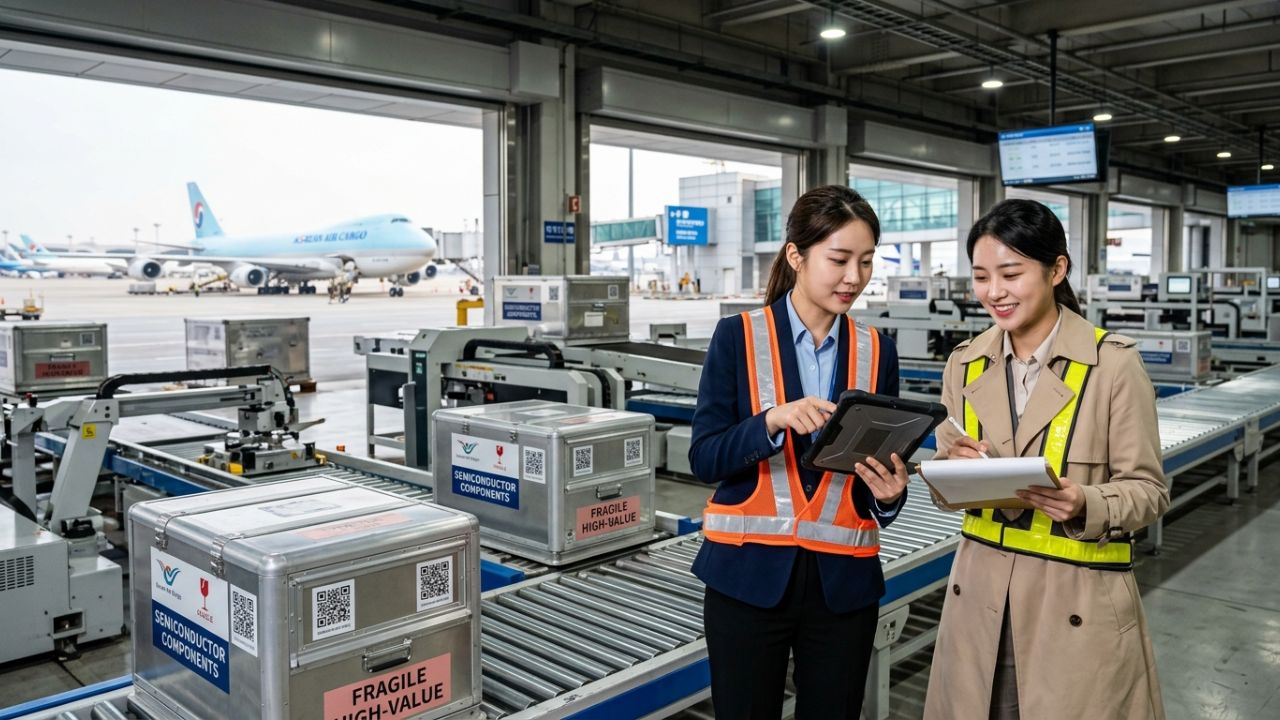
Image generated by AI
In a massive structural maneuver designed to actively shield the world's most critical high-tech supply chains from severe travel chaos and global logistics gridlock, Korean Air has initiated an unprecedented aviation expansion. Reported on June 20, 2026, as commercial industries frantically monitor the latest airline news to avoid rolling flight cancellations and supply chain collapse, the South Korean flag carrier announced a highly targeted cargo infrastructure upgrade. By aggressively expanding its handling capabilities at Incheon International Airport and its primary United States hub in New York, Korean Air is establishing a heavily fortified trans-Pacific corridor explicitly for semiconductors. This massive investment ensures high-value electronic components bypass the extreme airport disruptions crippling traditional bulk freight networks, cementing this specialized logistics strategy as today's most crucial headline in breaking aviation updates.
By introducing direct passenger coordination and dynamic scheduling backups, the regional aviation hubs target growing passenger demand across vital commerce sectors. The choice to coordinate flight departures in phases helps to manage gate capacity, supporting the country's broader regional transportation network.
Context: Eradicating Trans-Pacific Gridlock
For the highly interconnected global technology sector, establishing dedicated, high-speed aviation corridors is the absolute ultimate tactical defense against structural supply chain failure.
Historically, global air freight systems have struggled under the immense pressure of mixed-cargo loading. When massive surges in consumer goods trigger congestion at major international hubs, the resulting gridlock instantly creates a massive ripple effect, severely delaying the transport of fragile, time-sensitive components. The massive Korean Air cargo expansion permanently bypasses this logistical vulnerability. South Korea is the world's undisputed leader in semiconductor production, supplying the critical architecture for artificial intelligence, electric vehicles, and cloud computing. Because even minor transit delays can utterly destroy production schedules for major US technology firms, Korean Air is separating high-value electronics from standard freight. By developing specialized, highly automated terminals, the airline guarantees that these highly lucrative shipments remain entirely insulated from the operational meltdowns that routinely cripple the broader trans-Pacific trade route.
To view live flight schedules, verify the active equipment status of your specific Korean Air cargo itinerary, or to track potential route restorations prior to heading to the logistics center, forwarders must consult official aviation directories. For direct updates regarding how this massive infrastructure shift might shield corporate imports from current flight cancellations out of Incheon, logistics managers should aggressively utilize the official digital portals of their respective airlines. To explore live flight tracking and monitor the exact severity of the cascading bottlenecks paralyzing the broader North American airspace, operators can consult the official FlightAware tracking service.
Section-Wise Breakdown: The Semiconductor Corridor
Incheon International Airport: The Export Fortress
Incheon International Airport already serves as one of Asia’s largest and most advanced cargo hubs. However, to handle the explosive surge in semiconductor demand, Korean Air is executing a massive localized upgrade. The airline is aggressively overhauling its Incheon cargo terminals by integrating advanced automation systems and constructing highly specialized, high-security handling zones. These zones are explicitly designed to protect sensitive electronic shipments from temperature fluctuations, physical shock, and unauthorized access, dramatically reducing bottlenecks in export operations before the aircraft even leaves the ground.
New York Cargo Terminal: The US Distribution Gateway
Simultaneously, Korean Air is deploying a massive expansion of its cargo handling operations in New York. Operating as the primary inbound logistics gateway for North American technology distribution, the New York hub requires extreme efficiency. The upgrades specifically target the exact pain points that cause domestic gridlock: improving cargo sorting efficiency, dramatically reducing customs processing time, and significantly increasing specialized storage capacity. This ensures that the moment South Korean semiconductors land in the US, they are immediately cleared and injected directly into the domestic supply chain.
The Rise of Specialized High-Tech Freight
This dual-hub expansion highlights a massive pivot in the global air cargo industry. Legacy carriers are increasingly abandoning traditional bulk freight to focus strictly on high-value, low-volume shipments such as semiconductors, precision electronics, and pharmaceuticals. This strategic shift is driven entirely by the skyrocketing global demand for fast, ultra-reliable international logistics solutions that refuse to fail during peak commercial congestion.
Technical Roster: Official Airline Expansion Matrix
To ensure absolute factual accuracy regarding the exact infrastructure upgrades, operational hubs, and specific technological drivers defining this massive trans-Pacific expansion, the following matrix details the strictly verified logistics data:
Official Korean Air Cargo Expansion Matrix (2026)
| Operational Metric / Strategy | Verified Aviation Data |
|---|---|
| Operating Carrier | Korean Air |
| Primary Export Hub | Incheon International Airport, South Korea |
| Primary Import Gateway | New York, United States |
| Target Cargo Class | High-value semiconductors, precision electronics |
| Incheon Upgrades | Automation systems, high-security handling zones |
| New York Upgrades | Improved sorting efficiency, reduced customs processing time |
| Primary Industry Drivers | Artificial intelligence, electric vehicles, cloud computing |
| Strategic Logistics Goal | Enhance trans-Pacific supply chain reliability and speed |
Data accurately reflects the verified infrastructure investments and supply chain logistics tracking the Korean Air Incheon-New York semiconductor expansion as of June 2026.
Industry Impact: The Cost of Logistics Failure
For massive global technology manufacturers relying heavily on South Korean exports, this aviation expansion is an absolute lifeline against catastrophic financial loss.
Global semiconductor demand has increased so sharply that air cargo is no longer just an option; it is the absolute mandatory transportation method due to its speed, security, and specialized handling capabilities. The trade relationship between South Korea and the United States represents one of the most critical supply chains on the planet. If a shipment of AI chips is delayed by even 24 hours due to standard customs congestion in New York, the subsequent disruption to US data centers and automotive manufacturing lines translates to millions of dollars in lost revenue. By investing in digital tracking systems, automation, and expedited customs processing, Korean Air is actively eliminating the specific friction points that traditionally cause these catastrophic delays.
Logistics Analysis: Fortifying Trans-Pacific Trade
Aviation analysts monitoring the global freight sector note that the aggressive pivot toward dedicated high-tech logistics represents a massive structural shift in how legacy airlines generate commercial revenue.
Analysts emphasize that airlines are fundamentally restructuring their business models to cater exclusively to the technology sector. By improving processing speed and enhancing coordination directly between the airline, the manufacturer, and the local logistics providers, Korean Air is establishing an unbroken chain of custody for high-value goods. Aviation operators warn that carriers who fail to invest in high-security, automated cargo terminals will quickly lose massive market share to specialized operators. The Korean Air expansion proves that long-term trans-Pacific air cargo demand is no longer about moving the highest volume of boxes, but about moving the most valuable technology with absolute, zero-failure precision.
Actionable Advice for Corporate Supply Chains
If your corporation relies on the South Korea-US semiconductor corridor via Korean Air, you must execute this strategic logistics checklist immediately:
- Leverage the Upgraded Tracking Systems: Korean Air's expansion includes highly enhanced digital tracking capabilities. Ensure your internal supply chain software is fully integrated with these new APIs to monitor your shipments in real-time, preventing blind spots during the trans-Pacific crossing.
- Audit Customs Documentation: While New York is expanding capacity to reduce customs processing time, rapid clearance still requires flawless paperwork. Ensure all semiconductor import documentation is meticulously prepared prior to the aircraft's departure from Incheon to fully exploit the new high-speed processing lanes.
- Prioritize High-Security Zones: When booking freight, explicitly verify that your high-value electronic goods are manifested for Korean Air's new high-security handling zones in Incheon to guarantee protection against damage and theft during terminal loading.
FAQ: Korean Air Cargo Expansion
What is the Korean Air cargo expansion Incheon New York initiative?
It is a massive infrastructure upgrade at both Incheon and New York airports designed to significantly accelerate the handling and transport of high-value semiconductors.
Why is air cargo essential for the semiconductor industry?
Air cargo provides the required speed, specialized high-security handling, and climate protection necessary to transport highly fragile and expensive electronic components without disrupting global production schedules.
How does the New York terminal upgrade reduce travel chaos for logistics?
The New York expansion specifically improves cargo sorting efficiency, expands high-value storage, and reduces customs processing time, ensuring immediate injection into the US domestic supply chain.
The Reality of Specialized Aviation Logistics
The massive infrastructure investment by Korean Air proves definitively that specialized, high-security freight corridors are the ultimate weapon against global supply chain gridlock. By effectively linking highly automated terminals in Incheon directly to expedited distribution networks in New York, the airline has successfully guaranteed that the world's most critical technology can escape standard commercial congestion. Yet, as logistics managers frantically secure cargo space for their AI components, they must accept a critical new reality: surviving the modern supply chain requires utilizing these premium aviation networks. Navigating this era of rapid technological expansion demands extreme logistical precision, a complete refusal to rely on outdated bulk-freight methods, and the tactical discipline to integrate directly with airline data systems to ensure zero-failure delivery.
Key Takeaways
- Massive Cargo Expansion: Korean Air is significantly expanding cargo infrastructure at Incheon International Airport and its New York hub.
- Semiconductor Focus: The upgrades explicitly target the high-speed transport of semiconductors driven by AI, EV, and cloud computing demand.
- Incheon Upgrades: South Korean operations now feature advanced automation and high-security handling zones for sensitive electronics.
- New York Efficiency: The US distribution gateway is reducing customs processing time and improving sorting efficiency.
- Strategic Defense: The expansion creates a fortified trans-Pacific trade corridor designed specifically to bypass global logistics chaos.
Related Travel Guides
Massive Travel Chaos Paralyzes Chicago O'Hare with 1,425 Disruptions
Disclaimer
This article is for informational and educational purposes only. It does not constitute legal, financial, or professional advice. While we strive to provide accurate and up-to-date information, travel policies, regulations, and conditions change rapidly. Always verify information with official sources before making travel decisions. Nomad Lawyer makes no representations about the accuracy, reliability, completeness, or suitability of the information provided. Readers should consult qualified professionals for advice specific to their circumstances. The views expressed in this article are those of the author and do not necessarily reflect the views of Nomad Lawyer.
Kunal K Choudhary
Co-Founder & Contributor
A passionate traveller and tech enthusiast. Kunal contributes to the vision and growth of Nomad Lawyer, bringing fresh perspectives and driving the community forward.
Learn more about our team →