
Kolkata Traffic Alert: Route Diversions for Har Ghar Tiranga March
Kolkata Traffic Police issued route closures and diversions for the Har Ghar Tiranga march on August 10, expecting 50,000 participants.
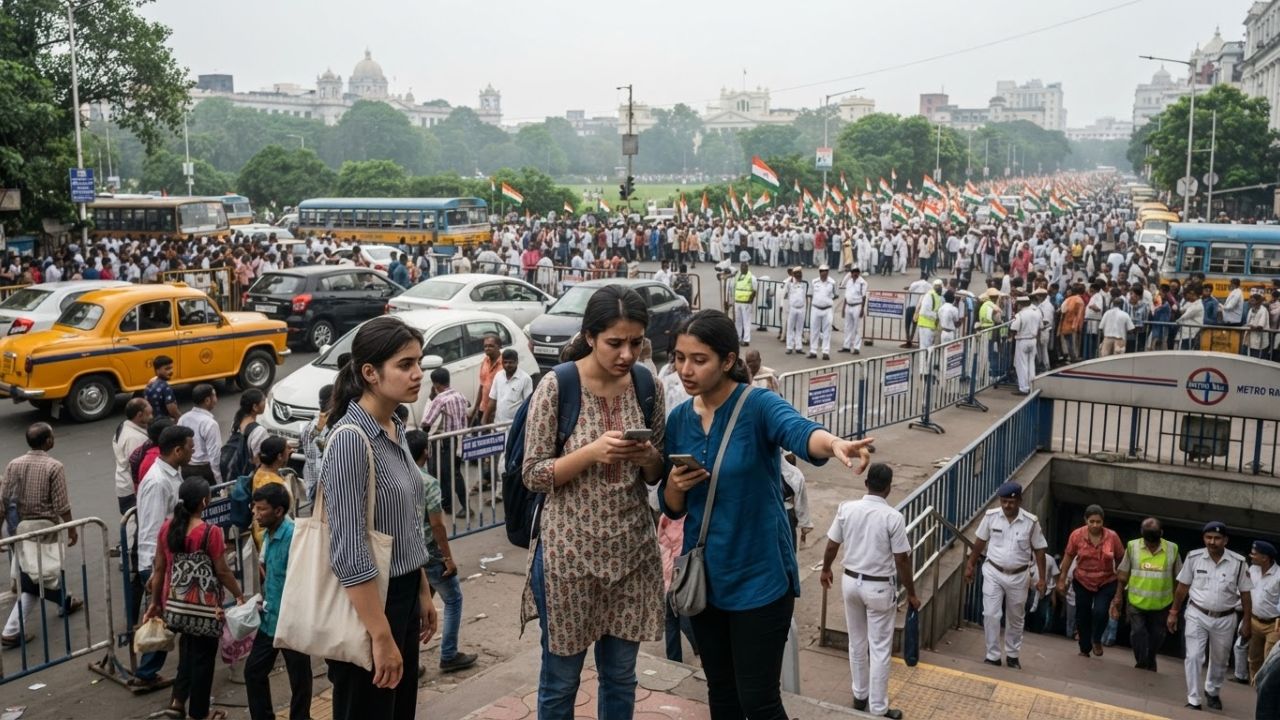
Image generated by AI
Kolkata Traffic Police has ordered widespread road closures and diversions for the Har Ghar Tiranga march, which starts at 3:00 PM on August 10, 2026.
The Core Transit Update
Urban mobility and traffic management in West Bengal are facing temporary adjustments today, August 10, 2026. The Kolkata Traffic Police has issued a comprehensive advisory due to the Har Ghar Tiranga march, which commences at 3:00 PM from the Netaji Subhas Chandra Bose statue on Red Road.
With an estimated turnout of 50,000 participants, central arteries are closed to general transit. Concurrently, a goods vehicle restriction is in effect starting at 12:00 PM on major bridges like the Vidyasagar Setu (2nd Hooghly Bridge) and AJC Bose Road, with exemptions allowed only for emergency and essential medical supply transports.
Road Closures & Metro Rail Specifications
Navigating the city core during public processions requires coordinating road diversions with rapid transit options. The following tables outline the municipal road restrictions and the current metro rail schedules.
| High-Impact Road Corridor | Primary Restriction Type | Recommended Alternate Route | Operational Timing |
|---|---|---|---|
| Red Road & Mayo Road | Closed to general passenger vehicles | Chittaranjan (Central) Avenue | Commencing at 3:00 PM |
| J.L. Nehru Road | Severe cascading delay zones | E.M. Bypass corridor | Peak afternoon/evening |
| Cathedral & Khidirpur | Southern approach diversions | Sarat Bose or Ashutosh Mukherjee Road | Bypassing Maidan perimeter |
| 2nd Hooghly Bridge / AJC | Goods vehicle restrictions (12+ tons) | Exemption for milk & medical supplies | Commencing at 12:00 PM |
| Garia Station Road | Full closure (pipeline construction) | Localized neighborhood bypasses | Continuous weekday closure |
Kolkata municipal road closures and diversions (August 10, 2026).
| Metro Transit Line | Operating Hours | Train Headway Frequency | High-Congestion Transit Stations |
|---|---|---|---|
| Blue Line (Dakshineswar - Kavi Subhash) | 6:50 AM – 11:00 PM | 5 to 7 minutes | Esplanade, Park Street, Maidan |
| Green Line (Howrah - Esplanade / Sec V) | 6:55 AM – 10:00 PM | Standard intervals | Howrah Maidan, Sealdah |
| Purple Line (Joka - Majerhat) | Normal weekday hours | Standard intervals | Majerhat junction |
Kolkata Metro rail operations and advisory guidelines.
Traveler Logistics Guide
From a ground-level perspective, the best way to navigate this is to park personal vehicles outside the central core and board the newly integrated Green Line metro tunnel from Howrah Maidan, which bypasses the surface road bottlenecks and connects directly under the river to Esplanade within 10 minutes. Checking station display boards is recommended.
To plan your daily commute:
- Avoid Central Surface Nodes: Bypass Red Road, Mayo Road, and J.L. Nehru Road entirely between 1:00 PM and 7:00 PM. Use Central Avenue (Chittaranjan Avenue) or the E.M. Bypass instead.
- Metro Passenger Congestion: Prepare for high foot traffic at Esplanade, Park Street, and Maidan stations on the Blue Line. Trains run every 5 to 7 minutes, but platform queues will be longer than usual.
- Vidyasagar Setu Bans: Keep in mind that heavy freight vehicles over 12 tons are barred from the 2nd Hooghly Bridge and Strand Road starting at 12:00 PM, delaying non-essential cargo movements.
- Garia and Chingrighata Work: Motorists in south Kolkata must bypass Garia Station Road due to pipeline construction, while lane-merging slowdowns are active on the E.M. Bypass near Chingrighata Metro station.
Infrastructure Impact Assessment
The implementation of synchronized traffic diversions and goods vehicle restrictions represents a significant milestone in Kolkata’s urban governance. Rather than allowing public processions to trigger systemic gridlock, the municipal traffic blueprint utilizes the expanded Metro rail network to channel passenger flows.
This multimodal approach balances public assembly rights with the city’s economic needs, ensuring that essential freight corridors and commercial transits remain operational during high-density rallies.
Related Travel Guides
The INSTC Multimodal Corridor Aims to Connect Russia and India
Disclaimer
This article is for informational and educational purposes only. It does not constitute legal, financial, or professional advice. While we strive to provide accurate and up-to-date information, travel policies, regulations, and conditions change rapidly. Always verify information with official sources before making travel decisions. Nomad Lawyer makes no representations about the accuracy, reliability, completeness, or suitability of the information provided. Readers should consult qualified professionals for advice specific to their circumstances. The views expressed in this article are those of the author and do not necessarily reflect the views of Nomad Lawyer.