
Knoxville Travel Chaos: Massive TSA Security Breakdown at McGhee Tyson Airport Triggers Extreme Passenger Delays and Terminal Gridlock
As a sudden mechanical failure destroys a critical TSA security lane at McGhee Tyson Airport, desperate passengers face terrifying travel chaos, massive checkpoint queues, and agonizing terminal gridlock.

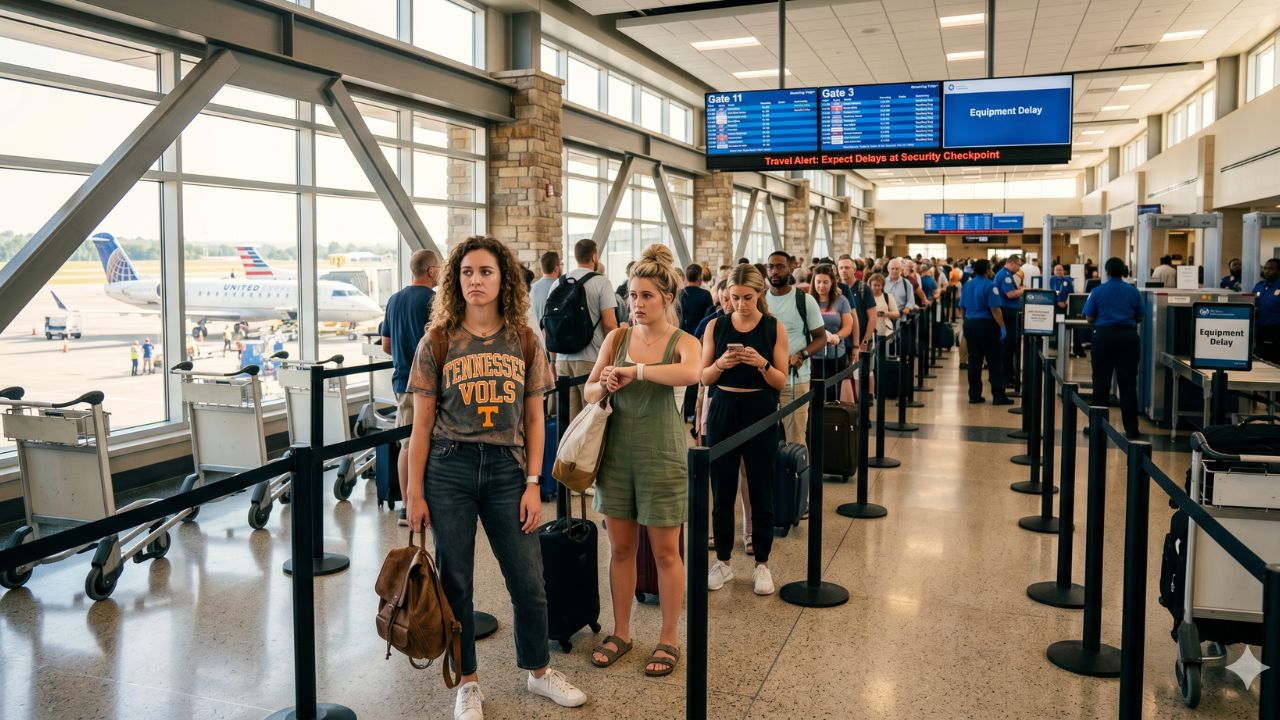
Image generated by AI
A Massive Infrastructure Meltdown Plunges Knoxville into Gridlock
While massive sectors of the global passenger network frequently battle highly unpredictable weather events, sudden infrastructure failures at critical terminal checkpoints remain the absolute most terrifying catalyst for sudden, unmanageable passenger congestion. Delivering highly urgent, breaking airline news, verified regional aviation trackers confirm that a catastrophic operational breakdown is actively generating severe, cascading travel chaos across East Tennessee. Today, June 1, 2026, an entirely unexpected and incredibly severe technical breakdown hit a main Transportation Security Administration (TSA) security line, violently paralyzing the main terminal at McGhee Tyson Airport (TYS) in Knoxville.
While desperate travelers already attempt to navigate sudden, terrifying airport disruptions caused by massive summer volumes, these exclusive aviation updates reveal that this localized checkpoint collapse is causing intense passenger delays. Thousands of passengers passing through the regional hub have been brutally stalled at the security entrance. The widespread issues highlight exactly how quickly a single mechanical failure can ripple through an incredibly fragile regional aviation network, forcing airport administrators to frantically manage immense public crowds and threatening to completely destroy the morning itineraries of both business commuters and vacationing families.
Expanded Overview: The Scale of the Aviation Crisis
The sudden, highly publicized execution of this infrastructure meltdown serves as an undeniable example of how rapidly a regional transit hub can completely disintegrate. Hurrying through the glass entry doors of a bustling regional airport terminal, travelers were instantly met with a horrifying visual: anxious passenger lines stretching completely out of the designated security checkpoint zone and spilling directly into the main public ticketing lobby. Watching a major security checkpoint suddenly grind to a near-halt due to an unexpected technical breakdown introduces a sudden, intensely frustrating layer of anxiety for time-sensitive flyers desperately trying to catch their morning connections.
According to live flight coordination logs and infrastructure registries managed on official airport planning platforms—including station files heavily monitored by the Federal Aviation Administration and local transit boards—airport administrators confirmed the absolute worst-case scenario. The TSA operations floor was officially down by one entire screening lane. Rather than letting sudden infrastructure slowdowns ruin their highly anticipated summer getaways, proactive passengers are urgently checking live local advisory updates early, ensuring they can navigate through these violently busy terminal lines with plenty of time and absolute peace of mind.
Section-Wise Breakdown of the Security Crisis
The Math of Checkpoint Friction
According to regional mobility indices and terminal capacity spreadsheets managed on official port authority platforms, the surprise operational squeeze escalated incredibly rapidly during a high-traffic weekend morning departure block. On-the-ground video logs captured by regional media reporters explicitly showed the absolute devastation of the terminal’s flow.
Airport management spokespersons clarified through emergency public bulletins that the severe queue bottleneck was triggered entirely by a sudden mechanical issue affecting the critical scanning and conveyor machinery on one of the main active screening lines. This technical breakdown significantly reduced the airport’s hourly passenger processing capacity exactly at the moment a massive wave of summer vacationers arrived at the gates. This created an immediate, high-pressure logistics hurdle for the available ground staff, completely overwhelming the terminal's structural limits.
The Peak Summer Convergence
The underlying strategy for analyzing this sudden terminal slowdown highlights an intense, terrifying accumulation of seasonal travel demands hitting an already fragile regional infrastructure. Aviation databases indicate that the hardware failure directly collided with the official kickoff of the high-volume summer vacation window, a period historically characterized by record-breaking passenger counts across the country.
Transportation experts heavily note that while experienced local commuters typically rely on the Knoxville regional hub’s historic reputation for extremely quick, fifteen-minute security turnarounds, the current mix of peak summer crowds and diminished lane configurations means that old timing strategies are obsolete. Relying on past metrics will definitively leave families completely stranded at the security gates while their flights depart without them.
TSA Operational Disruption Data
To fully comprehend the massive operational scale and strategic fallout dictating this highly volatile travel meltdown, the following table explicitly details the exact security checkpoint metrics recorded at McGhee Tyson Airport today:
| Airport Facility | Disrupted Sector | Status / Metric |
|---|---|---|
| McGhee Tyson Airport (TYS) | TSA Checkpoint Lane | 1 Entire Lane Offline (Mechanical Failure) |
| McGhee Tyson Airport (TYS) | Passenger Queue Status | Overflowing into Main Ticketing Lobby |
| McGhee Tyson Airport (TYS) | Recommended Arrival Buffer | Minimum 2 Full Hours Prior to Departure |
Passenger Impact: Stranded Itineraries and Severe Anxiety
For the modern domestic commuter attempting to navigate this highly volatile regional corridor, the passenger impact of this massive operational meltdown is completely exhausting. To fiercely prevent a catastrophic wave of missed flights and terminal gate delays, airport safety coordinators immediately updated their public communication protocols. They are now strongly advising all departing flyers to arrive at the airport at least two full hours ahead of their scheduled flight times.
Passengers must aggressively monitor live TSA wait time applications and prepare for agonizingly slow screening processes. Travelers are heavily urged to arrive at the airport extremely early, ensure their carry-on bags are perfectly packed to avoid secondary manual screenings, and fiercely demand proactive assistance from terminal ground crews if their flight boarding time is dangerously close.
Industry Analysis: Enhancing Technological Integrity
From a macroeconomic and industry operations perspective, the localized checkpoint failure highlights a massive, terrifying truth: aging security infrastructure cannot handle modern passenger volumes. Beyond the immediate visual spectacle of winding security queues and frustrated holiday crowds, airport authorities are moving aggressively to execute large-scale technological modernizations. Project tracking sheets reveal that the facility is working closely with federal infrastructure partners to ensure all available lanes eventually leverage the latest automated technology to optimize passenger throughput.
These advanced scanning systems are heavily engineered to fundamentally revolutionize terminal security operations by expediting the review of carry-on items. This ongoing infrastructure rollout promises to dramatically accelerate passenger throughput speeds over the long term, establishing a highly robust, automated buffer that will permanently shield the regional hub from experiencing parallel mechanical backlogs during future high-volume vacation surges.
Conclusion: A Highly Volatile Domestic Crisis
The massive, highly publicized infrastructure failure at McGhee Tyson Airport represents a severe, terrifying crisis for the regional travel sector. By actively forcing thousands of passengers to endure agonizing TSA delays, the operational breakdown guarantees an incredibly stressful, highly exhausting journey. Security technicians worked diligently throughout the day to inspect the offline screening equipment, swap out faulty components, and restore the terminal’s full operational baseline as quickly as possible. However, passengers are heavily urged to aggressively alter their arrival schedules, strictly prepare for severe delays, and fully expect massive terminal congestion amidst unprecedented local travel chaos.
Key Takeaways
- Massive Checkpoint Meltdown: A sudden mechanical failure completely paralyzed a main TSA security line at McGhee Tyson Airport (TYS) in Knoxville.
- Severe Capacity Loss: One entire screening lane was forced offline, destroying the hourly passenger processing capacity of the regional hub.
- Terminal Gridlock: Desperate passenger queues completely overflowed the designated security zone and spilled directly into the main public ticketing lobby.
- Critical Two-Hour Buffer: Airport safety coordinators are aggressively mandating that all passengers arrive a minimum of two full hours before their flights.
- Future Infrastructure Overhaul: Authorities are frantically planning to integrate next-generation automated scanners to prevent future catastrophic delays.
Disclaimer: The specific checkpoint metrics, delayed processing times, and TSA operational failures presented in this report are based on verified infrastructure data regarding the McGhee Tyson Airport disruption on June 1, 2026. Official terminal congestion levels and final security wait times are highly volatile and subject to continuous, real-time update based on active TSA operational directives. Prospective passengers are urgently advised to fiercely monitor their specific flight status and verify active checkpoint delays directly via the airport's official portal prior to terminal arrival.
Disclaimer
This article is for informational and educational purposes only. It does not constitute legal, financial, or professional advice. While we strive to provide accurate and up-to-date information, travel policies, regulations, and conditions change rapidly. Always verify information with official sources before making travel decisions. Nomad Lawyer makes no representations about the accuracy, reliability, completeness, or suitability of the information provided. Readers should consult qualified professionals for advice specific to their circumstances. The views expressed in this article are those of the author and do not necessarily reflect the views of Nomad Lawyer.
Kunal K Choudhary
Co-Founder & Contributor
A passionate traveller and tech enthusiast. Kunal contributes to the vision and growth of Nomad Lawyer, bringing fresh perspectives and driving the community forward.
Learn more about our team →