
KLM Expands Amsterdam-São Paulo Corridor to 9 Weekly Flights Amid Global Energy Crisis: How the 787-9 Dreamliner Defies Strait of Hormuz Tensions and Rising Oil Prices to Link Europe and Brazil
KLM Royal Dutch Airlines is increasing its Amsterdam-São Paulo frequency to 9 weekly flights starting October 25, 2026, leveraging the fuel-efficient Boeing 787-9 to navigate the global energy crisis and Strait of Hormuz tensions.

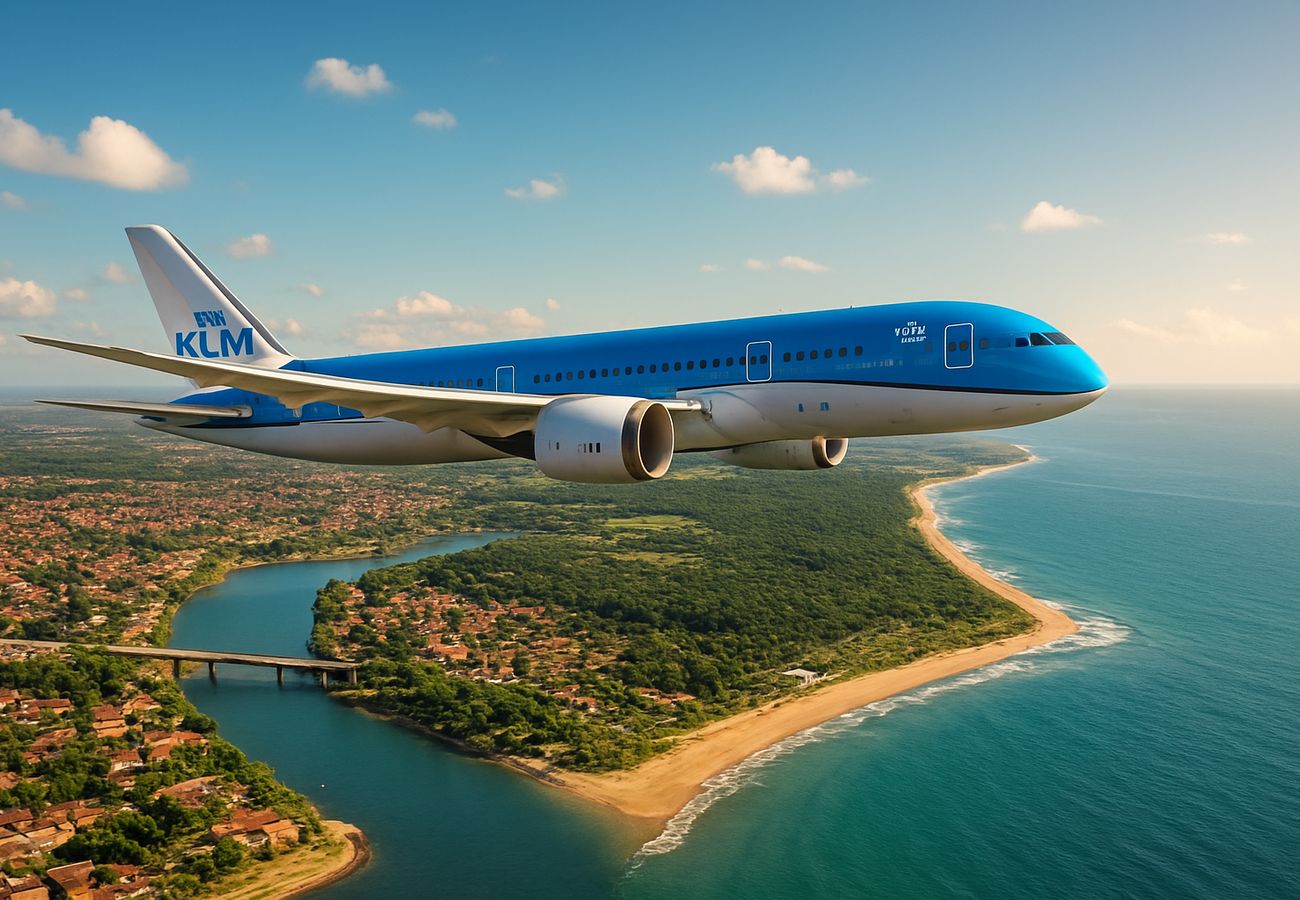
Image generated by AI
Quick Summary
- Frequency Boost: KLM will increase its services between Amsterdam (AMS) and São Paulo (GRU) to 9 weekly flights starting October 25, 2026.
- Efficient Fleet: The expansion will utilize the state-of-the-art Boeing 787-9 Dreamliner, a strategic hedge against the global energy crisis due to its 20% better fuel efficiency.
- Strategic Hubs: The move strengthens the transcontinental bridge between Europe’s business center (Amsterdam) and South America’s financial capital (São Paulo).
- Energy Defiance: Growth continues despite the US-Iran conflict and Strait of Hormuz tensions, which have inflated oil prices and long-haul operational costs.
- Business Momentum: The added capacity provides critical flexibility for corporate travelers navigating global shipping disruptions and trade delays.
- Diplomatic Ties: The expansion underscores the deepening bilateral economic and cultural relationship between the Netherlands and Brazil.
- Source: KLM Royal Dutch Airlines Network Expansion Report, May 7, 2026.
AMSTERDAM — In a bold tactical move that defies the current volatility of the global aviation market, KLM Royal Dutch Airlines has announced a significant expansion of its South American operations. According to breaking reports released on May 7, 2026, the carrier will increase its flight frequency between Amsterdam Schiphol Airport and São Paulo-Guarulhos to 9 weekly services effective October 25. This strategic escalation is being viewed by senior energy journalists as a high-stakes play to secure the "Brazil-Europe Corridor" as a stable trade and tourism hub, even as Gulf tensions and the persistent threat of a Strait of Hormuz closure send oil prices to unprecedented levels.
Expanded Overview: The 787-9 Dreamliner as a Strategic Energy Hedge
KLM’s decision to increase capacity on its most in-demand transcontinental route is not merely a response to traveler volume; it is an exercise in operational efficiency. By deploying the Boeing 787-9 Dreamliner, the airline is effectively insulating its South American network from the worst impacts of the global energy crisis. The Dreamliner’s advanced composite design and fuel-efficient engines allow for a 20% reduction in fuel consumption compared to previous generation aircraft, a critical advantage in an era where the US-Iran conflict has made jet fuel procurement a primary financial risk.
Geopolitical Context: Navigating the Strait of Hormuz and Global Supply Risks
The broader geopolitical landscape in 2026 is dominated by the standoff in the Strait of Hormuz. As Saudi Arabia, the UAE, and Qatar work to stabilize global oil flows, the resulting uncertainty has forced many airlines to cut long-haul frequencies. However, the Netherlands has prioritized the "Brazil Link" as a strategic necessity. By establishing a 9-weekly frequency, KLM is providing a reliable alternative for travelers who are currently avoiding Middle Eastern transit hubs due to shipping disruptions and airspace closures.
Global Energy Impact: Why Fleet Efficiency is the New Travel Currency
Rising oil prices have fundamentally changed the economics of long-haul aviation.
- The Dreamliner Advantage: The Boeing 787-9’s ability to fly further with less fuel makes it the ideal "crisis-proof" aircraft for the Amsterdam-São Paulo route.
- Operational Resilience: KLM is leveraging this efficiency to offer competitive pricing at a time when other carriers are applying massive "conflict surcharges" to their trans-Atlantic fares.
Shipping and Trade Impact: Direct Connectivity vs. Maritime Delays
The ongoing shipping disruption in global maritime routes has made air cargo and passenger-cargo "belly space" more valuable than ever.
- Bilateral Resilience: The 9 weekly flights will facilitate the rapid exchange of high-value goods between the Netherlands (a center for innovation) and São Paulo (Brazil's industrial heart), bypassing the trade delays currently affecting sea-bound freight.
- Corporate Agility: For business travelers from both nations, the added frequency ensures that the US-Iran conflict does not paralyze transcontinental corporate collaboration.
Regional Impact: The South American Pivot
While the Gulf States remain the focus of energy market volatility, Brazil is emerging as a critical partner for European energy and food security.
- The Brazil Connection: The expansion of flights to São Paulo reflects a broader European strategy to diversify its economic dependencies away from regions impacted by Strait of Hormuz tensions.
- Tourism Surge: For leisure travelers, the added flexibility makes São Paulo’s cultural districts and Brazil’s Atlantic coast more accessible, offering a "safe haven" alternative to more volatile holiday hubs.
Industry / Expert Analysis: Why the AMS-GRU Route Matters Globally
Aviation analysts at Reuters and Bloomberg suggest that KLM’s 2026 expansion is a signal of a "strategic consolidation" in the aviation industry. In an era of global energy crisis, airlines must concentrate their most efficient assets on routes that offer guaranteed business and leisure yield. The Amsterdam-São Paulo corridor, with its deep-rooted bilateral ties, represents one of the most stable long-haul markets in the world, allowing KLM to thrive even as the US-Iran conflict dampens demand in other sectors.
What Happens Next: Scenarios for the 2026-2027 Winter Season
As we move toward the October 25 launch, two primary scenarios emerge:
- Energy Stabilization: Should the Strait of Hormuz tensions ease, KLM is well-positioned to further increase frequency to a double-daily service (14 weekly flights) to capture the resulting tourism surge.
- Persistent Crisis: If oil prices remain elevated, the 787-9 Dreamliner will become the primary competitive advantage for the airline, allowing it to maintain the 9-weekly frequency while others are forced to consolidate.
- Diplomatic Outlook: Continued cooperation between the Netherlands and Brazil is expected to drive further infrastructure investments at both AMS and GRU hubs.
Conclusion: Reinforcing the Global Risk and Transcontinental Reward
KLM’s expansion to 9 weekly flights between Amsterdam and São Paulo is a testament to the power of efficiency in a world of shipping disruptions and oil price volatility. By surmounting the challenges of the US-Iran conflict and the geopolitical shadow of the Strait of Hormuz, the airline has proven that the "Dreamliner strategy" is the ultimate hedge against global uncertainty. As the world watches the Middle East, the Netherlands and Brazil are building a bridge that is both sustainable and resilient, ensuring that global connectivity remains intact.
Key Takeaways: KLM Amsterdam-São Paulo 2026
- Expansion: 9 weekly flights starting October 25, 2026.
- Aircraft: Boeing 787-9 Dreamliner (20% more fuel efficient).
- Hub Connectivity: Linking Amsterdam (Business/Culture) with São Paulo (Financial Heart).
- Energy Defiance: Growth achieved despite the global energy crisis and rising oil prices.
- Trade Resilience: Critical for bypassing maritime shipping disruptions.
- Strategic Hedge: Using advanced fleet technology to maintain long-haul viability.
Related Tourism Reports
Disclaimer
This article is for informational and educational purposes only. It does not constitute legal, financial, or professional advice. While we strive to provide accurate and up-to-date information, travel policies, regulations, and conditions change rapidly. Always verify information with official sources before making travel decisions. Nomad Lawyer makes no representations about the accuracy, reliability, completeness, or suitability of the information provided. Readers should consult qualified professionals for advice specific to their circumstances. The views expressed in this article are those of the author and do not necessarily reflect the views of Nomad Lawyer.
Kunal K Choudhary
Co-Founder & Contributor
A passionate traveller and tech enthusiast. Kunal contributes to the vision and growth of Nomad Lawyer, bringing fresh perspectives and driving the community forward.
Learn more about our team →