
KLM A350-900 Launches in September to Defeat Long-Haul Travel Chaos, Though Regulatory Certification Delays Pause Business Class Availability Amid Ongoing Airport Disruptions: Latest Airline News
To combat severe intercontinental travel chaos, KLM rushes its A350-900 into service this September, though stringent certification delays will temporarily pause the Business Class launch.

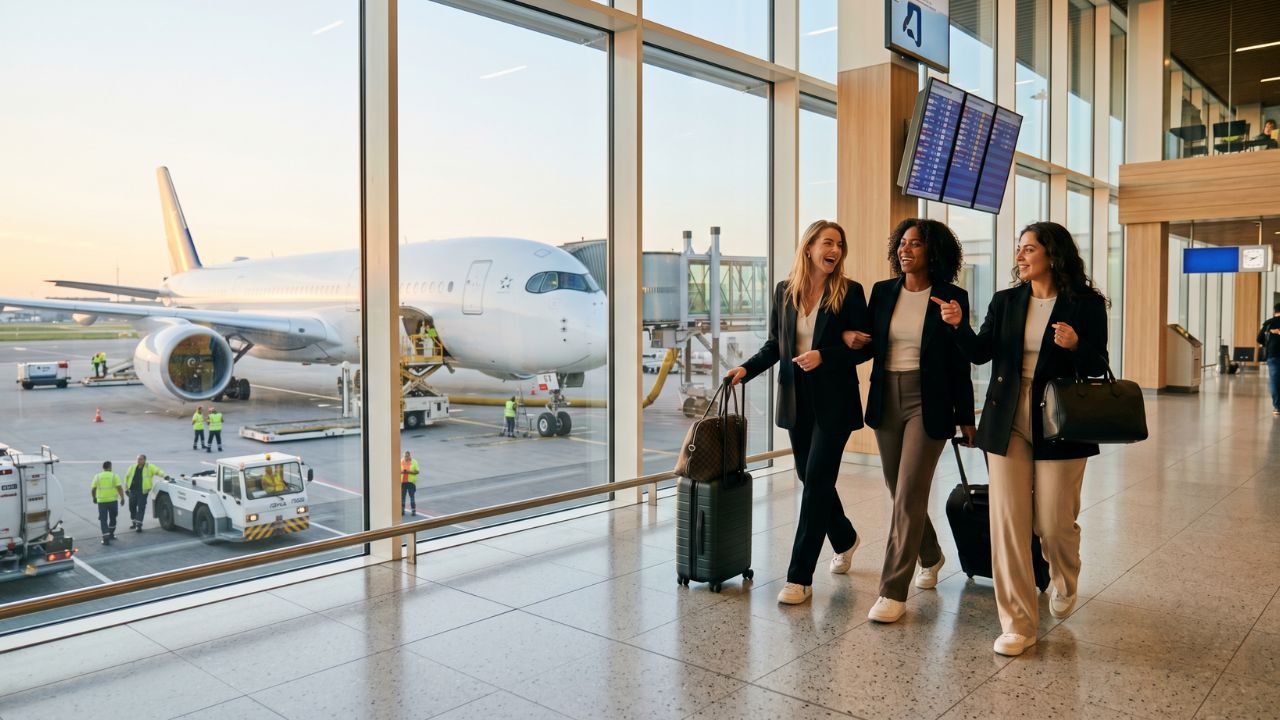
Image generated by AI
In a highly complex operational maneuver designed explicitly to protect international passengers from the devastating travel chaos and rolling flight cancellations currently infecting global long-haul networks, KLM Royal Dutch Airlines has confirmed a massive fleet deployment. Announced on June 18, 2026, the European carrier will officially inject its state-of-the-art Airbus A350-900 into commercial operations this September. Recognizing that corporate commuters and leisure tourists are entirely exhausted by the severe airport disruptions caused by failing, older-generation wide-body aircraft, KLM is aggressively pushing the highly efficient A350 into service. However, in a stark reminder of the rigorous safety protocols required to prevent airspace collapse, the highly anticipated Business Class cabin will not be available at launch due to ongoing regulatory certification delays. By choosing to deploy the aircraft with modified cabin availability rather than grounding the entire plane—a move that would trigger massive regional stranding—KLM is prioritizing immediate capacity relief. As travelers desperately demand reliable intercontinental flights, this phased deployment strategy stands as the premier headline in today's breaking airline news and absolutely vital global aviation updates.
By introducing direct passenger coordination and dynamic scheduling backups, the regional aviation hubs target growing passenger demand across vital commerce sectors. The choice to coordinate flight departures in phases helps to manage gate capacity, supporting the country's broader regional transportation network.
Context: Deploying Capacity to Prevent Network Collapse
For the millions of global commuters navigating long-haul aviation this year, the sheer scale of operational bottlenecks caused by aging aircraft fleets has transformed routine transcontinental transit into a severe liability.
Historically, when airlines face certification delays on new premium seating, they completely delay the aircraft's entry into service. This bureaucratic hesitation instantly triggers cascading flight cancellations, as the airline is forced to fly older, mechanically unreliable jets that inevitably break down and cause localized travel chaos. KLM Royal Dutch Airlines is refusing to engage in this failing strategy. The Airbus A350-900 is engineered to deliver drastically lower fuel burn per seat and massive operational reliability. By officially launching the aircraft in September on high-demand intercontinental routes connecting Europe with global regions, KLM is flooding the network with critical lift. Even though the business class product remains subject to complex regulatory certification approvals—involving evacuation timing tests, seat certification approvals, and material safety verification—KLM has decided that providing guaranteed, disruption-proof Economy and Premium Economy capacity is vastly superior to causing mass airport disruptions by holding the aircraft back.
To view live flight schedules, verify the active delay status of your specific itinerary, or to track active regional airspace restrictions, travelers must consult official aviation directories. For direct booking access onto highly reliable, next-generation aircraft fleets, travelers should aggressively utilize the official portals for KLM Royal Dutch Airlines. To explore live flight tracking and monitor the exact severity of the global bottlenecks causing the flight cancellations this A350-900 deployment will bypass, passengers can consult the official FlightAware tracking service.
Section-Wise Breakdown of the A350 Phased Launch
The September Deployment Strategy
KLM’s initial deployment strategy for the A350-900 will focus exclusively on selected long-haul routes where aircraft efficiency and capacity optimization are absolutely critical to preventing travel chaos. By introducing the aircraft in September, KLM is integrating the A350 gradually, allowing crews to master the next-generation systems while providing immediate relief to routes suffering from capacity constraints.
The Certification Delay: Prioritizing Safety
The absence of the Business Class cabin at launch is not an operational failure, but rather a reflection of stringent modern aviation safety systems. Aviation authorities require extensive validation of new cabin layouts, including mandatory emergency evacuation procedures and operational readiness assessments. Until these rigorous tests are passed, the cabin remains restricted. KLM’s decision to fly the aircraft without Business Class proves a commitment to absolute regulatory compliance while still combating flight cancellations.
Passenger Upgrades: The A350 Advantage
Even without the premium cabin, the A350-900 serves as a massive upgrade against physical travel exhaustion. The aircraft features advanced noise reduction systems, drastically improved cabin pressurization, and higher humidity levels compared to older wide-body jets. For passengers traveling in Economy and Premium Economy on routes exceeding eight hours, these redesigned seating layouts and improved environmental conditions drastically reduce long-haul fatigue.
Technical Roster: KLM A350-900 Operational Data
While no specific flights were actively cancelled as a result of this certification delay, the entire phased launch strategy is designed to combat future airspace volatility. To ensure absolute factual accuracy regarding the exact parameters of this high-capacity disruption-bypass tool, the following matrix details the verified rollout data:
KLM A350-900 Operational Rollout Data
| Operational Metric | Strategic Specification |
|---|---|
| Airline | KLM Royal Dutch Airlines |
| Aircraft Variant | Airbus A350-900 |
| Commercial Launch Target | September 2026 |
| Route Focus | Intercontinental Long-Haul Network |
| Business Class Status | Launch Delayed (Pending Regulatory Certification) |
| Available Cabins at Launch | Economy and Premium Economy |
| Fleet Strategy | Air France-KLM Group Harmonisation & Modernisation |
Passenger Impact: Navigating the Premium Cabin Pause
For the hundreds of thousands of corporate and leisure travelers relying on KLM's intercontinental network, this phased rollout presents a highly unique passenger dynamic.
The immediate passenger impact is a massive surge in overall schedule reliability, coupled with a temporary reduction in premium segmentation. Previously, if an aircraft delivery was delayed due to seat certification, the airline would scramble to substitute an older aircraft, frequently resulting in a catastrophic flight cancellation if no spare jet was available. Under KLM's strategy, the flight operates as scheduled. Passengers booked in Economy and Premium Economy will instantly benefit from the A350-900's advanced pressurization and humidity, arriving at their destinations physically refreshed. However, corporate travelers attempting to book Business Class on these specific A350-operated routes will face restricted inventory until aviation authorities officially clear the premium cabin for commercial use.
Industry Analysis: The Reality of Modern Certification
Aviation industry analysts view KLM’s phased A350-900 launch as definitive proof that the extreme complexity of modern regulatory certification is fundamentally altering how airlines combat travel chaos.
Analysts note that airlines across the globe are facing massive bottlenecks not just from aircraft manufacturers, but from the regulatory bodies that must certify complex, bespoke premium seating configurations. Evacuation timing tests and material safety verifications are more stringent than ever. By choosing to launch the A350-900 with a modified cabin configuration rather than parking a perfectly functional, fuel-efficient aircraft, KLM is maximizing asset utilization. Industry experts warn that as airlines transition to next-generation platforms, passengers will increasingly experience these phased rollouts. Carriers that refuse to fly until every luxury seat is approved will inevitably suffer severe airport disruptions, while pragmatic airlines like KLM will keep the network moving.
Actionable Advice for Surviving Long-Haul Gridlock
If you are navigating the highly volatile European long-haul network during the late 2026 travel season, execute this strategic planning checklist to fully bypass regional travel chaos:
- Verify Cabin Configurations: If you are flying KLM on a long-haul intercontinental route in September, explicitly check the aircraft type. If it is the new A350-900, be aware that Business Class may not be available for booking. Plan your corporate travel accordingly.
- Embrace Premium Economy: With the Business Class cabin temporarily restricted on the A350, demand for Premium Economy will surge. Book these seats aggressively, as the A350’s advanced cabin environment makes this class vastly superior to flying on older-generation jets.
- Prioritize Aircraft Reliability: Do not cancel your flight simply because the Business Class cabin is unavailable. The primary goal is avoiding severe travel chaos and flight cancellations; the A350-900 guarantees a drastically higher rate of mechanical reliability than the older aircraft it replaces.
- Monitor Regulatory Updates: The restriction on the premium cabin is temporary. Corporate travel managers should closely monitor aviation updates; the moment regulatory clearance is finalized, KLM will activate its full premium offering, immediately restoring elite intercontinental capacity.
FAQ: KLM A350-900 Rollout & Travel Chaos
How is the KLM A350-900 helping to defeat travel chaos?
By officially pushing the highly reliable Airbus A350-900 into commercial service in September, KLM is flooding its long-haul network with critical capacity, preventing the massive flight cancellations caused by aging, mechanically unreliable aircraft.
Why is the Business Class cabin delayed on the A350?
The delay is caused by highly stringent regulatory certification requirements, which include mandatory evacuation timing tests, material safety verification, and operational readiness assessments that must be passed before the premium cabin is approved.
What are the passenger benefits of the A350-900 despite the delay?
Even with modified cabin availability, passengers in Economy and Premium Economy will benefit from advanced noise reduction systems, drastically improved cabin pressurization, and higher humidity levels, reducing long-haul physical fatigue.
The Reality of Phased Fleet Integration
The historic phased deployment executed by KLM Royal Dutch Airlines proves definitively that maximizing immediate fleet capacity is the ultimate defense against systemic physical travel chaos. By launching the Airbus A350-900 in September despite ongoing Business Class certification delays, the European carrier has prioritized keeping its global network fluid over waiting for perfect premium segmentation. As archaic legacy airlines desperately park reliable jets while waiting for bureaucratic seat approvals—triggering rolling flight cancellations and severe airport disruptions that ruin vital corporate travel—passengers must accept a critical new reality: avoiding brutal travel anxiety requires actively supporting airlines that deploy safe, next-generation capacity immediately, ensuring that intercontinental connections remain totally immune to operational collapse.
Key Takeaways
- The A350 Capacity Injection: KLM is officially launching the Airbus A350-900 into commercial operations in September to modernize its intercontinental network.
- Premium Cabin Delay: The Business Class product will not be available at launch due to ongoing regulatory certification requirements (evacuation and safety tests).
- Phased Deployment Strategy: The airline is introducing the aircraft with modified cabin availability (Economy/Premium Economy) to provide immediate capacity and prevent flight cancellations.
- Passenger Comfort Upgrade: The A350-900 features advanced noise reduction, better pressurization, and higher humidity, drastically reducing fatigue on flights over eight hours.
- Passenger Survival: Corporate travelers must verify A350 cabin availability during the September rollout, booking Premium Economy to ensure they fly on the most reliable, disruption-resistant aircraft.
Related Travel Guides
Massive Travel Chaos Paralyzes Chicago O'Hare with 1,425 Disruptions
Disclaimer
This article is for informational and educational purposes only. It does not constitute legal, financial, or professional advice. While we strive to provide accurate and up-to-date information, travel policies, regulations, and conditions change rapidly. Always verify information with official sources before making travel decisions. Nomad Lawyer makes no representations about the accuracy, reliability, completeness, or suitability of the information provided. Readers should consult qualified professionals for advice specific to their circumstances. The views expressed in this article are those of the author and do not necessarily reflect the views of Nomad Lawyer.
Kunal K Choudhary
Co-Founder & Contributor
A passionate traveller and tech enthusiast. Kunal contributes to the vision and growth of Nomad Lawyer, bringing fresh perspectives and driving the community forward.
Learn more about our team →